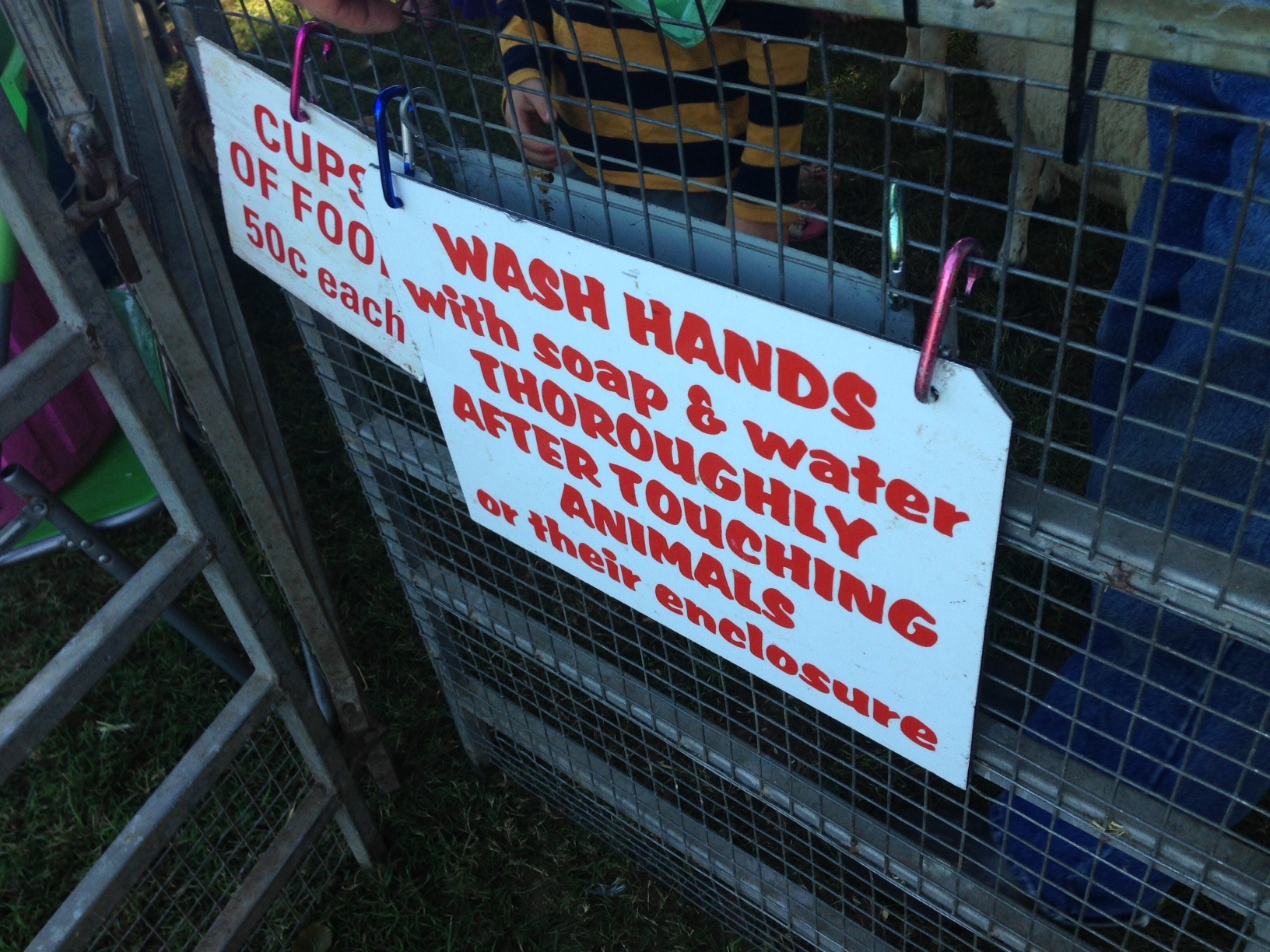
Family wants answers: Daughter, 5 others stricken with E. coli O157 in 2011 after trip to UK petting farm

In June 2011, 11-year-old Megan Oldfield took a school trip to a petting farm in East Yorkshire and was left fighting for life with kidney damage.

Megan OldfieldMegan Oldfield needed dialysis for two weeks after contracting the infection following a visit to Cruckley Animal Farm in East Yorkshire.

She fell ill in the week after the school trip and was rushed to Leeds General Infirmary where she was put on dialysis for two weeks.

Megan still needs regular check ups on her damaged kidneys and is vulnerable to further infections throughout her life.

Her dad James, 34, a gas engineer, was quoted as saying, “Seeing my little girl fight for her life because she contracted an infection that might have been prevented was very hard to witness and something I will never forget.

“She went from perfectly healthy to being hooked up to a life saving dialysis machine in a matter of days and nothing could have prepared us for the horrific battle she would have to face.

A Health Protection Agency (HPA) report into the farm the month after Megan’s visit found insufficient hand washing facilities for visitors.

The owners of the attraction – which closed permanently later the same year – deny responsibility.

Megan’s family have now instructed specialist solicitors Irwin Mitchell to investigate the cause of his daughter’s illness.

Lawyers at the firm have received details of a Health Protection Agency (HPA) report into Cruckley Animal Farm which was commissioned following the HPA being notified of ‘six cases (five primary and one secondary) of E-coli O157 with possible links to Cruckley Animal Farm between 7th and 18th July 2011’

The Health Protection Agency report, dated July 2011 found:

  • Hand wash facilities provided were deemed insufficient for the volume

of visitors

  • Location of hand wash facilities also considered not to be adequate,

especially in regard to the covered picnic area, which was located too far from

hand wash facilities

  • As a result, it was considered unlikely that the visiting public washed their hands after interaction with animals and before eating
  • There was a lack of explicit information about the risk of contracting an infection from animals

The HPA report stated: “Two improvement notices were issued which required (a) improved segregation of visitors from animals and increased number of hand washing facilities with hot and cold running water, (b) improved provision of information to visitors.”

The report confirmed that there was strong evidence that the farm was the source of the infection as, “it was the single common link identified in all six cases”.

The HPA concluded: “A lack of explicit information about the risk of infection from animals was also noticed, and this was of concern due to the lack of adequate hand washing facilities in eating areas.”

34 sickened: Dairy barn likely source of E. coli outbreak in Washington state

The strain of E. coli O157:H7 that caused an outbreak among people at the Milk Makers Fest in April has been found in the north end of the dairy barn where the event was held, according to a report released Wednesday, June 3.

royal.petting.zoo“The bottom line here is we can’t expect an environment like a barn to ever be completely free of pathogenic bacteria,” said Tom Kunesh, environmental health supervisor for the Whatcom County Health Department.

So why take little kids into that environment, as schools routinely do?

About 1,325 Whatcom County first-grade students, plus the teachers and parents who accompanied them, from all school districts in Whatcom County went to the annual event April 21-23 at the Northwest Washington Fairgrounds in Lynden.

Disease investigators calculated case counts based only on lab-confirmed infection with E. coli O157:H7 or physician-diagnosed hemolytic uremic syndrome (HUS), a type of kidney failure.

  • 25 people were confirmed cases.

o          9 of these cases were considered secondary cases (the ill person didn’t attend the event but had close contact with someone who did attend).

  • No one died.
  • 10 people were hospitalized.
  • 6 people developed HUS.

Multiple samples from the environment where the event was held were collected on two different days (April 30 and May 13) and submitted for laboratory testing. The samples indicated that several areas of the north end of the Dairy Barn at the Northwest Washington Fairgrounds were contaminated with the same strain of E. coli that made people ill. Negative results do not rule out contamination in other parts of the barn.

The outbreak strain of E. coli O157:H7 was identified in the following areas of the Dairy Barn:

  • Manure bunker
  • Hay maze area
  • Bleachers by east wall
  • Bleachers by west wall

Any environment where animals have been kept, such as barns, should be considered contaminated. E.coli O157 can survive in the environment up to 42 weeks (Varma, 2003 JAMA).

As part of the investigation, officials interviewed many of the confirmed cases to find out what they did during the event before they got ill. Officials also interviewed “controls,” meaning people who attended the Milk Makers Fest but did not get ill to find out what they might have done differently.

The results of analyzing the data collected during the interviews are not final, but a few preliminary findings stand out:

  • Event attendees who reported washing or sanitizing their hands before eating lunch were less likely to become ill.
  • Children who reported always biting their nails were more likely to become ill.
  • Leaving animal areas without washing hands might have contributed to an increased risk of transmission.
  • Eating in animal areas might have contributed to an increased risk of transmission.

Recommendations for Event Organizers:

  • Evaluate and update plans for cleaning and disinfection before, during, and after events, particularly surfaces with high levels of hand contact (such as seats, door or fence handles, and hand railings).
  • Evaluate and update measures to restrict access to areas more likely to be contaminated with animal manure.

o          This is especially important for people at higher risk for severe illness. These people include young children, pregnant women, adults older than 65, and people with weakened immune systems.

  • Ensure access to hand washing facilities with soap, running water, and disposable towels.
  • Display signs and use other reminders to attendees to wash hands when leaving animal areas.
  • Store, prepare, or serve food and beverages only in non-animal areas.


Terrible idea: UK kids meet animals at a raw milk farm

In the fall of 1998, I accompanied one of my four daughters on a kindergarten trip to the farm. After petting the animals and touring the crops – I questioned the fresh manure on the strawberries –we were assured that all the food produced was natural.

raw.milk.petting.zooWe then returned for unpasteurized apple cider. The host served the cider in a coffee urn, heated, so my concern about it being unpasteurized was abated. I asked: “Did you serve the cider heated because you heard about other outbreaks and were concerned about liability?” She responded, “No. The stuff starts to smell when it’s a few weeks old and heating removes the smell.”

But it’s all smiles at one Rimington farm as children enjoy the sunshine and all the farm has to offer.

Gazegill Farm in Rimington welcomes school groups and visitors to come to the farm and to have a look around.

But it’s not enough: Calgary petting zoo adopts no-touch poultry policy

It’s nice that the bureaucrats at Alberta Agriculture are recommending that petting zoos implement a no-touch poultry policy for children under five years of age following a Salmonella outbreak linked to baby chicks, but what about the barriers? What about aerosolization of pathogens?

chicken.south.parkAlberta Health reports that 24 Albertans have become ill since April 5, including 10 children. Three adults and one child required hospitalization, but all four have since been released.

The outbreak has also been linked to illnesses in British Columbia and Saskatchewan. The Public Health Agency of Canada (PHAC) says all of the cases involved contact with live baby poultry, and most have been traced back to an unnamed Alberta poultry hatchery.

“The funny thing about Salmonella is that it causes noticeable disease in humans, but for a lot of animals, they’re not noticeably affected at all,” said Dr. James Talbot, Alberta Chief Medical Officer of Health.

There’s nothing funny about Salmonella.

Butterfield Acres, a popular petting zoo located northwest of Calgary, is no longer allowing patrons to have any contact with live poultry on site.

In a emailed statement to Global News, a spokesperson said:

“We are taking precautions by adopting a no-touch policy for the poultry, and by restricting access to all our poultry pens. We are asking all visitors to watch the birds through the fences, and to use this situation as an excellent reminder that good hand washing is important.”


Handwashing is never enough: 34 sick with Salmonella from chicks in Canada

Sorenne told me about plans to have a live animal farm with reptiles and baby chicks established at her school.

OLYMPUS DIGITAL CAMERAYou see a cute chick, I see a Salmonella factory.

The Public Health Agency of Canada reports an outbreak of Salmonella infections in Alberta, British Columbia and Saskatchewan with cases of human illness related to contact with live baby poultry originating from a hatchery in Alberta.

The risk to Canadians is low.

No idea how they came up with that statement, and of course, no info on the age of those affected (I’ll put my money on little kids).

40 sick in Sweden from Cryptosporidium at kosläpp (letting the cows out)

Apparently it’s a thing in Sweden to go and watch the cows being let out; so is Cryptosporidium.

kosläppSome 40 people have fallen ill after being infected by Cryptosporidium, reports Skovde News.

It is associated with kosläpp, a Hjo and one in Skövde, two outbreaks occurred in May.

Infectious disease doctors in the area now warning parents to let young children petting calves at kosläpp and immediately afterwards eat food or refreshments, writes Skovde News. Then they risk getting upset stomach with abdominal pain and diarrhea.

Wash health officials limit fair events after E. coli outbreak

State health officials have restricted events at the Lynden, Whatcom County, fairgrounds, where an outbreak of dangerous E. coli sickened dozens last month, to prevent potential spread of additional illness.

petting.zoo.1.apr.13Dr. Scott Lindquist, the Washington state epidemiologist for communicable diseases, said the move is a precaution while county, state and federal officials determine the source of the outbreak that sent at least eight people to hospitals.

“We’re recommending they not have any more events until we’ve finished our investigation,” Lindquist said.

The request immediately affects a dog show planned for Saturday by the Mount Baker Kennel Club, expected to attract 800 canines and more than 2,000 people to the Northwest Washington Fair & Event Center.

Stiles said she understood and applauded health officials’ efforts to make sure no one else got sick at the site where more than 1,300 first-graders were exposed to Shiga toxin-producing E. coli O157: H7.

The outbreak followed the annual Milk Makers Fest held April 21-23. At least 15 people contracted lab-confirmed infections, with eight hospitalized and three who developed hemolytic uremic syndrome, a life-threatening complication of E. coli illness.

About 30 others are still being tested. Whatcom County health officials originally estimated as many as 47 people were sickened, but they’ve changed the way the cases are defined.

Handwashing in never enough: 42 now sick with E. coli O157 linked to farm visit in Wash.

The Whatcom County Health Department (WCHD) is investigating an outbreak of shiga toxin-producing E. coli O157 associated with the Milk Makers Fest that was held at the Northwest Fairgrounds in Lynden on 4/21 – 4/23/15.

cow.hug.cumberlandOver 1,000 primary school children from all of the school districts in Whatcom County attended the event. Most of the cases involve children who attended the event. Several older children involved with the event and some adults and close contacts of cases have also become ill.

WCHD is continuing to interview cases to determine if there was a common food or water source or activity, such as the petting zoo or other contact with livestock. Washington State Department of Health Communicable Disease Epidemiology is assisting with the outbreak investigation.

Cumulative total: 22 cases* (7 cases have been hospitalized), 20 probable cases ** Change since last report of 5/2/15: no new cases, +1 probable cases, no new hospitalizations

*Cases include those with positive labs (preliminary presumptive positive O157 and final confirmed positives), and clinical cases with close contact with a case with positive or presumptive positive labs.

** Probable cases are cases with clinical symptoms and were associated with the event, but lab results are not available or labs were not done.

The state public health lab is testing confirmed E. coli O157 isolates for serogroup (to determine if O157:H7 or another related serogroup). Preliminary positive O157 isolates are regrown and have further testing done at a commercial lab to confirm O157. We expect to get the first results of serogroup testing from the state public health lab this week.

Handwashing is never enough: 32 suspected sick from WA animal contact area

The Whatcom County Health Department is continuing to look for the cause of an E. coli outbreak among schoolchildren who went to the Milk Makers Fest last week in Lynden.

MILK_MAKERS_FEST_020.aurora_standalone.prod_affiliate.39Um, cows? Sheep? Goats?

Six children have been sickened so far with shiga toxin-producing E. coli and up to 32 are reported with symptoms.

The Milk Makers Fest introduces young students to farming. It also gave them a chance to pet farm animals.

Meanwhile, health officials are reminding people that they should wash their hands well, especially after using the bathroom and before preparing food for eating.

“Everybody has to be careful with their hand washing,” said Greg Stern, Whatcom County Health officer.

Uh-huh.

A table of petting zoo outbreaks is available at https://barfblog.com/wp-content/uploads/2014/04/Petting-Zoo-Outbreaks-Table-4-8-14.xlsx.

Best practices for planning events encouraging human-animal interactions

Zoonoses and Public Health

G. Erdozain , K. KuKanich , B. Chapman  and D. Powell

http://onlinelibrary.wiley.com/doi/10.1111/zph.12117/abstract?deniedAccess

Educational events encouraging human–animal interaction include the risk of zoonotic disease transmission. It is estimated that 14% of all disease in the US caused by Campylobacter spp., Cryptosporidium spp., Shiga toxin-producing Escherichia coli (STEC) O157, non-O157 STECs, Listeria monocytogenes, nontyphoidal Salmonella enterica and Yersinia enterocolitica were attributable to animal contact. This article reviews best practices for organizing events where human–animal interactions are encouraged, with the objective of lowering the risk of zoonotic disease transmission.

3 first-graders sick: Washington health investigating E. coli cases in children at farm event in Lynden

Sorenne is in grade 1. Her school fete is this Sunday.

They plan to have a petting zoo, and I’ve said, this is a bad idea and let the principal know.

courtlynn.petting.zooWe’ll be at hockey.

At least three Whatcom County first-graders in Washington state, and possibly a fourth, have been sickened by shiga-toxin producing E. coli after attending the Milk Makers Fest in Lynden last week.

About 1,325 first-graders and their chaperones went to the event April 21-23 at the fairgrounds in Lynden. It was put on by the Whatcom County Dairy Women.

The event introduced young students to farming. It also gave the students a chance to pet farm animals, including small horses, sheep, rabbits, chickens and a calf, the dairy women wrote on their Facebook page.

Pasteurized chocolate milk was given to the children but isn’t considered a source of contamination because pasteurization destroys E. coli, according to the Facebook post.

“Nothing’s been ruled out,” said Greg Stern, Whatcom County health officer, on Tuesday, April 28.

 A table of petting zoo outbreaks is available at https://barfblog.com/wp-content/uploads/2014/04/Petting-Zoo-Outbreaks-Table-4-8-14.xlsx.

Best practices for planning events encouraging human-animal interactions

Zoonoses and Public Health

G. Erdozain, K. KuKanich , B. Chapman  and D. Powell

http://onlinelibrary.wiley.com/doi/10.1111/zph.12117/abstract?deniedAccess

Educational events encouraging human–animal interaction include the risk of zoonotic disease transmission. It is estimated that 14% of all disease in the US caused by Campylobacter spp., Cryptosporidium spp., Shiga toxin-producing Escherichia coli (STEC) O157, non-O157 STECs, Listeria monocytogenes, nontyphoidal Salmonella enterica and Yersinia enterocolitica were attributable to animal contact. This article reviews best practices for organizing events where human–animal interactions are encouraged, with the objective of lowering the risk of zoonotic disease transmission.petting1-791x1024petting2-791x1024