Who says I don’t play well with others: Kansas State veterinarian outlines safety guidelines for kids handling animals

Do you have kids who love to find frogs and turtles in the wild or snuggle with baby chicks and ducklings? Kansas State University veterinarians say it’s great to encourage children to become interested in animals at a young age, but there are certain precautions and guidelines you should know.

uq.petting.zoo.1.aug.11“We want kids to be excited about animals, but it’s really important for parents to remember that safety should always come first,” said Kate KuKanich, associate professor of internal medicine in the Kansas State University College of Veterinary Medicine. “We want to make sure all of these experiences that kids have with animals are safe, healthy and positive experiences, which is why everyone should follow the Centers for Disease and Control and Prevention recommendations about interacting with animals.”

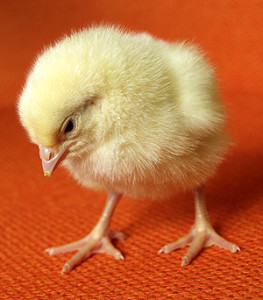
According to the CDC, parents should closely monitor which animals young kids come into contact with, and kids under the age of 5 should not be allowed to touch reptiles like turtles, snakes and lizards; amphibians like frogs, toads, salamanders and newts; and young poultry like chicks, ducklings and goslings. All of these animals are carriers and shedders of salmonella, which can cause illness in children and immunosuppressed adults.

“Salmonella is so common in reptiles that reports have shown that more than 90 percent of our reptiles may be carrying and shedding the bacteria — and they often don’t show symptoms,” KuKanich said. “Having young children wash their hands after petting the animal isn’t enough protection from salmonella because of the possibility of cross-contamination. Children who pet these animals often have risky behaviors, such as wiping their hands on their shirt, pants or the counter, or putting their hands in their mouth before washing. All of these actions can lead to the spread of the bacteria and ultimately, illness.”

More than 70,000 people become sick from salmonella through contact with reptiles each year in the U.S., with the main signs of salmonellosis being fever and bloody diarrhea.

“It’s just not worth the risk of letting toddlers handle, pet or even be in the same room with these animals,” KuKanich said.

That doesn’t mean animals can’t be part of young children’s lives. Kukanich says some fun animals that young kids can learn about and safely pet — as long as these animals are healthy — include pocket pets, adult dogs and cats, and adult farm animals.

ekka.petting.zooPetting zoos and farms can provide an excellent opportunity for children to learn and interact with animals. A recent study from KuKanich; Gonzalo Erdozain, a 2014 Kansas State University Doctor of Veterinary Medicine graduate; and colleagues found three main ways to reduce the risk of transmission of infection in these settings: knowing the risks involved with interacting with animals, including the potential diseases and how they spread; taking the proper sanitary measure of washing your hands; and being aware of risky behaviors that could lead to illness.

“Young kids are more prone to risky behaviors around animals, such as putting their hands in their mouths right after petting an animal or letting a pacifier touch an animal before going into their mouth,” Erdozain said. “Parents and teachers should supervise kids closely to minimize these behaviors, encourage hand-washing and help ensure all animal encounters are safe as well as fun.”

Previous research by Erdozain, KuKanich and colleagues found that of 574 visitors attending petting zoos in Kansas and Missouri, only 37 percent attempted any kind of hand hygiene.

“Think about how many kids pick up a turtle or toad they find in the yard and then don’t wash their hands immediately after handling the animal,” Erdozain said. “Properly washing your hands is the best way to decrease the chances of getting sick after petting or handling an animal.”

Proper hand-washing includes wetting hands, applying soap, rubbing for at least 15 seconds, rinsing with a significant flow of running water and drying with paper towels — not on clothes. KuKanich suggests teaching kids to sing a song while washing their hands to ensure they wash long enough.

The study, “Best Practices for Planning Events Encouraging Human-Animal Interactions,” was published in the journal Zoonoses and Public Health. Authors include Erdozain; KuKanich; Ben Chapman, North Carolina State University; and Doug Powell, powellfoodsafety.com.

Duh files: Doctors don’t always ask about pet-related health risks

According to NPR, if you’re being treated for cancer, an iguana might not be the pet for you.

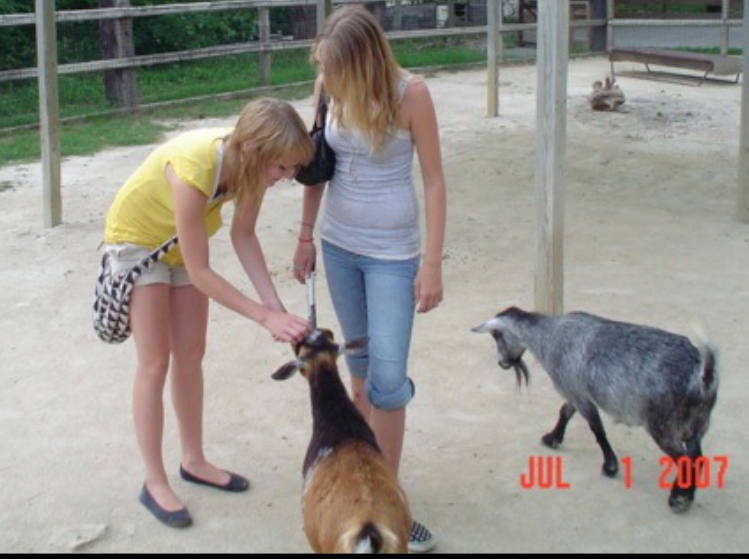
goat.petting.zooDitto if you’re pregnant, elderly or have small children at home.

Pets can transmit dozens of diseases to humans, but doctors aren’t always as good as they should be in asking about pets in the home and humans’ health issues, a study finds.

And that goes for people doctors and animal doctors. “The fact that they’re equally uneducated is concerning,” says Jason Stull, an assistant professor of veterinary preventive medicine at Ohio State University and lead author of the review, which was published Monday in the Canadian Medical Association Journal. “There hasn’t been a great dialogue between the veterinary community, the human health community and the public.”

Amphibians, reptiles, rodents and young poultry can spread Salmonella. Back in 2013 the Centers for Disease Control and Prevention warned of an outbreak of a rare strain of Salmonella among people who had pet hedgehogs, and suggested that people lay off cuddling the adorable creatures.

Parasites like giardia and Cryptosporidium cause diarrheal disease and can be spread by dogs and cats. Those are nasty but treatable. Rarer parasites like Echinococcus tapeworms can cause liver failure and death.

People should be sure to let their human health-care providers know that they have pets, Stull says, and let the vet know if there are family members who are at greater risk of animal-borne infections. That includes children under age 5, pregnant women, older people, and anyone with a weakened immune system due to things like chemotherapy, HIV/AIDS or organ transplants.

If you’re intrigued by the notion of Fluffy as disease vector, you’ve got friends at (decent hockey player Scott Weese’) Worms and Germs  blog from the University of Guelph. They’re closely following the new outbreak of canine flu, for example.

At The Ohio State University and partner institutions, researchers have compiled the latest information from more than 500 studies worldwide to make recommendations on how families can minimize the risk of disease transmission by choosing the right type of pet, or by making small changes in how they enjoy the pets they already have.

The review was published in the April 20 issue of CMAJ (Canadian Medical Association Journal).

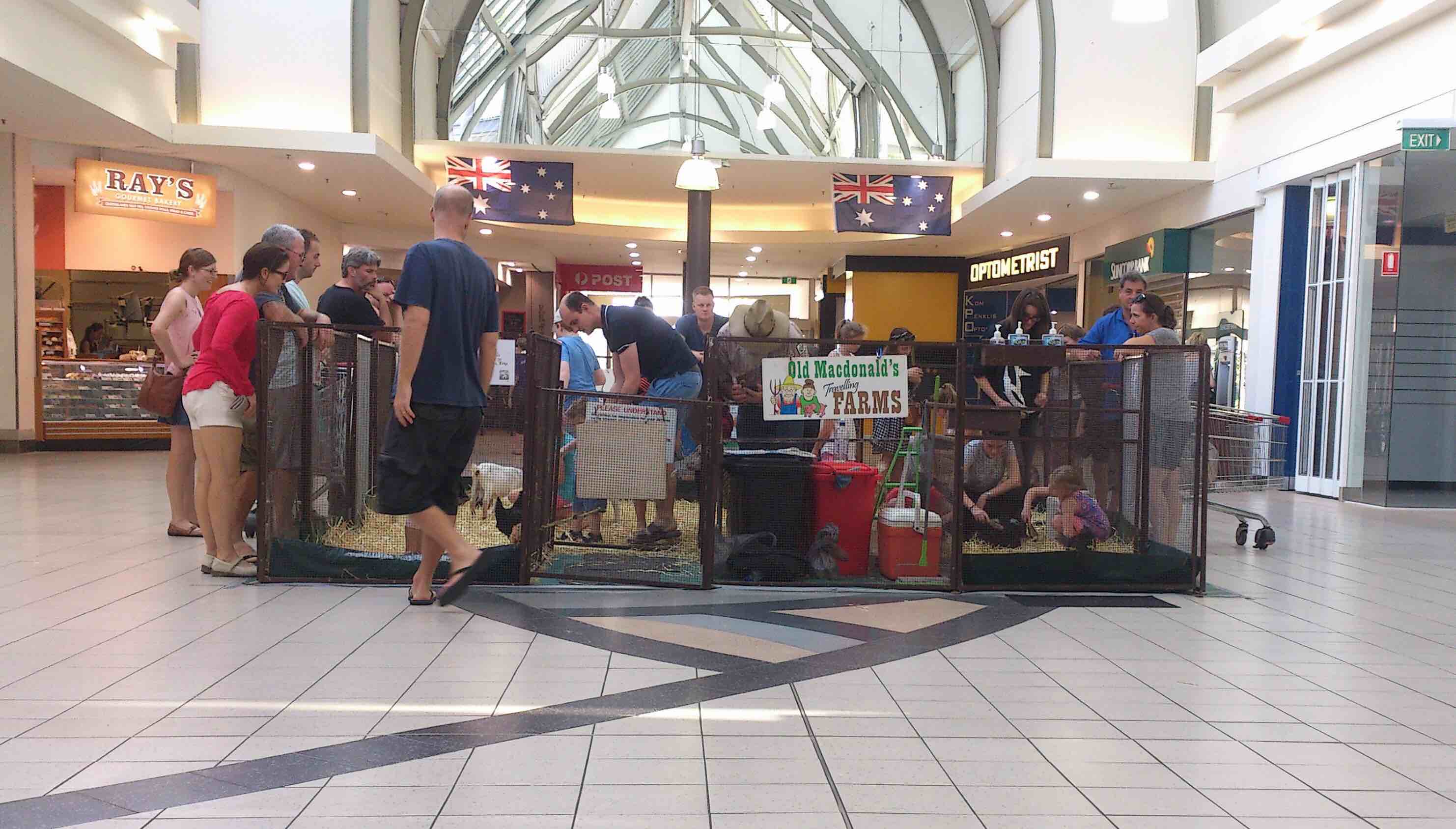
Queensland Health? Hello? Petting zoo ignorance

Petting zoos at a mall or a school without proper handwashing facilities is a bad idea.

Even with proper facilities, it’s a bad idea.

An alert reader sent this in from the Greenslopes mall, a few km from our house in Brisbane.

There is hand sanitizer in the upper right, but no handwashing facilities.

And no idea if anyone is using the sanitizer.

A table of petting zoo outbreaks is available at https://barfblog.com/wp-content/uploads/2014/04/Petting-Zoo-Outbreaks-Table-4-8-14.xlsx.

petting.zoo.greenslopes.apr.15


But handwashing is never enough: Ireland says wash hands after farm visits

As the weather improves and visits to outdoor farms increase, the Health and Safety Executive for Northern Ireland (HSENI) is reminding parents and teachers of the importance of schoolchildren washing their hands after being in contact with animals.

handwash.UK.petting.zoo.09A visit to a farm and the chance to see and handle animals is an exciting time for young children.

However, it is vitally important to remember that farm animals can carry harmful bacteria such as E. coli, which can be transferred to children through contact with the animal or its faeces. If the child then goes on to eat, drink, or put their hands near their mouth, without washing their hands, there is a real risk of serious infection.

Urging everyone to follow simple hygiene steps to avoid spoiling anyone’s fun, Malcolm Downey who heads HSENI’s farm safety team said: “Anti-bacterial gels and wipes alone are not a substitute for properly washing your hands.”

Sorry Malcolm, it’s not that simple.

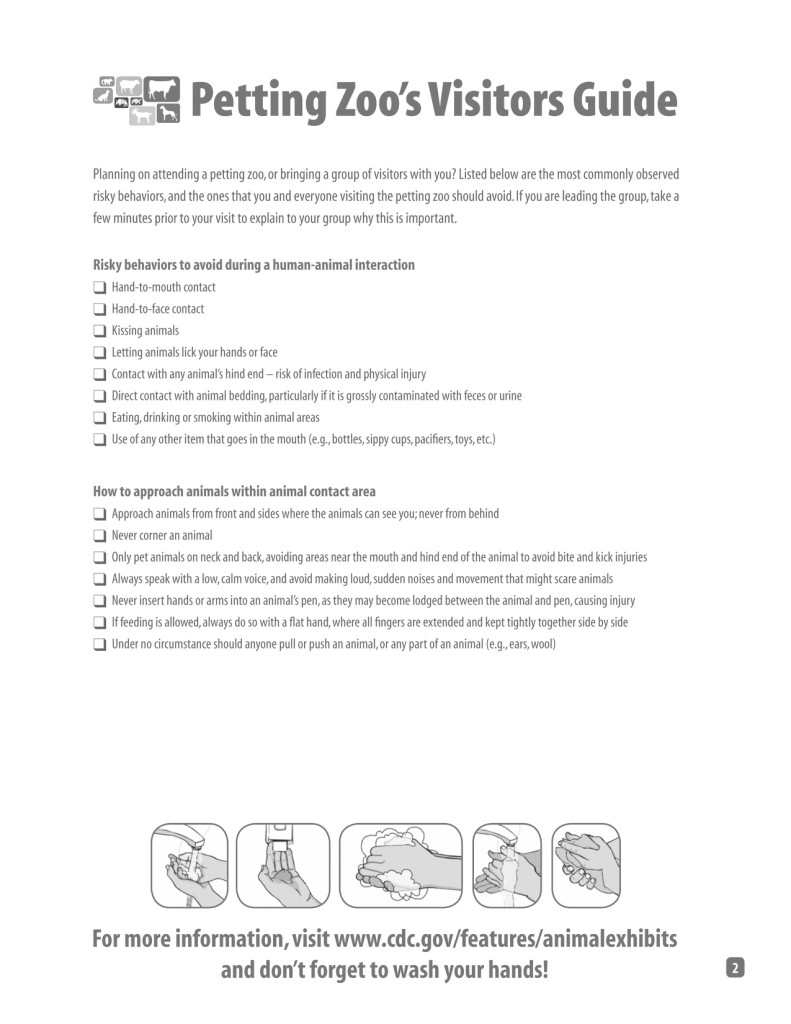
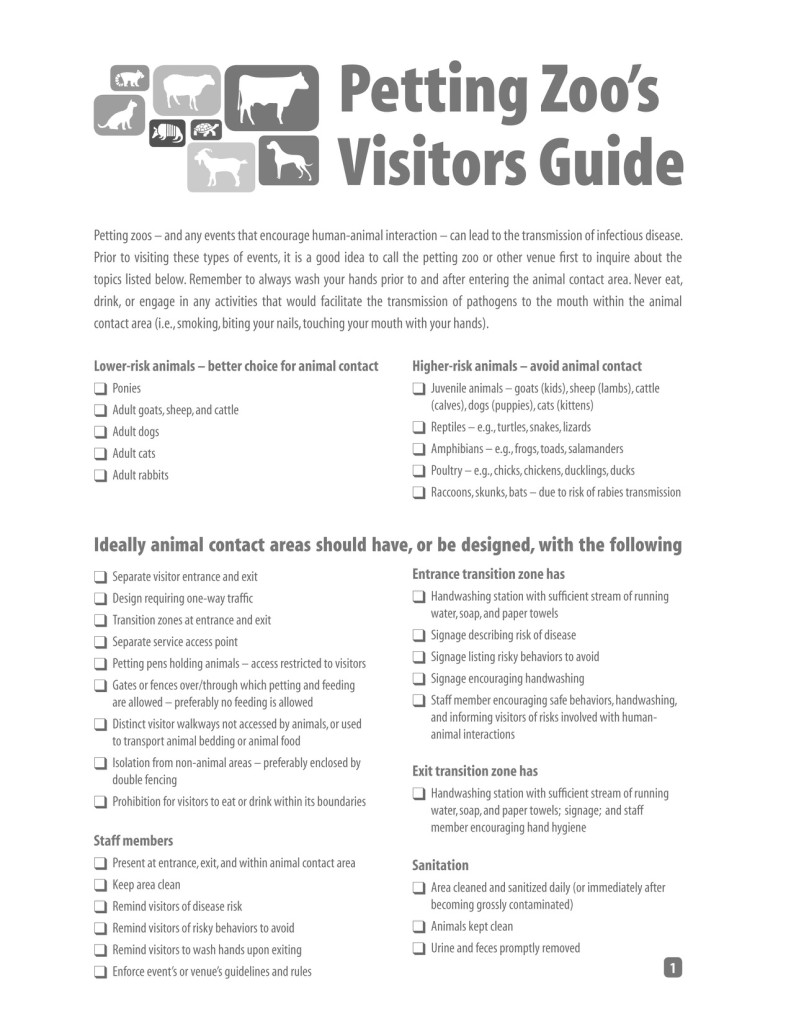
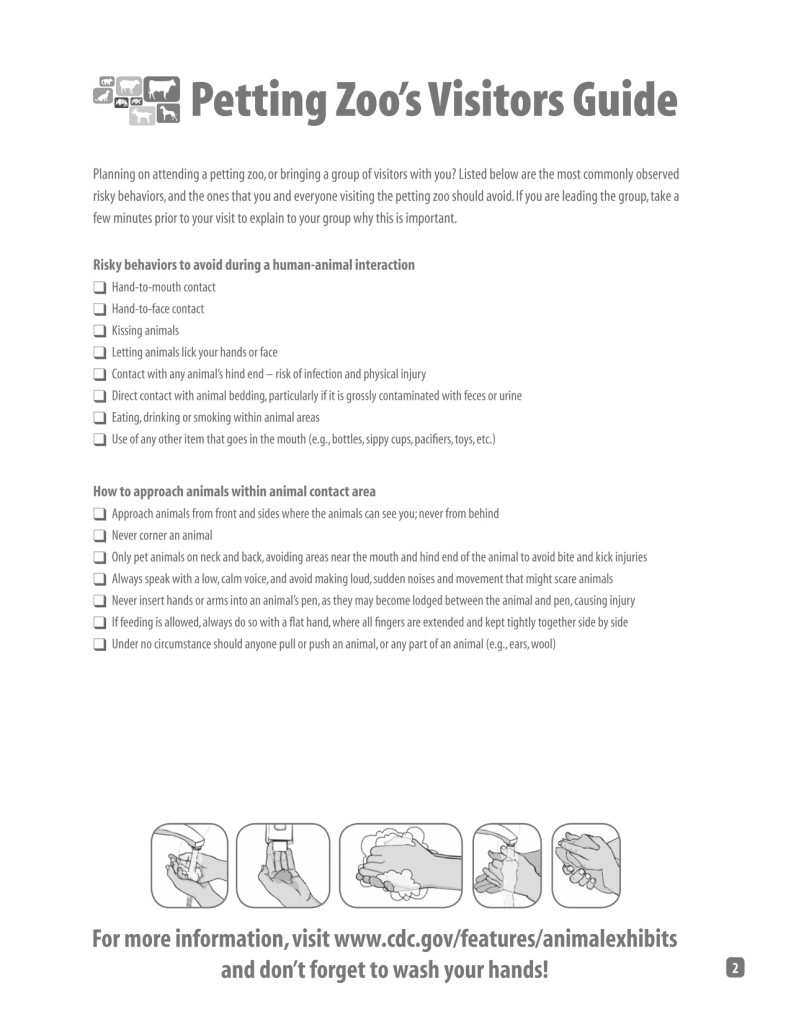
Our paper on human-animal interactions published in Zoonoses and Public Health, includes a 2-page checklist for parents, and the teachers who book these events.

Gonzalo Erdozain, Kate KuKanich, Chapman and I have all seen microbiologically terrible practices at petting zoos or in homes, and read about them from around the world, so we thought, maybe we should try and provide some guidance.

The uniting factor is we all have kids, and in my case, grandkids, and keep adding more.

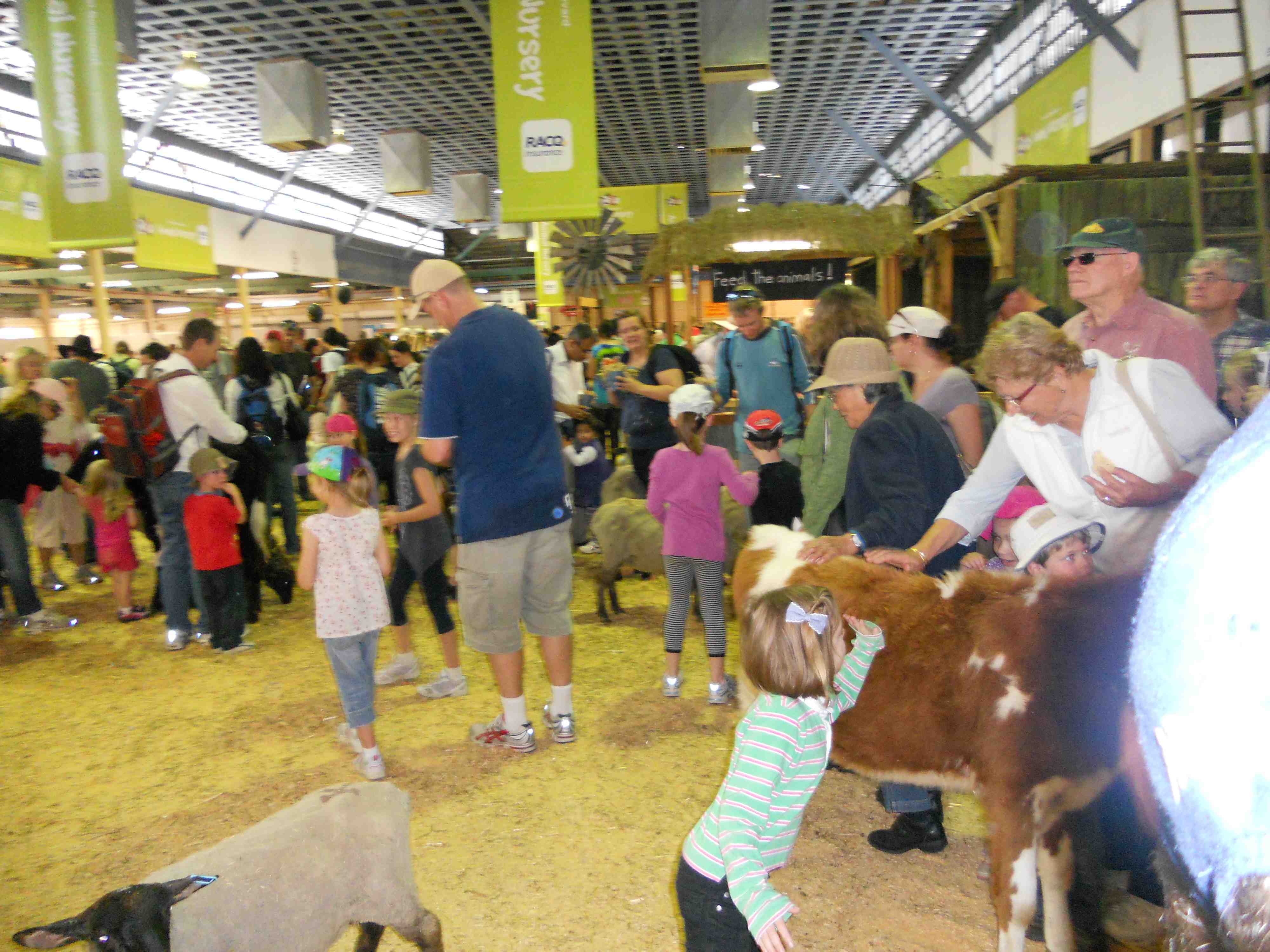
claudia.e.coli.petting.zoo.may.14In Brisbane, they have the Ekka, something like the Texas State Fair. The petting zoo was absolute madness, and after living in Brisbane and hanging out with micro-types I got the message, don’t go to the Ekka, you’ll get sick. We didn’t go in 2013: 49 people, primarily kids, got sick from E. coli O157 (and in typical Queensland style, the outbreak has never been written up, there has been no follow-up, nothing; guess it would be bad for agriculture).

North Carolina has had repeated and terrible outbreaks.

As a father of five daughters, I’ve had many requests over 20 years to go on a school trip to see the animals. As a food safety type, I’ve been routinely concerned about best practices. The other parents may dislike microbiology, but I’m concerned with the health and safety of the children involved.

A table of petting zoo outbreaks is available at https://barfblog.com/wp-content/uploads/2014/04/Petting-Zoo-Outbreaks-Table-4-8-14.xlsx.

Best practices for planning events encouraging human-animal interations

Zoonoses and Public Health 62:90-99

Erdozain , K. KuKanich , B. Chapman and D. Powell, 2015

http://onlinelibrary.wiley.com/doi/10.1111/zph.12117/abstract?deniedAccess
 Educational events encouraging human–animal interaction include the risk of zoonotic disease transmission. ‘It is estimated that 14% of all disease in the USA caused by Campylobacter spp., Cryptosporidium spp., Shiga toxin-producing Escherichia coli (STEC) O157, non-O157 STECs, Listeria monocytogenes, nontyphoidal Salmonella enterica and Yersinia enterocolitica were attributable to animal contact. This article reviews best practices for organizing events where human–animal interactions are encouraged, with the objective of lowering the risk of zoonotic disease transmission.

petting1-791x1024


petting2-791x1024

13 sickened: Handwashing is never enough and why I’m wary of animal displays: Crypto outbreak contained in Michigan

An outbreak of cryptosporidiosis at the Centreville High School agriculture program sent one student to the hospital and infected 12 others, according to Branch-Hillsdale-St. Joseph Community Health Agency.

cow.poop2The outbreak is contained and the hospitalized student has been released.

The outbreak came in early March in the co-op vet/ag science program run through St. Joseph Intermediate School District and involving students from throughout the county, according to Rebecca Burns, environmental health director.

The parasite is commonly found near calves, Burns said the health agency identified the calf program as the source.

“The school is all in to make sure this doesn’t happened again,” Burns said. “The problem was traced to poor hand-washing.”

Burns said there was hand sanitizer in the barn, but that alone is not enough.

cow_hug_cumberland“Nothing beats soap, water and friction to get rid of the parasite,” she said.

Two other major outbreaks of crypto were reported in the tri-county health district since 2011. In Hillsdale County in 2012, 28 people were infected at a pool party. In 2011, a Quincy firefighter was hospitalized and 19 others infected while fighting a fire at a calf barn. Firefighters used water from a pond nearby to extinguish the blaze.

363 sick from Salmonella in chicks and ducklings linked to single mail-order outfit

The U.S. Centers for Disease Control reports that in early 2014, five clusters of human Salmonella infections were identified through PulseNet, the national molecular subtyping network for foodborne disease surveillance.

OLYMPUS DIGITAL CAMERAMany ill persons in each of these clusters reported contact with live poultry, primarily chicks and ducklings, from a single mail-order hatchery; therefore, the clusters were merged into a single investigation. During February 3–October 14, 2014, a total of 363 persons infected with outbreak strains of Salmonella serotypes Infantis, Newport, and Hadar were reported from 43 states and Puerto Rico, making it the largest live poultry-associated salmonellosis outbreak reported in the United States.

Among the ill persons, 35% (122 of 353) were aged ≤10 years, and 33% (76 of 233) were hospitalized; no deaths were reported. Among those interviewed, 76% (174 of 230) reported live poultry contact in the week before illness onset. Among the ill persons who provided supplemental information on live poultry exposure, 80% (94 of 118) reported chick exposure and 26% (31 of 118) reported duckling exposure. Among 96 (81%) ill persons who were exposed to live poultry at their residence, 28 (29%) reported keeping poultry inside their home instead of outdoors, and 26 (27%) reported no direct contact with their poultry.

Of the 75 ill persons with live poultry purchase information, the average time from purchase to illness onset was 48 days (range = 2–730 days); 27 (36%) reported illness onset within 14 days of purchase. Hatchery source information was available for 69 purchases, of which 58 (84%) came from a single mail-order hatchery in Ohio. This same Ohio hatchery was previously linked with multiple, large human Salmonella infection outbreaks (1,2).

The U.S. Department of Agriculture’s National Poultry Improvement Plan, a collaboration between industry and state and federal agencies, provides guidance on management and sanitation practices for mail-order hatcheries, including a Best Management Practices Handbook.* Comprehensive Salmonella prevention and control programs are needed at all hatcheries and associated breeder farms to prevent outbreaks.

The possibility of environmental contamination of the home by live poultry, suggested by the 27% of respondents who reported no direct contact with their poultry, illustrates a need for additional educational information advising customers on how to reduce the risk for Salmonella transmission from live poultry (3) to humans through environmental contamination. Educational information regarding zoonotic Salmonella outbreaks, including outbreaks associated with live poultry, is available from CDC (4). A comprehensive approach to illness prevention involving human and animal health officials and practitioners, industry, and backyard poultry flock owners is needed to prevent future outbreaks.

Cute but careful: Guidelines for human-animal interactions published

Just in time for our annual school Fete (it’s a British thing) that will feature animals of some sort, I get to further play Dougie Downer and distribute this 2-page guide for playing with animals.

ekka.petting.zooOur paper on human-animal interactions is about to be published (hard copy this time) in Zoonoses and Public Health, and includes a 2-page checklist for parents, and the teachers who book these events.

Gonzalo Erdozain, Kate KuKanich, Chapman and I have all seen microbiologically terrible practices at petting zoos or in homes, and read about them from around the world, so we thought, maybe we should try and provide some guidance.

The uniting factor is we all have kids, and in my case, grandkids, and keep adding more (congrats, Gonzo)

In Brisbane, they have the Ekka, something like the Texas State Fair. The petting zoo was absolute madness, and after living in Brisbane and hanging out with micro-types I got the message, don’t go to the Ekka, you’ll get sick. We didn’t go in 2013: 49 people, primarily kids, got sick from E. coli O157 (and in typical Queensland style, the outbreak has never been written up, there has been no follow-up, nothing; guess it would be bad for agriculture).

North Carolina has had repeated and terrible outbreaks.

As a father of five daughters, I’ve had many requests over 20 years to go on a school trip to see the animals. As a food safety type, I’ve been routinely concerned about best practices. The other parents may dislike microbiology, but I’m concerned with the health and safety of the children involved.

A table of petting zoo outbreaks is available at https://barfblog.com/wp-content/uploads/2014/04/Petting-Zoo-Outbreaks-Table-4-8-14.xlsx.

Best practices for planning events encouraging human-animal interations

Zoonoses and Public Health 62:90-99

Erdozain , K. KuKanich , B. Chapman and D. Powell, 2015

http://onlinelibrary.wiley.com/doi/10.1111/zph.12117/abstract?deniedAccess

 Educational events encouraging human–animal interaction include the risk of zoonotic disease transmission. ‘It is estimated that 14% of all disease in the USA caused by Campylobacter spp., Cryptosporidium spp., Shiga toxin-producing Escherichia coli (STEC) O157, non-O157 STECs, Listeria monocytogenes, nontyphoidal Salmonella enterica and Yersinia enterocolitica were attributable to animal contact. This article reviews best practices for organizing events where human–animal interactions are encouraged, with the objective of lowering the risk of zoonotic disease transmission.


petting1


petting2

Campylobacter in petting zoos; we’ve done this

Here’s an example of terrible story-telling.
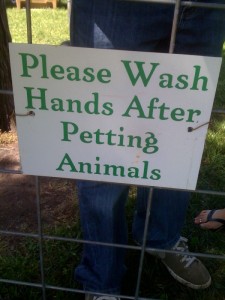
petting.zoo.handwash.10According to news reporting out of Bilthoven, Netherlands, by VerticalNews editors, research stated, “The significance of petting zoos for transmission of Campylobacter to humans and the effect of interventions were estimated. A stochastic QMRA model simulating a child or adult visiting a Dutch petting zoo was built.”

Our news journalists obtained a quote from the research from National Institute for Public Health and the Environment, “The model describes the transmission of Campylobacter in animal feces from the various animal species, fences, and the playground to ingestion by visitors through touching these so-called carriers and subsequently touching their lips. Extensive field and laboratory research was done to fulfill data needs. Fecal contamination on all carriers was measured by swabbing in 10 petting zoos, using Escherichia coli as an indicator. Carrier-hand and hand-lip touching frequencies were estimated by, in total, 13 days of observations of visitors by two observers at two petting zoos. The transmission from carrier to hand and from hand to lip by touching was measured using preapplied cow feces to which E. coli WG5 was added as an indicator. Via a Beta-Poisson dose-response function, the number of Campylobacter cases for the whole of the Netherlands (16 million population) in a year was estimated at 187 and 52 for children and adults, respectively, so 239 in total. This is significantly lower than previous QMRA results on chicken fillet and drinking water consumption. Scenarios of 90% reduction of the contamination (meant to mimic cleaning) of all fences and just goat fences reduces the number of cases by 82% and 75%, respectively.”

According to the news editors, the research concluded: “The model can easily be adapted for other fecally transmitted pathogens.

For more information on this research see: A Quantitative Microbiological Risk Assessment for Campylobacter in Petting Zoos. Risk Analysis, 2014;34(9):1618-1638. Risk Analysis can be contacted at: Wiley-Blackwell, 111 River St, Hoboken 07030-5774, NJ, USA. (Wiley-Blackwell – www.wiley.com/; Risk Analysis – onlinelibrary.wiley.com/journal/10.1111/(ISSN)1539-6924)

Going to a petting zoo? People need to be a lot more careful than they thought

 https://barfblog.com/2012/09/going-to-a-petting-zoo-people-need-to-be-a-lot-more-careful-than-they-thought/

The other parents hate me.

Even Amy changed her phone ring to the Debbie Downer noise from Saturday Night Live.

I’m Dougie Downer.

Every time there’s a sausage sizzle, I don’t complain, I cook for the kids and their families, and use a thermometer.

People think I’m weird.

The chicken coop at the daycare is still empty. And while no one will say it, I’m sure they blame me for depriving their little ones of chick interaction (and Salmonella).

This is nothing new; I’ve been causing angst or disgust for about 20 years, going with my kids on those field trips to the farm (the oldest of five daughters is 25; I’m ancient).

Besides, Gonzalo Erdozain did most of the work on this petting zoo paper, and he’s got a little one, so he can torment the parents of Roman’s future classmates.

Kansas State University came out with their version of our petting zoo paper and quoted me, as saying “People have to be careful — a lot more careful than they thought.”

Powell is co-author of the paper “Observation of Public Health Risk Behaviors, Risk Communication and Hand Hygiene at Kansas and Missouri Petting Zoos – 2010-2011″ that was published recently in the journal Zoonoses and Public Health.
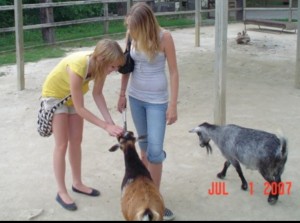
courtlynn.petting.zooThe paper’s main author is Gonzalo Erdozain, a master of public health student at the Kansas State University who works with Powell. Erdozain, Manhattan, visited numerous petting zoos and fairs in Kansas and Missouri in 2010 and 2011 and found many sanitary problems at the facilities. Article co-authors include Katherine KuKanich, assistant professor of clinical sciences at Kansas State University, and Ben Chapman of North Carolina State University.

When visiting petting zoos, Powell said parents need to be vigilant in watching their children and they need to put a health plan in effect for the visit. In Erdozain’s study, he observed children touching their faces after petting the animals, eating or drinking in the petting zoo, eating petting zoo food and sucking on a pacifier while at the zoo. Children were also seen picking up animal feces.

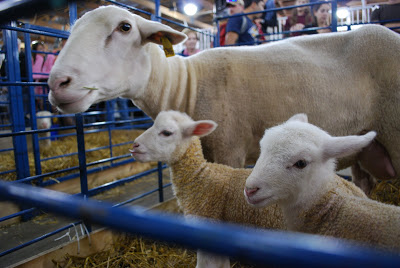
Another factor to watch for is the presence of high-risk animals — those most associated with zoonotic diseases, including chicks, young ruminants like goats, sheep and cattle.

Zoonotic diseases can be passed from animal to human, or vice versa.

Washing hands before and after encountering animals and the animal feed is one of the most recommended method to fight germs and bacteria from the animals and surrounding area of animal pens, Powell said.

“Hand-washing tool selection may also contribute to the success of hand hygiene as a preventive measure, as some outbreak investigations have reported alcohol-based hand sanitizer was not protective against illness, especially when hands are soiled,” Powell said.

Powell said Erdozain’s study found that visitors were five times as likely to wash their hands when a staff member was present. This observation, Powell said, is consistent with a study published last year that showed the importance of a little encouragement.

To help maintain a safe and healthy environment, Powell said petting zoos should constantly remind visitors to wash their hands when exiting the pens. Keeping clean and useful sinks near the exits of all facilities with a stand by attendant would help decrease the likeliness of a widespread illness due to forgetful hygiene, he said.

Strict governmental regulation and enforcement would be one way to ensure this happens but is an unlikely solution. Powell said that it is up to the zoos to help keep watch on what is happening within their pens and to make sure that the proper facilities are in place and are noticeable to visitors — children and adults alike.

“Providing hand hygiene stations, putting up some good signs, having staff supervise, avoiding high-risk animals and logical facility design are easy and inexpensive — and not doing so is inexcusable,” Powell said.

I’m fine with animal interactions; but people, and organizers, should be a lot more careful than they thought. That’s what I told my 3-year-old’s daycare as they prepared for a chicken coop. They hate me.

A table of petting zoo outbreaks is available at http://bites.ksu.edu/petting-zoos-outbreaks.

Erdozain G, Kukanich K, Chapman B, Powell D. 2012. Observation of public health risk behaviours, risk communication and hand hygiene at Kansas and Missouri petting zoos – 2010-2011. Zoonoses Public Health. 2012 Jul 30. doi: 10.1111/j.1863-2378.2012.01531.x. [Epub ahead of print]

Abstract below:

Observation of public health risk behaviors, risk communication and hand hygiene at Kansas and Missouri petting zoos – 2010-2011Outbreaks of human illness have been linked to visiting settings with animal contact throughout developed countries. This paper details an observational study of hand hygiene tool availability and recommendations; frequency of risky behavior; and, handwashing attempts by visitors in Kansas (9) and Missouri (4), U.S., petting zoos. Handwashing signs and hand hygiene stations were available at the exit of animal-contact areas in 10/13 and 8/13 petting zoos respectively. Risky behaviors were observed being performed at all petting zoos by at least one visitor. Frequently observed behaviors were: children (10/13 petting zoos) and adults (9/13 petting zoos) touching hands to face within animal-contact areas; animals licking children’s and adults’ hands (7/13 and 4/13 petting zoos, respectively); and children and adults drinking within animal-contact areas (5/13 petting zoos each). Of 574 visitors observed for hand hygiene when exiting animal-contact areas, 37% (n=214) of individuals attempted some type of hand hygiene, with male adults, female adults, and children attempting at similar rates (32%, 40%, and 37% respectively). Visitors were 4.8x more likely to wash their hands when a staff member was present within or at the exit to the animal-contact area (136/231, 59%) than when no staff member was present (78/343, 23%; p<0.001, OR=4.863, 95% C.I.=3.380-6.998). Visitors at zoos with a fence as a partial barrier to human-animal contact were 2.3x more likely to wash their hands (188/460, 40.9%) than visitors allowed to enter the animals’ yard for contact (26/114, 22.8%; p<0.001, OR= 2.339, 95% CI= 1.454-3.763). Inconsistencies existed in tool availability, signage, and supervision of animal-contact. Risk communication was poor, with few petting zoos outlining risks associated with animal-contact, or providing recommendations for precautions to be taken to reduce these risks.

Nosestretcher alert: no studies showing impact of diseases spread to customers from animals in petting zoo, but NY requires handwashing anyway

New York now requires petting zoos to provide for hand washing.

The new law says establishments providing an area where animals are grouped so visitors can view, touch or fondle them must provide appropriate facilities for washing.

claudia.e.coli.petting.zoo.may.14They should be located either at the exit of the petting area or within 50 feet. Signs are required.

The law also authorizes state and city health officials to formulate rules against the spread of bacteria and viruses carried by animals displayed at carnivals, fairs and amusement parks.

Sponsors say there have been no studies so far showing the impact of diseases spread to customers from animals in petting zoos.

And people wonder why journalism sucks.

A table of petting zoo outbreaks is available at https://barfblog.com/wp-content/uploads/2014/04/Petting-Zoo-Outbreaks-Table-4-8-14.xlsx.

Best practices for planning events encouraging human-animal interactions

Zoonoses and Public Health

G. Erdozain , K. KuKanich , B. Chapman  and D. Powell

http://onlinelibrary.wiley.com/doi/10.1111/zph.12117/abstract?deniedAccess

Educational events encouraging human–animal interaction include the risk of zoonotic disease transmission. It is estimated that 14% of all disease in the US caused by Campylobacter spp., Cryptosporidium spp., Shiga toxin-producing Escherichia coli (STEC) O157, non-O157 STECs, Listeria monocytogenes, nontyphoidal Salmonella enterica and Yersinia enterocolitica were attributable to animal contact. This article reviews best practices for organizing events where human–animal interactions are encouraged, with the objective of lowering the risk of zoonotic disease transmission.

It’s not that simple and handwashing is never enough; trying to stay healthy around state fair animals? Simple–wash your hands

For many visitors to the Minnesota State Fair, wandering through the animal barns, listening to the indignant squeals of jostling pigs or watching a 1,500 pound cow unfurl its long tongue to snag an out-of-reach kernel of grain, is one of the fair’s great pleasures.

fair_46But even though the animals are bathed and brushed to perfection, they can carry germs that can make people sick.

The risk was made apparent earlier this month, when an E-coli outbreak that sickened 13 people was traced to a traveling petting zoo that appeared at several Minnesota county fairs and festivals. Seven people were hospitalized and two patients developed serious kidney complications.