Mad cow Korea: Social amplification of risk, Internet style

One of the most influential papers I ever read was in a 1988 issue of the journal, Risk Analysis, entitled, The Social Amplification of Risk: A Conceptual Framework, by Roger E. Kasperson, Ortwin Renn, Paul Slovic, Halina S. Brown, Jacque Emel, Robert Goble, Jeanne X. Kasperson and Samuel Ratick. Today the paper seems particularly prescient for the events going on today, 20 years later,  in South Korea, where riot police were bracing for what could be the largest anti-government protest during weeks of rallies against an agreement to resume imports of U.S. beef.

Some 2,500 people gathered at a protest site in central Seoul, with thousands more expected to join them after a separate rally. Police estimated the total turnout would be about 20,000, the biggest in weeks of anti-U.S. beef protests.

Other reports said up to 100,000 protesters were present.

About a dozen farmers in traditional funeral clothes marched Saturday on a downtown street on the way to the main protest site, carrying signs with anti-government slogans. They also carried the severed head of a cow (right).

South Korea agreed last month to reopen what was formerly the third-largest overseas market for U.S. beef. It had been shut for most of the past 4 1/2 years following the first U.S. case of mad cow disease in a Canadian-born cow in Washington state in 2003.

That deal, coupled with some sensational media reports, sparked fears of mad cow disease and triggered weeks of near-daily street protests calling for scrapping and renegotiating the agreement (left, protesters carry a sign symbolizing U.S. beef infected by mad cow disease, from Reuters).

The abstract from the Kasperson, et al., paper, is below.

One of the most perplexing problems in risk analysis is why some relatively minor risks or risk events, as assessed by technical experts, often elicit strong public concerns and result in substantial impacts upon society and economy. This article sets forth a conceptual framework that seeks to link systematically the technical assessment of risk with psychological, sociological, and cultural perspectives of risk perception and risk-related behavior. The main thesis is that hazards interact with psychological, social, institutional, and cultural processes in ways that may amplify or attenuate public responses to the risk or risk event. A structural description of the social amplification of risk is now possible. Amplification occurs at two stages: in the transfer of information about the risk, and in the response mechanisms of society. Signals about risk are processed by individual and social amplification stations, including the scientist who communicates the risk assessment, the news media, cultural groups, interpersonal networks, and others. Key steps of amplifications can be identified at each stage. The amplified risk leads to behavioral responses, which, in turn, result in secondary impacts. Models are presented that portray the elements and linkages in the proposed conceptual framework.

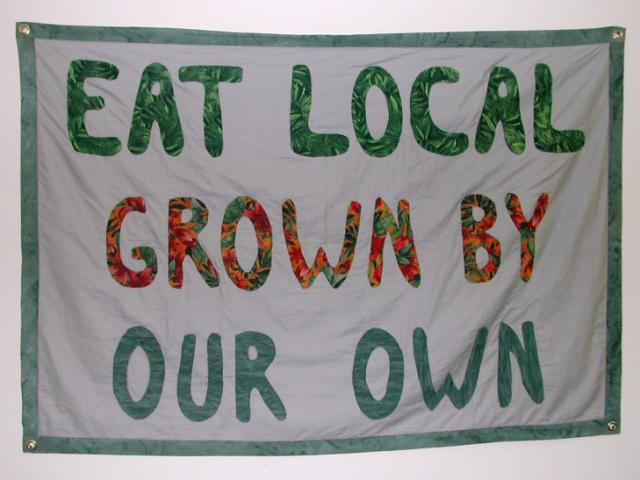
Ensuring safe local produce

Eight Seattle area hospitals have promised to change their food to make it healthier for patients, staff and visitors, including a commitment to local food.

That’s according to a blog post at the Seattle Post-Intelligencer, which also notes the hospitals signed a Healthy Food in Health Care Pledge.

Holly Freishtat, Sustainable Food Specialist for Washington Physicians for Social Responsibility, says,

"Hospitals are changing the culture of food in healthcare by sourcing local produce, hormone-free milk, meat without hormones or antibiotics, sustainable seafood and through hosting farmers’ markets, community- supported agriculture boxes for employees."

What’s missing is any discussion about the microbiological safety of, especially, fresh local produce.

As more producers and suppliers adapt to meet the demand for local produce, here are some basic questions:

• where is the farm located

• what type of fertilizer is used;

• what is the water source and how frequently is it tested; and,

• is the produce harvested, stored and transported safely, by staff who practice outstanding personal hygiene.?

Beyond the questions, the real challenge, as I’ve said many times before, is,

"Whether your food comes from down the street or around the globe, you want to verify that producers and processors are actually doing what they are supposed to be doing."

How about sourcing food from the place that can boast the fewest number of sick patrons?

Hepatitis A concerns at Detroit Papa Romano’s

Did you eat any uncooked items at the Farmington Hills Papa Romano’s between May 17 and May 23, 2008? If so, you may want to contact your doctor after a restaurant employee was diagnosed with hepatitis A.

Hopefully the employee practiced excellent handwashing so the hepatitis A virus, found in the employee’s poop, didn’t make its way to a salad or roll.

Dude wash your damn hands. And don’t eat poop.

Science fiction conference grounded — by barf

Some 50 attendees at the world’s leading feminist science fiction convention. WisCon32, which rocked Madison, Wisconsin’s Concourse Hotel May 23-25, 2008, were stricken with symptoms similar to those of stomach flu.

Officials with Dane County and the Madison Public Health Department think some attendees might have been exposed to the illness before the convention since they developed symptoms so soon after arriving. The sick ones may have then infected others through personal contact and shared access to food.

Hepatitis linked to Melbourne caf??

Five people have been struck down with Hepatitis A in an outbreak traced to Zanzibar Cafe on Latrobe Street in Melbourne’s city centre.

Victoria’s Department of Human Services said the outbreak has been linked to a food handler who also worked part time as a cleaner.

A 65-year-old man from Doncaster, a 32-year-old woman from Reservoir, a 51-year-old man from East Malvern and a 54-year-old man from Aspendale were among those affected. The department was notified of a fifth case on Friday afternoon.

An extensive clean up of the cafe had been carried out under the supervision of Melbourne City Council.

Hepatitis A is found in feces of the infected person and can be spread by direct contact with food, beverages or crockery.

Dude wash your damn hands. And don’t eat poop.

Don Schaffner, guest barfblogger: Perhaps it will help keep poop out of food?

When worlds collide…..

I’ve always found it interesting when disparate objects or ideas come together.  

One such collision was the subject of an earlier barfblog contribution when I wrote about a norovirus at a boy scout camp, integrating my interest in food safety and the the volunteer work I do with the boy scouts.

It also happened twice this week.  The first example has nothing to do with food safety, but hey, if Doug can write about Blacky the donkey, all’s fair.  I just can’t resist plugging this amazing YouTube video, where the band Phish covers the Lou Reed classic "Sweet Jane".  Hippy culture meets New York grit.  Cool stuff.

Anyway, on with the food safety story, sort of.  I need to explain: I’m a productivity pr0n addict.  For more on this addiction look here.  I think that one of the most entertaining and useful productivity gurus out there is Merlin Mann (yes,  that’s his real name), the editor and founder of productivity website 43Folders.com.  Anyway, when Merlin is not blogging about productivity, talking at The Google or Macworld, he’s  scouring the interweb looking for cool stuff.

And… now we get to the point of this article… and the second collision, where productivity guru meets food safety: Bottom Toilet Tissue Aid Self-wipe Cleaning: Health & Personal Care.  As Merlin quips, "Why is all the cool stuff for "disabled" people?  I could totally use this".  And maybe he right.  This might be something we could all use, and as Amazon notes "After use the tissue is discarded by  pressing an easy-to-use release button on the end of the handle.

This might be the solution to fecal cross contamination, and allow us all to avoid what O. Pete Snyder calls "toilet paper slips", helping us all to eat less poop.

Don Schaffner is an Extension Specialist in Food Science at Rutgers University, the newly appointed director of the Center for Advanced Food Technology, and a self-confessed productivity pr0n addict.

Pathogens in produce: a brief review

Following this morning’s report of a new European study demonstrating the potential for internalization of Salmonella in produce, Ben Chapman pulled together the following notes on the topic.

Irrigation water containing raw sewage or improperly treated effluents from sewage treatment plants may contain hepatitis A, Norwalk viruses, or enteroviruses in addition to bacterial pathogens such as E.coli O157:H7, Salmonella spp. and Shigella spp. (Beuchat, 1998).

Produce can also be contaminated with pathogens due to internalization of pathogens both through the root system and flesh or stem scars. Evidence of infiltration of bacteria into vegetables is reported in several articles (Bartz 1982; Bartz and Showalter 1981; Burnett et al., 2000; Seo and Frank 1999; Zhuang et al., 1995). Clear evidence exists to conclude that pathogens can be incorporated into fresh produce. So far, this evidence is based on laboratory experiments, not actual real world situations. Past research suggests that pathogens can enter lettuce plants through its roots and end up in the edible leaves. Small gaps in growing roots through which plant pathogens infect tissue may also allow E. coli entry (Solomon et al, 2002b; Warriner et al., 2003a, Warriner et al., 2003b).

The uptake of Salmonella spp. by roots of hydroponically grown tomato plants has been shown. Within one day of exposure to a high concentration mixture of Salmonella spp. pathogen cells were found in the hypocotyls, cotyledons, stems and leaves of young plants; though whether fruit is affected is not known at this time (Guo et al., 2002).

Solomon and colleagues (2002a) discovered that the transmission of E.coli O157:H7 to lettuce was possible through both spray and drip irrigation. They also found that the pathogen persisted on the plants for 20 days following application and submerging the lettuce in a solution of 200ppm chlorine did not eliminate all viable E.coli O157:H7 cells. This suggests that irrigation water of unknown microbial quality should be avoided in lettuce production (Solomon et al., 2002a).  In a follow-up experiment, Solomon and colleagues (2002b) explored the transmission of E. coli O157:H7 from manure-contaminated soil and irrigation water to lettuce plants. The researchers recovered viable cells from the inner tissues of the lettuce plants and found that the cells migrated to internal locations in plant tissue and were thus protected from the action of sanitizing agents These experiments demonstrated that E. coli O157:H7 can enter the lettuce plant through the root system and migrate throughout the edible portion of the plant (Solomon et al., 2002b).

The risk of contamination of produce due to Salmonella spp. was found to be increased when soil and water were present, and that soil and water actually act as reservoirs of the pathogen. Xuan and colleagues (2002) found that soil and water were factors in the infiltration of salmonella into the tissues of tomato. This supports the theory that preharvest contact with contaminated soil or water increased the contamination potential by certain pathogens and can lead to problems in pathogen removal and the efficacy of sanitizers.

Flesh scarring can provide a suitable environment for pathogen growth, and decreases the value of employing sanitizers, either in the packing shed or by consumers (Xuan et al., 2002).

The uptake of Salmonella spp. by roots of hydroponically grown tomato plants has also been shown. Within one day of exposure to a high concentration mixture of Salmonella spp. pathogen cells were found in the hypocotyls, cotyledons, stems and leaves of young plants; though whether fruit is affected is not known at this time (Guo et al., 2002).

In a 2006 review, Vectors and conditions for preharvest contamination of fruits and vegetables with  pathogens capable of causing enteric diseases,  Larry Beuchat of the Center for Food Safety and Department of Food Science and Technology at the University of Georgia, concluded:

"Manure, manure compost, sewage, sludge, irrigation water, and runoff water represent
avenues for introduction of pathogenic bacteria, parasites, and viruses to soil in which
fruits and vegetables intended to be eaten raw are grown. Pathogens vary in their
ability to survive in soil amendments and in soil. Inactivation rates and persistence in
soil are also influenced by soil type, rainfall, temperature, and agronomic practices.
Some pathogens can survive in soil for periods of time exceeding those needed to grow
plants from seeds or seedlings to the point of harvest. Pathogens originating from
preharvest environments may contaminate the surface of produce and evidence is
mounting that contamination of internal tissues can also occur. Prevention of
preharvest contamination of fruits and vegetables is an essential part of a systems
approach focused on applying interventions designed to achieve delivery of
microbiologically safe produce to the consumer."

References

Bartz, J.A. 1982. Infiltration of tomatoes immersed at different temperatures to different depths in suspensions of Erwinia carotovora subsp. carotovora. Plant Disease. 66:302-305.

Bartz, J.A., and R.K. Showalter. 1981. Infiltration of tomatoes by aqueous bacterial suspensions. Phytopathology. 71: 515-518.

Beuchat, 2006. Vectors and conditions for preharvest contamination of fruits and vegetables with  pathogens capable of causing enteric diseases. British Food Journal 108 (1): 38-53.

Beuchat, L.R. 1998. Surface decontamination of fruits and vegetables eaten raw: a review. WHO/FSF/FOS/Publication 98.2. World Health Organization. Geneva. 49pp.

Burnett, S.L., Chen. J. and Beuchat, L.R. 2000. Attachment of Escherichia coli O157:H7 to the surfaces and internal structures of apples as detected by confocal scanning laser microscopy. Applied and Environmental Microbiology. 66: 4679-4687.

Guo, X., van Iersel, M. W., Chen, J., Brackett, R. E. and Beuchat, L. R. 2002. Evidence of association of salmonellae with tomato plants grown hydroponically in inoculated nutrient solution. Applied  Environmental Microbiology. 68: 3639-3643.

Hedberg, C.W., Angulo, F.J., White, K.E., Langkop, C.W., Schell, W.L., Stobierski M.G., Schuchat, A., Besser, J.M., Dietrich, S., Helsel, L., Griffin, P.M., McFarland J.W. and Osterholm M.T. 1999. Outbreaks of salmonellosis associated with eating uncooked tomatoes: implications for public health. Epidemiology and Infection 122: 385-93.

Seo, K. H., and J. F. Frank. 1999. Attachment of Escherichia coli O157:H7 to lettuce leaf surface and bacterial viability in response to chlorine treatment as demonstrated by using confocal scanning laser microscopy. Journal of Food Protection.  62: 3-9.

Solomon, E. B., Yaron, S., and Matthews, K.R. 2002b. Transmission of Escherichia coli O157:H7 from contaminated manure and irrigation water to lettuce plant tissue and its subsequent internalization. Applied Environmental Microbiology. 68: 397-400.

Solomon, E.B., ,Potenski, C.J. and Matthews, K.R. 2002a. Effect of irrigation method on transmission to and persistence of Escherichia coli O157:H7 on lettuce. Journal of Food Protection. 65: 673–676.

Warriner K., Ibrahim F., Dickinson M,. Wright C. and Waites W.M. 2003a. Internalization of human pathogens within growing salad vegetables. Biotechnology & Genetic Engineering Reviews.  20: 117-134.

Warriner K., Ibrahim F., Dickinson M,. Wright C. and Waites W.M. 2003b. Interaction of Escherichia coli with growing salad spinach plants. Journal of Food Protection. 66: 1790-1797.

Xuan, G., Jinru, C., Brackett, R.E., Beuchat, L.R. 2002. Survival of salmonella on tomatoes stored at high relative humidity, in soil, and on tomatoes in contact with soil. Journal of Food Protection. 65: 274-279.

Zhuang, R.-Y., Beuchat, L.R. and Angulo. F.J. 1995. Fate of Salmonella montevideo on and in raw tomatoes as affected by temperature and treatment with chlorine. Applied Environmental Microbiolology. 61: 2127-2131.

Mice at Metropolitan Opera restaurant

The New York Department of Health and Mental Hygiene says on its website that an April 9 restaurant inspection at the Metropolitan Opera found "evidence of mice or live mice present in facility’s food and/or nonfood areas."

The nation’s largest musical organization also was cited for "food not protected from potential source of contamination during storage, preparation, transportation, display or service."

The department did not issue a notice of violation against the Met because the inspection found 13 violation points — below the average of 15 for New York City restaurants.

Who has the safest food in the world?

Scientists and journalists have a couple of things in common — at least that’s what I was told all those years ago.

Both require the ability to ask the right question. And both have to sell the same idea at least three times to make a living.

Yesterday, Bob Brackett, senior vice president and chief science and regulatory affairs officer for the Grocery Manufacturers Association, wrote in the Denver Post that "no other country in the world can claim a safer food supply than the United States."

Except that a couple of Canadian researchers at the University of Regina have done just that, issuing a report last week which purports to rank 17 industrialized countries.

The problem is, based on what is publicly available, it’s impossible to tell how countries were ranked on various scores.

For example, the report says,

"Canada would be considered as one of the world’s leading countries in relation to consumer affairs in food safety. In terms of incidences of reported illness by food-borne pathogens, Canada is (in) the normal range since it has the incidence between 5,000 and 15,000 per 100,000 persons. Even if Canada has more incidences, it has a decreasing trend of late, which means that all levels of the government had begun to control the situation."

Based on a population of just over 33 million, that means 1.65 — 4.95 million reported illnesses by foodborne pathogens, I’m assuming per year. Nowhere near that many cases of foodborne illness are actually reported. And the best guess on the actual incidence of foodborne illness in Canada is 11-13 million cases per year, slightly higher that the World Health Organization’s estimate of 30 per cent of citizens in developed countries getting sick from the food and water they consume each year.

The report authors also claim,

"Canada was also rated as a ‘progressive’ country based on its food safety education programs for consumers. Unlike other countries, the level of cooperation among the different levels of government in the country is significant and most programs target all segments of the population."

Apparently, no effort was made to assess whether such information was accurate.

Canada finished fifth, and the U.S. came in seventh. The United Kingdom had the highest ranking of the 17 countries studied. Make mine piping hot.

Who has the safest food in the world? Wrong question.