Red Robin has second hepatitis A incident in two weeks, this time in Missouri

Two weeks ago I wrote that I were a food business owner I’d be worried about hepatitis A.

Individuals can shed the virus without showing symptoms and even a Hep A positive handwashing superstar will result in lineups outside the business or at the health department while patrons get their post-exposure shots.RedRobinLogo1-300x214

Authors of a 2000 Journal of Food Protection paper on the cost effectiveness of vaccinating food handlers arrived at the conclusion that the public health benefit of vaccinating for hep A doesn’t outweigh the costs – but doesn’t factor in all the bad publicity, hassle and incident management costs. The stuff that a Stroudsburg, PA Red Robin restaurant is going through right now.

The corporate Red Robin folks must be working overtime, as an identical situation has popped up at a Missouri outlet of the chain. Same story, different location. According to USA Today, up to 5,000 may have been exposed to hepatitis A following after a food handler was diagnosed with the virus.

Health officials worry that as many as 5,000 people could have been exposed to hepatitis A at a Red Robin restaurant here after a worker was diagnosed with the virus.

Springfield-Greene County Health Department officials received a report Tuesday about the illness, which can affect the liver, and worked with state and federal officials to get enough vaccine shipped so people who went to the restaurant May 8 to 16 can be immunized.

The goal is to get as many customers vaccinated within 14 days of their possible exposure, officials said Wednesday. Otherwise, the shot won’t work, so they’ve set up clinics through the Memorial Day holiday weekend.

“Upon being informed of the incident, the Springfield Red Robin took all safety measures to ensure the well being of our guests and team members including arranging the inoculation of all Springfield team members with the immune globulin prophylaxis shot,” Red Robin Gourmet Burgers officials said in a statement.

Wonder how many incidents it takes for a company to tip the scales to benefit outweighing cost on providing or requiring food handlers to have a hep A vaccination.

10 sick from E. coli O121 outbreak linked to raw clover sprouts; Jimmy John’s again linked; keep eating those sandwiches, Kansas State

The late great Bill Keene predicted this when Jimmy John’s switched to clover sprouts.

An outbreak linked to raw sprouts in the U.S. that sickened 140 people occurred between November 2010 into 2011, involving sandwich franchise, Jimmy John’s. The owner of the Montana Jimmy John’s outlet, Dan Stevens, expressed confidence in his sprouts claiming that because the sprouts were locally grown they would not be contaminated, although the source of the contaminated sprouts had not yet been identified. By the end of December 2010 a sprout supplier, Tiny Greens Farm, was implicated in the outbreak. Jimmy John’s owner, John Liautaud, responded by stating the sandwich chain would replace alfalfa sprouts with clover sprouts since they were allegedly easier to clean. However, a week earlier a separate outbreak had been identified in Washington and Oregon in which eight people were infected with salmonella after eating sandwiches containing clover sprouts from a Jimmy John’s restaurant. This retailer was apparently not aware of the risks associated with sprouts, or even outbreaks associated with his franchisees.

amy.sprouts.guelph.05Now it has happened again.

Washington state health officials are warning consumers not to eat raw clover sprouts from an Idaho producer that have been linked to an outbreak of E. coli infections in the Northwest.

The sprouts have been linked to seven confirmed and three probable cases of E. coli O121 illnesses in Washington and Idaho.

Five of those patients were hospitalized; there have been no deaths.

Results from initial investigations indicate a strong link to eating raw clover sprouts produced by Evergreen Fresh Sprouts, LLC of Idaho.

Sprouts were eaten in sandwiches at several food establishments including Jimmy John’s Gourmet Sandwiches locations in King and Spokane counties, as well as two Pita Pit locations in Spokane County, and Daanen’s Deli as well as a Jimmy John’s location in Kootenai County.

The restaurants where the cases reported eating raw clover sprouts have voluntarily suspended serving sprouts.

The producer also distributed sprouts around the northwest to other restaurants, as well as retail grocery stores where consumers may buy them for home consumption.

Who takes eggs through an airport? Alleged smuggler stopped in Sydney

Anyone who has been to Australia knows, don’t mess with customs folks.

A Czech man who allegedly tried to smuggle 16 bird eggs into Australia by hiding them in his pants has been charged.

imagesThe 39-year-old was frisked at Sydney Airport by customs officers after arriving from Dubai on Tuesday.

“Officers … allegedly found 16 small eggs concealed in his groin area,” Customs NSW commander Tim Fitzgerald said.

Government vets are trying to identify the species of bird.

Federal prosecutors charge Iowa egg company, 2 executives in 2010 salmonella outbreak

In 2010, eggs produced by farms owned by Jack DeCoster in Iowa sickened at least 2,000 people with Salmonella.

Federal prosecutors have now filed charges against disgraced egg industry titan Austin “Jack” DeCoster and his son Peter DeCoster with introducing adulterated food into interstate commerce, a misdemeanor.

egg.dirty.feb.12Their company, Quality Egg LLC, is charged with introducing misbranded food into interstate commerce, a felony. The document says Quality Egg sold products for years with labeling that “made the eggs appear to be not as old as they actually were.”

The company is also charged with bribing a U.S. Department of Agriculture Inspector.

The charges were filed in a document called an information, which suggests they’ve reached plea agreements.

Serving up food safety

 I sleep at weird hours.

There’s a lot of things to be seen in the middle of the night.

powell_soli_mayLike all the food service trucks arriving at restaurants.

Do consumers know where their food comes from? Do restaurants?

These are the things I look for.

• When I order meat and the server asks, how would you like it done, I always say the appropriate temperature. Only once over the past decade has a server been able to say, we can do that, and pulled out a tip-sensitive digital thermometer she carried around. I returned to that establishment.

• If the restaurant or market advertizes their food as local/natural/sustainable/organic/GE free/wild seafood, etc., I ask, how is that verified? Is there any testing for microbial food safety?

• Inspection reports are only a snapshot in time, but patterns can be detected over time. Recurring problems mean, go somewhere else.

• When diners ask to take leftovers home, does the restaurant take the remains to the kitchen (bad) or bring a clamshell to the table for the diner to take care of her own food (good). And maybe some food safety stickers on that clamshell with date, time and reheating guidelines. It has been done.

waiterd• A restaurant that cares about food safety will have its own auditors and secret diners, to ensure that what management says is happening with front-line servers.

• Does management support food safety with rapid, reliable, relevant and repeated food safety information so front-line servers can at least attempt to answer basic food safety questions?

•Do staff have access to the proper tools for proper handwashing – vigorously running water, soap and paper towels?

• Are foods properly stored and thawed (this appears in restaurant inspection reports routinely)?

• Are steps taken to prevent cross-contamination (also shows up repeatedly in restaurant inspection reports)?

• What’s in that dip, has become my standard question at many Australian restaurants. Usually they use raw eggs, and the outbreaks keep piling up. I choose something else.

• Raw produce is problematic. Does that sandwich have raw sprouts? Where did that lettuce or spinach come from? Was it grown with good agricultural practices because washing ain’t going to do much?

• Are employees vaccinated against Hepatitis A. Do employees work when they are sick with norovirus (happens every week somewhere in the U.S.)?

• Does the restaurant welcome questions and support disclosure systems?

That’s a lot of questions when I just want to go out on the town with Amy.

But I ask these routinely and learn a lot. Curiosity has its benefits.

The interested public can handle more, not less, information about food safety. The best restaurants will not wait for government; they will go ahead and make their food safety practices available in a variety of media and brag about them — today.

Dr. Douglas Powell is a former professor of food safety who shops, cooks and ferments from his home in Brisbane, Australia.

Owners of UK takeaway fined £1,400 each after children choked on cling film in pizza

Majid Ali, Muhammad Akram and Hamed Jabbar – who together own Star Takeaway in Oxford Road – pleaded guilty to four offences under the Food Safety Act 1990 and breaching Food Hygiene Regulations at Reading Magistrates Court on Thursday.

The court heard how, on September 4 last year, the takeaway sold a customer a 12” chicken and sweetcorn pizza with cling film embedded in it, which was then eated by the buyer’s two young children.

Star-Takeaway-pizzaJPGWhen the buyer complained to Reading’s Environmental Health department, council officers visited the restaurant and found that staff were untrained in food hygiene principles, that there was no food safety management system in place and that lettuce was at risk of contamination from defrosting raw chicken nearby.

At the hearing, District Judge Davinder Larchar said: “Had the children choked to death on the cling film, you all could have been facing a more serious charge now at the Crown Court – murder or manslaughter.

“Health and safety practices are there for a reason: to protect the public. You started a new food business and have tried to do it on the cheap, without any training given to staff. You should have put all the procedures in place before opening for business.”

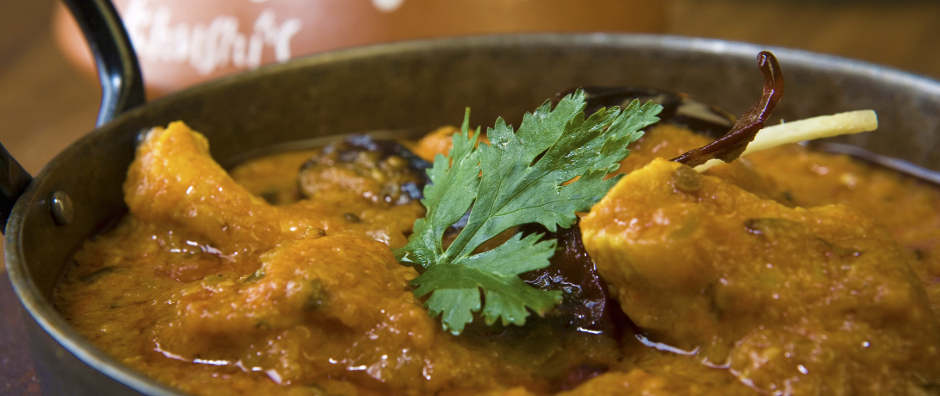
11 now sick; E. coli O157 outbreak linked to Khushi’s Indian Restaurant in Scotland

There is a cluster of five confirmed cases, and six suspected cases, associated with Khushi’s Indian Restaurant in Dunfermline.

Khushi%E2%80%99s-Indian-Restaurant- Khushi’s Indian RestaurantNHS Fife said none of the cases are in hospital, and all are recovering at home.

Khushi’s is co-operating fully with Fife Council’s environmental health department and has re-opened following deep-cleaning and other measures that were required to be put in place. 

Ellen Thomas: Thermometers only way to know a burger is safe

Ellen Thomas, a PhD student in food science at North Carolina State University who enjoys running, baking, and playing the violin, writes:

I’ve ordered a crazy number of burgers over the past year. This isn’t because I constantly crave red meat, I’m just interested in what restaurant servers say about eating undercooked burgers.

An E. coli O157:H7 outbreak, which sickened 11 people in 4 different states, has been linked to undercooked burgers at restaurants. Over 1.8 million pounds of ground beef have been recalled.

hamburger.thermometerThe FDA Food Code, adopted in some form by most states, says that it is the duty of the restaurant to disclose risk information around consuming undercooked hamburgers and remind people when they order. Sometimes this is included on the menu, sometimes the servers engage patrons. However, there is no data about whether this actually occurs.

To capture this data, I’ve trained a legion of secret shoppers to order burgers cooked medium rare, and record the risk information provided on menus and by servers.

It’s been an enlightening process.

A lot of servers talk about color, some talk about temperature, others talk about the firmness of the burger.

There have been numerous situations where a server simply says, “the cook just knows what they’re doing.” A lot of servers assure the secret shoppers that eating a medium rare burger is perfectly safe.

And some responses have been shocking like the server who volunteered, “You’ll be fine eating it medium rare- my sister ate a burger that was raw in the middle when she was pregnant and she was just fine.”

rare.hamburgerUnfortunately, misinformation about cooking burgers is widespread. When interviewed by 22News following the E. coli O157:H7 outbreak, Joe Igner, owner of Local Burger in Northampton, Massachusetts, said that he “never had a problem with E. coli” because “it’s recommended to cook ground beef at least 4 minutes and up to 7 minutes on each side.” Nowhere did Igner mention thermometer use. He also stated, “We don’t get it from a processing plant and that’s a big difference because when they process, they process beef and turkey and if they don’t change the blades, that’s when somebody’s going to get sick.”

This is simply not true. Contamination can occur at any point when processing, handling, and preparing raw ground beef, including in a restaurant kitchen, even if it is ground in house.

Sydney Lupkin of ABC writes, So how do you know if your hamburger’s safe? It’s not as simple as you think.

“With ground beef, color is not a reliable indicator of doneness,” said Marianne Graveley, a specialist at the U.S. Department of Agriculture’s meat and poultry hotline.

Meat that’s still pink may be well-done, Graveley said, and meat that’s brown may need more heat.

“We used to have different campaign: It’s done when it’s brown in middle,” she said. “Now we say to use a meat thermometer. It’s the only way to know that it’s safe.”

USDA recommends that hamburgers be cooked to at least 160 degrees internally. But it’s no secret that few of us take the temperature of our patties, and many of us prefer them rare.

“We would never recommend that,” Graveley said. “The risk of food poisoning is too great. People have gotten very sick from very small amount of food. We just don’t think it’s worth the risk.”

hamburger-safe and unsafe-thumb-450x138-175The server response that sticks with me the most is, “I’m just a server- I don’t know what the cooks do.” This may seem like a reasonable statement; servers are usually tending to numerous tables in a very high-paced environment and only pass through the kitchen to pick up dishes.

When digging into the current outbreak, it’s curious to think whether illnesses have occurred had risks been effectively communicated to consumers. What I’m trying to figure out is how much do servers play a role in advising consumers of their food choices?

Ordering all of these burgers shows me that there are gaps between what happens in a kitchen and what a server tells restaurant patrons. As the server is typically the liaison between the kitchen and the consumer, these gaps mark crucial points where risk information could occur and it is not happening.

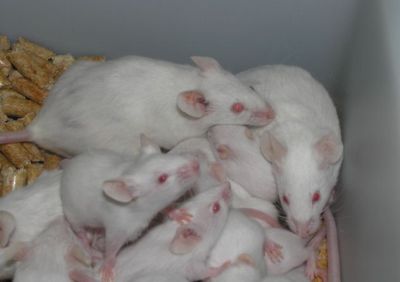
Wanna see me feed a mouse to my snake? 37 sick, again, with Salmonella from feeder rodents

Not the best pickup line from the movie, Almost Famous, but it captures what some of my teenage friends were doing at the time.

After an outbreak linked to feeder mice was reported in April 2012, a new outbreak has now been reported by the U.S. Centers for Disease Control.

almost.famous.band_.featuredCDC is collaborating with public health officials in many states, the U.S. Food and Drug Administration Coordinated Outbreak Response and Evaluation Network (FDA CORE), and the FDA Center for Veterinary Medicine (FDA CVM) to investigate an outbreak of human Salmonella Typhimurium infections linked to contact with frozen feeder rodents used to feed pet reptiles. FDA CVM is the regulatory authority for animal feeds (which includes pet food), animal drugs, and veterinary devices.

Public health investigators are using the PulseNet system to identify cases of illness that may be part of this outbreak. PulseNet, the national subtyping network of public health and food regulatory agency laboratories coordinated by CDC, obtains DNA “fingerprints” of Salmonella bacteria through diagnostic testing with pulsed-field gel electrophoresis, or PFGE, to identify cases of illness that may be part of this outbreak. This PFGE pattern has been seen before in PulseNet and in the past typically caused 4-8 cases per month during January to April.

A total of 37 persons infected with the outbreak strain of Salmonella Typhimurium have been reported from 18 states from January 11, 2014 to May 13, 2014. The number of ill persons reported from each state is as follows: Alabama (1), Arizona (2), California (7), Illinois (1), Kentucky (1), Maryland (1), Michigan (2), Minnesota (1), Missouri (2), Montana (3), New Jersey (3), New Mexico (1), North Carolina (1), Ohio (4), Oregon (2), Pennsylvania (3), South Dakota (1), and Texas (1).

Among 32 persons with available information, dates that illnesses began range from January 11, 2014 to April 21, 2014. Ill persons range in age from younger than 1 year to 69 years, with a median age of 21 years. Fifty-nine percent of ill persons are female. Among 34 persons with available information, 5 (15%) report being hospitalized. No deaths have been reported.

Epidemiologic, laboratory, and traceback investigations conducted by officials in local, state, and federal public health, veterinary, agriculture, and regulatory agencies indicate that contact with frozen feeder rodents used to feed pet reptiles is a likely source of this outbreak of human Salmonella Typhimurium infections. Frozen feeder rodents may include mice, rats, or other rodents of different sizes and ages. Frozen feeder rodents are used to feed some pet reptiles and amphibians.

In interviews, ill persons answered questions about foods eaten and animal contact during the week before becoming ill. Twenty-one (66%) of 32 ill persons interviewed reported contact with multiple types of reptiles, including snakes and lizards. Seventeen of the 21 ill persons reporting reptile exposure were able to provide information about what the reptile was fed. Fifteen (88%) of these 17 ill persons reported exposure to frozen feeder rodents.

The Oregon State Public Health Laboratory isolated the outbreak strain of Salmonella Typhimurium in one sample of unused frozen mice, packaged by Reptile Industries, Inc. and sold under the brand name Arctic Mice at PetSmart, collected by the Oregon Department of Public Health from an ill person’s home.

OLYMPUS DIGITAL CAMERAFDA has evaluated sales and shipping records, and traceback activities have identified Reptile Industries, Inc. as the common source of frozen feeder rodents purchased by ill persons. Testing conducted by FDA isolated the outbreak strain in two samples of frozen feeder rodents collected during an FDA investigation at the Reptile Industries facility.

In the absence of a voluntary recall from Reptile Industries, Inc., FDA issued a warning to pet owners who have purchased frozen rodents packaged by Reptile Industries, Inc. since January 11, 2014 that they have the potential to be contaminated with Salmonella. Reptile Industries, Inc. packages frozen rodents for PetSmart stores nationwide and are sold under the brand name Arctic Mice.

CDC’s National Antimicrobial Resistance Monitoring System (NARMS) laboratory conducted antibiotic resistance testing on Salmonella Typhimurium isolates collected from three ill persons infected with the outbreak strain; all isolates were pansusceptible (susceptible to all antibiotics on the NARMS panel). NARMS is a U.S. public health surveillance system that tracks antibiotic resistance in foodborne and other enteric bacteria found in people, raw meat and poultry, and food-producing animals. NARMS is an interagency partnership among CDC, FDA, the U.S. Department of Agriculture (USDA), and state and local health departments. The NARMS human surveillance program at CDC monitors antibiotic resistance in Salmonella and several other bacteria isolated from clinical specimens and submitted to NARMS by public health laboratories.

CDC and state and local public health partners are continuing laboratory surveillance through PulseNet to identify additional ill persons and to interview ill persons about foods eaten and animals they had contact with before becoming ill.

Stanley Prusiner: a victory lap for a heretical neurologist

Abigail Zuger of the New York Times writes that sweet revenge comes in many delectable forms, among them the receipt of accolades for work long scorned. And then to get to tell the whole story at length and without a single interruption — small wonder that the Nobel laureate Dr. Stanley B. Prusiner, a renowned neurologist at the University of California, San Francisco, writes with a cheerful bounce. Once disparaged, his scientific work is now hailed as visionary, and his memoir takes the reader on a leisurely and immensely readable victory lap from then to now.

PRUSINERIn the process, two stories unfold. The first is the progress of Dr. Prusiner’s thinking on the transmissible proteins he named prions (PREE-ons) in 1982, starting with his first experiments on an obscure disease of sheep and ending with the most recent work linking prions to an array of human neurological catastrophes, including Alzheimer’s disease. The science is convoluted, like the proteins, and for the uninitiated the best way to achieve a rudimentary grasp of the subject is to hear it the way Dr. Prusiner tells it, from the very beginning.

But a parallel narrative turns out to be equally fascinating: perhaps not since James D. Watson’s 1968 memoir “The Double Helix“ has the down and dirty business of world-class science been given such an airing. Dr. Watson raised eyebrows with his gossipy account of the serious task of unraveling the genetic code — and he was working in genteel postwar Britain at the time, with experimental science still at least in theory a gentleman’s game. That illusion is long gone: The stakes are considerably higher now, the competition fierce, the pace frantic, and Dr. Prusiner, 71, revisits quite a few of the battles that punctuated his long research career.