Raw and risky: Hepatitis A cluster linked to oysters and clams in Taiwan

Our friends are off to China and Indonesia at the end of the week (start of summer holidays) so we’re having them over for dinner tomorrow, where I’ll offer up a seafood pasta (I simply cannot compete with Susan’s stir-fry and other Chinese dishes).

SUN0705N-Oyster7But with the holiday season approaching, there will – like no raw egg dishes — be no raw shellfish served in this house.

The Taiwan CDC reports 30 indigenous cases of Hepatitis A from Oct. to Nov. 2014, in which more than 80 percent of the patients required hospitalization for their illness.

According to the epidemiological investigation, most patients consumed raw bivalves such as oyster and clams during the disease incubation period.

This has prompted the Taiwan CDC to remind the public to pay attention to personal dietary hygiene and consume only thoroughly cooked bivalves.

Bivalves such as oysters and clams concentrate the pathogens that are present in harvest waters.

Watch and learn Maine: NJ health officials release info about hepatitis A exposure

A food handler from a New Jersey restaurant is in hospital recovering from hepatitis A. According to nj.com, the individual worked in the back of the house of Rosa’s Restaurant and Catering in Hamilton, NJ.

Health officials warned that anyone who ate at or catered from the restaurant between Nov. 10 and Monday may be at risk for developing Hepatitis A if they have not been previously vaccinated. The township received notification from the state Department of Health Monday. Township health officer Jeff Plunkett said the employee, who worked in food preparation, has been in the hospital since last Tuesday.Unknown-17-1

“It is contagious through the oral route when you ingest food so it’s a possibility that … you could contract the virus if he was handling your food at the time,” Plunkett said.

Unvaccinated individuals who ate there should receive an injection of immune globulin or Hepatitis A vaccine. Both can prevent an infection if given within 14 days of exposure.

This information is much more useful than what health folks in Maine said a couple of weeks ago.

Over 100 exposed to hepatitis A after virus-shedding kids go to school

Getting my kids to wash their hands is a constant struggle. I’m likely not alone. There’s not a whole lot of great information on this outbreak but Heart is reporting that an outbreak of hepatitis A in Wessex (U.K.) has led to over 100 IgG shots.

According to health authorities, seven school-aged kids at a couple of schools in the U.K. have picked up hepatitis A – and the common link appears to be household-contact related.dirty-hands-medium-new

The Wessex PHE Centre has recommended that close contacts of the cases, including household, some children and staff attending the same class groups in school as some cases should receive Hepatitis A vaccination to prevent further spread of this infection.

Officials say the likelihood of spread of this infection in the school environment is very low, however as a precaution, all parents have been advised of the signs and symptoms of Hepatitis A and asked to contact their General Practitioner if they have concerns:

Dr Anand Fernandes, Consultant in Health Protection at PHE Wessex, said:

“We are working closely with colleagues in the local NHS and Portsmouth City Council Environmental Health and Public Health Departments to manage the very low risk of further spread of this illness. “No other children, staff or visitors to the schools will be offered the vaccine as the risk of exposure to them is very low.”

The News reports that Around 150 vaccinations are now being carried out at the Devonshire Infant School and Fernhurst Junior School in Southsea.


Hepatitis A in fresh vegetables a hidden health risk in Pakistan

The purpose of the current study was to evaluate fresh vegetables raised on the fecal contaminated water for the detection of Hepatitis A virus HAV by PCR method. Twenty nine samples were collected from 13 different locations of district Mardan and screened for the presence of HAV.

fieldcropworker_editVillage Bajowro near Takht Bhai was the most contaminated site having HAV in all vegetables grown over there. Water samples collected from this area proved to be contaminated with HAV.
It may be concluded that fecal contaminated water is unsafe for irrigation because of the health risk associated with such practices.

Author: Waleed KhanMuhammad IrshadGauhar RehmanAnwar Hussain
Credits/Source: SpringerPlus 2014, 3:675

Australian cafe reopened after Hepatitis A alert

Health authorities sanitized a Noosa cafe for five hours after an employee triggered a Hepatitis A alert.

beach-chalet-sunriseQueensland Health is urging anyone who dined out or used the toilet at the Beach Chalet Shop at Sunrise Beach between October 10 and November 1 to see a doctor.

People can be vaccinated within two weeks of exposure to the virus to reduce the risk of developing Hepatitis A.

Despite the highly contagious nature of the disease, Beach Chalet Shop owner Ivan Mather said the whole thing had been blown out of proportion.

“This will blow over,” he said. “Because it is just ridiculous.”

Two days ago, Mr Mather said he was advised over the phone by a state nurse that the employee had contracted Hepatitis A.

The employee no longer works at the cafe.

Mr Mather said he voluntarily closed the shop.

“I want to make that clear. I did it voluntarily,” he said.

He said Noosa Council health department staff was satisfied the cafe could be re-opened for business.

“They were here for four to five hours, supervising and sanitizing,” he said.

165 sickened: ‘Disease detectives’ trace last year’s hepatitis A outbreak to Turkish pomegranates

According to The Sacramento Bee, a mysterious outbreak last year of a foreign strain of hepatitis A set in motion a federal government investigation that led food-safety sleuths halfway around the world to Turkey.

berry.blend.hep.aThere, in a pomegranate grove, the detective work paid off: Investigators found the likely culprit of a widespread foodborne virus that sickened at least 165 people in 10 states, including California.

Lab tests of specimens from the patients traced the virus to a particular strain called genotype 1B, rarely seen in the Americas yet common to North Africa and the Middle East.

Together, experts from the U.S. Food and Drug Administration worked painstakingly and step-by-step with the federal Epidemic Intelligence Service – also known as the “disease detectives” – to trace shipments of pomegranate seeds from the Turkish Goknur Foodstuffs Import Export Trading Co.

Using techniques that combined epidemiology, data from several sources, genetic analysis of patient samples and product-tracing, the investigators quickly located the common denominator of the outbreak in the U.S. to the frozen food section of Costco stores.

The tainted Turkish pomegranate seeds had somehow been contaminated by microscopic amounts of fecal matter and were included in a five-berry combination package sold under the name of Townsend Farms Organic Antioxidant Blend, an Oregon agribusiness.

“The investigation captured the whole global aspect of today’s food system,” said Mike Taylor, deputy commissioner for foods and veterinary medicine for the U.S. Food and Drug Administration. “It was a very robust process.”

Public health always gets hit first: Maine CDC missing top hepatitis expert for recent case

When the Maine Center for Disease Control and Prevention decided last week how to respond to a potential hepatitis A exposure at a Cumberland County restaurant, it did so without its top hepatitis coordinator and two leading epidemiologists, positions that have been vacant for months.

public.healthThe state’s handling of that case has drawn criticism from public health leaders who say the state should have named the restaurant to alert diners who may have been exposed to the virus during the weeks when the worker served food there.

The Maine CDC is operating without a full staff trained to deal with such infectious diseases. And while the department grapples with concerns over Ebola and the approaching flu season, 14 of its roughly 50 public health nurse positions remain vacant – more than 25 percent of the workforce. Public health nurses are front-line workers who run vaccination clinics and respond to outbreaks.

“Our public health infrastructure is woefully inadequate,” said MaryAnne Turowski, legislative and politics director for the Maine State Employees Association, the union that represents public health nurses. The state is “not prepared for an infectious disease outbreak,” she said.

Beware those berries: Three simultaneous, foodborne, multi-country outbreaks of hepatitis A in 2013

I love the berries fresh, so I moved to a sub-tropical climate where we have a steady supply.

I love the berries frozen, because of convenience and continual availability.

Frankenface.berryBut there’s been a lot of outbreaks on berries of late – on the frozen kind. Many of the frozen kind are originating in areas like Egypt and shipped around the world.

Many countries in the European Union advise cooking frozen berries to reduce the risk of Hepatitis A.

Where’s the smoothie fun in that?

According to Gossner and Severi, writing in Eurosurveillance, between March and May 2013, three multi-country outbreaks of hepatitis A virus (HAV) infection were reported through the Epidemic Intelligence Information System for Food- and Water-borne diseases (EPIS-FWD) of the European Centre for Disease Prevention and Control (ECDC).

The aim of this work is to put these outbreaks into a European Union (EU) and European Economic Area (EEA) perspective and highlight opportunities for improving detection and investigation of such outbreaks. Although HAV outbreaks are not unusual in the EU/EEA, having three large food-borne multi-country outbreaks declared within three months is an unexpected event, particularly when at least two of these outbreaks are associated with frozen berries. Factors influencing the occurrence of these events include the increased number of susceptible Europeans, the limited coverage of HAV vaccination, the global trade of potentially contaminated products introduced in the EU/EEA, and the ‘awareness chain effect’ leading to a wave of notifications. Further studies should be conducted to understand the risk posed by frozen berries.

Laboratory capacity and surveillance of viral infections in the EU/EEA, as well as HAV vaccination recommendations to travellers to endemic countries should be strengthened. Finally, timely reporting food-borne events through EPIS-FWD, to ensure timely response.

Eurosurveillance, Volume 19, Issue 43, 30 October 2014

Gossner CM, Severi E.

http://www.eurosurveillance.org/ViewArticle.aspx?ArticleId=20941

Weird messaging: Maine health alert issued for hepatitis A with no details on location

If I were a food business owner I’d be worried about hepatitis A. Individuals can shed the virus without showing symptoms (for 30 days) and even a hep A positive handwashing superstar still could result in lineups outside the business or at the health department while patrons get their post-exposure shots.

Except in Maine. Unknown-17

A health alert has been issued by officials stating that people may have been exposed to the hep a after a food handler tested positive somewhere in Cumberland County. Bizarrely, that’s all they said.

The Maine Center for Disease Control and Prevention has issued a health alert about hepatitis A.

The center said that a food service worker at a Cumberland County restaurant tested positive for the virus. Maine CDC did not identify the location but said the person was working with food between Sept. 29 and Oct. 11.

Patrons at the unnamed restaurant may be at risk for infection.

Anyone experiencing fever, jaundice, nausea, clay-colored stool and dark urine are urged to get tested, Maine CDC said.

Dr. Sheila Pinette, director of the Maine CDC, refused to comment on Thursday.

So if you ate at any restaurants in Cumberland County a month ago you might have been exposed to hepatitis A. Or maybe not. Please check your poop and urine.

We’re all hosts on a viral planet: Scientists unlock exact structure of Hepatitis A

That was barroom discussion in graduate school 30 years ago, but not all hosts die because then there’d be no where for the viruses to have babies..
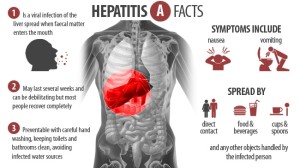
hep.a.infographicHeady stuff.

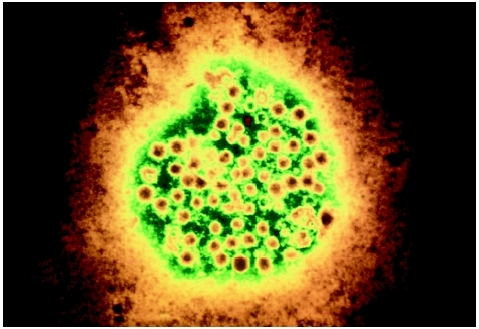
Scientists have announced that for the first time, they have determined the precise atomic structure of the Hepatitis A virus. In an unprecedented step forward, a team of scientists from Beijing and Oxford have been able to map the exact construction of Hepatitis A, down to the individual atoms. This new finding is a considerable advance for research into Hep A, one of the most resilient and difficult to control viruses and more broadly for our understanding of the virus world. The findings are published today, in the publication Nature.

Despite an existing vaccine, Hep A continues to infect 1.4 million people every year. It causes infection of the liver and symptoms can include diarrhoea, vomiting, yellow skin, fever, and abdominal pain. These findings are particularly significant due to the unique qualities of the virus. Hep A is particularly hardy unlike other viruses in the picornavirus family, which includes polio and the common cold. Hep A is able to withstand remarkably high temperatures and remain stable in hostile environments, making it difficult to control infection. It also has a unique, enveloped form, allowing it to shroud itself in the host membrane, making it harder for the body’s immune system to detect.

This discovery is ground-breaking in terms of what it reveals about the history and evolution of viruses. The findings suggest that Hep A may be the evolutionary ‘missing link’ between picornaviruses, which infect humans and animals, and some insect viruses.

By scrutinising the atomic structure of the virus, the team from the University of Oxford identified that Hep A possesses characteristics of both ancient insect viruses and modern human viruses such as polio. The methods by which it infects host cells, the very limited range of cells in which it thrives and the sheer stability of Hepatitis A all point towards it having somehow become stuck along the evolutionary trail. Where other viruses in the same picornavirus family developed into the structures we know today, Hepatitis A has remained forever frozen between the old and the new.

Hep A has proved difficult to study in the past. Using the advanced X-ray techniques at the UK’s synchrotron science facility, Diamond Light Source, scientists were able to study the virgech_0001_0002_0_img0129us at an atomic level. Diamond Light Source, is the UK’s national synchrotron, a giant x-ray machine the size of Wembley Stadium. It is the largest science machine the UK has ever built and produces a light 10 billion times brighter than the sun. 3,500 scientists and industry users from the UK and across the world, visit the synchrotron every year, to carry out cutting-edge scientific research.
Viruses are some of the oldest and most pervasive elements of the natural world. There are more viruses on Earth than all bacteria, plant and animal life combined, and they can evolve much faster than any living thing. Because they are so diverse and develop so quickly, it can be difficult to work out how they are related and how they evolved. Scientists know enough to group similar viruses into different families, but the question of their history and how these families came to exist in their current form has been very difficult to unravel.

Recent advances in technology have allowed scientists to look more closely at the structures of challenging viruses. Upgrades to facilities for analysing viruses at the Diamond synchrotron – which produces powerful X-ray light for scientists to use in their research – make it easier for whole viruses to be scrutinised in minute detail. Using Diamond’s crystallography ‘beamlines’ the group has uncovered vital new insights into how viruses have evolved.

Dave Stuart, Professor of Structural Biology at Oxford University and Head of Life Sciences for Diamond Light Source led the research into Hepatitis A. He points out exactly why these findings are so significant: “Viruses are too small and fragile to leave a fossil record, and change so quickly that many people would despair of piecing together the story of their evolution, so it is wonderful to see that their intricate details show mechanisms that form missing links between different families.”

The message is clear: the more we know about virus history and relationships, the more prepared we are to tackle viruses that pose a serious threat now and in the future; that’s why it’s so important to understand the fundamental atomic processes required for a virus to replicate and survive. This underpinning knowledge is the groundwork for the next stage, the production of improved vaccines and effective anti-viral drugs. Using advanced new technology such as Diamond, scientists are able to unpick the mysteries of even the most enigmatic viruses, atom by atom.

The findings are published today in the publication Nature. The paper is entitled ‘Hepatitis A virus and the origins of picornaviruses’.