Crab seized for Listeria

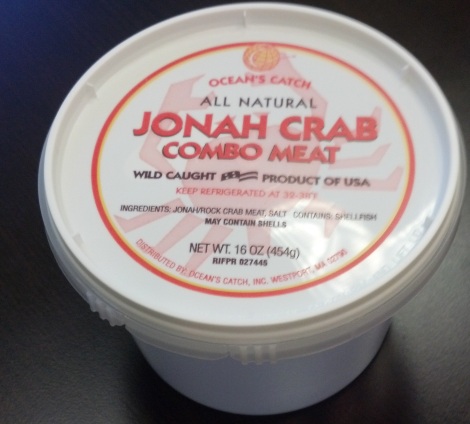
At the request of the U.S. Food and Drug Administration and the U.S. Attorney for the District of Massachusetts, U.S. Marshals have seized about 5,000 cases of ready-to-eat frozen Jonah crab products processed by Rome Packing Company Inc. (Rome Packing). FDA investigators determined the products have been prepared, packed and held under unsanitary conditions and may present a risk to human health.

jonah.crabDuring an FDA inspection of Rome Packing in Lakeville, Massachusetts, from November 2014 through January 2015, investigators observed poor sanitary practices and found that the company’s cooking process for crabs did not maintain adequate temperatures to prevent the growth of pathogens such as Listeria monocytogenes (L. mono). FDA investigators collected environmental swabs during the inspection and confirmed the presence of L. mono in the manufacturing area. The presence of L. mono in the processing environment may indicate colonization in other areas of the facility.

“The FDA made several efforts to help Rome Packing correct processes, but the company failed to take adequate corrective measures,” said Melinda K. Plaisier, the FDA’s associate commissioner for regulatory affairs. “In this case, we had to intervene and seize this adulterated food to prevent it from reaching consumers.”

The FDA used a bacterial typing tool called whole genome sequencing (WGS) to link the samples collected in the facility. WGS technology can show the relationship among isolates of bacterial pathogens found in the environment, a food source, or a person who became ill from consuming contaminated food.

Use of Internet search queries to enhance surveillance of foodborne illness

As a supplement to or extension of methods used to determine trends in foodborne illness over time, we propose the use of Internet search metrics.

social.mediaWe compared Internet query data for foodborne illness syndrome–related search terms from the most popular 5 Korean search engines using Health Insurance Review and Assessment Service inpatient stay data for 26 International Classification of Diseases, Tenth Revision, codes for foodborne illness in South Korea during 2010–2012. We used time-series analysis with Seasonal Autoregressive Integrated Moving Average (SARIMA) models. Internet search queries for “food poisoning” correlated most strongly with foodborne illness data (r = 0.70, p<0.001); furthermore, “food poisoning” queries correlated most strongly with the total number of inpatient stays related to foodborne illness during the next month (β = 0.069, SE 0.017, p<0.001).

This approach, using the SARIMA model, could be used to effectively measure trends over time to enhance surveillance of foodborne illness in South Korea.

Emerging Infectious Diseases, Volume 21, Number 11—November 2015

Gyung Jin Bahk, Yong Soo Kim, and Myoung Su Park

http://wwwnc.cdc.gov/eid/article/21/11/14-1834_article

40 sick in Norovirus outbreak at Brisbane camp

Looks like I picked the wrong week to send the kid to camp (I didn’t).

airplane.sniffing.glueQueensland health is trying to identify the cause of a suspected norovirus outbreak.

A highly contagious stomach bug is suspected to have hit about 40 primary school pupils after a Year 4 camp at the weekend.

In an email to parents yesterday, Grovely’s St William’s School principal Anthony Lucey said one family had a confirmed diagnosis of norovirus.

Brisbane Catholic Education communications manager John Phelan said about 40 children had been affected since symptoms were first reported last weekend after children returned from Camp Warrawee at Joyner.

“Once students began reporting as ill, we immediately contacted both the camp and Queensland Heath,” Mr Phelan said.

Losing my religion.

Keeping the fair judges safe from botulism

One of the roles I inherited when I came to North Carolina is organizing the judges for annual home food preservation competition at the State Fair. The fair has a long history in scoring entries based on color, consistency, shapes and in some categories, taste.

According to the fair organizers we’re one of a handful of state fairs that allow judges to taste entries. It’s the part that has always made me nervous. I recruit the judges and it would be a tragic situation if someone got sick volunteering their time to evaluate canned goods. 9690269_orig

A couple of years ago, following a bot illness linked to watermelon jelly in British Columbia we decided to test the pH of some entries. Armed with blenders and pH meters my group opened a bunch of products and tested away. We found that a few exceeded 4.6 (the threshold that the NCHFP sets for safety in their recipes) and informed the competitors of the risks.

In subsequent years we increased the number of products we tested, and eliminated a category (sweet potato butter) due to safety concerns.

But the big turning point was the 2014 competition where we had a couple of judges taste a product that was supposed to be pickled, that wasn’t, and the pH was 6.1; a nice environment for bot toxin production.

It was a nervous week of waiting.

In consultation with the fair organizers, I decided to change the rules of the competition and require that competitors follow recipes in one of the three sources that have safety data behind them – the Ball Blue Book, So Easy to Preserve and the USDA guide to home canning.

It was a risk management decision. And it made some folks mad.

Jill Warren Lucas of Indy Week, a first time judge this year wrote a nice piece on her experiences and and the new rules,

Somewhere in my house, there is a photo of a much younger me, looking stunned to have won a red ribbon on my first try at the Indiana State Fair. I was bested only by my inspiration, the perennial winner Mrs. Imogene Orme.

Other hobbies have come and gone, but my obsessive passion for canning has stood the test of time. I’ve tested recipes for successful cookbooks and even published a few items of my own. And this year, I’ve met a new canning milestone: I served as a judge for home preservation entries at the North Carolina State Fair, which continues through Oct. 25.

I was the only newbie among 18 judges, some of whom have been participating for decades. After receiving directions from contest director Ben Chapman, associate professor and food safety extension specialist at North Carolina State University, we were sent off in pairs to pass judgment on blind entries in various categories.

During the next three hours, I tasted about 70 jams, jellies and juices. Even with small samplings, I soon approached a sugar-fueled state of delirium that my colleague expertly diagnosed as “jam drunk.” We both confessed relief when certain jars were determined to be outside of the scope of their category—for example, a lovely mashed-fruit jam erroneously entered as a whole-fruit preserve—and thus did not need to be sampled.

While a handful of entries were so exceptional we nominated them for Best of Show consideration, others were so mundane (or awful) that we actually presented no awards in a few categories.

The reason for this surprising lack of top-quality entries? Changing food safety standards.

Perhaps because I’m a careful canner, worrying about the safety of tasting entries never crossed my mind. But as Chapman soberly warned judges, concerns about just that led organizers to make controversial changes to this year’s contest.

According to Chapman, the North Carolina State Fair is one of only five across the country that tastes nearly all entries. The exception is low-acid foods, which, because of their inherent risk of instability, are judged on appearance only by a pair of food scientists, serving in this role for about 40 years. All other entries were first tested for safe pH levels and then brought to judges.

To further ensure our safety—and, more broadly, to foster standardized canning processes—all entrants had to cite one of three established sources as the basis of their recipe: the ubiquitous Ball Blue Book Guide to Preserving, USDA.gov guidelines or So Easy to Preserve, a publication of the University of Georgia’s National Center for Home Food Processing and Preservation. “We know that these documents have data behind the safety of their recipes,” Chapman explains.

Entrants also had to submit their entire recipe. Some longtime canners, like those who faithfully recreate recipes handed down through generations, balked at having to use a specified source. Many more took offense at having to provide their recipe. A few expressed anger at the lack of trust. Some feared that secret recipes would be revealed. While the updated rules were published in July, the backlash hit its peak in the weeks preceding the October 12th deadline to submit jars for judging. Organizers expected nearly 1,200 entries, but only received about 700.

Chapman says one irate individual, a longtime participant, even stated the intention to launch a boycott. University and fair officials have advised Chapman to not discuss specifics of what the individual said, but he confirmed that security issues became involved. There was even a brief scare at the fairgrounds when someone tried to enter the closed judging area, though it proved to be a false alarm.

Chapman spent much of his day comparing non-sourced entries to the three guides to determine if they were sufficiently similar to remain in contention. Most were found to have acceptable ratios of ingredients. If such vigilance seems like too much worry over canned fruit, remember 24 cases of botulism, including one death, have been reported in the U.S. this year.

“This happened last spring, right about the time we were talking about the rule changes,” Chapman says, adding there also was a troubling case in Ashe County. An experienced canner who ate spoiled carrots suffered severe symptoms for 11 days before her doctor identified the cause. “Botulism is the most toxic, naturally occurring substance we know of. It’s been used in terror attacks (not actually used but identified as a potential weapon -ben). One gram of botulism that is crystalized can kill a million people. It’s serious stuff.”

Previous tweaks to entry rules, likewise made in the name of food safety, also frustrated entrants. Chapman recalls “a similar uproar” a few years ago when participants were required to state how many minutes they processed any entry, an essential clue to knowing whether a jar’s contents had enough time to reach the temperature necessary to kill potential toxins. Unlike mold or other visible signs of spoilage, dangerous bacteria is not always so evident.

“We want to keep the tradition of tasting entries, but it’s my job to worry about this stuff,” Chapman says. “Most people understood the rationale. If some people decide that they can’t participate anymore, we’ll live with that.”

62 sickened: Raw eggs a ‘hazardous substance’ Company fined over Salmonella outbreak in Australia

Australia still has an egg problem.

egg.farmI agreed to take on the role of food safety overseer at the Nov. 13, 2015 (ice) hockey annual banquet. Mainly because I didn’t want to see any of the kids I coach or parents get sick from microbiologically stupid Aussie traditions like using raw eggs in aioli or mayonnaise.

A company at the centre of a massive Melbourne Cup Day salmonella outbreak has been found guilty of failing in food safety standards, a court has heard.

It comes as the partner of a woman who died after contracting the infection during the outbreak has called for raw eggs to be “declared a hazardous substance.”

The Brisbane Magistrates Court yesterday heard the bacteria was contained in one or some of the 20 raw eggs used to make five batches of mayonnaise by Piccalilli Catering in November 4, 2013.

The condiment was then used as a potato salad dressing, which was then sold to 14 separate Melbourne Cup Day functions in southeast Queensland, including one for the Department of the Premier and Cabinet.

Magistrate Noel Noonan said despite expert evidence, “exactly how the salmonella got into the mayonnaise is unclear.” However, he added it was most likely through “horizontal transmission”, where salmonella is transferred from the shell into the egg.

The court heard 62 people became ill from eating the salad, including one woman who died from heart complications after contracting the infection at one of the functions.

Magistrate Noonan found the company had failed to pass on warnings regarding the quality of the eggs in questions, nor had they performed adequate checks on the same products.

However, he described the company as a “good corporate citizen” that “cooperated extensively with authorities” during the investigation.

It has also retained a five-star food safety rating from the local council.

(Which means the voluntary ratings in Brisbane are window-dressing).

Delish Foods owner Helen Grace expressed concern raw eggs were still allowed in food preparation.

“Rather than prosecuting a small business that followed all the rules, we believe the authorities should move to ban the use of raw eggs by caterers, restaurants and cafes, to ensure this kind of tragedy never happens again,” the statement read.

A table of Australian egg outbreaks is available at https://barfblog.com/wp-content/uploads/2015/10/raw-egg-related-outbreaks-australia-10-9-15.xlsx

Crackdown on food safety in Iran

Hassan Qazizadeh Hashemi, who was speaking on the sidelines of a conference to mark World Food Day, said that no serious reform has taken place in the food sector over the last year, Tasnim reported.

iran-amputation-3_2464258bWorld Food Day is observed globally on October 16.

“What embarrasses us is that why we cannot spot all food safety violators. Or when we ban some unhealthy products, why do they return into market?” Qazizadeh Hashemi said, adding that the problem is in the type of the punishment which has failed so far.

“We are determined not to allow [anybody] to play with people’s health at all and we take measure against [law violators] but we need judicial system as well as executive power to support us,” he stressed.

Go to jail. Go directly to jail

Ron Doering, counsel in the Ottawa offices of Gowlings, and a past president of the Canadian Food Inspection Agency, writes in his monthly Food in Canada column:           

Chance_go_to_jailAfter warrants were issued for their arrest, the two food company executives turned themselves in to the police and then they were led into the court for their arraignment in shackles.

The Jensen brothers faced a possible six years in jail for the misdemeanor of failing to ensure the quality and safety of the food product they were selling. They did not go to jail primarily because they pled guilty. Last January they were sentenced to six months home detention and five years probation, and ordered to pay $150,000 in restitution.

The evidence was clear: neither of the corporate executives had any idea that their food product was adulterated or that they had done anything wrong. What’s going on here?

In this and several other recent cases, the United States Department of Justice has made it clear that it has adopted a new enforcement policy to aggressively use criminal prosecution against food company executives. Citing the serious public health consequences of foodborne illness, with 48 million Americans sickened every year and an estimated 3,000 deaths, Assistant Attorney General Stuart Delery has publicly warned corporate officers that they were now going to be held personally and criminally responsible if their companies failed to adequately control the quality of their food products. Delery has emphasized that introducing adulterated food into interstate commerce is a strict liability offence, meaning a company violates the law when it distributes an adulterated food whether or not it intended to do so.

In adopting this new aggressive policy the prosecutors have resurrected the old and mostly dormant 1975 U.S. Supreme Court decision in United States v Park, which held that corporate executives could be prosecuted criminally even for unintended violations of food laws by their companies. “This apparent revival of the Park Doctrine is a huge concern for the industry” asserts U.S. food law attorneys McGuireWoods.

This dramatic change in U.S. food law is evident in many recent cases. For example, in 2014 Iowa egg company executives pled guilty in a deal that included prison time and millions of dollars in fines after an outbreak that had sickened almost 2,000 people in 2010. In May 2015, arising from a tainted peanut butter recall in 2006, prosecutors extracted a settlement with the food giant ConAgra Foods that included a fine of $11.2 million, the highest criminal fine in U.S. food safety history.

This rising threat of criminal prosecution for food industry executives is real and has not gone unnoticed by food companies and their lawyers. Washington lawyer Gary Jay Kushner, a partner with Hogan Lovells and one of America’s leading food law lawyers, told me recently that “this is a serious development for food company executives. We’re seeing this increasing trend in a lot of cases.”

The most recent case that has garnered so much media attention involves the Peanut Corporation of America (PCA) in which an investigation revealed that its adulterated product had led to over 700 reported infections and at least nine deaths. After a six-week trial, a federal jury found PCA president Stewart Parnell and two other company executives guilty of violating several food safety laws and obstruction of justice. Because company employees falsified lab results and made several false and misleading statements to FDA investigators, prosecutors are seeking life sentences for PCA executives.

Criminal prosecution of company executives is not new in Canada. The Canadian Food Inspection Agency regularly brings charges in the criminal courts. What we haven’t seen yet in this country is major prosecutions of executives after recalls or prosecutors seeking jail terms for company executives who were unaware of any violation, though I know that this has been seriously considered in at least a couple of instances.

There is also another important distinction between Canada and the U.S. We have a longstanding, if narrowly defined, defence of due diligence in cases of strict liability offences; a defence that deserves to be better known, and the subject of next month’s column.

People are sick: Snap peas recalled in Canada due to Cyclospora

No word on whether this is related to the 500 or so people sickened by Cyclospora that was thought to be Mexican cilantro, no word on how many are sick, no word on where the snap peas originated, but Canadians are busy with an election.

bob.doug.mckenzie.strange.brew.1980The Canadian Food Inspection Agency says that Costco Wholesale Canada Inc. is voluntarily recalling Alpine Fresh brand Snap Peas from the marketplace due to possible Cyclospora contamination. Consumers should not consume the recalled product described below.

The product has been sold from Costco locations across Ontario.

This recall was triggered by findings by CFIA during its investigation into a foodborne illness outbreak. The CFIA is conducting a food safety investigation, which may lead to the recall of other products. If other high-risk products are recalled, the CFIA will notify the public through updated Food Recall Warnings.

The CFIA is verifying that industry is removing recalled products from the marketplace.

There have been reported illnesses associated with the consumption of this product.

Thanks for that info. And now this. (Chapman may have something to say about the cameras).

15 sick with Salmonella from raw frozen chicken thingies

My friend the postie, (as in works for the post office, to speak Australian just add ie to everything) is going to become a grey nomad (that’s slang for retired people who drive around Australia in their caravans).

barber.foodsHe was showing me his new ride, and how he’s going to cook a lot in a microwave, so I said I’d give him a tip-sensitive digital thermometer.

Here’s why:

The U.S. Centers for Disease Control reports that since the last update on July 29, 2015, six more ill people were reported from five states.

A total of 15 people infected with the outbreak strains of Salmonella Enteritidis were reported from seven states. The number of ill people reported from each state was as follows: Connecticut (1), Illinois (2), Minnesota (8), New Hampshire (1), New York (1), Oklahoma (1), and Wisconsin (1).

Illness onset dates ranged from April 5, 2015 to July 27, 2015. Ill people ranged in age from 4 years to 82, with a median age of 32, and 60% were female. Among 10 people with available information, 4 (40%) were hospitalized, and no deaths were reported.

As we found back in 2007,  when preparing frozen foods, adolescents are less likely than adults to wash their hands and are more susceptible to cross-contaminating raw foods while cooking.

“While half of the adults we observed washed their hands after touching raw chicken, none of the adolescents did,” said Casey Jacob, a food safety research assistant at Kansaas State. “The non-existent hand washing rate, combined with certain age-specific behaviors like hair flipping and scratching in a variety of areas, could lead directly to instances of cross-contamination compared to the adults.”

Food safety isn’t simple, and instructions for safe handling of frozen chicken entrees or strips are rarely followed by consumers despite their best intentions, said Doug Powell, K-State associate professor of food safety who led the study.

As the number and type of convenience meal solutions increases — check out the frozen food section of a local supermarket — the researchers found a need to understand how both adults and adolescents are preparing these products and what can be done to enhance the safety of frozen foods.

In 2007, K-State researchers developed a novel video capture system to observe the food preparation practices of 41 consumers – 21 primary meal preparers and 20 adolescents – in a mock domestic kitchen using frozen, uncooked, commercially available breaded chicken products. The researchers wanted to determine actual food handling behavior of these two groups in relation to safe food handling practices and instructions provided on product labels. Self-report surveys were used to determine whether differences exist between consumers’ reported food handling practices and observed behavior.

The research appeared in the November 2009 issue of the British Food Journal. In addition to Jacob and Powell, the authors were: Sarah DeDonder, K-State doctoral student in pathobiology; Brae Surgeoner, Powell’s former graduate student; Benjamin Chapman, an assistant professor at North Carolina State University and Powell’s former graduate student; and Randall Phebus, K-State professor of animal science and industry.

Beyond the discrepancy between adult and adolescent food safety practices, the researchers also found that even when provided with instructions, food preparers don’t follow them. They may not have even seen them or they assume they know what to do.

“Our results suggest that while labels might contain correct risk-reduction steps, food manufacturers have to make that information as compelling as possible or it will be ignored,” Chapman said.

They also found that observational research using discreet video recording is far more accurate than self-reported surveys. For example, while almost all of the primary meal preparers reported washing hands after every instance in which they touched raw poultry, only half were observed washing hands correctly after handling chicken products in the study.

Powell said that future work will examine the effectiveness of different food safety labels, messages and delivery mechanisms on consumer behavior in their home kitchens.

 Self-reported and observed behavior of primary meal preparers and adolescents during preparation of frozen, uncooked, breaded chicken products

01.nov.09

British Food Journal, Vol 111, Issue 9, p 915-929

Sarah DeDonder, Casey J. Jacob, Brae V. Surgeoner, Benjamin Chapman, Randall Phebus, Douglas A. Powell

http://www.emeraldinsight.com/Insight/viewContentItem.do;jsessionid=6146E6AFABCC349C376B7E55A3866D4A?contentType=Article&contentId=1811820

Abstract:

Purpose – The purpose of the present study was to observe the preparation practices of both adult and young consumers using frozen, uncooked, breaded chicken products, which were previously involved in outbreaks linked to consumer mishandling. The study also sought to observe behaviors of adolescents as home food preparers. Finally, the study aimed to compare food handler behaviors with those prescribed on product labels.

Design/methodology/approach – The study sought, through video observation and self-report surveys, to determine if differences exist between consumers’ intent and actual behavior.

Findings – A survey study of consumer reactions to safe food-handling labels on raw meat and poultry products suggested that instructions for safe handling found on labels had only limited influence on consumer practices. The labels studied by these researchers were found on the packaging of chicken products examined in the current study alongside step-by-step cooking instructions. Observational techniques, as mentioned above, provide a different perception of consumer behaviors.

Originality/value – This paper finds areas that have not been studied in previous observational research and is an excellent addition to existing literature.