
Notable finding: illness was associated with visit to a building in which sheep, goats, and pigs were housed for livestock competitions. Fair attendees were not intended to have physical contact with animals in the building; however, 25% of case-patients (three of 12) and 24% of control subjects (five of 21) who visited the building reported direct contact with animals.
The U.S. Centers for Disease Control and Prevention reports that on October 24, 2011, the North Carolina Division of Public Health (NCDPH) was notified of four Shiga toxin–producing Escherichia coli (STEC) infections among persons who had attended the 2011 North Carolina State Fair, held October 13–23 in Raleigh. Approximately 1 million visitors had attended the fair.
NCDPH conducted a case-control study to identify the source of transmission. A case was defined as laboratory evidence of STEC, hemolytic uremic syndrome (HUS), or acute bloody diarrhea with 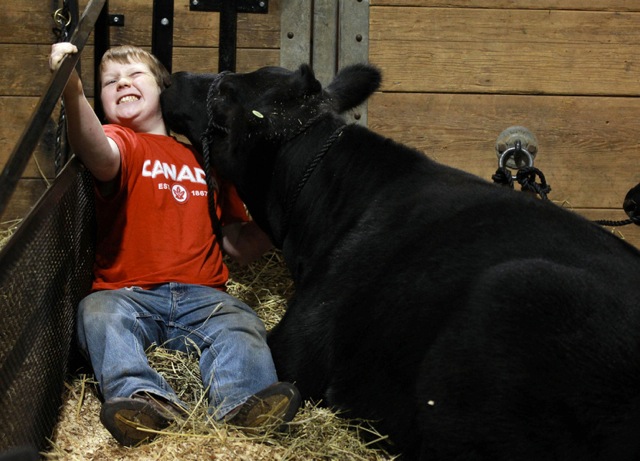 no other identified etiology in a person who attended the fair 1–10 days before illness onset. Active case finding was performed by using a network of hospital-based public health epidemiologists..
Passive surveillance was enhanced through notifications to public health officials, health-care providers, laboratory directors, and the public. Control subjects were recruited by contacting 11,000 randomly selected advanced ticket purchasers by e-mail with a request to participate in the investigation. Three control subjects were matched to each case by age (<18 years or ≥18 years) and date of fair attendance. A stool specimen was requested of all case-patients for laboratory confirmation of E. coli. Pulsed-field gel electrophoresis (PFGE) patterns were compared with known strains in the national PulseNet database. Case-patients’ exposures to food, animals, and fair activities were assessed by using a scripted questionnaire administered to case-patients and control subjects.
Twenty-five cases were identified with case-patients’ illness onsets during October 16–25; median age was 26 years (range: 1–77 years). Eight case-patients (32%) were hospitalized; four (16%) experienced HUS. Nineteen case-patients provided stool specimens, and 11 (44%) had laboratory confirmation of E. coli O157:H7 with matching PFGE patterns. This PFGE pattern is the eighth most common pattern in the PulseNet database and has been associated with previous foodborne outbreaks (CDC, unpublished data, 2011).
The only exposure associated with illness was having visited one of the permanent structures in which sheep, goats, and pigs were housed for livestock competitions (matched odds ratio: 5.6; 95% confidence interval: 1.6–19.2). Fair attendees were not intended to have physical contact with animals in the building; however, 25% of case-patients (three of 12) and 24% of control subjects (five of 21) who visited the building reported direct contact with animals.
A previous STEC outbreak linked to a petting zoo at the 2004 North Carolina State Fair resulted in 187 illnesses, 15 of which were complicated by HUS (1). The 2004 outbreak led to the passage of Aedin’s Law in North Carolina, which created regulations for exhibitions housing animals intended for physical contact with the public. These regulations include requirements for permitting, .jpg) education, and signage to inform the public of health and safety concerns, enhanced maintenance of animal facilities, transitional entrances and exits, and easily accessible hand-washing stations. The 2011 outbreak was associated with an animal exhibit not subject to Aedin’s Law. Preventive measures such as educational signs and hand-washing facilities were in place, based on national guidelines compiled in the 2011 Compendium of Measures to Prevent Disease Associated with Animals in Public Settings. As a result of this outbreak, a multiagency task force is being created in North Carolina to evaluate the preventive measures that were in place during the 2011 state fair and to identify additional interventions that could be applied to prevent disease transmission in livestock exhibitions where physical contact with the public might occur.
education, and signage to inform the public of health and safety concerns, enhanced maintenance of animal facilities, transitional entrances and exits, and easily accessible hand-washing stations. The 2011 outbreak was associated with an animal exhibit not subject to Aedin’s Law. Preventive measures such as educational signs and hand-washing facilities were in place, based on national guidelines compiled in the 2011 Compendium of Measures to Prevent Disease Associated with Animals in Public Settings. As a result of this outbreak, a multiagency task force is being created in North Carolina to evaluate the preventive measures that were in place during the 2011 state fair and to identify additional interventions that could be applied to prevent disease transmission in livestock exhibitions where physical contact with the public might occur.
A table of petting zoo/fair-related outbreaks is available at http://bites.ksu.edu/petting-zoos-outbreaks.
 Cole Creek Arena in Casar.
 confidentiality. The source of the illness has not been traced.
.jpg) getting sick. The community knew there was a problem several days before health types went public.
getting sick. The community knew there was a problem several days before health types went public..jpg) descended on Walkerton for weeks. They had their own helicopters, but the worst was the medical helicopters flying patients with hemolytic uremic syndrome to the hospital in London. Every time Jim saw one of those, he wondered if it was someone he knew.
descended on Walkerton for weeks. They had their own helicopters, but the worst was the medical helicopters flying patients with hemolytic uremic syndrome to the hospital in London. Every time Jim saw one of those, he wondered if it was someone he knew..jpg) safety of the product, implementing good manufacturing practices, establishing guidelines for safe sprout production, and beginning chemical disinfection of seeds prior to sprouting.
safety of the product, implementing good manufacturing practices, establishing guidelines for safe sprout production, and beginning chemical disinfection of seeds prior to sprouting..jpg) sick since mid July.
sick since mid July.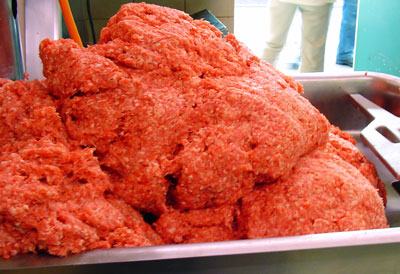 is to accomplished in a hamburger patty. And while thorough cooking to the appropriate temperature (the. U.S. says 160) will destroy the bad bugs, cross-contamination in any kitchen – home, food service, retail – is a huge issue and difficult to control. Here’s the story.
.jpg) Poitou-Charentes et Rhône-Alpes regions. For Casino, the center and the southwest quarter of the country are concerned.
Poitou-Charentes et Rhône-Alpes regions. For Casino, the center and the southwest quarter of the country are concerned. death. She endured six days of intensive care, multiple blood transfusions and, so far, 196 bags of plasma.
 Amy and a colleague left early this morning for Montreal and the Northeast Modern Language Association annual meeting, or NeMLA. Every time she says NeMLA, I say NAMBLA. It never gets old.
.jpg) A feature in tomorrow’s (today’s)
A feature in tomorrow’s (today’s) .jpg) Last year several outbreaks at petting zoos across Britain caused a number of children to require medical treatment.
Last year several outbreaks at petting zoos across Britain caused a number of children to require medical treatment.