
NSW Minister for Primary Industries Katrina Hodgkinson today released new guidelines for the increasingly popular cooking style sous vide.
Ms Hodgkinson said sous vide involves cooking food at low temperatures for long periods of time and chefs need to be aware of the potential food safety risks.
Sous vide, which means ‘under vacuum’ in French, refers to a technique where foods are vacuum-sealed in plastic for slow cooking which in some cases results in food remaining 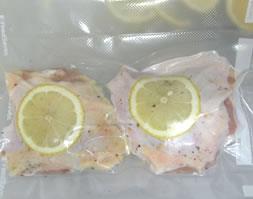 raw or undercooked.
The new sous vide guidelines recommend that chefs:
• prepare thin portions of food so food cooks quickly;
• set water bath temperature above 55 degrees Celsius;
• cook food below 54.5 degrees Celsius for a maximum of six hours;
• cool food quickly in slush ice or specialized equipment; and,
use equipment that has accurate temperature control and heating capacity.
“It is pleasing to have Quay Restaurant’s head Chef Peter Gilmore promoting the sous vide guidelines which have been designed for chefs, from apprentices to world-renowned, to follow,” Ms Hodgkinson said.
“The handy fact sheet will make it easy for chefs to know how to avoid the possibility of food poisoning,” Mr Gilmore said.
Quay Restaurant has also been given five stars in the NSW Government’s Scores on Doors program for excellent compliance of food safety and hygiene standards.
.jpg) department decided how to regulate the newfangled method. … Now restaurants desiring to use the sous vide method must have an approved HACCP plan to do so.”
department decided how to regulate the newfangled method. … Now restaurants desiring to use the sous vide method must have an approved HACCP plan to do so.” evidence of rats and mice. The report also cited “hand washing facility not provided in or near food preparation area and toilet room. Hot and cold running water at adequate pressure to enable cleanliness of employees not provided at facility. Soap and an acceptable hand-drying device not provided.”
  “In March the Board of Health approved those regulations. They require restaurants that cook sous vide to have an approved Hazard Analysis and Critical Control Point plan. …
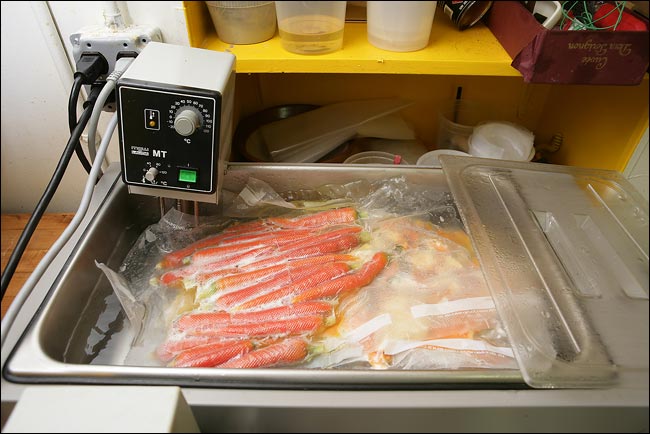 “It’s very easy to work with the top chefs, but when you are making regulations you need to take care of all the chefs, not just the top chefs,” Mr. Goussault said. “Perhaps sometimes it’s excessive, too much regulation for the top chefs, but I think it’s necessary.”