Former Tasting and Complaining host forced to resign as Thai PM

Thailand’s prime minister was forced out of office Tuesday along with his Cabinet after a court ruled that he had broken a conflict-of-interest law by hosting TV cooking shows.

There sure is a lot of crap on TV cooking shows. We covered it in our 2004 paper here.

Others have apparently borrowed our idea. Imitation is a form of flattery, I guess. Or it’s just posing.

Samak Sundaravej’s 73, a self-proclaimed foodie, hosted a popular television cooking show — "Tasting and Complaining" — for seven years before becoming prime minister. But he also made several appearances after taking office, breaking a constitutional prohibition on private employment while in office.

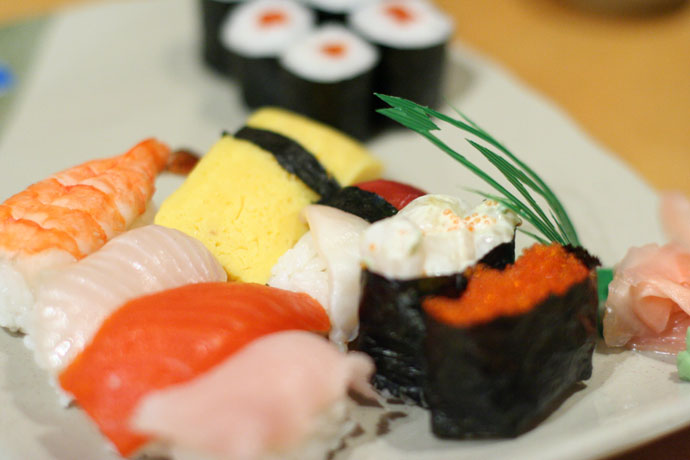
Australian sushi business fined over rats

The Sydney Morning Herald reports that the Chief Industrial Magistrates Court fined Sushi World’s Camperdown premises more than $60,000 after it heard the business was closed by the New South Wales Food Authority after an inspection in November 2006 revealed it was a "risk to public health.”

Inspectors who toured the premises found rat faeces scattered over the floor, on equipment and in food-processing areas. Two 12.5-kilogram bags of flour had been "gnawed open by rodents" and one of the creatures was seen in the food storage area, the court heard.

The NSW Chief Industrial Magistrate, George Miller, said Sushi World’s failure to adhere to parts of the food standards code indicated "serious shortfalls in basic food handling", and the company’s continued breaches from November 2006 to May 2007 suggested a "disturbing willingness to run a food business without regard for basic hygiene standards".

During the hearing its director, Suk Joon Song, said trade decreased by 50 per cent due to negative publicity after the charges had been made public.

Sushi World no longer operates from the Camperdown premises but has opened a factory in Meadowbank, which has been approved by the NSW Food Authority.
 

Listeria in cheese from Toronto shop sickened pregnant woman

On Aug. 29, 2008, Ping Chiu, owner of Cheese Magic in Kensington Market, had to throw out $1,000 worth of cheese and wasn’t happy about it.

"According to the health inspector, it was listeria. Although I was told by two big cheese suppliers that it can’t be listeria."

It was listeria.

Health officials confirmed Tuesday that product sold at a popular Kensington Market cheese shop was the source of the listeria bacterium that sickened a pregnant customer.

“Cheese Magic at 182 Baldwin St. was closed down last week after a regular customer fell ill after contracting listeriosis. Health inspectors also claim they found cat and mouse droppings in a food area of the store, mould growth inside a walk-in cooler, and products stored at incorrect temperatures.

“The business has since reopened after inspectors found it had met all safety requirements when they revisited the shop.”

For some bizarre reason, Dr. Barbara Yaffe, an Associate Medical Officer of Health for Toronto Public Health, felt it necessary to downplay the risk of listeria, especially for pregnant women, rather than shout it from the rooftops.

“Keep in mind that the risk from listeriosis is low for healthy individuals. Those most at risk of developing serious illness are pregnant women, the elderly, and those with weak immune systems."

Thanks. My pregnant wife will keep that in mind. So will the pregnant woman who got sick. At some point Canadian health types will have an honest discussion with consumers at risk without worrying if they will offend industry.
 

Pot pies, p??t?? and pregnancy: The medium and the messages to create a food safety culture

Food safety culture will be the topic of a presentation by Kansas State University’s Doug Powell as part of the K-State Department of Diagnostic Medicine and Pathobiology Seminar Series.

Powell, associate professor of diagnostic medicine and pathobiology and scientific director of the International Food Safety Network, will present "Pot pies, Pâté and Pregnancy: The Medium and the Messages to Create a Food Safety Culture" at 3:30 p.m. Thursday, Sept. 11, in the Practice Management Center on the fourth floor of K-State’s Trotter hall. The seminar is free and open to the public.

Powell will provide an overview on the different mediums and messages his research team has experimented with to foster a food safety culture, from farm to fork.

"From pot pies, peanut butter, deli meats and pizza to peppers, tomatoes, spinach and more: food can make people sick — a lot of people," Powell said. "The World Health Organization estimates that up to 30 percent of all citizens in developed and other countries will get sick from the food they consume each year.

"But statistics are easy to ignore," he said. "In the past month, a 26-year-old died and 206 were sickened with E. coli 0111 after eating in Locust Grove, Okla. Nineteen people have died and dozens sickened with listeria after eating deli meats in Canada. In a separate outbreak, at least seven pregnant women in Quebec have acquired listeria from cheese, leading to premature births and illness in their babies."

Powell said the challenge is to provide reliable and relevant information in a compelling manner to reduce the burden of foodborne illness.
 

British holidaymakers in Turkey struck with salmonella

The British Mirror reports that hundreds of tourist may have been struck down with salmonella food poisoning and some have already been diagnosed after returning from a hotel complex in Turkey.

The tourists affected were staying at the Holiday Village Turkey in the resort of Sarigerme.

Andrew Morton, of the Manchester law firm Pannone, who is taking action against First Choice Travel on behalf of more than 100 clients, said,

"From all reports coming out of the resort, we expect the number of cases to rise significantly over the next few days. Estimates put the figure of those affected at well over 1,000. Anyone returning to the UK from Sarigerme who has been ill should see their doctor immediately."

Last night, a spokeswoman for First Choice said "a very small proportion" of guests at the resort reported being ill and were being treated for an "airborne virus.”
 

Whole Foods and Martin Sheen flog raw milk

Hollywood heavyweight Martin Sheen is lending his voice to the battle to protect consumer choice, as a measure to help keep safe, well-regulated raw milk on California store shelves heads to Governor Arnold Schwarzenegger for signature.

At least that’s what the press release from California State Senator Dean Florez, D-Shafter, says. Sure, consumers can have choice. And lawyers like Bill Marler and the victims of foodborne illness have the choice to litigate against those who peddle poop. Whole Foods may as well paint a bullseye on its logo.

The Connecticut Department of Agriculture has a comprehensive report on its most recent investigation of raw milk related illness at

http://www.ct.gov/doag/lib/doag/marketing_files/bulletin/Wednesday_Augus t_20_2008_issue.pdf

On July 16th, 2008 the Connecticut Department of Agriculture began an investigation of a possible link between several reported illnesses and the consumption of Retail Raw Milk (unpasteurized milk). Recently we concluded that investigation. The investigation was prompted when the Department was notified by Connecticut Department of Public Health (DPH) Epidemiologists of 2 reported illnesses in which both patients had consumed Retail Raw Milk from a dairy licensed to produce Retail Raw Milk and pasteurized milk and milk products. The patients were aged 2 and 7, one was on dialysis. After notifying the dairy of the investigation, the dairy voluntarily stopped sale of all milk. Soon after the initial 2 reported illnesses, DPH reported 2 additional cases linked to the dairy. By the time we concluded our investigation a total of 7 known individuals were sickened from consuming Retail Raw Milk and several were hospitalized. The Retail Raw Milk implicated in this incident was purchased from 2 separate national, natural food, chain store locations and directly from the farm. None of the reported illnesses were linked to pasteurized milk and milk products produced at this dairy. The individuals sickened had acquired a condition known as Hemolytic Uremic Syndrome (HUS) and one case of Thrombotic Thrombocytopenic Purpura (TTP). HUS is a disorder that occurs when an infection in the digestive system produces toxic substances that destroy red blood cells. …

After extensive testing of milk, milk contact surfaces, water sources, the environment in and around the farm and processing plant and, analysis of feces from each milking aged animal, the department obtained a genetic fingerprint match between E. coli O157:H7 recovered from the feces of 1 cow and E. coli O157:H7 isolated from 3 patients. Approximately 170 separate samples and specimens of milk, water, feces and swabs of milk contact surfaces were analyzed by the DPH Public Health Laboratory in a 3 week period. …

The department has concluded that the most likely cause of this food borne illness outbreak was the consumption of Retail Raw Milk contaminated with E. coli O157:H7. While good sanitation and management practices can lower the incidence of pathogens in raw milk we believe and studies support the position that pasteurization is the only proven way to eliminate pathogens from raw milk.
 

Are therapy animals leaving more behind than just hair in senior living centers?

Nursing homes and senior living centers are always looking for ways to engage residents and to help them feel more at home.  Why not man’s best friend, and other furry friends?

Therapy dogs, cats, pigs, rats, even kangaroos have been brought into nursing homes around the country.  The residents enjoy taking care of the animals and generally spending time in their presence.  Administrators praise the change they see in their residents from an animal visit.  "Animals re-engage people with life," says Loren Shook, who decades ago saw the positive effect of animals on the patients at the psychiatric hospitals where his family worked. Now, as CEO of Silverado, he has instituted a must-have-animals policy at all 17 facilities. "Having animals in our facilities reduces depression and anxiety and reduces the need for psychotropic drugs by 35%."

There have been many reports on how animals have benefited the lives of the elderly in senior centers, but the side effects may have been overlooked.  Zoonoses anyone?

A zoonotic disease is classified as any disease that can be transmitted from animals to people, and vice versa.  There are many different bacterial, parasitic, fungal, protozoal and viral infections that all classify as zoonotic diseases. There is always a degree of risk of disease transmission from any contact with an animal, just as there is from any contact with another person.  Some of the diseases involved are minor or even insignificant, while others are potentially devastating, especially in the immunocompromised.

But wait, many elderly are immunocompromised, does this mean that these companion animals are putting the senior residents at risk?  Unfortuntately yes.  Before bringing a pet into an environment with immunocompromised individuals, all possible precautions should be taken.  The pet should be thoroughly examined each year by a licensed veterinarian for any health issues and to test the temperment of the pet.  Any necessary vaccinations should be given at the time, along with a fecal parasite check to be performed every three months unless it is proven that the pet is on a monthly dewormer.

Pets continue to enrich the lives of both the young and the old, but responsible pet owners should definitely closely monitor their pets for any zoonotic diseases.  Common sense and good hygiene will go a long way toward keeping a pet free of zoonotic diseases. Here are a few simple precautions:
* Wash hands before eating and after handling the pet.
* Schedule annual checkups and fecal exams for the pet; the pet should also always be seen by a veterinarian in the event of an illness.
* Keep all vaccinations current.  (Vaccinations should always be administered by a licensed veterinarian)
* Maintain appropriate flea and tick control.
* Avoid letting the pet lick your face, food utensils, or plate.
* Seek medical attention for bites or scratches caused by a pet.
* Feed the pet cooked or commercially processed food, and clean out the fecal area regularly.

For more resources on zoonotic diseases, visit the Zoonotic Diseases Tutorial or World Health Oganization: Zoonoses and veterinary public health.

Immunocompromised individuals (such as the elderly) should consult with a health care professional about specific concerns with any animals in their care.

Watch out, the pet might just predict your death as well.


Don’t eat poop – and if it’s on oysters at least cook it

Xinhua News Agency reports,

“A total of 141 people in Macao were food-poisoned after eating polluted raw oysters in local restaurants, the Special Administration Region’s health authorities announced on Monday.

“The food-poisoning outbreak was firstly reported on Aug. 28 when a number of people fell sick after eating raw oysters served in a buffet restaurant in the Venetian Macao Resort, and more cases were later reported in restaurants in the Sands Hotel, Golden Dragon Hotel and the Macao Tower, according to the SAR’s Disease Control and Prevention Center of the Macao Health Bureau ( SSM).

“The SSM said in its latest press release that eight new cases were reported on Monday, the victims of which dined in the four restaurants mentioned above and ate raw oysters, but it also confirmed that those victims have fully recovered from the illness.

“The problem oysters served in the four restaurants came from the same supplier in Hong Kong, according to the SSM, which has ordered the four eateries to stop providing raw oysters at their buffets.

“The food-poisoning was caused by Norwalk virus that was communicable through food, vomit, and excreta among human beings, said the SSM, adding that the victims comprised locals as well as tourists from Hong Kong and elsewhere.”

Dave’s not here, man – but THC may fight bacteria

Cheech and Chong are back on the road and researchers in Italy and Britain have found that the main active ingredient in marijuana — tetrahydrocannabinol, or THC — and related compounds show promise as antibacterial agents, particularly against microbial strains that are already resistant to several classes of drugs.

The N.Y. Times reports,

“It has been known for decades that Cannabis sativa has antibacterial properties. Experiments in the 1950s tested various marijuana preparations against skin and other infections, but researchers at the time had little understanding of marijuana’s chemical makeup.

“The current research … looked at the antibacterial activity of the five most common cannabinoids. All were found effective against several common multi-resistant bacterial strains, although, perhaps understandably, the researchers suggested that the nonpsychotropic cannabinoids might prove more promising for eventual use.”
 

Seven pregnant women among 14 sickened with listeria from Quebec cheese

In 2004, I spent a week at a cottage with a couple of my children in Eastern Ontario near Sandbanks Provincial Park on Lake Ontario. Lovely spot.

One rainy day, we toured around and ended up at a cheese shop. They produced the cheese in the factory at the back, and had a charming market outlet that seemed to trap tourists like bees on sap.

Upon entering the store, a sign declared, “HACCP – A food safety program; Hazard Analysis Critical Control Pont.” Cool. I asked one of the staff what it meant. She said she didn’t know.

But beside the HACCP proclamation was a sign that read, “Public bathroom is out of order; for your convenience there is a blue Johnny on the spot behind the building (sic).”

And here it is (left). Note the lack of handwashing facilities or sanitizer. I watched people go to the porta potty and then come into the cheese shop and do what people do at quaint cheese shops: stick their unwashed hands into shared samples of curds (that’s one of my daughters looking disgusted in the middle, right, not because of the practice, but because I have to take pictures and be a food safety geek everywhere we go).

HACCP really doesn’t mean much unless there is a culture of food safety amongst the employees and everyone involved in making a product, like cheese or deli meat.

Best as I can figure, there is a separate outbreak of listeria in Quebec, in which one has died and 14 have been sickened. Eleven different types of cheese have been recalled, and many of them appear to be raw milk cheese, which the Quebec government recently approved for sale.

While merchants are complaining about the crackdown and lost sales, what seems to have been lost in the coverage is that seven pregnant women – four confirmed, three suspected – have developed listeriosis and three gave birth prematurely.

Sylvie Thibault, a customer sampling some of the free cheeses at La Fromagerie Atwater yesterday, said she’s not worried, stating,
 
"I have started to double-check what cheese I buy. But I won’t stop eating the food I love because of a little scare."

Joe Schwarcz, director of McGill University’s Office for Science and Society, said,
 
"
We need to put this in perspective," adding it’s important "not to have people think every time they bite into a piece of brie, they’re risking death."

Wow. I wouldn’t want to be pregnant in Quebec. So, Quebec government (Canada has no real authority in Quebec), given the number of pregnant women who have been sickened, any efforts to highlight the risks of listeria in certain foods to at-risk populations? Or is it just a silly little scare?

The recalled products from Fromagerie Medard are: Le Rang des Iles, Le 14 Arpents, Les Petits Vieux, Le Gedeon, Le Medard, Le Couventine, Le Cabrouet and Les Cailles, all with best-before dates between July 12 and Sept. 6. Products pulled off shelves from Fromagerie Table Ronde are: Le Fleurdelyse, Le Fou de Roi and Le Rassembleu with best-before dates after July 14.

Last week, cheeses manufactured by Fromages La Chaudiere were recalled because of salmonella, blamed for the death of an elderly person in the Chaudiere Appalaches region and 90 illnesses across Quebec.