
Playing politics with listeria in Canada

“In October, 1996, 16-month-old Anna Gimmestad of Denver drank Smoothie juice manufactured by Odwalla Inc. of Half Moon Bay, Calif. She died several weeks later; 64 others became ill in several western U.S. states and British Columbia after drinking the same juices, which contained unpasteurized apple cider –and E. coli O157:H7. Investigators believe that some of the apples used to make the cider may have been insufficiently washed after falling to the ground and coming into contact with deer feces.

“The Odwalla outbreak, and dozens of others, illustrate some basics about E.  coli O157:H7 that have gotten lost in the rush –especially by some virulent columnists –to describe the Walkerton outbreak through the filters of political preference. E. coli O157:H7 is part of nature, a natural world that will change and adapt as humans alter their version of the world. But for all the railing against so-called factory or industrial farming, the links remain tenuous. In fact, such assumptions and finger-pointing can actually be dangerous as individuals become less vigilant, assuming that such problems only happen to other people in other places.”
That’s what I wrote in Canada’s National Post on June 3, 2000 in the wake of the Walerton, Ontario, E. coli O157:H7 outbreak which would kill seven and sicken 2,500 in a town of 5,000.

The person in charge of the municipal water system for Walkerton was found to add chlorine based on smell and criminally convicted; the farm was a cow-calf operation that was the poster farm for Environmental Farm Plans.

No matter.

The same mind-numbing politics is now dominating the listeria outbreak in Canada which has killed 19 and sickened dozens.

The cause of the outbreak appears to be the accumulation of listeria in meat slicers used at the Maple Leaf plant in Toronto. The feds have advised all registered establishments that manufacture ready-to-eat meat products to step up their cleaning protocols. Bill Marler noted some other examples related to listeria and meat slicers in a post this morning.

No matter.

A letter writer to the Toronto Star this morning says the only people affected by listeria are “those whose immune systems are low because they have been eating a nutritionally poor diet of mostly processed foods … we would all be better off if we bought fresh, unprocessed food from local farms. These foods would keep our immune systems strong so they could easily ward off a few harmful bacteria.

Guess the letter writer has never heard of pregnant women getting listeria (see next post).

On Saturday, Canadian Prime Minister Stephen Harper set the terms of reference for an investigation into the listeriosis outbreak:

• Examine the events, circumstances and factors that contributed to the outbreak.

• Review the efficiency and effectiveness of the response by federal agencies in terms of prevention, the recall of contaminated products, and collaboration and communication among partners in the food safety system and the public.

• Make recommendations aimed at enhancing prevention of future outbreaks and the removal of contaminated products from stores and warehouses.

No matter.

The report is due before March 15, 2009.

Harper then called a Canadian election for Oct. 14, 2008.

Bob Kingston, president of the Public Service Alliance of Canada’s Agriculture Union, said in a news release,

"
We already know the problem is too few inspectors . . . in a system that relies too much on the food industry to police itself.”

Apparently the union inspectors have super vision and can see listeria – especially in the depths of slicing machines.

Others are calling for a full-scale inquiry, like what happened after Walkerton and in Ontario after some dodgy meat slaughtering practices were uncovered (the Haines report). I participated in both inquiries. There is no need for another.

The Ministers of Agriculture and Health, or the Prime Minister’s office, need to call up the bureaucrats and say,

"People are pissed. Give me a clear accounting of who knew what when so I can give a clear accounting to the public. I want the report on my desk Monday at 7 a.m. I’ve got an election campaign going on."
 

Geese poop a lot

The parents of my high school girlfriend had a cottage in Barry’s Bay, Ontario. Lovely place, including memories of dive-bombing geese and the darkest night skies ever.

Nearby Pembroke, Ontario, also has a problem with geese – specifically their poop — like many other communities.

The Daily Observer reports that Pembroke’s Riverside Beach was closed last month due to high E. coli levels, primarily from geese poop.

Deputy Mayor Les Scott said,

"This matter has gotten to the point where this animal is contributing negatively to the health and safety of our citizens.”

What annoys him is if the city is found to be the cause of elevated E. coli, the province would be on them in a minute. When it is geese, nothing happens.

Maple Leaf identifies likely source of listeria contamination at plant

Maple Leaf Foods continues its textbook risk communication, being the first to publicly provide information about the source of the listeria contamination that has killed 19 and sickened dozens.

But is it enough?

“After careful study of the records, the physical plant and product test results received from the Canadian Food Inspection Agency (CFIA), internal and external experts have concluded that the most likely source was a possible collection point for bacteria located deep inside the mechanical operations of two slicing machines on lines 8 and 9. Rigorous sanitization of this equipment was completed on a daily basis in accordance with or exceeding the equipment manufacturer’s recommendations. However, upon full disassembly, areas were found where bacteria may accumulate deep inside the slicing machines and avoid the sanitization process. There were also other environmental factors, not on product contact surfaces, that may have contributed to the contamination.

"We deeply regret this incident and the impact it has had on people’s lives," said Michael McCain, President and CEO. "We have the highest food safety standards and we have worked around the clock and left no stone unturned to identify the root cause and eliminate the source of this contamination. Throughout this crisis we have done whatever it takes to place our consumers’ interests and public health first. It’s now up to us to earn back your confidence."

Concerns with slicing machines are hardly new regarding listeria. The company has taken some good steps, but can do more:

• Release the results of the 3,000 listeria swabs your company takes every year to provide some data, some meaning, to your claims that public health is your top priority?

Support some kind of point-of-sale initiative – warning labels or otherwise – to explicitly warn pregnant women and immunocomprimized Canadians that, as you say, listeria is so widespread in the environment, that vulnerable people should not eat your products, unless they are heated or some other kill step is employed.

Typo in food magazine recipe poisons Swedes

Ten thousand copies of a food magazine were recalled in Sweden last month after a mistake in one of its recipes left four people poisoned.

Matmagasinet’s chief editor Ulla Cocke told AFP,

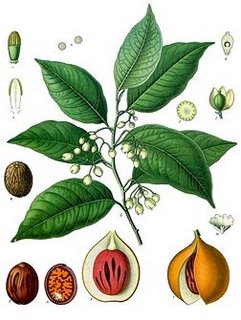
"There was a mistake in a recipe for apple cake. Instead of calling for two pinches of nutmeg it said 20 nutmeg nuts were needed.”

When Matmagasinet first discovered the mistake it immediately sent out letters to its 50,000 subscribers and placed a leaflet inside the copies sold in the store, cautioning that "high doses of nutmeg can cause poisoning symptoms."

"We publish 1,200 recipes each year, and of course there have been times when they’ve had a bit too much butter or too little flour, but we have never experienced anything like this before,"
Cocke said.

In large doses, nutmeg is a mild hallucinogen
.
 

Jesse Jackson released from hospital after food poisoning

The Associated Press is reporting that 66-year-old civil rights leader Jesse Jackson was released from a Chicago hospital late Friday morning after developing food poisoning while conducting voter registration activities in Ohio and Georgia on Wednesday.

Jackson told the Atlanta Journal-Constitution from his bedside yesterday that he had not been able to pin down where he became ill.

“Two days ago I began to feel stomach anxiety and pain and by yesterday it was very intense,” he said.

Salad Smackdown at Food Micro ’08

The press releases were fast and furious and the excitement non-stop  today in response to some new research about Salmonella sticking to salad greens that was presented at Food Micro ’08 in Aberdeen.

Professor Gadi “Flagella” Frankel of Imperial College London was first into the ring yesterday with a press release containing tragically cliché headline, How Salmonella bacteria contaminate salad leaves — it’s not rocket science, and produced by his own Imperial Colleague that said,

"In their efforts to eat healthily, people are eating more salad products, choosing to buy organic brands, and preferring the ease of ‘pre-washed’ bagged salads from supermarkets, then ever before. All of these factors, together with the globalisation of the food market, mean that cases of Salmonella and E. coli poisoning caused by salads are likely to rise in the future. This is why it’s important to get a head start with understanding how contamination occurs now.”

U.K. media outlets rose to the challenge, with the Horrible Herald inverting the order of the press release to lede with,

“The growing popularity of pre-packed salads is likely to lead to an increase in food poisoning cases, scientists warned yesterday.

“They said the increased uptake in the salads in particular, but also in fruit and vegetables, is likely to be reflected in a future rise in food poisoning.

Professor Gadi Frankel, from Imperial College, said a greater understanding of how salads are contaminated is important because cases of food poisoning caused by salads are "likely to rise in the future."

The Fresh Prepared Salads Producer Group – really, that’s the association name, how about Big Salad – today, “completely refutes suggestions in the press that prepared salads are unsafe to eat," and tag teamed with Prof. Bill “Critical” Keevil, professor of environmental health care at the University of Southampton, who was at the conference in Aberdeen where the salad research which sparked the stories was presented, and said,

"I was extremely disappointed by the quality of the data presented and its interpretation. We have known for a long time the various mechanisms that bacteria can use to attach itself to a range of surfaces, including plants. This is not new."

Big Salad said in a statement:,

"Our products sold as ‘washed and ready to eat’ are just that. We have long recognised that to produce a safe-to-eat salad one needs safe-to-eat produce off the field. To achieve that, we strive to ensure that dangerous microbes do not get the opportunity to contact our crops – such that hypotheses as to how they initially adhere are irrelevant. The UK prepared salads sector has an unrivalled safety record and employs stringent controls, described as ‘excellent’ by the FSA – not necessarily the case elsewhere in the world. There has not been a confirmed outbreak associated with prepared salad since 2001 in the UK. … There is absolutely no evidence to suggest that re-washing a prepared salad will do any good at all – and it’s even possible that exposing the salad leaf to the ‘kitchen sink’ will increase the food safety risk. Indeed, the Advisory Committee on the Microbiological Safety of Food (FSA) has recently determined that re-washing is unlikely to remove any contamination remaining on the produce after the manufacturing process.”

To further muddle things, Judith “Hey Now” Hilton wrote on a U.K. Food Standards Agency blog that,

“In fact, while we advise that it’s a good idea to wash salad items in general, there is no need for consumers to rewash ready-to-eat bagged salads unless it says otherwise on the packet.  You can best help yourself by following good food hygiene practice at home – it’s important to follow the 4Cs – cooking, cleaning, chilling, avoiding cross contamination.”

Smackdown. Consumers, if you get sick from ready-to-eat salads, it’s your fault.
 

Want effective food safety communication? Put a name and a face on victims

Acording to the Western Mail, in a speech tomorrow, Professor Hugh Pennington will tell world food safety experts at FoodMicro in Aberdeen that “we owe it to people like Mason Jones” to ensure “top-rate” safety systems are put in place. Mason Jones was a five-year-old boy who died after eating a school lunch in October 2005. Some 150 schoolchildren were sickened in the outbreak traced to the John Tudor & Son meat plant in Bridgend, which supplied hundreds of schools in the Valleys with cooked meats. Owner William Tudor was sentenced to 12 months in jail in 2007 after admitting breaching food hygiene rules and supplying contaminated meats to schools. A public inquiry into the outbreak, which Pennington led, was chronicled on barfblog.
 

What struck me about Pennington’s comments was how he, like Doug and I have been doing through barfblog and food safety infosheets, was putting names and faces on the victims. Pennington is calling out the food safety professionals to make food safety personal.  Food safety communication isn’t just about the statistics, it’s about the stories.

We’re not just making this stuff up.

Morgan and colleagues (2002) evaluated various safety messages targeted at farmers regarding the use of personal protective structures for vehicles, by presenting message combinations and surveying 433 members of the target audience. Although the researchers did not look at practices (self-reported or otherwise) of the target audience, and only measured what the respondents felt would have the highest impact with them, they found, that messages based on stories, and those that were meant to elicit fear about individual practices had more impact with than presenting consequence-based statistics alone.  Slater and Rouner (1996) investigated the effectiveness of a variety of messages containing a combination of narratives and statistics around the safety of alcohol consumption with a convenience sample of 218 undergraduate students. Slater and Rouner (1996) found that survey respondents who were non-believers prior to the presented information, rated messages with narratives as higher quality and perceived them as more effective.  Slater and Rouner (1996) also found that statistics alone only reinforced respondents who identified themselves as already believing in the messages. Psychologist Howard (1991) argues that narratives and storytelling are effective methods in conveying information and suggests that there is a better understanding of one’s place in a system when individual sees himself or herself as an actor within the context of a story.

Our research supports this concept of storytelling: the most impactful infosheets (from a food handlers’ point of view) are the ones which put a name and a face on victims, the food safety offenders and their establishments.  Food safety communications is about storytelling, and personalizing the outcomes for the front-line staff who are in control.

Howard, G. S. 1991. Culture tales: A narrative approach to thinking, cross-cultural psychology, and psychotherapy. American Psychologist, 46: 187-197.

Morgan S.E., Cole H.P., Struttmann T. and Piercy L. 2002. Stories or statistics? Farmers’ attitudes toward messages in an agricultural safety campaign. Journal of Agricultural Safety and Health. 8:225-39.

Slater, M. D., & Rouner, D. 1996. Value-affirmative and value-protective processing of alcohol education messages that include statistical evidence or anecdotes. Communication Research. 23: 210-235.


Salmonella use tails to attach produce; is that how the mouse got in the salad?

A press release from the Food Micro 2008 conference in Aberdeen says that research being presented tomorrow will describe how Salmonella use flagella to attach themselves to produce.

"The new research, led by Professor Gadi Frankel from Imperial College London and carried out with Dr Rob Shaw and colleagues at the University of Birmingham, has uncovered the mechanism used by one particular form of Salmonella called Salmonella enterica serovar Senftenberg, to infect salad leaves, causing a health risk to people who eat them. …

"Professor Frankel and his colleagues at the University of Birmingham found that Salmonella enterica serovar Senftenberg bacteria have a secondary use for their flagella – the long stringy ‘propellers’ they use to move around. The flagella flatten out beneath the bacteria and cling onto salad leaves and vegetables like long thin fingers. To test this observation the scientists genetically engineered salmonella without flagella in the lab and found that they could not attach themselves to the leaves, and the salad remained uncontaminated."

Professor Frankel was further quoted as saying, "In their efforts to eat healthily, people are eating more salad products, choosing to buy organic brands, and preferring the ease of ‘pre-washed’ bagged salads from supermarkets, then ever before. All of these factors, together with the globalisation of the food market, mean that cases of Salmonella and E. coli poisoning caused by salads are likely to rise in the future. This is why it’s important to get a head start with understanding how contamination occurs now.”

Maybe a mouse used its tail to allow its head to get into a bag of greens served in Malta, packed in the Netherlands and imported from Belgium. The supplier was fired.

No worries for Shawn Dell Joyce, a sustainable artist and activist living in a green home in New York’s Mid-Hudson region, who writes that, "when you start asking questions, you begin to see the beauty of eating locally."

Joyce says that local produce is usually grown and harvested within 24 hours of being sold and that local producers tend to be more careful because it is often their own families, friends and neighbors who will eat the produce.

Maybe the Salmonella in that area don’t have flagella.

E. coli O111 toll in Oklahoma: 1 dead, 206 sick

On Feb. 1, 1995, the first report of a food poisoning outbreak in Australia involving the death of a child from hemolytic uremic syndrome (HUS) after eating contaminated mettwurst, an uncooked, semi-dry fermented sausage, reached the national press. The next day, the causative organism was identified in news stories as E. coli O111, a verotoxigenic E. coli (VTEC) which was previously thought to be destroyed by the acidity in fermented sausage products like mettwurst. By Feb. 3, 1995, the child was identified as a four-year-old girl and the number sickened in the outbreak was estimated at 21.

By Feb. 6, 1995, the manufacturers, Garibaldi Smallgoods, declared bankruptcy. Sales of smallgoods like mettwurst plummetted anywhere from 50 to 100 per cent according to the National Smallgoods Council.

The outbreak of E. coli O111 and the reverberations fundamentally changed the public discussion of foodborne illness in Australia, much as similar outbreaks of VTEC in Japan, the U.K. and the U.S. subsequently altered public perception, regulatory efforts and industry pronouncements in those countries.

In all, 173 people were stricken by foodborne illness linked to consumption of mettwurst manufactured by Garibaldi smallgoods. Twenty-three people, mainly children, developed HUS, and one died. Although sporadic cases of HUS had been previously reported, this was the first outbreak of this condition recognized in Australia.

The citizens of Locust Grove, Oklahoma, a community of 1,500 about 50 miles east of Tulsa, now know about E. coli O111. What no one knows is how it got into food associated with the Country Cottage restaurant

Health officials, who first reported the outbreak Aug. 25, said Tuesday that 206 people have become sick, including 53 children. Those sickened range in age from 2 months to 88 years.

The outbreak has been blamed for the death of 26-year-old Chad Ingle of Pryor, who died Aug. 24, a week after eating at the restaurant.
 

Hurricane Gustav and food safety

I have been following Hurricane Gustav closely on the news. I choke when I see images of the storm and people evacuating their homes, the same homes that were devastated by Katrina 3 years ago.

As reported by the New York Times:

“More than one million households in Louisiana were without power, with most of the outages — about 300,000 — concentrated in the greater New Orleans area, Gov. Bobby Jindal said at a televised news conference. As flood waters and tidal surges continued to subside, city and state officials struggled to get electricity to hospitals and sent thousands of emergency workers onto streets to clear debris and fix downed power lines.”

Residents who are left without power should take the following precautions to minimize risk of foodborne illness:

1 – The refrigerator and freezer doors should be kept closed as much as possible to keep the cold temperature longer. A refrigerator keeps food at safe temperatures for about 4 hours if unopened. Dry or block ice also helps maintain the proper temperature: at or below 40°F for a refrigerator and 0°F for a freezer. 

2 – If any meat, poultry, fish, or eggs, where left over 40°F for more than two hours, it is safer to discard it.  A thermometer in your refrigerator helps you determine the temperature (make sure it is working properly).

Residents who are in flood areas:

1 – The safest is to stick with bottled water. However, if you don’t have access to this, you can also filter (through clean cloths) and boil the water for at least a minute. Water can also be disinfected with household bleach, which kills some, not all, pathogens. Add 1/8 teaspoon (8 drops) of bleach per gallon.

2 – Discard food that has come in contact with floodwater, including anything in cardboard boxes, home canned foods, or damaged cans.

A more complete guide can be found here, and please, stay safe.