Salmonella-in-peanut paste poster boy fights to restrict release of records

The former president of the Lynchburg-based peanut company at the heart of a food-poisoning outbreak that sickened more than 700 and killed at least nine people, is going back to court to keep investigators away from company records.

The News & Advance reports that Stewart Parnell asked a judge earlier this month to stop the lawyer who administered Peanut Corp. of America’s bankruptcy from turning over records to the Department of Justice. Parnell claims some of those records may contain emails to his lawyer that shouldn’t be used against him in a criminal case.

Parnell and Peanut Corp. were subjects of Food and Drug Administration and congressional investigations, and by late January 2009, the Department of Justice and the FDA announced a criminal investigation. Parnell appeared before a congressional subcommittee on Feb. 9, 2009, but invoked his Fifth Amendment right against self-incrimination.

Throughout Feb. 2009, federal agents raided the company’s manufacturing plants and Parnell’s home, which also served as the Peanut Corp. headquarters, seizing documents and computer records. Some of those records made their way to the bankruptcy trustee to help him pay out what was left of the company’s assets.

Parnell’s lawyers note he has not been indicted and has not received a “target letter” sometimes sent to subjects of federal investigations. Spokeswomen for the FDA and for the U.S. Attorney’s office in Macon, Ga., would not comment about the matter Tuesday except to say the investigation is ongoing.

2 reports of campylobacter may be related to raw milk from NY farm

Consumers in Tompkins County, New York and surrounding areas not to consume unpasteurized raw milk produced at Jerry Dell Farm located at 39 Fall Creek Rd (RT 366) in Freeville, due to possible contamination with campylobacter.

The state Health Department received 2 reports of Campylobacter enteritis, from people who have consumed raw unpasteurized milk purchased from Jerry Dell Farm. Both patients have recovered.

Anyone who purchased milk from Jerry Dell Farm and still has the product should discard it immediately. Individuals experiencing gastrointestinal illness symptoms after consuming milk purchased from Jerry Dell Farm should contact their health care provider.

The farm has voluntarily suspended milk sales. The farm was first notified of the reported illnesses on September 22.

Confirmatory tests completed today at the New York State Food Laboratory found that the raw unpasteurized milk produced at Jerry Dell Farm, and collected on September 22, contained Campylobacter. This producer will be prohibited from selling raw milk until subsequent sampling indicates that the product is free of pathogens.

Try harder: retailer tells cantaloupe growers to improve food safety

As the official toll in the listeria-in-cantaloupe outbreak rose to 13 dead and 72 sick in 18 states, a major retailer said cantaloupe growers need to do more to prevent outbreaks of foodborne disease.

“I don’t think the cantaloupe industry can continue on doing the very same thing and expecting a different result,” said Craig Wilson, the head of food safety for Costco, the Seattle-based warehouse retailer, which is regarded as a leader in requiring food safety measures from its suppliers. “It’s time for companies to get more aggressive. If they know this is going to happen, let’s step up and not let it happen.”

William Neuman of the New York Times reports federal officials on Tuesday that there had been at least 19 previous outbreaks involving more than 1,000 illnesses and three deaths resulting from cantaloupe consumption since 1984. We count at least 36 outbreaks.

Wilson further said Costco would consider setting standards for how melons are grown and how they are cleaned and handled after they are picked. He said the company would most likely require that suppliers test melons for pathogens before shipping them to Costco.

He called on the industry to finance research into the best way to wash or clean cantaloupes to remove contaminants.

Dr. Margaret Hamburg, commissioner of the Food and Drug Administration, said that investigators had yet to determine how the melons became contaminated.

Trevor V. Suslow, an extension specialist at the University of California, Davis, who has done industry-financed research into food safety and cantaloupes, said that the fruit’s rough skin made it more susceptible to harboring unwanted bacteria.

“You have these tremendous hiding places, if you will, nooks and crannies, lots of areas for microbes to get in and attach and hide,” Dr. Suslow said.
It is best to keep cantaloupes dry to reduce the possibility that bacteria will grow on them, he said. In California, growers typically do not immerse melons in water to wash them and use chilled air to cool them.

In other regions, he said, cantaloupes are often washed in a large tank or with a water spray and are cooled with sprays of cold water as well. Those techniques may be more likely to spread bacteria.

Stephen F. Patricio, a melon shipper who is the chairman of the California Cantaloupe Advisory Board, a trade group, said that sales were plummeting, even though only melons from the farm in Colorado were implicated.

“The entire melon category needs to look at the best practices and research that’s been done by the California industry and others to best analyze their own risks,” Mr. Patricio said. “Or we’re all going to continue to suffer.”

Salmonella in Del-Monte cantaloupes: epidemiology is faster, more powerful than laboratory confirmation

As part of continuing coverage of the yes-it-was-salmonella-in-Del-Monte-cantalopues-that-made-people-sick-no-it-wasn’t lawsuit, Kirk Smith, epidemiology supervisor for the Minnesota Department of Health, told the Washington Post it’s rare for scientists investigating foodborne illness outbreaks to test the exact food suspected of carrying pathogens. By the time symptoms occur and a foodborne illness is reported and confirmed, the product in question has likely been consumed or has exceeded its shelf-life and been thrown away.

Instead, scientists, like detectives, interview victims, collect data, analyze patterns and match food “fingerprints” to determine the likely source of an outbreak.

“The majority of outbreaks, we don’t have the food to test,” Smith said. “Laboratory confirmation of the food should never be a requisite to implicating a food item as the vehicle of an outbreak. Epidemiology is actually a much faster and more powerful tool than is laboratory confirmation.”

The Post also uncovered some e-mail exchanges between Oregon state epidemiologist William E. Keene and Del Monte execs.

Keene wrote in an e-mail to the company on March 19 that evidence the company’s cantaloupe was the source of contamination was “overwhelming. … I think we need to move ahead with the common understanding that your cantaloupes caused this outbreak.”

Keene included in the e-mail an epidemiological analysis of cantaloupe consumption in the United States and how it relates to the U.S. share of cantaloupe from a farm in Guatemala that supplies Del Monte Fresh Produce. He used this analysis to explain the high probability that the contaminated cantaloupe originated from the farm, located in AsuncionMita.

“In our world, these numbers are considered pretty good evidence, however circumstantial,” he wrote.

Thomas Young, Del Monte Fresh Produce’s vice president of research and agricultural services, wrote in one e-mail, “I cannot imagine how [salmonella] could be coming from our Mita operation, but I am available to assist you in your investigation.”

Young also argues that none of Del Monte Fresh Produce cantaloupes tested positive for Salmonella Panama. Keene responded that a positive test “is a pretty tough standard to meet,” given the fact that the implicated cantaloupe had already been consumed and whatever remained had likely been thrown away.

Lives devastated by listeria as cantaloupe outbreak grows

 I got up at 2 a.m. Friday for a 3 a.m. chat session after a video presentation about social media and food safety at the U.S. Centers for Disease Control’s 15th annual PulseNet Update Meeting/seventh annual OutbreakNet Conference in Long Beach, Calif., only to be told the gene jockeys and epidemiologists had broken the Internet and couldn’t get a phone line.

No worries, instead I chatted in hushed tones (trying not to wake the family) with JoNel Aleccia of msnbc about listeria and cantaloupe.

Cantaloupe is particularly susceptible to contamination, ranking among the top five kinds of commonly tainted produce, along with spinach, lettuce, tomatoes and green onions, said Doug Powell, a professor of food safety at Kansas State University and publisher of a food safety blog.

“What makes cantaloupe stand out is a couple of things. There’s the structure of the fruit. Think about a honeydew melon. They’ve smooth and very hard. Cantaloupe is very soft,” Powell told msnbc.com.

With its bumpy rind and succulent flesh, cantaloupe can easily become tainted at any point from field to table, Powell said. Bacteria on the skin are hard to remove, and they can be spread to the edible portion of the melon when a knife slices through. There’s some evidence that the porous skin might actually allow tainted water to permeate the flesh, he added.

It’s not yet clear how the Jensen Farms cantaloupes were contaminated. FDA officials have found listeria in lab samples taken from equipment and fruit at the farm’s packing facility. But the bacteria can be present in soil or water, so the root cause has not yet been determined, said Doug Karas, a spokesman.

Powell also said many outbreaks are confirmed only through interviews with ill people that reveal a common food source.. In the case of the new listeria outbreak, a health warning and recall was issued a week before experts actually detected the bacteria, possibly halting more infections and death.

“Can you imagine the outcry if Colorado had waited an extra week to go public in the current outbreak?”

Bad tuna sends seven Subway customers to the hospital in Vancouver

Seven customers at a Subway sandwich outlet in the international terminal of the Vancouver airport were taken to hospital on Friday afternoon suffering from an apparent bout of food poisoning.

Vancouver Coastal Health spokesman Justin Karasick said the suspected cause of their illness was some tuna that may not have been stored at the right temperature.

The customers are believed to have been stricken by a form of food poisoning known as scombroid, which occurs when there is a high level of histamine in raw or uncooked fish, said Mr. Karasick.

Up to 40 ill; possible foodborne illness associated with South Carolina church fundraiser

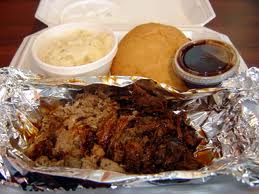
South Carolina health types advised people who purchased barbeque at a fundraiser at York’s Grace Covenant Church fundraiser on Sept. 16 and 17 to throw the food away.

“The food from this event shouldn’t be eaten by any people or animals,” said Gil Potter, M.D., medical director of the S.C. Department of Health and Environmental Control’s Region 3 public health office, which includes York County. “We’ve received reports of more than 40 people who became ill after eating food purchased at the church. More than 300 plates of food were sold, and many people bought barbeque in bulk for freezing and later use.”

According to Potter, all of the people who became ill are reporting the same symptoms, mainly vomiting, diarrhea and stomach cramps.

“Tests are under way to identify the cause of the illness and we’ll continue to investigate this situation,” Potter said. “While not conclusive, this fundraiser is one thing in common among the people who got sick. As a precaution, we are advising everyone to immediately discard any food purchased at this fundraiser.”

Tahina (ground sesame seeds) may contain salmonella

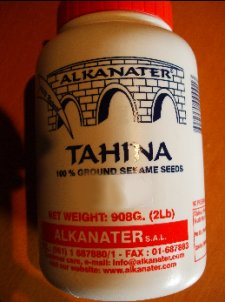
The Canadian Food Inspection Agency (CFIA) and Phoenicia Products Inc. are warning the public not to consume the Alkanater brand Tahina described below because the product may be contaminated with Salmonella.

The affected product, Alkanater brand Tahina, is sold in 908 g containers bearing UPC 6 92551 00001 3 and codes "Prod.: 5/1/2011" and "Exp.: 5/1/2013". This product has been distributed nationally.

There have been no reported illnesses associated with the consumption of this product.

Is that a piece of metal in your mouth or are you just happy to see me: Pepperidge Farm recalls sesame sticks

Pepperidge Farm, Incorporated is voluntarily recalling a limited quantity of 10.2-ounce boxes of Baked Naturals Sesame Sticks as a precaution due to the possible presence of small, thin pieces of wire.

A small number of consumers have reported minor scrapes in and around the mouth. Pepperidge Farm issued the voluntary recall out of an abundance of caution to ensure the safety of consumers.

The affected product is marked with a yellow 20% More! banner across the top of the package and has the following codes on the top package flap:

W07*1781 Sell by 11/20/2011
W07*1891 Sell by 11/27/2011
W07*1921 Sell by 12/4/2011
W07*2041 Sell by 12/11/2011
W07*2061 Sell by 12/13/2011
W07*2221 Sell by 1/1/2012.

Approximately 13,000 cases of the affected products were shipped to customers across the United States. The product is not distributed in Canada.

Fridge raids help track listeria-in-cantaloupe outbreak; biosolids being investigated as possible source

The hunt by Colorado scientists’ to identify the source of a national listeria outbreak that has been linked to eight deaths involved two weeks of brainstorming, studying blood samples and confiscating half-eaten food from patients’ refrigerators.

Health officials also shopped for grocery-store cantaloupe before pinpointing a single farm in Holly as the source.

State epidemiologist Alicia Cronquist thought it slightly odd when she learned two people were sickened by listeria bacteria within days.

When two more reports arrived at the state health department in late August, Cronquist figured she was dealing with an outbreak.

In the early stages of Colorado’s investigation, county health authorities used 15-page questionnaires to interview patients and their families about what they ate and where they bought it.

"The vast majority of people are elderly," Cronquist said. "The average age is in the 80s and they are quite ill. Their family members are at their bedside, and we are asking them to remember food that they ate a month ago. They are actually very difficult interviews."

Meanwhile, the bacteria in patients’ blood was isolated, and state microbiologist Hugh Maguire’s labs deconstructed the DNA profiles to see whether they had listeria strains in common.

Those profiles were uploaded into a CDC database of data from across the nation.

Scientists pulled food from patients’ homes, including typical listeria suspects like deli meats, hot dogs and dairy products.

By Sept. 2, the state food lab determined that two patients had matching strains and two other patients matched in a separate strain. With hundreds of strains of listeria, two or more can be on the same food.

Epidemiologists in patients’ home counties interviewed the patients to look for patterns while the state health department faxed and emailed a listeria alert to doctors, hospitals and labs.

When Cronquist checked a CDC database tracking foods that listeria victims reported eating, she found that all the patients she was tracking had eaten cantaloupe.

Health authorities purchased 15 cantaloupes at three grocery stores and tested the rind and flesh for listeria bacteria. They also were testing patients’ leftover melon. Maguire’s lab fast-tracked the genetic matching, setting aside some of the lab’s other, more routine work.

A week after the first public warning, health authorities announced they had linked the source of the poisoning to cantaloupe.

As more patient blood samples arrived at the state lab, they fell into three distinct strains. Cantaloupe taken from patients’ refrigerators had the same strains but no sticker naming the farm. In interviews, though, patients volunteered that the cantaloupe said ‘Rocky Ford’ on it or was extra sweet.

By tracking the melon purchases of patients back to the distribution trucks, investigators from the state and the Food and Drug Administration narrowed the focus to two farms and sampled soil and machinery.

Two days after warning people not to eat Rocky Ford cantaloupe, health officials announced they had pinpointed the farm.

Jensen Farms in Holly recalled its cantaloupes Sept. 14, while farmers in the Rocky Ford region miles away lamented how their produce was swept into early warnings about cantaloupe.

Meanwhile, 7NEWS in Denver has confirmed the investigation is expanding beyond Jensen Farms and that a company that sprays treated human waste – biosolids — confirmed to 7NEWS it has been contacted by investigators. State investigators confirmed they want to know if biosolids may have caused the contamination.

Parker Ag Services vice president Mike Shearp told 7NEWS that government investigators have questioned him in recent days as to where those biosolids were applied. He said the substance was applied to a field directly across from a Jensen Farms field years ago.

Shearp maintained that the contamination will not be traced back to his operation.

Colorado State University animal science professor Lawrence Goodridge said, "If processed properly, there should not be pathogens. If they are not processed properly, if the wastewater treatment process breaks down, they could be (a) source of pathogenic bacteria such as salmonella, listeria and other pathogens."

A spokeswoman with Jensen Farms said the company does not use biosolids in its operation.