Awash in cockroaches Calif restaurant calls health department on itself

I’m a fan of transparency for all things food, so when a Marin, California restaurant called the heath department to report a massive cockroach infestation – at its own restaurant, I thought, yeah.

Inside Scoop SF cites CBS which reports that Mill Valley’s Cafe del Soul — which describes itself as “a natural and organic cafe” — discovered “horrible” cockroach nests in between the walls of the restaurant and a neighboring business that happened to be remodeling.

The story gets weirder. Instead of closing (yes, they’re still open during said massive infestation) or keeping the problem hush-hush, they’re acting with full disclosure. In fact, they’re almost advertising it. To make matters stranger, even though Cafe del Soul called the health department on themselves, they are still allowed to stay open; per CBS, inspectors haven’t even inspected the restaurant yet.

Here’s the note that the owners of Cafe del Soul posted online and at the store:

To our Community,I feel I need to inform you of a situation that is out of our hands. Despite our best efforts to do and continue to do everything we can to keep our café and the surrounding areas as clean as possible, we feel we are fighting a losing battle because from what we have seen and experienced (been told by outside contractors) the building we are located in is infested with German cockroaches.

We are working with outside contractors and the building owner to eradicate the problem and will continue to do so, but because of the size of the problem a simple solution is not easy to find.

Thank you for your understanding and please talk to us about any questions and concerns that you have. Our hope is this information supports you in seeing what and how we do things to the best of our ability and trying to be as true and honest as we can.

All Staff & Supporters of Café del Soul.
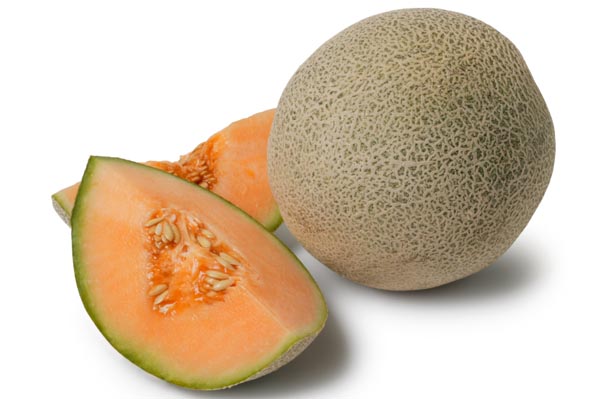
California cantaloupe growers back state’s food safety program

Cantaloupe growers, packers and shippers in California say they’re hopeful the state’s new commodity-specific food safety program will bolster consumer confidence in their crop.

Jim Malanca, vice president of sales for Westside Produce Inc., Firebaugh, Calif., told The Packer several factors, including lingering effects from last fall’s listeria-tainted Colorado cantaloupe, probably contributed to this summer’s lethargic market.

“It’s very difficult to put your finger on ― everything that’s going on economy-wise, weather-wise and food safety-wise,” he said. “We’ve done as much as we can to make sure our food is safe for consumers, and we document everything.”

In response to last fall’s listeria outbreak, California cantaloupe growers and handlers enlisted the help of university and other food safety experts to develop a mandatory food safety program.

Members of the Dinuba-based California Cantaloupe Advisory Board unanimously approved the program in May.

Colace, who is also vice-chairman of the board, said he believes the program already has helped bolster confidence among retailers and buyers. But consumers may be a different story.

“I think the biggest thing is to educate the public that we have a piece of fruit that is very safe,” he said.

Then market food safety directly to consumers – at retail.

E. coli adapts to colonize plants

This is from a U.K. Institute of Food Research press release:

To find out more, the IFR team took the first comprehensive look at the differences between the populations of E. coli growing on crop plants and populations in the mammalian gut. Funded by the Biotechnology and Biological Sciences Research Council, they took over 100 isolates from leafy parts of vegetables growing in fields in England. Analysis of these showed that even within the same field the E. coli population is diverse and complex. They then compared these isolates with a standard reference collection of E. coli taken from mammals, including humans, from different continents. Profiling the two groups found a number of significant differences depending on the source of isolation. Compared to the habitat inside the gut, a leaf surface is a hostile environment for gut bacteria. The temperature fluctuates away from the constant 37 °C inside our bodies, and there is a greater risk of drying out.

The researchers found that E. coli populations derived from plants tended to form biofilms more readily. Biofilms are complex structures formed by populations of bacteria coming together to make a thin film over a surface. They are held together by a protective extracellular matrix of proteins and sugars, and the researchers saw that there was also an increase in the production of components of this matrix in E. coli derived from the fields. These strains also used sucrose and other plant-derived sugars more than the E. coli populations derived from mammalian sources.

Biofilms might help to prevent E. coli drying out outside of its host and being able to take advantage of plant sugars could also aid their survival outside the main host, although overall the plant strains showed lower growth on the usual carbon sources E. coli uses.

An analysis showed that these differences are associated with previously defined phylogentic groups of E. coli showing that different environmental conditions have a selective effect in the evolution of different groups. While some have become more generalised, adapting to life outside the mammalian gut, others have remained specialised for life in this environment, avoiding the associated growth penalty. “While it was known that different environments harboured different E. coli populations, we now have an idea on how and why this happens,” said Sacha Lucchini. “Knowledge of the mechanisms involved in plant colonisation by E. coli provides targets for developing strategies aimed at preventing potentially dangerous E. coli strains from colonising vegetables, thus keeping them off our plates.”

Reference: Phylogenetic distribution of traits associated with plant colonization in Escherichia coli, Environmental Microbiology doi:10.1111/j.1462-2920.2012.02852.x


E. coli found in biodynamic Australian yoghurt

As per their usual practice, FSANZ announces a recall but can’t manage a sentence about whether anyone is sick or not.

That’s Food Standards Australia New Zealand, which announced today that B.-d. Farm Paris Creek Pty Ltd has recalled Organic Biodynamic Yoghurt Apricot from Foodland, IGA and health food stores in NSW and SA due to microbial contamination (E. coli). 

$3500 fine; Melbourne market sold food contaminated with rat feces, court hears

The Queen Victoria Market in Melbourne is a sprawling enterprise that I always visit when in town; but I have no delusions about food safety.

The Melbourne Magistrates’ Court has, according to the Herald Sun, heard six inspections over a six-month period revealed stallholder Robert Dinardo, 47, had food on display containing rodent droppings and packaging that had been gnawed at and shredded by rats.

An environmental health officer also found incorrectly labeled items and food for sale containing dirt, insects and feathers.

Dinardo pleaded guilty to 13 charges, including failing to comply with relevant legislation and selling food unsuitable for human consumption.

Dinardo was convicted and fined $3,500 and ordered to pay costs of $2,100.

Are the menus sticky? I prefer to look for risk factors of foodborne illness

I have the premiere episode of Food Network’s newest reality show, Health Inspectors, on my DVR saved for a particularly nerdy day. To promote the series Food Network pushed out a blog post about what star host, restaurant consultant Ben Vaughn looks for at a restaurant to figure out whether the restaurant is unsanitary.  Vaughn lists the following:

– Restrooms: Check out the restrooms first. Are they clean? Check the floors. Are paper towels readily available and is the soap dispenser full?

– Menus: Many restaurants use clear covers on their dining menus because they’re easy to clean, but are they actually cleaning them? Check for fingerprints — and note whether the menu feels sticky.

– Floors: Does it look like the staff mops regularly and with a clean solution? Some restaurants just sweep and sometimes I find that debris has been pushed into the corner.

– Staff uniforms: Has the staff taken the time to clean themselves and wear pressed shirts and clean aprons? Take a special look at their shoes. Are they clean? Debris always falls on the ground in a restaurant; I would frequently wash my shoes.

– Use your senses: Smell and look around. Uninviting smells like old grease or mildew are bad signs. Customers should be able to visually see everything unless they’re at a romantic restaurant that has dim lighting. If the restaurant is poorly lit otherwise, chances are management is covering something up they don’t want you to see.

I prefer to think of things in terms of whether the restaurant is more likely to cause an outbreak – and what common factors have led to illnesses in the past. Back in 1988 Frank Bryan defined defined illness risk factors as:

– Food from Unsafe Sources;
– Inadequate Cooking;
– Improper Holding Temperatures;
– Contaminated Equipment (and cross-contamination);
– Poor Personal Hygiene.

Bean and Griffin from U.S. Center for Disease Control and Prevention (CDC) in 1990 also looked to these factors in surveillance reporting.

Not included in the evidence-based, peer-vetted list are Vaughn’s sticky menus, clean floors and the smell test. While they might be gross, they are more yuck factor than risk factor. After reviews of inspection results compared to outbreaks (1,2), dirty vs. clean bathrooms also doesn’t seem to matter much. What does matter, which Vaughn gets right, is the availability of handwashing tools like soap and paper towels.

Observation is part of my tactic in selecting a restaurant, but I can but I can’t often assess real risk factors very well by just looking around so I ask a lot of questions (especially if the cooks use thermometers to test cooking temperatures) and review past inspection reports (in jurisdictions where I can get them) for risk factor infractions. If a place demonstrates historic problems with stuff like holding food at the right temperature or improper handwashing procedures, I avoid them.

Toddler dead, 106 sick; disease hunters track Cleveland County E. coli outbreak

As the number of sick with E. coli O157 linked to Cleveland County Fair rose to 106, North Carolina Health News details how the investigation started. Excerpts below:

When David Sweat received a phone call late one Monday afternoon that a Gaston County child was hospitalized with an E. coli infection, he knew he’d miss dinner that night, and for many nights to come.

It was Oct. 8. Sweat, an epidemiologist with the Communicable Disease Branch of the state Division of Public Health, knew a county fair had just wrapped up in the Gaston County vicinity. Sweat also knew that only a small percentage of people exposed to E. coli end up with kidney failure like the child in the hospital.

“We knew immediately this was likely to be a bigger outbreak,” Sweat said.

Sweat stayed late that night, making phone calls to learn more of what was happening and to consult with doctors and lab technicians where the child was hospitalized.

The next morning, two more calls came in. Sweat’s colleagues dropped what they were doing and started looking for more cases. They found four that day, all hospitalized in Charlotte.

By the end of the day Wednesday, Oct 10, the folks in the Communicable Disease Branch had ruled out other possibilities: The source was the Cleveland County Fair.

One of the epidemiologists, Zack Moore, sent out a blast communication to doctors, clinics and hospitals in surrounding counties – including neighboring South Carolina counties – alerting them to look for patients with symptoms characteristic of E. coli infection and who had some connection to the fair.

Two people were dispatched to the fairgrounds, where the exhibits and animals had been packed up days earlier. They collected swabs to confirm the relationship between the E. coli in stool samples and the bacteria on the ground.

“We were crawling around, collecting dirt and poop with disposable spoons,” said Carl Williams, a public-health veterinarian who collected more than 40 samples into sterile cups that came back to the state lab. There technicians compared bacteria from the soil samples with that from patients.

The bacteria persists. After the state fair E. coli outbreak in 2004, Foust’s team found the bacteria in the soil five months later. Aedin’s Law, passed in the wake of that outbreak, insures that the soil under animal exhibits where an E. coli outbreak takes place remains unused for six months.

2 dead, 195 sick from Salmonella outbreak linked to mail-order chicks

The pic, left, is from Sorenne’s pre-school yesterday.

The teachers-that-be decided at some point it was a good idea to get a chicken coup for the pre-school; I said it may be a bad idea, sent them a bunch of info about outbreaks, and left it at, you have to be a lot more careful than you thought.

There were some chickens in there for two weeks during spring break, and they came
from the grade 3 class across the road.

These are ducks; they came from one of the teachers, who fancies herself a bit of a foodie, but at least isn’t snobbish about it.

I asked if the ducks had pooped, because kids can’t be watched all the time in a 6-kid-1-teacher ratio.

Sorenne has taken to putting all sorts of things in her mouth and on the table when eating. I try to explain the be-the-bug concept; like today, Sorenne and I had lunch with a friend and his two pre-school daughters. They were putting flip-flops on the table; Sorenne was eating the menu. These are things kids do. The microbiological explanation didn’t go very far. The communal fries came with aioli dipping sauce, so I had to ask the café staff, how was the aioli made?

Raw eggs, but whole eggs.

Pasteurized or cooked?

No, raw.

I didn’t have any. Neither did Sorenne.

Kids will do all sorts of things, so platitudes about handwashing stations at petting zoos and washing hands when dealing with potentially risky things is nice but never enough.

The U.S. Centers for Disease Control reports a total of 195 persons infected with the outbreak strains of Salmonella Infantis, Salmonella Newport, and Salmonella Lille were reported from 27 states.

• 34% of ill persons were hospitalized;

• two deaths were reported; and,

• 33% of ill persons were children 10 years of age or younger.

Epidemiologic, laboratory, and traceback findings linked this outbreak of human Salmonella infections to contact with live poultry from Mt. Healthy Hatchery in Ohio.

Mail-order hatcheries, agricultural feed stores, and others that sell or display chicks, ducklings, and other live poultry should provide health-related information to owners and potential purchasers of these birds prior to the point of purchase. This should include information about the risk of acquiring a Salmonella infection from contact with live poultry.

143 sickened; ‘PLUs were a mess’ mango board pledges improvements

With at least 143 Americans and Canadians sickened with Salmonella Braenderup linked to mangoes from Agricola Daniella of Sinaloa, Mexico, this fall, the National Mango Board decided it might be an apt time to review good agricultural practices (GAPs).

The Packer reports William Watson, executive director of the National Mango Board, told Fresh Summit 2012 attendees the board has undertaken a risk assessment in mango producing nations of Mexico, Ecuador, Brazil, Peru, Guatemala and the U.S. A scientific advisory board is being formed to review findings of the risk assessment and develop good agricultural practices – especially for post-harvest operations.

Watson reminded the mango producers and importers that the commodity board’s activities are limited by federal law. He said the board is working with the Food and Drug Administration to develop the GAPs, which should be available to the industry by winter 2013.

“I know now that there are things I would have done differently,” Watson said. “We could have been two or three days faster getting information out. The PLUs were a mess.”

Many consumers and mainstream news reporters were confused about the price lookup codes listed initially by the Canadian Food Inspection Agency early in the recall. The mango board issued statements explaining that the PLUs relate to varieties and sizes of mangoes and not specific brands, but media reports had already done the damage.

Canadians ‘need to know’ about mechanically tenderized meat

As XL Foods prepares to open next week, it’s still not clear if XL used meat tenderization in its processing, yet Alberta Health Services has previously suggested that tenderization of steaks at Costco stores in Alberta may have factored in the E. coli illnesses.

Shouldn’t it be easy to ask?

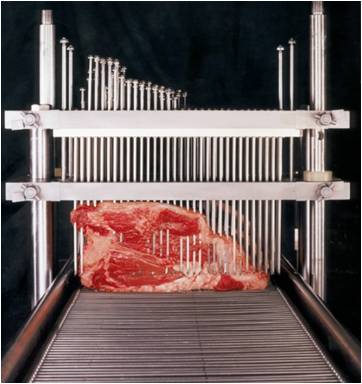
Mechanical meat tenderizers use needles and blades to penetrate steak and roasts. Health Canada says the process of mechanically tenderizing meat is a “very common practice” that is used by suppliers, retailers and restaurants “to improve the tenderness and flavour of cooked beef.”

The process can also drive E. coli on the surface of the meat into the centre, making it harder to kill during cooking, CBC’s Marketplace found during a recent test.

Marketplace worked with Rick Holley, a food scientist and microbiologist at the University of Manitoba, to see how the mechanical tenderization process works and what potential risks might exist.

Holley said up to two per cent of meat cuts, steaks in particular, can carry the organism on the surface.

In a test, Holley spread E. coli O157:H7 that he grew in a lab on a piece of beef. The meat was then run through the machines to see what happened to the bacteria on the surface.

In that instance, Holley found that 10 per cent of the bacteria from the surface was forced into the centre of the meat.

An earlier test using a gel visible under ultraviolet light also found that the material on the surface of the meat doesn’t only contaminate the meat – it can also spread to the needles or blades on a tenderizing machine. Holley said it can be “almost impossible” to properly clean the machines, which can then spread E. coli to other pieces of meat that are tenderized.

It’s not clear exactly how much meat processed in Canada goes through mechanical tenderization, but the Public Health Agency of Canada says in a study it could be between 20 to 50 per cent.

It’s difficult to tell which meat products have been tenderized, because after the meat has been treated the tiny holes seal up and disappear.

Holley said that the recent E. coli outbreak is just another symptom of a continuing problem. “Clearly, what we are seeing represents a failure, again, in the system,” he said. “And if things don’t change, we can expect to see this in the future.”

Canada’s agriculture minister, Gerry Ritz, said Friday federal officials are looking at issues surrounding mechanically tenderized meat, stating, such a label would warn people “that if you’re buying this tenderized product at a lesser price, because it’s a lesser cut of meat that’s been tenderized, that it should be labelled to warn you to cook it beyond the temperature that’s required.”