Fundraiser held for 6-year-old Georgia girl stricken with E. coli

A gun club aims to help a Cherokee County girl, sick with E. coli.

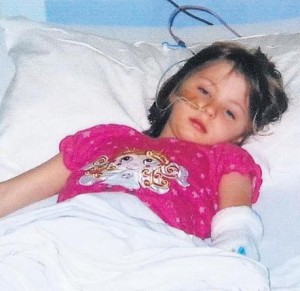
Seven-year-old Hannah Faith Collett is battling serious complications from a severe E. coli infection. Fundraisers have been mounted to help Hannah.faith_-300x168offset the family’s medical bills.  Her stepfather serves as a deputy for the Cherokee County Sheriff’s Office.

Today, Armed American Ladies hosts a Poker Shoot & Bake sale at Big Woods Goods on Ronnel Road in Canton.  Proceeds will be donated to Hannah’s family.  The grand prize is a Mossberg 500 shotgun.

North Carolina cantaloupe packinghouses invest in infrastructure for food safety

Following 2011’s tragic Listeria-in-cantaloupe outbreak linked to Jensen Farms and a 2012 Listeria-prompted recall, the U.S. Food and Drug Administration (FDA) issued a letter detailing inspection visits to U.S. cantaloupe packinghouses:cantaloupe_salmonella(25)

Because the recent outbreaks have been traced to domestic cantaloupe packinghouses, during the 2013 growing season, we intend to initiate inspections with a sampling component at a subset of the cantaloupe packinghouses in the United States.  The aim of these inspections is in part, to assess the current practices by this segment of the produce industry and to identify insanitary conditions that may affect the safety of cantaloupe destined for distribution to consumers.

In preparation for the inspections, and partnering with colleagues at the North Carolina Department of Agriculture and food safety friends in other states we put together a series of workshops and on-farm assessments. Michelle Danyluk and I even wrote a fact sheet on how to use sanitation to establish a clean break and define a lot in pack facilities.  FDA carried out multiple visits and took hundreds of samples. Although a full report hasn’t been released, some information trickled out and the industry took note.

According to The Grower, many North Carolina cantaloupe producers have upgraded facilities, infrastructure and sanitation protocols.

Last year at the end of the season, Southeastern Growers Association, Kenly, N.C., updated its cantaloupe packing line to all-stainless steel and this year is the first season that the company is using the new equipment.

Other companies are making similar changes to ensure the safety of their product. In 2013, Jackson Farming Co. transformed its open packing shed to an enclosed cantaloupe packing facility.

“Our job in the industry is to make changes when needed and learn how our practices could affect this industry,” said Matt Solana, vice president of operations and supply chain at Jackson Farming Co.

T.C. Smith Produce, Seven Springs, N.C., also completed a new stainless steel cantaloupe packing line in its cantaloupe packing room and used it for the first time last season.

The company wanted to improve food safety any way that they could. 

“We will continue to make adjustments as new scientific information becomes available,” said Solana. “The bottom line is that we want to continue growing and selling cantaloupes and we want to make them as safe as they can be.”

UK mother warns of E. coli threat from petting zoos

Claudia Erskine was seven-years-old when she fell critically ill just days after visiting Godstone Farm in 2009.

The Argus reports that Claudia, now 11, was one of 76 children under the age of 10 who contracted E. coli O157 at the farm.
claudia.e.coli.petting.zoo.may.14The families who were worst affected by the outbreak settled their damage claims with the farm in court earlier this month.

Claudia’s mother Lucy, 39, told of how “no amount of money in the world” would offset the fact her daughter has to live with the health effects of what happened.

She said it was the “darkest period” of her family but added they were determined to raise awareness of the infection.

The mother-of-three said: “Having lived through the dreadful effects that it had on our family, and nearly losing our little girl as a result, we would ask other parents to think twice before taking children to petting farms.

“I sat vigil by her bedside, terrified and not knowing whether she would have the strength to pull through.

“It seemed impossible to us that our little girl, who had been happy and healthy just a few days before, was now lying in a hospital bed fighting for her life – and all because of a day out at Godstone Farm.”

Claudia was left hospitalised for three weeks, pulling through in what her mother called a “miracle”.

Claudia’s siblings, Niall, six, and Evan, 15-months, also contracted the disease but recovered.

Jill Greenfield, of the law firm Field Fisher Waterhouse, said: “It is tragic that these young children were allowed to skip into this farm completely oblivious to the danger that awaited.”

For information about keeping safe from E. coli go to: hse.gov.uk/campaigns/ farmsafe/ecoli.

And these outbreaks inspired some of our work. Handwashing is never enough.

Best practices for planning events encouraging human-animal interactions

Zoonoses and Public Health

G. Erdozain , K. KuKanich , B. Chapman  and D. Powell

http://onlinelibrary.wiley.com/doi/10.1111/zph.12117/abstract?deniedAccess

Educational events encouraging human–animal interaction include the risk of zoonotic disease transmission. It is estimated that 14% of all disease in the US caused by Campylobacter spp., Cryptosporidium spp., Shiga toxin-producing Escherichia coli (STEC) O157, non-O157 STECs, Listeria monocytogenes, nontyphoidal Salmonella enterica and Yersinia enterocolitica were attributable to animal contact. This article reviews best practices for organizing events where human–animal interactions are encouraged, with the objective of lowering the risk of zoonotic disease transmission.

Checklist Final 3

Checklist Final 3_Page_1

Checklist Final 3_Page_2


Australian deli meats a microbiological worry

I look forward to the peer-reviewed paper, because PR before publishing is usually a bad idea. I also like the messaging Publix supermarkets use in the U.S.

A new study by students at Adelaide University, which will be presented this week at a Perth conference, shows hygienic food handling is not practised at many of the city’s supermarket delicatessens.

publix.deli.warningThe study found 134 out of 174 samples of various ready-to-eat deli meats bought at randomly selected supermarkets had bacterial levels that failed to meet food standards guidelines.

“Although no recognised food poisoning pathogens such as Escherichia coli or Salmonella species were found on these meats, the high bacterial count suggests that hygiene has been compromised,” said the university’s Professor Michael Reichel.

“Such out-of-control processes are also susceptible to contamination with serious food poisoning organisms.”

Sliced salami, fritz and roast pork showed the highest proportions of unsatisfactory bacterial counts.

Ham and chicken meats had lower levels of bacteria, but two-thirds of those samples still failed to meet satisfactory standards.

He said 15.5 per cent of samples showed the presence of coliform bacteria, indicating poor hygiene such as people not washing their hands after going to the toilet.

Royal Hawaiian resort linked to over 100 illnesses

With the mid-season finale of my current favorite television show, Mad Men, less than an hour away, I’m preparing with some wine, happy that I’m not suffering with norovirus like over 100 guests of the Royal Hawaiian. Featured in Season 6 the Royal Hawaiian was the inspiration for one of Don Draper’s magical pitches – the hotel is an experience.

But probably not like barfing and puking.Mad_Men_Hamm_Pare_Waikiki_Beach_Courtesy_AMC*304

According to the Global Dispatch, an norovirus has swept it’s way through the resort.

Royal Hawaiian general manager, Kelly Hoen, apologized for the unpleasant situation, “We at the Royal Hawaiian are very sorry for having many of our guests and several of our associates that have gotten ill with the norovirus.”

Hawaii health officials confirmed norovirus. Hawaii state epidemiologist, Dr. Sarah Park said in an interview with KITV, “It’s a very hearty sort of virus that it can stick around in the environment and be resistant to normal antiseptic kind of sanitation-type solutions. Park went on to say that someone not necessarily contaminated food at the hotel, but since several employees were sickened, kitchen surfaces and dishware likely got contaminated.

Hoen said the hotel has cleaned and sanitized public areas, restrooms, kitchen and guest rooms at the hotel.

Salmonella in Seattle at retail

Poultry have been identified as one of the major sources of salmonellosis, with estimates ranging from 10 to 22% of total cases.

Despite several advances in the industry and new performance standards, the incidence of salmonellosis in the population has not declined over the last 15 years. Salmonella is pervasive in a wide variety of foods, and thus, estimating its burden resulting from specific food categories has been challenging and plagued with uncertainty seattle3due to critical data gaps. The objective of this study was to conduct a year-long market survey (1,322 samples) to help bridge the data gaps on the contamination rates and levels of Salmonella on raw poultry by product type (i.e., breast, thighs, drums, wings, and split breast) and production method (conventional versus organic).

The isolates recovered were serotyped and tested for antibiotic sensitivities. A PCR method was utilized for initial screening of samples after an overnight enrichment in tryptic soy broth. Three-tube most-probable-number (MPN) assays and anti-Salmonella immunomagnetic separation methods were utilized to determine the levels of Salmonella and aid with the recovery of Salmonella species, respectively. Eleven percent of the samples were positive for Salmonella. Significant differences in percent positive rates by product type included up to a 4-fold difference in percent positive rates between establishments, ranging from 7 to 31%.

Of the samples positive for Salmonella species, 94% had <30 MPN/100 g. Production methods identified as organic or as not using antibiotics had significantly higher rates of recovery of Salmonella. On the other hand, all of the Salmonella isolates that were resistant to two or more antibiotics originated from conventional processing establishments where antibiotics were utilized. In addition, a significant proportion of isolates from conventionally processed products were serotypes clinically relevant to humans.

Prevalence, concentrations, and antibiotic sensitivities of Salmonella serovars in poultry from retail establishments in Seattle, Washington

Journal of Food Protection, Number 6, June 2014, pp. 872-1042, pp. 885-893(9)

Mazengia, E., Samadpour, M., Hill, H. W., Greeson, K., Tenney, K., Liao, G., Huang, X., Meschke, J. S.

http://www.ingentaconnect.com/content/iafp/jfp/2014/00000077/00000006/art00003

Silence of the goats; traditional slaughter in South Africa

The South African Department of Agriculture, Forestry and Fisheries estimated in 2012 that there were 2.033 million goats in the country.

Of these animals, less than 0.5% are slaughtered at registered abattoirs. Although informal and traditional slaughter of goats for home consumption is permitted under the South African Meat Safety Act 40 of 2000, the responsibility for ensuring that products are safe is left to the traditional or ritual slaughter practitioners. The objective of the the_silence_of_the_lambspresent study was to assess whether preslaughter activities associated with traditional or ritual slaughter promote or reduce food-associated risks and to recommend mitigation strategies for potential food safety hazards.

Structured interviews were conducted with 105 selected respondents (in and around Tshwane, South Africa) who had been involved in traditional goat slaughter. Approximately 70% of goats slaughtered were obtained from sources that could be traced to ascertain the origin of the goats. None of the respondents were aware of the need for a health declaration for slaughter stock. Some slaughter practitioners (21%) perform prepurchase inspection of stock to ascertain their health status. However, this percentage is very small, and the approach is based on indigenous knowledge systems.

The majority of respondents (67.6%) travelled 1 to 11 km to obtain a goat for traditional slaughter. Although approximately 70% of slaughter goats were transported by vehicles, the vehicles used did not meet the legal standard. More than two-thirds of goats were tied to a tree while waiting to be slaughtered, and the rest were held in a kraal. The holding period ranged from 1 to 72 h, but more than 70% of the animals were slaughtered within 36 h.

This study revealed that traditional and ritual slaughter involves some preslaughter activities with potential to mitigate the risk of slaughtering animals that are not fit for human consumption. Such activities include prepurchase inspection, obtaining goats from known and traceable sources, and ensuring that animals have sufficient rest before slaughter. However, given the rudimentary nature of these activities, they may not offer adequate protection to consumers of such meat.

The lack of understanding of the importance of a obtaining a health declaration certificate and minimizing stress in animals waiting to be slaughtered should be addressed to minimize the potential for propagation of foodborne diseases. The Meat Safety Act 40 of 2000 should be enforced where it applies and should be reviewed to provide guidelines that would help mitigate human health risks associated with traditional slaughter of goats.

 Assessment of food safety risks associated with preslaughter activities during the traditional slaughter of goats in Gauteng, South Africa

Journal of Food Protection, Number 6, June 2014, pp. 872-1042, pp. 1031-1037(7)

Qekwana, Nenene Daniel; Oguttu, James Wabwire

http://www.ingentaconnect.com/content/iafp/jfp/2014/00000077/00000006/art00024

Portland boil water alert lifted: Here’s what to do

The Oregon Health Authority has lifted Portland’s boil water alert that was issued on Friday.

But, as Lynne Terry of The Oregonian writes, before using tap water, running-tap-wateror using ice from a machine, here’s what residents need to do:

  • Flush pipes and faucets by running cold water faucets continuously for at least two minutes or until water runs cold.
  • Flush water coolers by running those with direct water connections for five minutes, according to the Centers for Disease Control and Prevention.
  • Flush home automatic ice makers by making three batches of ice cubes. Discard all three batches.
  • Run water softeners through a regeneration cycle.
  • Drain and refill hot water heaters set below 113 degrees Fahrenheit.
  • Change all point-of-entry and point-of-use water filters, including those associated with equipment that uses water.

30 ill with salmonellosis in linked to Fuego’s Tortilla Grill in College Station, Texas

Brazos County, Texas is back in the food safety news again. A year after the famed taco-eating press conference (Since everybody, I’m sure, would want to know the name of the restaurant, I went by there right before I came. I got a beef taco, so here it is.”) the Brazos County Health Department has connected 30 cases of Salmonella Typhimurium Ohio to a Fuego’s Tortilla Grill. According to WTAW,  a specific food source has yet to be identified but multiple food samples tested positive for the outbreak strain. l

Through the course of the food borne outbreak investigation, Fuego’s Tortilla Grill Restaurant became of statistical significance. Environmental samples were obtained from the restaurant 05/13/2014.

Today, the DSHS Laboratory reported that 4 of the 36 samples obtained from the restaurant tested positive for Ohio strain. A specific exposure source, such as food handling procedures, food supply or an infected employee has not been specifically identified, but is currently under investigation.

BCHD is working very closely with Fuego’s Restaurant to find the source of bacteria, and how to prevent this type of event from recurring. Fuego’s Restaurant’s management has been cooperative during this investigation, and has closed voluntarily today, when they received the news about the lab samples.

The Eagle, a College Station newspaper, also reported that Fuego’s Tortilla Grill had reopened following a through scrubbing.

“We’re owning up to this,” owner Paul Moler said following a news conference by the Brazos County Health Department. “We’re not a victim here.”

“All we can do is move forward, but I guarantee you Fuego will open its doors the best it’s ever been, and we will continue to give fresh, quality value at a great price. We’re not going to compromise. We’re not going to cut corners.”

On Friday, upon learning the results of the samples taken on May 13, Fuego voluntarily closed its doors for the day in order to clean and implement changes in food handling, as required by county health officials. Those requirements included a thorough cleaning of the premises by employees followed by an outside cleaning crew, the disposal of all open and prepared foods, as well as all cutting boards — some of which had tested positive for the bacteria.

“This happens,” Sullivan said, noting that Salmonella is a common bacteria found in most kitchens. “This happens with well-intentioned restaurants doing the best they can, so we work together … to come up with best practices and to learn from these types of things.”

Salmonella may be common in kitchens (especially on incoming ingredients and poorly washed hands of staff) but good restaurants have food safety management strategies to keep it off the plates of their patrons.

Relative sensitivity of Escherichia coli O157 detection from bovine feces and rectoanal mucosal swabs

Heh, heh. They said rectoanal in title of their paper.

But it’s important because figuring out how to reduce loads of E. coli O157 entering food service and home kitchens, it’s necessary to do buttheadtextsurveillance and figure out where the most bang for the buck is on the farm.

The need to quantify the potential human health risk posed by the bovine reservoir of Escherichia coli O157 has led to a wealth of prevalence studies and improvements in detection methods over the last two decades.

Rectoanal mucosal swabs have been used for the detection of E. coli O157 fecal shedding, colonized animals, and those predisposed to super shedding.

We conducted a longitudinal study to compare the detection of E. coli O157 from feces and rectoanal mucosal swabs (RAMS) from a cohort of dairy heifers. We collected 820 samples that were tested by immunomagnetic separation of both feces and RAMS. Of these, 132 were detected as positive for E. coli O157 from both samples, 66 were detected as positive from RAMS only, and 117 were detected as positive from feces only. The difference in results between the two sample types was statistically significant (P < 0.001). The relative sensitivities of detection by immunomagnetic separation were 53% (confidence interval, 46.6 to 59.3) from RAMS and 67% (confidence interval, 59.6 to 73.1) from fecal samples. No association between long-term shedding (P = 0.685) or super shedding (P = 0.526) and detection by RAMS only was observed.

Journal of Food Protection, Number 6, June 2014, pp. 872-1042, pp. 972-976(5)

Williams, K. J.; Ward, M. P.; Dhungyel, O.; Van Breda, L.

http://www.ingentaconnect.com/content/iafp/jfp/2014/00000077/00000006/art00014