For awhile I tried to play the harp.
I sucked.

Nour Youssef of the N.Y. Times reports that more than 3,300 children were hospitalized in Egypt on Tuesday after an outbreak of food poisoning at several state-run primary schools, state-owned news media said.
 The mass poisoning, in the impoverished Upper Egypt province of Sohag, north of Luxor, was one of the biggest food-safety cases to hit the country in years.
Officials suspect that school lunches may have been contaminated, and they have opened an investigation. Samples from the lunches, consisting of processed cheese cubes, dry sesame paste bars and loaves of bread, were being analyzed, they added.
Children, most younger than 12, began vomiting within an hour of eating the lunches, Ahmed Nashaat, a Sohag lawmaker, said in a telephone interview. A total of 3,353 children became ill, and at least 50 ambulances were sent to the schools, state news media said. Since then, all but 17 of the students have recovered and been discharged. No deaths or serious complications were reported.
The ordeal revived complaints over the declining quality of Egypt’s public education and health systems. “It is ridiculous how this keeps on happening,” Mr. Nashaat said. “It is not hard to store biscuits and look at the expiration date.”
Apparently in an attempt to deflect some of the anger, the governor of Sohag, Ayman Abdel-Moneim, quickly suspended the distribution of government meals and demanded that changes be made to how they were stored and transported to schools.
Tuesday’s outbreak was one in a long series that have occurred in public schools and universities nationwide recently. Earlier this month, more than 214 students were found to have food poisoning caused by government meals at several schools in the provinces of Minya and Assiut.
Outrage over such instances of perceived government neglect was a main cause of the popular uprising in 2011 that toppled the government of President Hosni Mubarak. “It was not just the parents who were angry in Sohag,” Mr. Nashaat said. “Everyone believes that was the result of neglect. This is leading people to conclude that the people in charge don’t care about their kids.”
I still can’t say no to students.
Beth Driscoll, MA, CPHI(C), CHA, PMP (I’m not sure what all those initials mean) and PhD Candidate, Policy Studies, at Ryerson University (that’s in Toronto, which is in Canada) writes:
 My name is Beth Driscoll, and I am inviting you to participate in a brief, online survey. This survey will take approximately 15 minutes to complete, and investigates the perceptions of Global Food Safety Initiative (GFSI) auditors’ role in public health. This survey is being conducted for my doctoral research project at Ryerson University.
To participate in this project, you must:
•]be fully certified to conduct GFSI audits for at least one benchmarked scheme;
• have completed at least five GFSI audits of that scheme; and,
• be fluent in English.
The survey is not intended to investigate or assess the GFSI, a GFSI benchmarked Food Safety Scheme, Certification Body, Accreditation Body, government or other organization. Should the responses to the survey questions contain information that would identify one of these organizations, the identifying information will be anonymized prior to use.
Conflict of interest declarations: I am a contract employee for NSF International. This information is being collected solely for my researcher’s graduate degree, and is not being collected for any organization associated with the GFSI or NSF International, nor do I conduct GFSI audits.
If you choose to participate, you will be asked to complete an online survey about your professional identity and your understanding of your role in public health through the audits you conduct to a Global Food Safety Initiative (GFSI) benchmarked Food Safety Scheme. The survey is confidential is using Opinio, Ryerson University’s Online Survey Program, and all data is stored at Ryerson University. This study has undergone review through the Ryerson University Research Ethics Board and if you have questions about your rights as a research participant, you may contact the Ryerson Research Ethics Board at rebchair@ryerson.ca. If you have any questions about the survey please contact the researcher, Beth Driscoll, at edriscol@ryerson.ca or Dr. Richard Meldrum at meldrum@ryerson.ca before continuing.
Please feel free to forward this email to anyone you feel may be qualified to participate.
To participate, please go to the following website: https://survey.ryerson.ca:443/s?s=6004
Chapman was always the kinder, gentler version of me, and he goes too easy on Canadian boffins who announced today there are now 24 people sick with E. coli O121 in British Columbia (12), Saskatchewan (4), Alberta (3) and Newfoundland and Labrador (5).
 That the outbreak missed Manitoba, Ontario, Quebec, Nova Scotia, New Brunswick and PEI should give epidemiologists solid clues, ones that the Public Health Agency of Canada is not ready to divulge.
The initial public announcement was Jan. 12, 2017.
A couple of months later, the case count has doubled, and the only advice PHAC has is wash your fucking hands.
The last two major North American outbreaks of E. coli O121 were in flour, last year, and in sprouts, a few years earlier (please, let it be sprouts, please).
Five months into the outbreak, I’m sure the dedicated Canadian public servants have had time to match the genetic fingerprint of the outbreak strain with the U.S.-based outbreaks, but don’t expect PHAC to answer such simple questions.
They could have done whole genome sequencing in the time it took to have miniions craft a press release that said … nothing.
“The Government of Canada is committed to food safety. The Public Health Agency of Canada leads multi-jurisdictional human health investigations of outbreaks and is in regular contact with its federal and provincial partners to monitor and take collaborative steps to address outbreaks.”
Eat me completely.
A bunch of hosers are sick with E. coli O121, according the the Public Health Agency of Canada.
There have been 24 cases of E. coli O121 with a matching genetic fingerprint reported in four provinces: British Columbia (12), Saskatchewan (4), Alberta (3) and Newfoundland and Labrador (5). The illness onset dates range from November 2016 to February 2017. Six individuals have been hospitalized. These individuals have recovered or are recovering. The investigation into the source of the outbreak is ongoing.

Rob Mancini writes:
Food irradiation is the treatment of food with a type of radiation energy known as ionizing radiation used to kill microorganisms. In Canada, irradiation has been used on products such as potatoes, onions, wheat and spices. Health Canada has now authorized the use of ionizing radiation to treat fresh and frozen raw ground beef and permit the sale of these products in Canada.
A number of concerns regarding the use of irradiation were brought forth to the attention of Health Canada including the formation of hydrogen peroxide and alkylcyclobutanones. Health Canada states that hydrogen peroxide is relatively unstable and any residues that may remain on the meat after irradiation are expected to break down to water and oxygen during post-irradiation storage. Alkylcyclobutanones are products referred to as “Unique Radiolytic Products” (URPs) that are derived from fat when irradiated and therefore their presence is directly related to the fat content of the food. These URPs are found in extremely small quantities in irradiated foods, in the order of parts per billion. The overall weight of evidence indicates that the very low levels of these compounds found in irradiated beef do not pose a risk to human health.
I currently live in Winnipeg, Manitoba (Canada) and have been asked a number of times what I’m doing here, cause of the ridiculous cold and short summers. Family is everything to me and they all live in Winnipeg. My parents have kindly suggested that if I take away their grandkids, nothing good will come from that scenario. Winnipeg is also home to food microbiologist guru Dr. Rick Holley whom I have had the pleasure of working with in the past on the CFIA modernization project ranking biological hazards with food commodities. Here is Dr. Holley speaking on food irradiation:
Earlier this month Doug and I had a paper published in the Journal of Environmental Health about the need for public health folks (especially at the local and state levels) who are dealing with an outbreak to have a plan on when to go public. The plan should include what info the release; how they release it; and, what triggers release.
There are a bunch of great folks in these agencies who are often understaffed, overworked and dealing with political pressures – but often don’t look to the risk communication world for tips on this stuff.
Caitlin Dewey at the Washington Post wrote about why FDA doesn’t practice sharing outlets/retailers where recalled products are sold, even those linked to illnesses.
The FDA does not specify, however, which stores, centers or schools — because that would violate its interpretation of an obscure trade secret rule.
This interpretation differs from that of other agencies in the federal food safety system, an overlapping and often illogical network of regulatory fiefdoms. The system, which is responsible for keeping food free of bacteria and other pathogens, frequently has to weigh the very real interests of private food companies against potential risks to the public. In the case of releasing retailer lists during major outbreaks, the FDA has historically sided with business, ruling that such lists constitute “confidential commercial information” and thus should not be available for public consumption.
Critics say that the agency’s unwillingness to share this information poses a clear danger to public health, particularly in cases like the current E. coli outbreak, where parents may not know if their child consumed the recalled product. According to the Centers for Disease Control and Prevention, 14 of the 16 people who have fallen ill were children.
It could also prove relevant in incidents like last year’s multistate hepatitis A outbreak, which was traced to frozen strawberries imported from Egypt and sold at several Tropical Smoothie Cafes. The FDA did not specifically reveal which locations, however — a measure that some experts say would have gotten the news to ill consumers faster. That’s important in the case of an illness like hepatitis A, which can be treated with a vaccine for a limited period after exposure.
Doug and I argue that public health agencies (like FDA) should be in the business of sharing the info they have, the info they don’t have and all the uncertainties. This includes distribution data. There are lots of ways that folks get food safety and recall information. Sometimes it’s directly from their retailer of choice; or maybe it comes from a local media source. Or someone shared something on Facebook.
Bill Hallman and colleagues at Rutgers conducted a survey of consumers and their self-reported behaviors following 2008’s Salmonella saintpaul in tomatoes, er, peppers outbreak and found that lots of people (81%) say they they share recall info when they see it. 38% believe that the food they purchase is less likely to be recalled than their neighbors. And less than 60% report checking their fridges and pantries for the food.
Releasing retailer/distribution information might increase the chance individuals will say to themselves ‘I’ve bought some soynut butter recently, and I got it at that grocery store’ and they go check.
But I could just be optimistic.
A food safety Facebook friend posted a couple of days ago about a Listeria monocytogenes-linked recall. It was so important to him that he posted the info twice once on Feb 17 and again March 11, ‘I want to again stress that you should check any production codes immediately and if you have any of these products, either throw them away or return them to your grocery store. I just checked my cheese stash and had the pepperjack slices that are included.’
But, like Hallman and colleagues found, while he shared the info, he wasn’t motivated to actually go to his fridge to look for it the first time he posted. Maybe the distribution information would have triggered a behavioral response.
Don and Ben talk I.M. Healthy’s soy nut butter-linked E. coli O157 outbreak; social responsibility and food safety; and produce washing. The guys also discuss the particulars of goalie screening and Salmonella sticking around in the environment for months. Bonus: urinals.
Episode 121 can be found here and on iTunes.
Show notes so you can follow along at home:
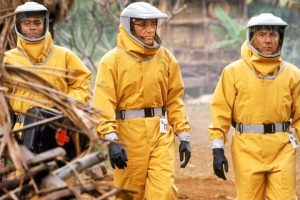
There’s an ongoing debate among public health officials about how quickly they should notify the public about foodborne illness outbreaks, and how much information should be shared. Is it better to tell people as early as possible, or could that create panic that is counterproductive?
Food safety researchers are now calling on public health agencies to develop clear guidelines on when to inform the public about foodborne illness outbreaks – something which is often handled on an ad hoc basis at the local, state and federal levels.
To learn more about how health agencies are currently addressing these questions, researchers evaluated 11 case studies of large outbreaks, dating back to 1996.
Not only is there no clear consensus on how to respond, they discovered, but there is no system in place to help officials decide when to tell the public about a foodborne illness outbreak.
“We found that pressure from social media, or from companies, has sometimes influenced when health officials release information, which is problematic,” says Ben Chapman, lead author of a paper on the work and an associate professor of agricultural and human sciences at North Carolina State University.
“Officials need to have clearly defined processes for determining when information should be made public, and those processes don’t appear to exist right now,” Chapman says.
Instead, researchers found that public health agencies – from the federal Centers for Disease Control and Prevention to state and local agencies – make decisions about sharing information on a case-by-case basis.
“There are advantages and risks to both sharing and withholding information,” Chapman says.
Sharing information early in an outbreak can allow consumers to make informed decisions about their food choices that limit risk. But there can also be a lot of uncertainty about that information.
“For example, officials may be investigating a particular restaurant or type of food, but the investigation could ultimately find that the culprit was actually a different source altogether,” Chapman says.
By the same token, withholding information until there is less uncertainty may increase public health risks because the source of the illness may remain accessible to unwitting consumers.
“The best case is to share what you know, and what you don’t know, in an open and transparent way,” Chapman says. “Talking about uncertainty may be uncomfortable for officials, but they need to have a plan for how to do so.”
The paper, “Going Public: Early Disclosure of Food Risks for the Benefit of Public Health,” is published in the Journal of Environmental Health. The paper was co-authored by Maria Sol Erdozaim, a former undergraduate at Kansas State University, and Douglas Powell of Powell Food Safety.
-shipman-
Note to Editors: The study abstract follows.
“Going Public: Early Disclosure of Food Risks for the Benefit of Public Health”
Authors: Benjamin Chapman, North Carolina State University; Maria Sol Erdozaim, Kansas State University; Douglas Powell, Powell Food Safety
Published: March 2017, Journal of Environmental Health
Abstract: Often during an outbreak of foodborne illness, there are health officials who have data indicating that there is a risk prior to notifying the public. During the lag period between the first public health signal and some release of public information, there are decision makers who are weighing evidence with the impacts of going public. Multiple agencies and analysts have lamented that there is not a common playbook or decision tree for how public health agencies determine what information to release and when. Regularly, health authorities suggest that how and when public information is released is evaluated on a case-by-case basis without sharing the steps and criteria used to make decisions. Information provision on its own is not enough. Risk communication, to be effective and grounded in behavior theory, should provide control measure options for risk management decisions. There is no indication in the literature that consumers benefit from paternalistic protection decisions to guard against information overload. A review of the risk communication literature related to outbreaks, as well as case studies of actual incidents, are explored and a blueprint for health authorities to follow is provided.
We’ve moved into my grandparents’ home circa 1967 (the last time the Leafs won the cup).
The walls are cigarette yellow, the plants are overgrown, but I got Internet.
We love this neighbourhood, and will do our fiscally-able best to improve the place.
Living in a townhouse is convenient, but soul-sucking.
Where I live and write, the place has to have soul.