
The foreign supplier verification rule is foreign to many importers

My friend, Roy Costa from Florida, sent along this piece and I deemed it worthy.
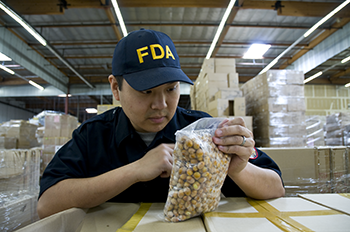
The foreign supplier verification rule is foreign to many importers, October 20, 2018

The Foreign Supplier Verification Rule (FSVP), 21 CFR Part 1, Subpart L, is the part of the Food Safety Modernization Act that regulates the importation of food covered by FDA. While the Act when into effect in 2015, some importers have not yet fully implemented an FSVP program.

An FSVP program is a risk-based system that ensures that foreign suppliers meet the same US rules for food safety as domestic suppliers. This means that importers must verify that FDA’s rules, the Current GMP Hazard Analysis and Risk Based Preventive Controls for Human and Animal Foods, and the Produce Safety rules, have been implemented by suppliers.

Importers bare the responsibility for verification of the safety of foods imported into the US. The Customs filings now include a line item for the “FSVP Importer”. This entry utilizes the Dunn and Bradstreet’s unique facility identifier-the DUNS Number; no food maybe imported without this filing. Whoever is identified as the FSVP Importer must be qualified through education and experience to understand any document submitted for verification, and is subject to unannounced FDA inspection.

The FSVP rule allows third-party audits, microbial, physical and chemical testing and operational records to be used for verification purposes. The key documents an importer must verify are the Food Safety Plan of foreign manufacturers, and the records that show compliance with the Produce Safety rule.

In order to understand these complex verification documents, one must understand the Hazard Analysis and Critical Control Point (HACCP) concept. Education in the Preventive Controls and Produce Safety rules will be necessary for most importers. Without a scientific background, understanding how to successfully apply the five preliminary HACCP steps and the seven HACCP principles is impossible, and the Produce rule requires a deep understanding of Good Agricultural Practices.

Some importers will not be qualified to make decisions about supplier approval, or even understand what is required of them, without training.

An importer must prepare his own FSVP program for each commodity he obtains, based on a risk assessment similar to HACCP. He can only do this if he is a FSVP Qualified Individual, although he can hire or use another Qualified Individual, if he is not so qualified.

The barriers of entry are high. If a supplier does not meet the rules, or if the importer cannot verify the safety of foods, no such foods can be obtained. This could put some importers out of business, and restrict trade in foreign foods.

The impact is huge for the global economy. Currently, imported foods make up an estimated 15 percent of the U.S. food supply, including 50 percent of fresh fruits, 20 percent of fresh vegetables and 80 percent of seafood.

The FSVP rule prohibits anyone with a financial interest in the outcome of verification to have a financial interest in an approval decision. The problems with conflicts of interest in this scheme are readily apparent, since many importers also own the operations of the foreign supplier, and virtually all importers have some kind of monetary incentive for bringing products into the US.

FDA has the authority to inspect the records of the FSVP Importer, and they typically do not notify in advance of a routine inspection. Once in the office, FDA has access to virtually all the records of the importing firm, and will expect that the firm has a Qualified Individual, policies and procedures, records, and a risk-based system to make decisions about supplier approval, with an approved supplier list. Without these vital documents, there will be no way an importer can demonstrate compliance.

At this time, FDA is making inspections to primarily educate the industry, but they will act if they find an importer violating US rules or obtaining unsafe foods.

With such dire consequences possible, one would expect that an importer would seek education in areas of legal compliance, but the industry has not shown overwhelming interest in taking the training needed to understand their responsibilities.

Eventually, the agency will take a focused approach to weeding out the non-compliant importing operations, but the job will be difficult. Policing these complex importer arrangements will not be an easy assignment; it is well known the importers sometimes flaunt the rules that have been in place, and engage in port shopping, ignoring Import Alerts, and outright deception. These new regulations should allow FDA to be more effective in detecting criminal activity, and I expect that penalties will be severe for importers who bring in contaminated foods that cause illness and death to US consumers.

I also expect that product liability will eventually stretch back to the importer in such cases, and that lawsuits will take into consideration the compliance history of the importer when perusing justice for victims of foodborne illness.

I strongly recommend that both foreign suppliers and importers take the Food Safety Preventive Controls Alliance FSVP course, and the other FSPCA relevant courses as needed, Preventive Controls for Human and Animal Foods, and Produce Safety Rules, and learn how to develop a compliant FSVP program.

Contact Environ Health Associates, Course Administration Manager; Katherine Jones 386-316-7266 for course registration.

Just cook it doesn’t cut it: 283 sick from Salmonella in UK lamb

I’ve been in Australia for 7 years now, and while I once thought it was national duty to eat lamb, I could never get over the smell.

So guess we’re safe from the latest Salmonella outbreak linked to lamb in the UK.

Food Standards AgencyFood Standards ScotlandPublic Health England and Health Protection Scotland are reminding people to take care when handling raw meat and to cook it properly.

This comes as we investigate a rise in cases of a particular strain of Salmonella Typhimurium which have been linked to lamb and mutton. We first saw an increase in cases of this particular type of salmonella in July 2017. A number of control measures were put into place which led to a significant decline in cases at the end of that year. A total of 118 cases were reported up until May 2018.

Since June 2018, a further 165 cases have been reported (up to 19 October), which led us to put control measures in place. These haven’t led to the same decline in cases as in 2017 and so we are now reminding the public about how to cook and handle raw meat.

Nick Phin, Deputy Director, National Infection Service, PHE said:

The likely cause of the increased numbers of this specific strain of Salmonella Typhimurium is considered to be meat or cross-contamination with meat from affected sheep.

People can be infected with Salmonella Typhimurium in a number of ways such as not cooking their meat properly, not washing hands thoroughly after handling raw meat, or through cross-contamination with other food, surfaces, and utensils in the kitchen.

Prior to July 2017 only 2 cases of this strain (Single Nucleotide Polymorphism address 1.43.67.992.2703.3225. %) had been detected in England.

Between July 2017 and November 2017, the first increase in this strain was observed with 95 cases reported in England, Scotland and Wales. Control measures were implemented which resulted in a decline in cases.

Numbers of cases were at low levels from December 2017 to June 2018 (23 cases during this period).

In June 2018, the numbers of cases increased again and since June 2018 165 cases have been reported.

There was a death in which salmonella was thought to be a contributory factor related to this outbreak last year, but we are not aware of any deaths related to this strain in 2018

Food safety in food service: We’re on a mission from god

Now they’re citing my lab in Turkey.

OK, I had a bunch of qualified people, and I’m putting the band back together to write a book.

These Turkey folks don’t know shit.

Neither do lots of others.

The purpose of this study is to examine the food safety knowledge of foodservice staff in fast-food restaurants in a Turkish context. Data for this empirical investigation was gathered from a sample of full-time foodservice staff at the different fast-food restaurants in Ankara/Turkey. Respondents self-administered the questionnaires. The total number of 165 questionnaires was obtained in the research location. Results based on the descriptive statistics, staff works in fast food restaurants in Ankara are not knowledgeable on foodborne/food poisoning and the training rate is not at the satisfactory level. In addition, t-test result demonstrates that female respondents are more knowledgeable compared to males. This paper provides implications for managers in terms of minimising the negative effects of foodborne diseases and maximising the employees’ food safety knowledge in a service setting where the food industry is increasing. Theoretically, the current study by examining the food safety knowledge of restaurant staff and providing insights into the foodborne disease in a developing touristic destination lends further contribution to the related literature.

Assessing the food safety knowledge of fast-food restaurant staff in Ankara/Turkey: some strategies from managerial approach

Middle East Journal of Management, https://doi.org/10.1504/MEJM.2018.095583

Kerem Kaptangil, Mustafa Daskin

https://www.inderscienceonline.com/doi/abs/10.1504/MEJM.2018.095583

UK Cyclospora shit fest

TTG reports a judge sitting at Manchester county court has ordered the disclosure of all documentary evidence relating to investigations carried out by Public Health England (PHE) surrounding cyclospora — a parasite spread by food contaminated with infected human faeces.

According to The Times, many customers claimed Tui did not tell them the Riviera Maya region of Mexico was subject to a public health warning due to cyclosporiasis before they booked.

This is in spite of 359 of the 440 British cases reported between June and October 2016 “involving travel to Mexico”, it is claimed.

Others customers allege they were handed a warning letter “only after their plane landed”.

If you’re not too busy farming read this: Draft Guidance for industry: Standards for the growing, harvesting, packing, and holding of product for human consumption,

The purpose of this draft compliance and implementation guidance document is to help covered farms comply with the requirements of the Produce Safety Rule, which establishes science-based minimum standards for the safe growing, harvesting, packing, and holding of produce.  Entitled “Standards for the Growing, Harvesting, Packing, and Holding of Produce for Human Consumption,” the rule is part of FDA’s implementation of the FDA Food Safety Modernization Act (FSMA). 

The draft guidance provides a broad range of recommendations on how to meet the requirements for most subparts of the rule. It also outlines how to determine whether produce or farms may be eligible for exemptions from certain requirements, or from the rule in its entirety.  

Specific regulatory or statutory requirements are cited, and in some cases, specified using the word must. The use of the word should indicates that something is recommended, but not required. The use of the word including means options that are not limited to the described items.

You are encouraged to submit comments on the draft guidance within 180 days of the publish date to ensure your comments are considered while FDA works on the final version of the guidance.

In addition to the draft guidance, there is an At-a-Glance overview of key points in each of the nine chapters described below, as well as a glossary of key terms. The overviews summarize important aspects of each chapter.  It is recommended that you review the draft guidance itself for complete information.

It’s not the colonoscopy diet: People say Burger King’s new black slushie turned their poop weird colors

Tomorrow morning, a doctor is going to stick a camera up my ass.

I’ve been on the pre-colonoscopy diet for three days now, and today is the broken-jaw version I had when I was 18, but worse.

No protein. No fruits or veg.

Just clear liquids. I have a bunch of chicken stock I made last night.

I live in sub-tropical Brisbane which has a fabulous supply of produce and proteins, and I’m eating Jello.

Later today I have to take some colon blow stuff which involves being on the toilet for about 4 hours.

But at least my poop won’t be black.

Dustin Nelson of Thrillist writes that coal-black slushies are one of Burger King’s Halloween specials this year. It’s a Frozen Fanta Scary Black Cherry, and it’s seriously dark. The drink has attracted an unexpected amount of attention not for its flavor, but for, uh, the impact of its dark hue. In fact, people have been heading to Burger King just to get a good look at the, umm, effects. 

Maybe people couldn’t resist the intestinal challenge of an artificially black treat or maybe they remember the unique results of eating that black-bunned Whopper a couple years back. Either way, people are grabbing the cherry treat and reporting on social media that it turns your mouth intensely black. Oh, and it also turns your poop a fun color. Though, no one really agrees on a single color. People have said their results have been black, green, and even blue. Whatever the individual result, it’s not on your usual spectrum of poop colors.

Asked for comment, a Burger King representative said, “For those who want to know, try it and find out.”

My female doctor also had a great suggestion for checking my prostrate, cause I’m of that age too.

She said she could do it while I was passed out for the colonoscopy.

Sign me up.

Another good Brantford boy, Phil Hartman, who was tragically killed by his third wife, is featured below.

German man sentenced to over 12 years in jail for baby food poisoning

A man who contaminated baby food in Germany has been sent to jail for 12-and-a-half years.

Gavin Grey of Eyewitness News reports the 54-year-old had attempted to blackmail retailers by claiming he would point out the poisoned items in return for cash.

He targeted shops in a southern German city.

In court, he admitted placing poisoned jars of adult and baby food in supermarkets and trying to blackmail the owners.

The contaminated jars contained ethylene glycol which is an odourless and toxic liquid used in antifreeze.

Prosecutors said some of the foods contained enough of the poison to kill a child and he was found guilty of five counts of attempted murder.

He was also found guilty of extortion, sending threatening emails to the stores demanding R200 million.

The court heard it was a matter of luck no child had been hurt.

Operation Tarantelo: How the illegal bluefin tuna market made over eur 12 million a year selling fish in Spain

Europol coordinated the international Operation Tarantelo, conducted by the Spanish Guardia Civil with support of French, Italian, Maltese and Portuguese authorities, in which 79 individuals were arrested.

More than 80 000 kg of illicit Bluefin tuna were seized and it is estimated the network trafficked a volume of over 2.5 million kg a year

Several poisoning cases were detected due to the unsanitary conditions in which the fish were stored

Operation Tarantelo was launched when the Spanish Guardia Civil became aware of irregularities relating to Bluefin tuna fishing in the Mediterranean Sea. Investigations revealed that the fish was being traded illegally in Spain, but imported into the country through French harbours, after being caught in Italian and Maltese waters. While the fish caught in Maltese waters were illegally imported using documents from legal fishing and authorised farms, the fish caught in Italian waters arrived in Spain without documents or inspections. Although most of the fish was caught in Malta and Italy, in Spanish waters there were also unauthorised catches, in this case, the illegally fished Bluefin tuna was transported in false bottoms under the deck of a vessel.

This illegal Bluefin tuna market was up to 2.5 million kg a year and it is estimated criminals earn at least EUR 5 profit per kg; total illegal profits amount to EUR 12.5 million. The volume of this illegal trade is double the annual volume of the legal trade, which is estimated to be 1.25 million kg.

The tuna business is often linked to other crimes such as food fraud or document fraud. The main risks for consumer health were due to the unsanitary conditions in which the fish was transported and stored. Sometimes the fish was hidden underwater after it was fished, awaiting transportation. The supply chain was interrupted several times, which made the tuna go off and the risk of food poising higher for eventual customers. Several cases of food poisoning were detected after eating the tuna, due to the degradation of proteins from the unhygienic conditions in which the tuna was stored.

Frank Yiannas headed to FDA

Bob Brackett, who was the U.S. Food and Drug Administration’s point man during the E. coli spinach outbreak of 2006 ( and did a great job), told me once it was always part of the plan to work in academia, government and industry, and he’s done it.

Much praise from this critic.


Frank Yiannas, the vice president of food safety for Walmart and an outspoken proponent of blockchain, is leaving retail to take a post at the Food and Drug Administration.We visited Frank when he was at Disney, Frank visited us when we were in Kansas, we went shopping together at Walmart, as food safety nerds do.


I have a lot of respect for Frank, and hope the bureaucratic screws don’t wear him down.

He always said, where can I get the most bang for my food safety buck (OK, those are my words) but I’m fairly sure Frank would go along with that encapsulation.

And the Susies in our lives.

Raw is risky: Outbreak of multidrug-resistant Salmonella infections linked to raw chicken products

The U.S. Centers for Disease Control (CDC) and public health and regulatory officials in several states are investigating a multistate outbreak of multidrug-resistant Salmonella infections linked to raw chicken products. The U.S. Department of Agriculture’s Food Safety and Inspection Service (USDA-FSIS) is monitoring the outbreak.

Always handle raw chicken carefully and cook it thoroughly to prevent food poisoning. This outbreak is a reminder that raw chicken can have germs that spread around food preparation areas and make you sick.

CDC is not advising that consumers avoid eating properly cooked chicken, or that retailers stop selling raw chicken products.

CDC advises consumers to follow these steps to help prevent Salmonella infection from raw chicken:

Wash your hands. Salmonella infections can spread from one person to another if hands have Salmonella germs on them. Wash hands before and after preparing or eating food, after contact with animals, and after using the restroom or changing diapers.

Cook raw chicken thoroughly to kill harmful germs. Chicken breasts, whole chickens, and ground poultry, including chicken burgers and chicken sausage, should always be cooked to an internal temperature of 165°F to kill harmful germs. Leftovers should be reheated to 165°F. Use a food thermometer to check, and place it in the thickest part of the food.

Don’t spread germs from raw chicken around food preparation areas. Washing raw poultry before cooking is not recommended. Germs in raw chicken can spread to other foods and kitchen surfaces. Thoroughly wash hands, counters, cutting boards, and utensils with warm, soapy water after they touch raw chicken. Use a separate cutting board for raw chicken and other raw meats if possible.

CDC does not recommend feeding raw diets to pets. Germs like Salmonella in raw pet food can make your pets sick. Your family also can get sick by handling the raw food or by taking care of your pet.

CDC will update the advice to consumers and retailers if more information comes available, such as a supplier or type of raw chicken product linked to illness.

Symptoms of Salmonella Infection

Most people infected with Salmonella develop diarrhea, fever, and stomach cramps 12 to 72 hours after being exposed to the bacteria.

The illness usually lasts 4 to 7 days, and most people recover without treatment.

In some people, the diarrhea may be so severe that the patient needs to be hospitalized. Salmonella infection may spread from the intestines to the bloodstream and then to other places in the body.

In rare cases, Salmonella infection can cause death unless the person is treated promptly with antibiotics.

Children younger than 5 years of age, adults older than 65 years of age, and people with weakened immune systems are more likely to have severe illness.
d