The U.S. Centers for Disease Control (CDC) is concerned that bulk, fresh hard-boiled eggs produced by Almark Foods of Gainesville, Georgia, are contaminated with Listeriaand have made people sick. These products were packaged in plastic pails for use nationwide by food service operators. These products have not been recalled. However, because Listeria can cause severe infections, CDC is warning against selling, serving, or using these eggs to make other food products.
Retailers and food service operators should know who supplies their bulk hard-boiled eggs. Consumers will not be able to tell if products they’ve purchased from stores contain these eggs, so it is important that people at higher risk for Listeria infections follow the advice listed below.
Retailers and food service operators should not use bulk hard-boiled eggs produced at the Almark Foods Gainesville, Georgia facility, regardless of use-by date.
These eggs were peeled, hard-boiled, and packaged in plastic pails of various sizes.
Food processors and manufacturers should not use these eggs to make ready-to-eat foods, such as egg salad, deviled eggs, or salads.
These fresh hard-boiled eggs were packaged in plastic pails and have a 49-day shelf-life.
Ian Hitchcock, 52, died in June after eating a contaminated meal – a scandal that appears to have claimed the lives of six people in the UK this year.
Today it emerged sandwiches at Royal Derby Hospital, where Mr Hitchcock was receiving cancer treatment, were kept in ‘ineffective’ fridges that warmed the food to above 8C – an offence under 2013 food safety laws.
The problem was found by experts inspecting the kitchen on June 4 and 5 where an environmental health officer said the broken fridges were serving food at illegal temperatures.
A report said the food was a particular risk to anyone with a weakened immune system, such as cancer sufferer Mr Hitchcock.
On June 8 he died after eating one of the pre-packed sandwiches.
Ian Hitchcock, 52, died after eating a pre-packaged sandwich while being treated for cancer at the Royal Derby Hospital last week. His death is being linked to an NHS listeria outbreak which has so far claimed five lives +2
Ian Hitchcock, 52, died after eating a pre-packaged sandwich while being treated for cancer at the Royal Derby Hospital last week. His death is being linked to an NHS listeria outbreak which has so far claimed five lives
In a letter, seen by the BBC, food safety inspector Jayne Hassall said ‘high risk foods’ such as sandwiches were ‘stored outside temperature control due to ineffective refrigerators’.
Outbreak News Today reports that since the last report on the Cryptosporidium outbreak in Sweden about two weeks ago, health officials say the number of reported cases has decreased in recent weeks.
While cases are declining, the number of cases reported per week remains slightly higher compared to the same period in previous years. To date, some 400 Cryptosporidium cases have been recorded.
Most cases have been reported from Stockholm, Östergötland, Västra Götaland, Halland, Jönköping and Uppsala.
The Public Health Authority analyzes samples from the cases to determine what type of cryptosporidium they have become ill from. Of the 202 samples analyzed so far, 93 have been shown to belong to subtype (A) and 58 belong to subtype B of Cryptosporidium parvum. In addition to this subtype, a number of different subtypes have been detected.
The fact that different subtypes are seen indicates that there are different sources of infection for the cases reported during the fall. From the survey studies it was shown that cases with subtype A have drunk to a greater extent pre-purchased freshly squeezed fruit and vegetable drinks that are no longer on the market when the shelf life is short. The majority (almost 80%) of cases with subtype A were reported to have fallen ill.
From the time I started teaching at university in 1984, I never once recommended a textbook.
They were a student rip-off.
Tim Wu of The New York Times writes that as the semester ends, instructors at universities and community colleges around the country will begin placing their orders for next year’s textbooks. But not all professors will pay enough attention to something that students complain about: the outlandish prices of the books we assign. Having grown at many times the rate of inflation, the cost of a leading economics book can be over $250; a law school casebook plus supplement can cost $277. Adding to such prices is the dubious trend of requiring students to obtain digital access codes, averaging $100, to complete homework assignments.
Professors love tough questions. Here’s one we need ask ourselves: Are we helping rip off our students?
Police said 42-year-old Carpenter was angry over a complaint she filed at school and wanted revenge on the principal.
The sub allegedly was witnessed in rubber gloves and a face mask around 6:30 a.m. Dec. 1 at Urfer Park putting fecal matter around the pavilion, which was reserved for the birthday party of the principal’s 6-year-old daughter.
Officers spoke to the principal who explained she had an ongoing dispute with a substitute teacher, who taught her daughter’s class. The detectives went to the home of Carpenter, who allegedly confessed to the act of revenge, officials said.
She told officers she flung the poop around the pavilion because she was upset over how a complaint she filed at school was being handled and wanted to disrupt the birthday festivities.
The unidentified pooper was filmed relieving himself on the floor of the Safeway supermarket in San Francisco’s Marina District around 7:45 am last Sunday morning.
He was snapped defecating by a stunned shopper called Mike, who uploaded the photos to social media afterwards. The incident happened close to an aisle full of cleaning products, even though the Safeway has a restroom that is free for shoppers to use.
Mike says the pooper left the Safeway shortly after – apparently without paying for the toilet paper he’d used – before wandering into a nearby Starbucks. His behavior was met with disgust by fellow shoppers, one of whom told KRON he was ‘lost for words.’
We have an abundance of excellent public toilets in Australia – or at least Brisbane.
The U.S. Centers for Disease Control reports on October 25, 2018, at 2:15 a.m., a woman aged 30 years and her mother, aged 55 years, both of Egyptian descent, arrived at an emergency department in New Jersey in hypotensive shock after 16 hours of abdominal pain, vomiting, and diarrhea. The daughter also reported blurry vision and double vision (diplopia), shortness of breath, chest pain, and difficulty speaking. She appeared lethargic and had ophthalmoplegia and bilateral ptosis. Both women were admitted to the hospital. The mother improved after fluid resuscitation, but the daughter required vasopressor support in the intensive care unit. Although the mother did not have evidence of cranial nerve involvement on admission, during the next 24 hours, she developed dysphagia and autonomic dysfunction with syncope and orthostasis and was transferred to the intensive care unit as her symptoms progressively worsened similar to those of her daughter.
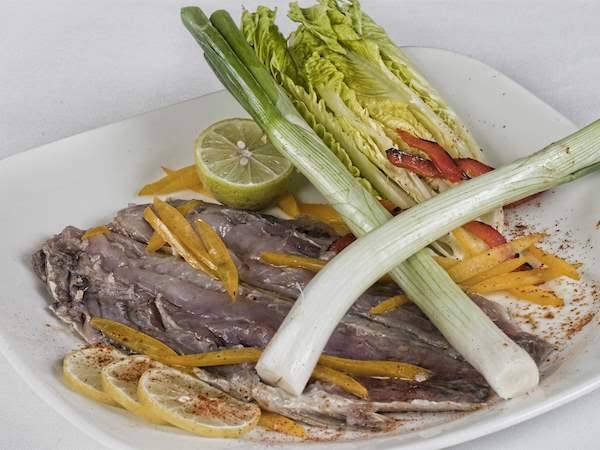
Two days before admission, both women had eaten fesikh, a traditional Egyptian fish dish of uneviscerated gray mullet that is fermented and salt-cured. Fesikh has been linked to foodborne botulism, including a large type E outbreak in Egypt in 1993 (1). The Egyptian Ministry of Health has since issued public health warnings regarding fesikh before Sham el-Nessim, the Egyptian holiday commemorating the beginning of spring, during which fesikh is commonly prepared and eaten.* Foodborne botulism outbreaks associated with fesikh and similar uneviscerated salt-cured fish have also occurred in North America (2); two outbreaks occurred among persons of Egyptian descent in New Jersey in 1992 (3) and 2005 (4).
Botulism, a paralytic illness caused by botulinum neurotoxin (BoNT), was suspected because of the reported exposure to fesikh along with symptoms of ophthalmoplegia, bilateral ptosis, dysarthria, and autonomic dysfunction. Per New Jersey Reporting Regulations (NJAC 8:57),† these suspected illnesses were immediately reported to the New Jersey Department of Health. After consultation with CDC, heptavalent botulism antitoxin was released by CDC and administered to both patients within approximately 24 hours of arrival at the hospital. The daughter’s symptoms improved, and she was weaned off vasopressors. Both patients survived following intensive care for 2 days and total hospitalization of 7 days each.
CDC tested serum obtained before antitoxin administration. Serum from the daughter tested positive for BoNT type E by the BoNT Endopep-MS assay (5); the mother’s serum tested negative. A leftover sample of the consumed fesikh also tested positive for BoNT type E and Clostridium botulinum type E.
Interviews conducted by the Communicable Disease Service at the New Jersey Department of Health revealed that two fresh mullets purchased by the patients’ neighbor at a local Asian market were used to prepare the fesikh. The mother salt-cured and fermented the mullet, leaving the fish uneviscerated and wrapped in plastic in the kitchen for 20 days at ambient temperature. The mother confirmed that she previously used the same method of preparation in Egypt with no deviation in techniques or steps.
These cases illustrate the importance of early recognition and treatment of botulism. Botulism can be fatal, typically from respiratory failure, and treatment delays can result in increased mortality and worsened overall outcomes (6). These cases also highlight the role of uneviscerated, salt-cured fish dishes as potential vehicles for foodborne botulism. C. botulinum spores are ubiquitous in marine environments, and traditional methods of home preparation for these dishes might support conditions that are favorable for toxin production (i.e. anaerobic conditions) (2). Neither of these patients had previously heard of botulism. Risk communication via public awareness campaigns, as has been conducted by the Egyptian Ministry of Health to discourage fesikh consumption, might be indicated in the United States; engagement with Egyptian communities in the United States might provide insights into additional prevention strategies to decrease the risk for foodborne botulism from fesikh and other uneviscerated, salt-cured fish products.
Jessica Grose of The New York Times writes that “two days before my 37th birthday, I received the following bone-chilling email from my daughter’s elementary school: “Dear Families, We wanted to inform you that we had an unusually high number of students across all grades suffering from symptoms of a stomach bug.”
One day before my 37th birthday, I had a parent-teacher conference in that building of horrors.
You know where this is going: I spent my birthday eve in the local E.R., getting fluids and the anti-nausea medication Zofran pumped into my veins. “You need to break the barf cycle,” the attending doctor said.
The ailment sweeping my kid’s school and my intestines was norovirus, a highly contagious stomach bug that causes nausea, vomiting and diarrhea. There are multiple strains of norovirus, so you can catch it more than once in a season — and it’s basically hanging around all winter, from November to April.
Norovirus can live on surfaces for days and, per the Centers for Disease Control and Prevention, people infected with norovirus shed billions of virus particles for two weeks or more; just a few particles can make other people sick. That’s why norovirus outbreaks have caused an elementary school in Seattle and 40 schools in Colorado to close briefly in recent weeks — officials wanted to stop the spread, and keeping sick kids away from each other and the building can help.
CDC and FDA both posted an updates to their Romaine/E. coli O157:H7 outbreak pages yesterday that shows another 36 ill folks with an onset date as late as December 1, and that one of the growers associated with an unopened bag of Fresh Express Romaine also supplied Romaine in other outbreaks that FDA is investigating.
FDA says: These outbreaks are each caused by strains that are different from each other and different from the larger outbreak. One of the additional outbreaks, in Washington state, is potentially linked to romaine lettuce. The other outbreak, with cases in the U.S. and Canada, is linked to Fresh Express Sunflower Crisp Chopped Salad Kits.
I had a couple of conversations about these outbreaks today and someone asked about why Salinas Romaine has been linked to outbreaks around the same time frame in 2017, 2018 and this year.
Essentially asking whether I had any theories on why the risk seems to go up around the time that the season is nearing its end and supply is transitioning elsewhere. Is it because people are more lax about food safety around this time? Something else?
My answer: Not sure, but I think that’s exactly what everyone is trying to figure out.

 Deaths: 1