Ben Chapman

About Ben Chapman

Dr. Ben Chapman is a professor and food safety extension specialist at North Carolina State University. As a teenager, a Saturday afternoon viewing of the classic cable movie, Outbreak, sparked his interest in pathogens and public health. With the goal of less foodborne illness, his group designs, implements, and evaluates food safety strategies, messages, and media from farm-to-fork. Through reality-based research, Chapman investigates behaviors and creates interventions aimed at amateur and professional food handlers, managers, and organizational decision-makers; the gate keepers of safe food. Ben co-hosts a biweekly podcast called Food Safety Talk and tries to further engage folks online through Instagram, Twitter, Facebook, YouTube and, maybe not surprisingly, Pinterest. Follow on Twitter @benjaminchapman.

Check yourself: CDC re-estimates burden of foodborne illness, now thought to be 48 million annually in U.S.

(note – original title was incorrect — should read 48 million not 42 -bc)

The much anticipated new estimates of the burden of foodborne illness in the US are now available from CDC. For the past 10+ years the common calculation estimate was 76 million illnesses/year (about 1-in-4 individuals annually). The new report, released today, points to an estimate of 1-in-6 (or 48 million) illnesses annually.

You can read all about it here, http://cdc.gov/foodborneburden/ (it’s a really nice site, with open, transparent calculations).

I’m sure that there will be lots of folks trying to make comparsions between the two estimates (arguing that there has been major progress) or complaining about how poor the 1999 estimates were, but CDC is clear in providing how they made the estimations and says:

The 2011 estimates reflect innovations in data and methodology that have occurred in the past decade. As with the current study, the 1999 study used the best data and methods available at the time.

Better comparisons for progress can be made with the foodnet data (where increases and decreases, depending on pathogen and year, have been seen). The new estimates provide a more precise look at how many sick folks there are every year. 48 million is still a lot.

Langauage barrier can derail food safety culture

Exposes by local media and the weekly discussion of restaurant food safety compliance might do something for inspection scores.  Media pressure certainly affected L.A. over 12 years ago, leading to a revamped inspection system and the county becoming a U.S. leader for posting restaurant scores. Anecdotally, the coverage affects sales both positive and negatively. Pretty well every day media coverage of restaurant inspection shows up in our Google Alerts and most of the time what’s being reported is entirely expected: dirty sinks, insects, food out of temp, etc.

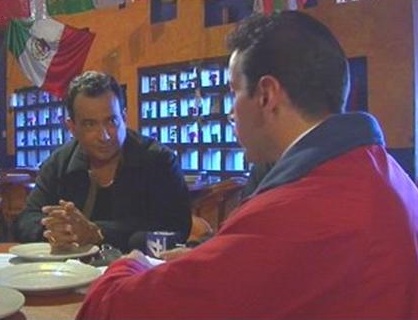
Sometimes we get a jewel like this video. Ryan Wolf of Action 4 News (Brownsville/McAllen, TX) has a weekly restaurant inspection segment, Food 4 Thought. While a little over produced, sort of an homage to Adam West-era Batman with heavy yuck-factor B-roll, Wolf gets operators to talk about how reporting inspections affect their businesses. He also does a decent job at asking managers and owners why they ended up with a poor score.
 
In this week’s segment Wolf interviews an operator from Poncho’s, a restaurant with two poor inspections in the past eight weeks (a history that indicates some food safety culture issues). The owner says the biggest factor leading to poor inspections is a language barrier. Wolf calls the operator on it and says:
 
[Our viewers] don’t want to hear that. They want to know that there is an open line of communication and people are understanding that their safety comes first. Can you assure us that people are safe to eat here?
 
The operator answers, “Yes, regardless of the language barrier.” Not a great promise, especially considering their history.
 
I wrote a bit about food safety culture and how our food safety infosheets can be used to connect food handlers to the consequences of their actions in an article that was published in Food Safety Magazine this week.
 
A culture of food safety is built on a set of shared values that operators and their staff follow to produce and provide food in the safest manner. In an organization with a good food safety culture, individuals are expected to enact practices that represent the shared value system and point out where others may fail. By using a variety of tools, consequences and incentives, businesses can demonstrate to their staff and customers that they are aware of current food safety issues, that they can learn from others’ mistakes, and that food safety is important within the organization. Creating a culture of food safety within a business, which is stronger than just a program, means supporting an environment within a business where staff know risks, how to manage them and value not making patrons ill. A food safety culture requires application of the best science with the best management and communication systems, including compelling, rapid, relevant, reliable and repeated messages.
 
And doing everything you can to overcome language barriers. It’s difficult to compel staff to reduce risks if you can’t communicate with them.

Small-scale business recalls a lot of soup; right thing to do

I made my first soup ever a few weeks ago.

I’ve never really loved soup for a variety of reasons (mainly because I’m messy when I eat it) but Dani loves it. I’ve taken over the majority of meal duties since our youngest son arrived a month ago and I thought I’d mix things up and dive into the world of soup. I made a butternut squash/apple soup that actually turned out pretty good and was easy to make (except for dicing up the squash). Quality-wise, it was way better than what I’ve had in the convenience of canned or boxed soups. I made a bunch of soup but not enough that I needed to freeze or can. We ate it all within a few days.

There are weekly features in various media outlets about the increase of home-based food processors and the changing/updating of rules to support the local food economy businesses – many of these businesses are an expansion or new direction of a family-run farm.

Doug and I (and lots of others) gained experience with this sector 10 years ago while working with Jeff Wilson and co. at Birkbank Farm in Hillsborough ON (that’s in Canada). Jeff, moving away from just producing commodities and towards being a ready-to-eat food producer, had a market store on his 200 acre fruit and veg farm and expanded his business.

The extension agents I work with in North Carolina are receiving an increased number of calls looking for advice about moving from a strictly agriculture business to other ventures like making apple cider; baking pies and canning jams; shredding and bagging leafy greens to be sold with homemade salad dressing; and making soup.

Relatives of Doug’s run Barrie Brothers Local Food Company, who expanded into the home food business as a way to supplement their existing fresh asparagus sales.

From their website:

The initiative to launch Barrie Bros. Local Food Company was inspired by our Grandfather, Homer McMann. A life-long farmer from Alliston, Ontario, Homer provided Campbell’s Soup Company with exceptional quality asparagus for use in their soups. We still use Grandpa’s soup crates in our operation and have modelled our own Barrie Brother’s crates in their image as a way of paying homage to the years Homer spent making good soup.
 
Earlier this week, the Canadian Food Inspection Agency announced a recall and issued a warning the public not to consume one of Barrie Brothers products, Fresh Broccoli Soup.
 
According to the Waterloo Region Record:
 The problem surfaced Monday after the Ontario Ministry of Food and Agriculture tested several jars of the company’s fresh broccoli soup as part of the ministry’s one-year pilot project to routinely monitor locally-produced products, Barrie said.
 
“This one jar did come back with a potential concern of the presence of bacteria,” he said. While the exact type of bacteria was not identified, “the concern is for botulism,” he said.
 
The soup was made in a Guelph-area kitchen in July 2009 and it has a shelf life of 18 months. The ministry inspected the certified kitchen where the soup was made and no problems were identified, he said, adding that ministry officials believe the process time for this one batch of the soup was not long enough to kill all bacteria.
 
Late last night Barrie Brothers expanded the recall to include all of their soups that were processed in that kitchen (see here, already up on their website). They did the right thing by going public and getting the other products back. By only focusing on one lot, or one product producers make the assumption that an issue is isolated and not systemic – when it comes to processing times and equipment and messing around with botulism risks, recalling everything that was processed using the same techniques is a good way to go. Even with the small margins and the financial hit Barrie Brothers will take through this event, it’s better than being linked to illnesses and saying “we didn’t know it was a problem.”
 

Orlando Magic players sent home with GI virus; player vomits in hallway

In addition to fantasy football and rotisserie baseball, I used to play fantasy basketball. Our league only lasted a year (we made the rules somewhat complicated with daily player substitutions) and there were only 6 of us. When I was playing, info like the below from ESPN would have been awesome to know and maybe would have led to a win for me. Sucks for the Magic players though.

A Magic spokesman said Jameer Nelson and J.J. Redick took a flight back to Orlando before Saturday’s game at Milwaukee because of the illness. Dwight Howard and Mickael Pietrus came back before the team’s game at Detroit on Friday night.

The Magic have won six straight games. They still managed to beat Detroit despite playing short-handed. During a win at Chicago on Wednesday, Pietrus vomited in the hallway at one point in the first half.

If the virus is noro, that hallway vomiting event might have been the tigger for some of the other ill players. And maybe for some Chicago or other visiting teams as well if the vomit wasn’t cleaned up well.

Click here for a cleaning up vomit infosheet.

Maple Leaf listerosis victims haven’t been paid; delay linked to medical evidence from claimants

The Toronto Star reports in tomorrow’s paper that while a March 2009 announcement by Maple Leaf Foods describing a "fair and early settlement" of an estimated $27 million to victims following their 2008 Listeria outbreak, no money has been paid out.

They have not paid out one penny to anyone,” said Walter Muller, who was awarded a small amount after he got sick from what he thinks was salami that was later part of a nationwide recall of cold cuts contaminated with Listeria monocytogenes in the summer of 2008. 

The deadline for victims or their family members to submit a claim was in November 2009. The timeline for actually putting the cheque in the mail, on the other hand, keeps getting extended.

The Star reports that no money will be paid to any claimants until all claims are settled or arbitrated and detailed medical evidence can be collected and verified.  

 Laura Bruneau,  president of the Bruneau Group who is handling the claims cites delays in scheduling doctor’s appointments as the problem “People are reporting to us that it can take anywhere from six to eight months to get an appointment to see their physicians.” Wow.

Lawsuits and settlements can take a while to resolve but unfortunately those affected by the pathogen are the big losers in the delays. Revisiting this outbreak over two years after it occured also demonstrates the need for food businesses to have a long-term recovery and crisis management strategy — it’s so much more than being open, transparent and available during the early days of the incident.

Turkey day in Raleigh a day earlier than normal

We’re preparing our Thanksgiving meal today as my Mother-in-law, who’s been here for the past week and is an enormous help with the new baby, is traveling back to Canada tomorrow. Stuffing, potatoes, squash and apple crisp are all prepared and chilling in the fridge. The bird is in the oven and is on target to be done around 5pm.

I’ve been getting some intermittant calls and emails from extension agents and others for some last minute tips; here are a few of the tidbits:

-Cooking turkeys overnight at a really low heat is still a common practice (without using a thermometer)– it’s not a best practice and not recommended, especially without watching the temps of the meat as it cooks.
– It takes a few days to thaw a frozen turkey in the fridge — putting it in the fridge or on the porch now, in preparation for tomorrow is probably not enough time. Cooking from frozen is a good alternative.

-The inside of the carcass is the most contaminated part — cross contamination while stuffing a bird (if that’s the technique being used) can be a big problem.

-Timing of the meal is tough — heard an anecdote from an infosheet subscriber who attended a family meal a couple of years ago where the turkey was cooked and sat on the counter for 4+ hours as the rest of the meal was prepared.

Earlier in the week I spoke with Jeanna Bryner from LiveScience and we talked about some of the risks associated with Thanksgiving meals (including the infamous exploding-a-turkey-in-a-deep-fryer-trick).

From the article:

Don’t wash the turkey. What?! "As soon as you have the pressure of the water hitting the turkey it can spray anything on the outside of that turkey around the kitchen," Chapman told LiveScience. Researchers in the United Kingdom recently found that forceful water hitting a turkey could spray its pathogens up to 3 feet (about 1 meter) away. Chapman recommends wiping the outside of the bird with a damp rag, and then immediately throwing that rag into the washing machine. "Treat that damp rag like a raw chicken," he said, adding that it likely contains the pathogens you’re trying to avoid.

Cook that bird. "The most important thing is cooking that turkey to 165 degrees Fahrenheit (74 degrees Celsius), and there’s only one way to know whether you’ve cooked it safely and that is to use a thermometer." Campylobacter and Salmonella can’t grow until the temperature hits 41 degrees F, and they are killed off when the thermometer reaches 165 degrees F. While turkey juices do change from raw-meat pink to a clear color as the bird cooks, that doesn’t equate with safe eating. Here’s how to measure a turkey’s doneness: Stick a tip-sensitive digital thermometer into perhaps eight to 10 spots on the turkey. If the thermometer reads at least 165 degrees F all around, it can come out. Chapman says to target areas of thick muscle away from the turkey cavity and bone, since the bone conducts heat much better than does the meat and so could give you a false reading.

Quick, get the bird in the fridge. As soon as the meal is done, Chapman suggests getting the turkey meat into the refrigerator, because if any pathogens were left on the meat they could start growing as soon as temperatures get below about 135 degrees F (57 degrees C).

And for your viewing pleasure here are some links to our holiday food safety infosheets and other relevant ones for the past couple of years:

Holiday meal food safety

Avoid foodborne illness during the holidays

Bathing birds is a food safety mess

Keeping poop off the plate

Avoid the runs around the holidays

New food safety infosheet: holiday meal food safety

Thanksgiving is my favorite holiday. Mid-week football, four days of quiet family time and the kick-off of the holiday season — signified by the repeated showing of National Lampoon’s Christmas Vacation on USA Network. With a new little dude here (Sam, he was born Nov 6) who likes to feed every couple of hours and a somewhat crazy 2-year-old, most of the turkey dinner preparation is falling to me this year. I’m planning on doing some dishes in advance and cooking a simplified menu — but it will still involve a fresh turkey. Click here for the holiday meal food safety infosheet.

Calls from fake health inspectors in NC a fraud scam

My buddy Larry Michael with the NC Dept of Environment and Natural Resources, Food Protection Branch is quoted in an AP story as warning restaurant operators in NC to be wary of someone posing as health inspector and calling for business information.

Officials say someone is calling restaurants claiming to be a health inspector or other government official with new inspection procedures. They give the restaurants a code and tell them to provide the information when they get an automated call or when an inspector visits.

Larry says that the business information is being used to create dummy accounts for online shopping and auction sites.

This scam has beeen reported all over the U.S. and Canada. Back in June officials in Washington state also reported the information phishing:

The first caller tells the restaurant that it will receive an automated call providing a numeric confirmation code. A second caller, claiming to be a health inspector, requests the code and seeks to set up an in-person restaurant inspection. The caller threatens fines if the restaurant doesn’t cooperate.

Regulations help butter tart producers reduce food safety risks

Some of my fondest childhood memories are going to the farmers’ market and eating.

But mainly eating.

Where I grew up (Port Hope, Ontario – that’s in Canada), there was a small tailgate farmers market Saturday mornings in the parking lot adjacent to Valu-Mart, but the real event was a trip to either the St. Lawrence Market in Toronto or the Peterborough market on Landsdowne St.

Regardless of the locale, the trip involved getting up at close to 5am, driving in a usually freezing car, walking around waiting for my mom to figure out which tomatoes or peppers looked better and then carrying bushel baskets for her.
 
I wish I had an iPod back then. That part of the experience would have been better.
 
I hated walking (what seemed to be aimlessly) around the market; but I always went because there was a promise of baked goods. I’d beg my mom for a couple of dollars and blow it on sugar, flour and butter treats. The sugar high made it all worth it.
 
I never really wondered whether the stuff I bought would make me sick. I didn’t think a whole lot about food safety and regulation until years later. I figured that if someone could sell it, they must know what they are doing, and I didn’t have to worry about it. I didn’t know (or care) whether the butter tarts (a Canadian, and probably British delecacy; right, exactly as shown) were made in someone’s home. I just wanted them to taste good (and justify the trip). Food safety is all about trust, and I had lots of it.
 
Folks who want to make food in their home or garage and sell it to moody, overweight, Star Wars-loving teenagers at farmers markets are part of a growing business segment, coined as the cottage food industry (although I’m sure they also see other buyers for their products).
By many accounts, the cottage food industry is growing in North America and county extension agents I serve as a resource to have fielded an increased number of questions of how to break into the food industry in the past year. The poor economy is definitely a factor as is the opportunity to be part of and market to a local food movement.
 
Twenty U.S. states allow certain foods to be processed in the home and sold for consumption – but it’s a patchwork of approaches on how the businesses are regulated. In some states, the entire process is deregulated for certain exempt products. These products usually are limited to direct-selling (at a farmers’ market or roadside stand) of baked goods, jams and jellies.
 
In Michigan, as was reported in the Detroit Free Press today, a new law has been enacted that allows for home-based food production. In the absence of inspection, the law requires each item to have a label saying it was produced in an uninspected home kitchen, listing the food’s ingredients and any known allergens, and including the producer’s name and address.
The loudest opponents of this approach are often the larger businesses who are competing with them and pay for licensing and inspection – and sometimes the regulators.
 
What makes me nervous about the exempt/deregulation path and slapping a label on it is that there isn’t someone there initially to ask the questions about what folks are doing that qualifies them for the exemption. This discussion can trigger a conversation about risks and find that the producer isn’t really addressing all the things necessary to protect their customers. Or that their recipe is unsafe.
Exemption makes it so the entrepreneur has to start from scratch and be the food safety expert – sometimes with no real direction. While this might be a great wish, it’s not fair to the businesses and can lead to public health issues.
 
North Carolina is one of the 20 states that allow home-based food production, but before a producer can start selling, an initial inspection of the kitchen is required and all processes evaluated. My colleagues at the North Carolina Department of Agriculture & Consumer Services say that they have seen a significant increase in requests for inspection of home-based food facilities over previous years and have recently dedicated staff to just address new requests. I like this approach. While inspection is just a snapshot it makes me more comfortable that someone is checking to make sure the entrepreneur is awake when it comes to food safety and can refer them to other experts to help them. It helps me trust in the safety of my butter tarts (which I still try to buy when I hit a farmers’ market).


Reheating instructions are a great idea; would be even better if they had temps

We’re in a bit of a waiting game. My wife and I are expecting our second child at any moment (for real, today’s the due date). For our first child, Jack (right, exactly as shown), planning was much less of an issue. We had him at home, didn’t have much else to worry about except making sure our dog was out of the way and we could deal with him coming whenever he was ready. Planning is much more part of the situation this time: we’re using a Chapel Hill-based birth center (40 min away) and have a calling tree of folks who will look after Jack once things start happening.

We had a midwife appointment today and following the check-in we hit a favorite restaurant of ours, Maggiano’s in Durham.

This was all part of the evolving plan.
 
We’re usually pretty good about putting together a menu and doing a big grocery shop once a week but with all of our baby uncertainty we’ve been pretty lax in the food planning department. Maggiano’s has a great deal where you get two entrees for the price of one: one to eat there and a refrigerated helping to heat up later. Even better about the deal is that I can seldom eat my in-restaurant meal so I end up with two or three leftover meals. All for what seems ridiculous like a ridiculous price of $12.95. Good value and we don’t have to do a lot of meal planning over the next couple of days.
We’ve participated in this deal on a few occasions but this time we were presented with a take-out insert card by our server with a 10 second blurb describing that we now had reheating instructions (below, exactly as shown). Being a food safety communication nerd, after she left our table I grabbed the card and scoured it for times/temps and anything I could see about safe handling.
 
I was a bit disappointed.
 
The card says to cook until “thoroughly hot” but doesn’t say anything about what temperature that might be, or that a patron might want to use a thermometer to verify it was hot enough.
 
Going to the expense of printing and distributing the insert cards is a great step. An even better step would be to engage folks into what they can do to reduce risks – not only does this start a dialogue with customers but it can help restaurants and food providers distinguish themselves in a competitive marketplace.
 
Brae Surgeoner led a project a few years ago when we were both at Guelph looking at this issue. Her study showed that a safe food handling label for take-out food was a promising value-added investment for restaurant operators as long as the stickers were used consistently and employees supported the initiative. Check out the abstract below for more.


Assessing management perspectives of a safe food-handling label for casual dining take-out food
01.oct.09
Food Protection Trends, Vol 29, No 10, pages 620-625
Brae V. Surgeoner, Tanya MacLaurin, Douglas A. Powell
Abstract
Faced with the threat of food safety litigation in a highly competitive industry, foodservice establishments must take proactive steps to avoid foodborne illness. Consumer demand for convenience food, coupled with evidence that consumers do not always engage in proper food-safety practices, means that take-out food from casual dining restaurant establishments can lead to food safety concerns. A prescriptive safe food-handling label was designed through a Delphi-type exercise. A purposive sample of 10 foodservice managers was then used to evaluate the use of the label on take-out products. Semi-structured in-depth interviews focused on the level of concern for food safety, the value of labelling take-out products, perceived effectiveness of the provided label, and barriers to implementing a label system. Interviews were audiotaped and transcribed, and the data was interpreted using content analysis to identify and develop overall themes and sub-themes related to the areas of inquiry. It was found that labeling is viewed as a beneficial marketing tool by which restaurants can be differentiated from their competitors based on their proactive food safety stance.