About Douglas Powell

A former professor of food safety and the publisher of barfblog.com, Powell is passionate about food, has five daughters, and is an OK goaltender in pickup hockey. Download Doug’s CV here. Dr. Douglas Powell editor, barfblog.com retired professor, food safety 3/289 Annerley Rd Annerley, Queensland 4103 dpowell29@gmail.com 61478222221 I am based in Brisbane, Australia, 15 hours ahead of Eastern Standard Time

Woman in India ‘kills party guests with poisoned food because they ridiculed her cooking’

Pradnya Survase, of Khalapur, faces the death penalty after five guests died at the feast in Mahad, in Raigad district, on June 18. Police said Survase intended to kill her husband, her mother-in-law, two sisters-in-law, along with her mother-in-law’s sister and her husband after they ‘regularly insulted’ her complexion and cooking.

Pradnya Survase is alleged to have poisoned family members with pesticides in dal. According to authorities, Survase allegedly mixed snake poison into a container of dal that was then served to guests, which left 88 people in hospital and led to the deaths of five.

Vishwajeet Kaingade, senior police inspector of Khalapur police station, told the Hindustan Times: ‘Pradnya claims that since her marriage two years ago, she has been insulted regularly for her dark complexion and accused of not being able to cook well.’ Survase, divorced from her first husband, also believes relatives had damaged her second marriage. She is alleged to have served poisoned dal to the guests. Around 120 people were invited to the housewarming and a village cook prepared food which was served from 2.30pm until 11.30pm. But those who ate later in the day began complaining of nausea, vomiting and stomach ache just a few hours later. The newspaper reports that 88 people were hospitalised and four children, aged between seven and 13, died along with 53-year-old Gopinath Nakure, two of whom were related to Survase. Vilash Thikrey, a 13-year-old who survived the poisoning, remembers the dal tasting ‘bitter’. 

Diamondbacks pitcher took the mound with poop in his pants

Archie Bradley, a relief pitcher for the Arizona Diamondbacks, told Yahoo Sports’ MLB Podcast he pooped his pants in a game this season shortly before taking the mound. The tale came up while discussing Adrian Houser, the Milwaukee Brewers pitcher who recently barfed on the field. Bradley had a story that definitely one-upped Houser’s.

“I was warming up to go in a game. I knew I had the next hitter. I knew he was on deck. The at-bat was kinda taking a little bit. As a bullpen guy in these big situations, I call ’em nervous pees, where like I don’t have to pee a lot, but I know I have to pee before I go in the game. I can’t believe I’m telling you this,” Bradley told Yahoo Sports.

“So it’s a 2-2 count, and I’m like, ‘Man, I have to pee. I have to go pee.’ So I run in our bathroom real quick, I’m ready to go. I’m trying to pee and I actually s–t my pants. Like right before I’m about to go in the game, I pooped my pants. I’m like, ‘Oh my gosh.’ I know I’m a pitch away from going in the game, so I’m scrambling to clean myself up. I get it cleaned up the best I can, button my pants up, and our bullpen coach, Mike Fetters, says, ‘Hey, you’re in the game.’ So I’m jogging into the game to pitch with poop in my pants essentially.

“It was the most uncomfortable I’ve ever been on the mound. And I actually had a good inning. I had a clean inning, and I walked in the dugout and I was like, ‘Guys, I just [expletive] myself.’ They didn’t believe me, then the bullpen came in and they’re like, ‘Oh my God, you had to see this.’”

How produce gets contaminated in the field: A review

Foodborne illness resulting from the consumption of contaminated fresh produce is a common phenomenon and has severe effects on human health together with severe economic and social impacts.

The implications of foodborne diseases associated with fresh produce have urged research into the numerous ways and mechanisms through which pathogens may gain access to produce, thereby compromising microbiological safety.

This review provides a background on the various sources and pathways through which pathogenic bacteria contaminate fresh produce; the survival and proliferation of pathogens on fresh produce while growing and potential methods to reduce microbial contamination before harvest.

Some of the established bacterial contamination sources include contaminated manure, irrigation water, soil, livestock/ wildlife, and numerous factors influence the incidence, fate, transport, survival and proliferation of pathogens in the wide variety of sources where they are found. Once pathogenic bacteria have been introduced into the growing environment, they can colonize and persist on fresh produce using a variety of mechanisms.

Overall, microbiological hazards are significant; therefore, ways to reduce sources of contamination and a deeper understanding of pathogen survival and growth on fresh produce in the field are required to reduce risk to human health and the associated economic consequences.


Sources and contamination routes of microbial pathogens to fresh produce during field cultivation: A review

Food Microbiology, vol. 73, pg. 177-208

Oluwadara Alegbeleye, Ian Singleton and Anderson Sant’Ana

https://doi.org/10.1016/j.fm.2018.01.003

https://www.sciencedirect.com/science/article/pii/S0740002017310158?via%3Dihub

Will it mean fewer sick people? Trump’s plan to consolidate federal food safety efforts won’t work

Timothy D. Lytton, Associate Dean for Research & Faculty Development and Distinguished University Professor & Professor of Law at Georgia State University College of Law writes in this contributed op-ed that:

The Trump administration on June 21 unveiled an ambitious plan to consolidate federal food safety efforts within the U.S. Department of Agriculture.
Currently, 15 agencies throughout the federal government administer 35 different laws related to food safety under the oversight of nine congressional committees.

The administration calls this system “illogical” and “fragmented.”

“While [the USDA’s Food Safety Inspection Service] has regulatory responsibility for the safety of liquid eggs, [the Food and Drug Administration in the Department of Health and Human Services] has regulatory responsibility for the safety of eggs while they are inside of their shells,” the document explains. “FDA regulates cheese pizza, but if there is pepperoni on top, it falls under the jurisdiction of FSIS; FDA regulates closed-faced meat sandwiches, while FSIS regulates open-faced meat sandwiches.”

Concern about this state of affairs has been fueling similar consolidation proposals for decades.

But my research for a forthcoming book on the U.S. food safety system suggests that the Trump administration plan faces a number of challenges that make a major reorganization of federal food safety regulation both impractical and undesirable.

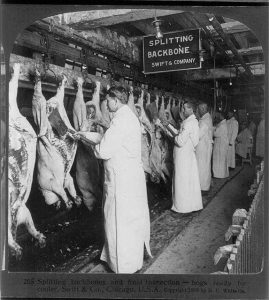
The curious division of labor between the U.S. Department of Agriculture and the Food and Drug Administration dates back to the passage of two laws enacted in 1906.

The Meat Inspection Act mandated inspection of all beef carcasses. The Pure Food and Drug Act prohibited the sale of adulterated food in interstate commerce.

Initially, both laws were implemented by officials at the USDA. Its Bureau of Animal Industry placed inspectors trained in veterinary science at every meat plant. Meanwhile, its Bureau of Chemistry employed laboratory scientists to test foods for adulteration.

In 1940, Franklin Roosevelt moved the Bureau of Chemistry, by then renamed the Food and Drug Administration, out of the USDA and into the Federal Security Agency, which later became the Department of Health and Human Services. Today, the FDA is responsible for overseeing the production of most foods other than meat and poultry.

Separately, the Bureau of Animal Industry was renamed the Food Safety Inspection Service, which is still responsible for all meat and poultry inspections.
Concerns about regulatory fragmentation grew as Congress assigned new tasks related to food safety to a variety of other agencies.

For example, Congress instructed the Federal Trade Commission to regulate food advertising, the Environmental Protection Agency to set pesticide tolerances and the National Marine Fisheries Service to inspect seafood.

Proponents of putting food safety under the roof of a single agency have argued that the current system causes confusion because different agencies produce inconsistent standards.

They further allege that overlapping jurisdictions create inefficiencies and that inadequate coordination leaves gaps in coverage. They also worry that the involvement of so many different actors diffuses political accountability.

The first high-profile proposal to consolidate federal food safety regulation was made in 1949, during the Truman administration, when a presidential commission recommended transferring food safety oversight to the USDA, just as the Trump administration has.

In 1972, consumer activist Ralph Nader advocated creating a new consumer safety agency to oversee food safety. And a few years later, a Senate committee recommended moving the USDA’s food safety responsibilities to the FDA.

Those are just three examples of more than 20 such proposals from both sides of the political aisle, including one by President Barack Obama in 2015.

None of these consolidation efforts succeeded for the same reasons the current one is unlikely to work now.

First of all, the many congressional committees that currently oversee agencies that regulate food safety are unlikely to support any reorganization that would reduce their power. Congressional oversight affords lawmakers who serve on committees opportunities to help interest groups and constituents in exchange for political support.

Similarly, industry associations are unlikely to support a reorganization that would disrupt their relationships with existing agencies. Consolidation threatens to reduce their access and influence over agency decisions.

In addition to the political obstacles to consolidation, there are practical problems. Merely merging the 5,000 food safety officials in the FDA and the 9,200 officials in the FSIS under the oversight of a single administrator would not eliminate the differences in jurisdiction, powers and expertise responsible for the current bureaucratic fragmentation. Meaningful consolidation would require a complete overhaul of federal food safety laws and regulations, a task of extraordinary legal and political complexity.

Moreover, consolidating food safety efforts in a single agency might create new forms of fragmentation. For example, transferring the FDA Center for Veterinary Medicine’s program for regulating drug residues in beef and poultry to the USDA would separate it from the FDA’s veterinary drug approval program.

And finally, reorganization is costly and would take years for the different agency teams newly working together to develop bonds of trust and cooperation. And these costs would have to be paid upfront, without a clear idea of whether the expected gains will ever pay off.

Consolidation need not be all or nothing.

For example, some have proposed more modest consolidation of inspection services, policy planning and communications that would be less costly and not so difficult.

Nonetheless, Congress has shown little interest in considering any bureaucratic reorganization of federal food safety regulation, even a partial consolidation.

In other words, the Trump administration may have to settle for the less ambitious goal of better interagency coordination, which offers an alternative way to address concerns about duplication and coverage gaps. This more modest approach would not, however, address the persistent problem of fragmentation.

In food safety, as in other regulatory reform arenas, it may turn out that half a loaf is better than none.

Yes E. coli is natural: Texas Natural Meats recalls frozen raw ground beef products for E. coli O103

Texas Natural Meats, a Lott, Texas establishment, is recalling approximately 489 pounds of frozen raw, ground beef products that may be contaminated with Shiga toxin-producing E. coli (STEC) O103, the U.S. Department of Agriculture’s Food Safety and Inspection Service (FSIS) announced today.

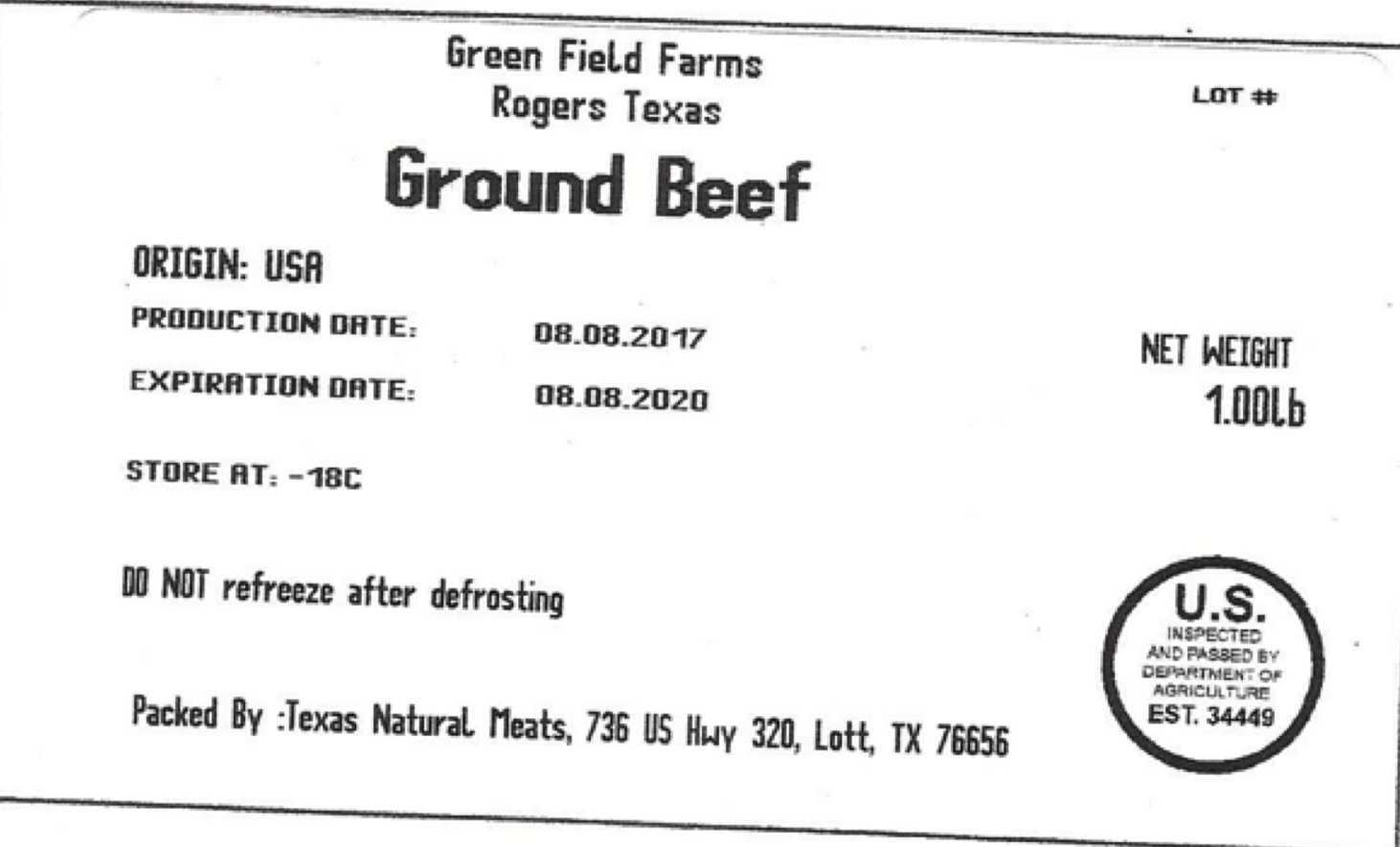
The frozen raw, ground beef items were produced on Aug. 8, 2017.  The following products are subject to recall:  [View Label (PDF only)]
1.00-lb. bags of “Green Field Farms Rogers Texas Ground Beef.”  The bags display the “PRODUCTION DATE 08.08.2017” and also display the “EXPIRATION DATE 08.08.2020.”  The bags are labeled “COOK USE ONLY” with the instruction “DO NOT refreeze after defrosting.”  
The products subject to recall bear establishment number “EST. 34449” inside the USDA mark of inspection. These items were shipped to a retailer who sold the product at a farmer’s market in Roger, Texas.
The problem was discovered on June 19, 2018 by FSIS during routine inspection activities. The product was tested by the establishment and found to be positive for STEC O103 under their sampling program. …

The only way to confirm that ground beef is cooked to a temperature high enough to kill harmful bacteria is to use a food thermometer that measures internal temperature, http://1.usa.gov/1cDxcDQ.

7 dead, 1 miscarriage: New control measures to be set up on Australian rockmelon farms

My thoughts go to Australian rockmelon growers because they’ve been sold down the stream.

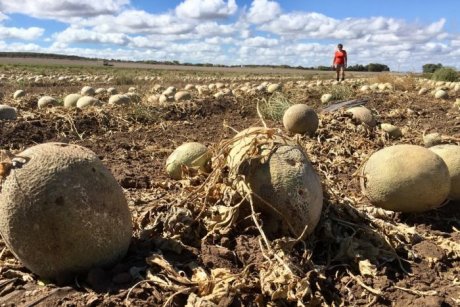
In April, thousands of rockmelons were left to rot in paddocks near Geraldton on the Western Australian coast, record low prices and lost markets meant they were simply not worth picking.

Grower Carol Metcalf said the rows of rotting melons were the result of the listeria outbreak on a rockmelon farm more than 3,500 kilometres away in New South Wales.

Under a new plan released this week, all rockmelon farms in Australia will be inspected and work will be undertaken on each individual farm to ensure that the highest standards are implemented and maintained.

At the time of the outbreak on February this year, the NSW Food Authority speculated that the most likely cause of the listeria outbreak was contaminated soil possibly not being properly washed off the skin of the fruit.

In addition it was thought that a weather event may have increased the listeria bacteria on the product.

But the formal investigation into the cause of the outbreak has not been completed by the NSW Food Authority and therefore the official report on the cause has still not been released.

What is planned is visits to all Australian rockmelon growers and packing sheds to review and audit current practice and critical control points and provide one-on-one food safety consultations with growers, managers and key farm staff.

The development of a melon food safety Best-Practice Guide, was informed by the findings from consultations, feedback from retailers and other key stakeholder groups.

The development of a ‘toolbox’ for grower use including risk assessment templates, training guides, food safety posters and record sheets to support food safety programs — this will be housed on the Australian Melon Association website.

Regional roadshows in key growing regions will highlight the availability and contents of the toolbox and Best Practice Guide.

A helpdesk to provide technical support to growers, packers and other stakeholders will also be developed.

Australian Melon Association industry development manager Dianne Fullelove said the new initiatives would ensure that every rockmelon grower in Australia had the highest level of food safety possible.

“NSW DPI will lead the project and the key is that they will visit every farm and work with every grower to fix any problems or issues.

“We want to make food safety as good as it can be,” Ms Fullelove said.

“This new initiative will make that reputation even stronger and give our growers sure-fire tools to support our product integrity for decades to come.

“This move will put us ahead of the game.”

Food safety isn’t a game, not when your product contributes to the death of seven people and one miscarriage.

Why are melon growers relying on government to visit farms (oh, right, money).

They should hire their own people to be out front on any food safety issue; government is the last source to rely on. And don’t act like this is something new: There have been plenty of outbreaks of Listeria and Salmonella on rockmelon over the years.

(A table of rockmelon-related outbreaks is available here.)

Some basic questions that have yet to be answered:

  • was the farm prone to flooding and near any livestock operations;
  • what soil amendments, like manure, were used;
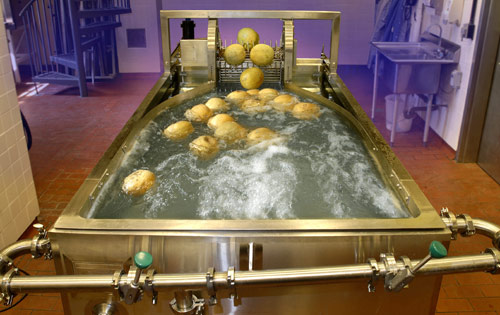
  • after harvest were the rockmelons placed in a dump tank;
  • was the water in the dump tank regularly monitored for chlorine levels;
  • did a proper handwashing program exist at the packing shed;
  • were conveyor belts cleaned and tested;
  • did condensation form on the ceiling of the packing shed;
  • were transportation vehicles properly cooled and monitored;
  • was the Listeria in whole cantaloupe or pre-cut; and,
  • was the rockmelon stored at proper temperatures at retail?

Stop waiting for change to happen and take charge, without relying on government: Your growers are still losing money.

Use a thermometer: Raw frozen chicken burgers sicken 68 in Canada

Craig Takeuchi of Straight writes several more cases of Salmonella have been reported in an outbreak across Canada linked to a recalled frozen raw chicken product.

The Pubic Health Agency of Canada, the Canadian Food Inspection Agency, Health Canada, and provincial and territorial health partners have been investigating and issued a public notice about the Salmonella Enteritidis outbreak on June 2.   

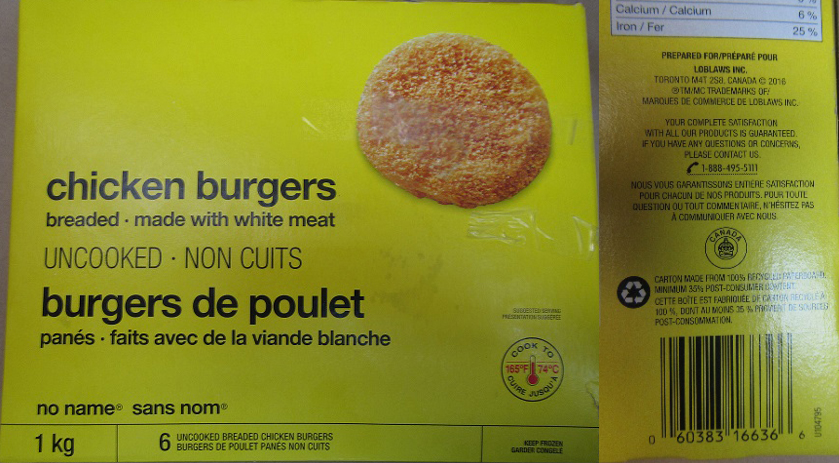
The Canadian Food Inspection Agency had issued a food recall warning on June 2 for a frozen raw breaded chicken product: No Name brand chicken burgers (1 kilogram) from Loblaw Companies Limited with a best before date of February 6, 2019 (with UPC code 0 60383 16636 6). The product was distributed nationally.

Several affected individuals in the outbreak had reported consuming the product.

As of June 18, there were nine additional cases of illness to increase the total number of infections to 68 individuals. Eight of those cases are in B.C., and the largest number is in Quebec, where there are 23 cases.

So far, 15 people have been hospitalized but no deaths have been reported.

Canadians are advised not to consume the product and to either dispose of it or return it to the store it was purchased from while restaurants are advised not to serve it. Those who do not have the original packaging and are uncertain if it is included in the food recall are advised to throw it out to be safe.

Sprouts still suck: Seven in hospital, 14 more sick with Salmonella from alfalfa sprouts in South Australia

Brad Crouch of The Advertiser writes seven people are in hospital and another 14 sick from eating alfalfa sprouts, triggering a SA Health warning to the public not to eat alfalfa sprout products produced by Adelaide business SA Sprouts.

SA Health Chief Medical Officer and Chief Public Health Officer, Professor Paddy Phillips, said there had been 21 confirmed cases of Salmonella havana linked to the sprouts.

“We are advising anyone who has purchased the recalled SA Sprouts alfalfa sprouts products to return them to the place of purchase for a refund, or throw them away,” Prof Phillips said.

“We also want to alert cafes and restaurants to check their suppliers and not serve any SA Sprouts alfalfa sprout products until further notice.

“In cases of salmonella a common food source is not often identified, however a joint investigation between SA Health, local government and Primary Industries and Regions SA (PIRSA) has linked these cases to SA Sprouts alfalfa sprouts.

“We are working closely with the producer and suppliers while we continue to investigate.”

On Salmonella, go with science or rapper who craves Honey Smacks?

Joshua Espinoza of Complex writes that Boosie Badazz is in disbelief over the 2018 Honey Smacks recall.

Just days after it was announced that the beloved cereal was linked to 73 salmonella outbreaks in 31 states, the Baton Rouge rapper went to social media demanding further proof of the reported contamination.

“I just got home and my kids told me some shit about Honey Smacks are no longer available. I don’t if this true, but I’m pissed. I need proof,” he said in an Instagram video. “I think somebody might be tryin’ to fuck with me […] They say it’s full of salmonella, they were sayin’ something—well I’m full of salmonella!”

Boosie’s love for Honey Smacks has been well documented over the years. There are a number of videos of the rapper doing nothing more than grubbing on the puffed wheat breakfast cereal.

“I need proof, man. Fuck that. They just can’t take them off the market,” he goes on in the video. “I need proof. Somebody DM proof. The scientists, somebody, DM me some proof.”

How badazz is it to eat a kid’s cereal?