Ben Chapman

About Ben Chapman

Dr. Ben Chapman is a professor and food safety extension specialist at North Carolina State University. As a teenager, a Saturday afternoon viewing of the classic cable movie, Outbreak, sparked his interest in pathogens and public health. With the goal of less foodborne illness, his group designs, implements, and evaluates food safety strategies, messages, and media from farm-to-fork. Through reality-based research, Chapman investigates behaviors and creates interventions aimed at amateur and professional food handlers, managers, and organizational decision-makers; the gate keepers of safe food. Ben co-hosts a biweekly podcast called Food Safety Talk and tries to further engage folks online through Instagram, Twitter, Facebook, YouTube and, maybe not surprisingly, Pinterest. Follow on Twitter @benjaminchapman.

Crown Princess cruise ship hit with fourth norovirus outbreak in four years

Earlier this year Time Magazine included Princess Cruise Line’s ship, the Crown Princess on a list of the 13 worst cruise-related norovirus outbreaks.

Twice.

4. Princess Cruises, Crown Princess (January 2010)

Total number sick: 396

In 2010, there were 14 outbreaks of illnesses on ships , including this one. Eight were attributed to norovirus.Crown Princess

5. Princess Cruises, Crown Princess (February 2012)

Total number sick: 363

The cruise, which embarked just a month after another outbreak on the ship, returned to Ft. Lauderdale two days early as passengers started falling ill.
Something is up with that ship as AP reports that 37 patrons of the Crown Princess are yet again barfing onboard.
Princess Cruises spokeswoman Karen Candy says about 37 passengers on the Crown Princess reported being sick while the ship was in San Francisco on Monday.
 
Candy says the ship’s staff began intense disinfecting of surfaces, and all sick passengers are being encouraged to remain in their rooms.

Las Vegas’ Firefly has food safety problems again

In June 2013 Las Vegas’ Firefly Tapas Kitchen and Bar was linked to over 250 cases of salmonellosis. Investigators fingered cross-contaminated chorizo as the likely source. At the time of the outbreak owner Tabitha Simmons was quoted as saying, “It’s just sad because we’ve been vilified and we did not want anyone to get hurt. We certainly weren’t managing our restaurants poorly.” firefly-300x300

Uh huh.

According to Fox 5, Las Vegas health inspectors gave another Firefly location 38 inspection demerit points resulting in a C grade in March.

The owners of Firefly Tapas Kitchen and Bar acknowledged on Tuesday it received a “C” rating when inspectors for the Southern Nevada Health District inspected the eatery at 11261 S. Eastern Ave. in Henderson on March 31.

Of the 38 demerits it incurred, Firefly was flagged for violations including those for handwashing, improper refrigeration of food, food improperly cooked at the proper temperature and failure to properly store food from potential contamination, according to SNHD’s website.

In a statement from Firefly owners John and Tabitha Simmons, the March 31 inspection was random. The owners also said the eatery was cited for 1-day-old expired food in the refrigerator.

The owners went on to say they corrected the violations within hours of the inspection. A subsequent inspection the following Friday, April 4, brought the restaurant’s rating back up to an “A,” the owners said on Tuesday.

Sure looks like they are managing their restaurants poorly, food safety-wise.

Vibrio outbreak prompts changes in oyster handling

I’ve only once had raw oysters, on a trip to New Zealand while in graduate school where some Kiwi food safety folks urged me to try the delicacy.

They were slimy.

I determined that the taste benefit wasn’t worth the risks for me.

According to the Vineland Gazette, a 2013 outbreak of Vibrio parahaemolyticus, linked to Katama Bay (MA) oysters prompted the Massachusetts Massachusetts Department of Fish and Game, Division of Marine Fisheries and the Department of Public Health, Bureau of Environmental Health, Food Protection Program to develop a plan to limit Vibrio risks.SUN0705N-Oyster7

A Vp control plan takes effect next month that will require faster cooling and delivery of oysters, changes in handling methods for harvesters, specific requirements for icing and new rules for record keeping among commercial oyster growers.

Backed by the state Division of Marine Fisheries, the rules will be in effect from May 19 through Oct. 19. The U.S. Food and Drug Administration recommended last year that Massachusetts develop a plan to control Vp during the warm weather months to prevent illness. 

U.S. National Guard and Navy called in to help child suffering from salmonellosis

Dealing with an ill toddler while away from home is stressful; being 900 miles offshore in a wind-powered boat with a kid who has picked up Salmonella is scary.

According to NBC San Diego, the California Air National Guard and U.S. Navy are involved in a complex rescue mission to help a sick baby on a boat off the coast of Mexico.

tdy_sick_baby_140405.nbcnews-video-reststate-640

 
The one-year-old girl, her 3-year-old sister and her parents from San Diego set sail two weeks ago for the latest leg of their trip around the world.
 
The family is sailing aboard a 36-foot boat named the “Rebel Heart,” blogging and posting pictures online.
 
On Thursday, the Bay Area’s 129th Rescue Wing received a call from the U.S. National Guard about a “seriously ill” girl aboard the boat located about 900 nautical miles off the coast of Mexico.
 
Two rescue helicopters took off Thursday to join the rescue mission.
 
After a five-hour flight, a team of four “Guardian Angel” pararescuemen jumped into the open ocean to board the Rebel Heart.
 
After checking the girl’s vitals, the crew determined the girl was in stable condition.
 
NBC 7 has learned the baby may suffer from some type of salmonella and has been given antibiotics. 

From the low-moisture-foods-with-Salmonella files: black peppercorn edition

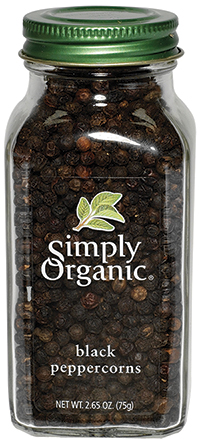
Sprouts Farmers Market have, according to a U.S. Food and Drug Administration (FDA) press release have recalled some black peppercorn products due to Salmonella after internal testing revealed the bacterial contamination.ucm391994

Sprouts Farmers Market, Inc. (the “Company”) is recalling Organic Black Peppercorns sold under the Sprouts brand name from all stores. This product has the potential to be contaminated with Salmonella.

The recalled Organic Black Peppercorns were distributed to Sprouts Farmers Market stores in Arizona, California, Colorado, Kansas, New Mexico, Nevada, Oklahoma, Texas and Utah. No illnesses have been reported to date.

The product comes in a 2.12-ounce, clear glass jar marked with lot #3287 on the bottom of the container and with an expiration date of October 2016. Each container is identified with an individual label showing the Sprouts Farmers Market company logo, the description: Organic Black Peppercorns.

Sprouts Farmers Market initiated the recall after a sample taken during routine testing by the FDA revealed the presence of Salmonella in one lot of Organic Black Peppercorns. 

For a good primer on Salmonella in low moisture foods check out this presentation from FDA’s Jenny Scott.

The consequences of unsafe home canning are scary

With the first ramps making their way to New York restaurants, the North Carolina spring is here.

As the top two-thirds of North America thaws out, the bottom third is gearing up for the home canning season. If done incorrectly (without acid or pressure as a control step) things can get scary.canned-tomatoes

According to ASIA-plus, 33 residents of a Tajikistan village have contracted botulism from a risky batch of home canned tomatoes, tragically leading to a 10-year-old’s death.

The boy was one of 33 residents of the Qahramon village in Sughd’s Asht district who have contracted botulism poisoning by eating home-canned tomatoes. According to the Sughd Center for Sanitary and Epidemiological Supervision, four of them were in the intensive care unit.

“On March 21, some 95 residents of the village of Qahramon gathered to celebrate the Navrouz holiday and 33 of them contracted botulism poisoning by eating home-canned tomatoes,” said the source.  “On March 23, they were taken to the Asht central district hospital, where they were vaccinated (I think they mean treated with antitoxin -ben) against botulism.”
It’s unclear from the report whether the product was just straight tomatoes or had other low acid foods (like peppers or onions added). Modern varieties of tomatoes are lower acid than some of their predecessors – making them a borderline low-acid food. Canned tomatoes require some added acid (lemon juice or vinegar are most common) to keep the Clostridium botulinum spores from germination, outgrowth which can then lead to bot toxin formation.

Food Safety Talk 58: Where’s my wallet?

Food Safety Talk, a bi-weekly podcast for food safety nerds, by food safety nerds. The podcast is hosted by Ben Chapman and barfblog contributor Don Schaffner, Extension Specialist in Food Science and Professor at Rutgers University. Every two weeks or so, Ben and Don get together virtually and talk for about an hour.  They talk about what’s on their minds or in the news regarding food safety, and popular culture. They strive to be relevant, funny and informative — sometimes they succeed. You can download the audio recordings right from the website, or subscribe using iTunes.1396369706543

In Episode 58 the guys started the show admiring Ben’s new computer, and his House of Clay beer, before talking about Don and Victoria Backham’s treadmill desksRicky Gervais bathtub photosdressing up like a realtor, and confidence intervals.

Don and Ben then welcomed Bill Marler to the show. Bill’s notoriety started with the Jack-in-the-Box outbreak (documented in the book Poisoned). The discussion moved to the Jensen farm legal case, in particular, the criminal aspects of unknowingly shipping contaminated food and the involvement of service providers, i.e. auditors. The guys also discussed the impact on apportioning liability as a result of the recent North Carolina limiting farmers liability law. The conversation then turned to Salmonella and Foster Farm’s chicken and no one could understand why there hadn’t been a recall.

The guys then discussed Listeria and cantaloupes, including CDC’s recommendations and Don’s paper on “Modeling the growth of Listeria monocytogenes on cut cantaloupe, honeydew and watermelon.”

After a short detour via the AVN Awards, Bill got the chance to explain why he generally doesn’t take on norovirus cases and the lengths he goes to before taking on a case, using the Townsend Farm Hepatitis A outbreak as an example. The conversation then turned to auditors and what the impact of the Jensen Farm litigation case might be.

After saying farewell to Bill, Don and Ben talked about podcasting, including Lex Friedman, and Libsyn’s Rob Walch.

In the after dark the guys chatted about House of CardsTrue Detective, Ben’s quirky Aussie accent, Malaysia Airlines flight 370 andLost.

The longterm business impacts of an outbreak

Beyond the tragic longterm effects on health for the victims of an outbreak, issues associated with foodborne illness incidents can taint a business for a long time. Jack-in-the-box, Odwalla, Castleberry’s and others may have changed their processes and practices but the stigma from an outbreak can last years. Beyond public perception, internal and external investigations into the causes can continue to impact business for years. And lead to revenue losses, expensive changes and criminal action.images

On national peanut butter and jelly day, the Atlanta Business Chronicle, uh, chronicles Conagra’s responses to a 2007 Salmonella outbreak affecting over 280 individuals associated with the Peter Pan and Great Value brands.

Seven years after a recall of peanut butter made at a Georgia plant, federal investigations are still hanging over the head of ConAgra Foods Inc.

Following the recall, investigators searched the plant. The U.S. Attorney’s office in Georgia and the Consumer Protection Branch of the Department of Justice launched a formal investigation in 2011.

ConAgra (NYSE: CAG) reported today that it spent a total of $25 million in 2012 and 2013 in connection with the investigations.

“We have been and continue to be engaged in ongoing discussions with the U.S. Attorney’s office and the Department of Justice in regard to the investigation,” ConAgra reported today. “We are pursuing a negotiated resolution, which we believe will likely involve a misdemeanor criminal disposition under the Food, Drug & Cosmetics Act.”

University of Pittsburgh at Johnstown identifies norovirus outbreak, takes steps to limit virus exposure

A few years ago fellow graduate student Brae Surgeoner had a fun idea to collect behavior data in the midst of an outbreak. The University of Guelph was dealing with a bunch of illnesses that seemed to be linked to residence halls and the symptoms looked like norovirus. The local health folks worked with the universities housing group and placed alcohol-based sanitizer at the entrance to one of the cafeterias (which was thought to be ground zero). Looking back, the hand sanitizer step wasn’t the greatest public health intervention (not with commercially available products), but what we wanted to know was whether students heeded the warnings and advice. student-cafeteria-02

By using ethnography, we found that only 17 per cent of the observed students followed the hand hygiene recommendations, but self-reported surveys of the same population showed that 83 per cent of students said that they had been following the guidance (we published the results in the Journal of Environmental Health, abstract below).

Health officials often put up posters and signs and rely on self-reporting to determine whether interventions are effective. People may say they are washing their hands more, but our study showed that the behavior and reports don’t always match up.

Faced with a bunch of students ill with norovirus, the decision-makers running the show at the University of Pittsburgh at Johnstown, according to Global Dispatch, made a good disease management call by canceling all events and closing the cafeteria to limit virus transfer.

Several University of Pittsburgh at Johnstown students have reported an illness–with the symptoms of  fever, chills, nausea, vomiting, diarrhea, and general abdominal discomfort, to campus Health Services during the past 48 hours prompting the university to cancel all in-door social events for the weekend. In addition, the decision has been made to suspend cafeteria services at all dining facilities on campus. Instead, prepackaged meals will be available in the Student Union for pick-up.

In an effort to respond to students who feel that they need medical attention, the Office of Health and Counseling will be open on both Saturday and Sunday, 8:30 A.M. to 5:00 P.M.

University Students’ Hand Hygiene Practice During a Gastrointestinal Outbreak in Residence: What They Say They DO and What They Actually Do

Journal of Environmental Health, 72(2):24-28

Brae V. Surgeoner, M.S., Benjamin J. Chapman, Ph.D., Douglas A. Powell, Ph.D.

Abstract

Published research on outbreaks of gastrointestinal illness has focused primarily on the results of epidemiological and clinical data collected postoutbreak; little research has been done on actual preventative practices during an outbreak. In this study, the authors observed student compliance with hand hygiene recommendations at the height of a suspected norovirus outbreak in a university residence in Ontario, Canada. Data on observed practices was compared to postoutbreak self-report surveys administered to students to examine their beliefs and perceptions about hand hygiene. Observed compliance with prescribed hand hygiene recommendations occurred 17.4% of the time. Despite knowledge of hand hygiene protocols and low compliance, 83.0% of students indicated that they practiced correct hand hygiene during the outbreak. To proactively prepare for future outbreaks, a current and thorough crisis communications and management strategy, targeted at a university student audience and supplemented with proper hand washing tools, should be enacted by residence administration.


Russian factory staff bathes in cheese vat

Still hurting from their early exit in the 2014 men’s Olympic hockey tournament, Russians have apparently resorted to bathing with cheese to heal the wounds. And are sharing the activities on Instagram.

Or something like that.article-2590574-1C937D7E00000578-915_634x416

According to Opposing Views, a picture is making its way through the internet that shows Siberian factor workers  naked in a vat of cheese.

“Yeah, our job is really boring,” the photo’s caption reads.

Officials were alerted to the photo when angry consumers saw the “sickening” picture, which is believed to be taken at lead food processing center Omsk “The Cheese” trade house.

“If you plan to buy string cheese the next time you go to the supermarket, you may want to check that it wasn’t made in Omsk,” one Russian newspaper warned. 

Alexander Kriga, head of RosPotrebNadzor, the Russian food safety watchdog in the Omsk region, said investigation into the exact location the picture was taken at is under way.