
Ben Chapman

About Ben Chapman

Dr. Ben Chapman is a professor and food safety extension specialist at North Carolina State University. As a teenager, a Saturday afternoon viewing of the classic cable movie, Outbreak, sparked his interest in pathogens and public health. With the goal of less foodborne illness, his group designs, implements, and evaluates food safety strategies, messages, and media from farm-to-fork. Through reality-based research, Chapman investigates behaviors and creates interventions aimed at amateur and professional food handlers, managers, and organizational decision-makers; the gate keepers of safe food. Ben co-hosts a biweekly podcast called Food Safety Talk and tries to further engage folks online through Instagram, Twitter, Facebook, YouTube and, maybe not surprisingly, Pinterest. Follow on Twitter @benjaminchapman.

Health department report: Bean Day illnesses linked to poor risk management

An investigation into a Salmonella outbreak points to multiple potential risk factors associated with a fundraiser. According to the Alabama Department of Health, 8 confirmed and up to 50 suspected cases of salmonellosis were linked to a community event – Bean Day – in Athens, AL.  beans-thumb-500x404
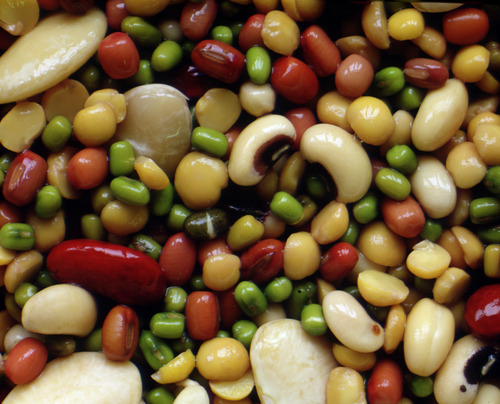
The News Courier reports that organizers and volunteer food handlers made multiple risky decisions that likely led to the illnesses. Amongst the weirdest was a using a horse trough covered with plywood to soak beans that were then added to a bean soup.

Early on, public health officials determined that the beans were likely the source of the outbreak of salmonella senftenberg, but they did not know how the infection occurred.

Interviews with food preparers identified “several opportunities for cross-contamination and improper holding temperatures,” according to the report. Among them:

1.) Soaking the beans in a plastic-lined horse trough covered with plywood, with a water hose running water through the trough (the ADPH did not know if or how the trough, which was located at the church, had been used prior to the dinner)2.) Handling food without gloves;3.) Turning off the heat source for the beans and disconnecting gas lines for burners without monitoring the temperature of the food;4.) Transferring the beans in outside cooking pots to a smaller iron pot on wheels to take large quantities of the beans inside the church;5.) Using one sterno can per 6-inch-deep chaffing pan to maintain the holding temperature of the beans;
6.) Re-using chaffing pans and adding new beans to existing beans throughout the serving time.

The final report said investigators studied 14 food samples (boxed plates left over from the event), 30 environmental samples and from 13 stool specimens from those who fell ill.

Salmonella senftenberg was isolated “in two environmental samples obtained from the church, nine food samples and all stool specimens,” according to the report. “The two positive environmental samples were from environment swabs of a dirty strainer and the double sink floor drain at the church.”

Sounds like there wasn’t a lot of hazard identification or risk management going on – which can often be the case when amateur food handlers are placed into a situation where they are asked to make food for 300.

Handling food without gloves was noted as a factor, but as friend of barfblog Don Schaffner points out on Twitter, with all the other temperature and sanitation problems it probably doesn’t rank as #2 on the list.


Norovirus cruising woes

My friend and fellow NC State dude Chris Gunter (below, on the left, exactly as shown) texted me this morning while on his way to Houston. He’s about to embark on a cruise and his ship, The Caribbean Princess, was linked to 173 norovirus illnesses this week. According to Ben Souza of the appropriately named CruiseFever.net, Chris’ cruise is delayed while the good folks at the CDC Vessel Sanitation Program do an investigation.1014303_10102397059410553_886550941_n

There has been a confirmed norovirus outbreak on the Caribbean Princess.  Out of the 3102 passengers on board, 162 (5%) have reported ill in addition to 11 crew members.  The cruise ship will return to Houston one day early and arrive on January 31 due to a fog advisory.

When the ship returns to Houston, Texas, 2 CDC Vessel Sanitation Program environmental health officers will board the ship for a health assessment.  They will evaluate the outbreak and collect specimens for testing at the CDC lab.

One thing that popped up in the coverage of this week’s other cruise disaster, 600+ norovirus illnesses linked to the Explorer of the Sea, was the apparent focus on hand sanitizer as a control measure. According to passenger Claudia Cirisi, the stuff was everywhere.

“There were a lot of people in the bathroom getting sick and they had hand sanitizers all over, and you were constantly washing your hands. You couldn’t go into the dining rooms without having some Purell. They were washing down the railings; they were washing down the seats after you got out from the pool. They were washing anything that came in contact with the passengers”

While hand sanitizer that can be purchased at drugstores has its uses, reducing norovirus spread isn’t one of them. Pretty much all retail-available hand sanitizers suck when it comes to reducing norovirus viability. Same with the alcohol-containing wipes. Maybe what’s being used on board is a different formulation, but seeing some data would be nice.

Maine legislators want more than eleven health inspectors

Local and state public health inspectors are some of the most important folks in the food safety world. Especially in places where the philosophy has moved from traditional sanitation observations to risk-based inspections. They are individuals who see what is really going on in kitchens, are often the technical experts for independent restaurants, and are integral in solving outbreaks. welcome_to_maine_sign

In the entire state of Maine, there are 11 of them. According to the Portland Press Herald, this is a problem for some Maine legislators.

The Maine Restaurant Association, the Maine Innkeepers Association and the Maine Tourism Association opposed the bill during a public hearing before the Legislature’s Health and Human Services Committee, which oversees the restaurant inspection program. The industry groups said they fear the bill would confuse restaurant owners with inconsistent rules. 

The state now employs 11 inspectors, each of whom is responsible for inspecting 600 to 800 establishments a year, including restaurants, tattoo parlors, summer camps and inns. 

Cooper’s bill, L.D. 1592, was submitted shortly after the Portland Press Herald/Maine Sunday Telegram exposed weaknesses in state and local inspection programs, including less frequent inspections and less public access to inspection results than all but two other states. The newspaper found that lawmakers reduced the mandated frequency of inspections even as complaints about sanitation or food-borne illnesses increased.

The number of restaurant-related complaints continued to rise through the fall of 2013, according to the latest records provided by the state, as the state inspectors worked to inspect restaurants once every two years. The failure rate of restaurants varied greatly by county.

Testifying for the restaurant association, Richard Grotton, the group’s former chief executive officer, said millions of people eat in Maine restaurants every year, and very few have gotten seriously ill. He urged the committee to maintain the status quo, which he called “a good system.”

The state’s illness rate for pathogens doesn’t suggest that there is anything special going on – and there’s lots of room for improvement. Maine Department of Health and Human Services reports a Salmonella incidence rate of 12.1 per 100,000 in 2012 – which is just under the national average.

Making food safe costs money

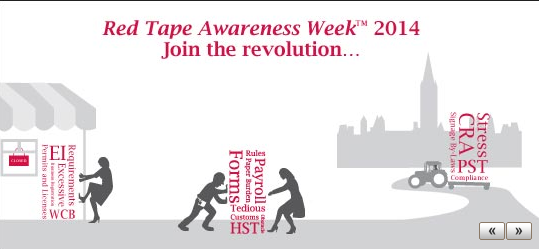
With the absence of Rob Ford antics and Olympic hockey news, Canadian media attention has shifted towards federal budget rumors and posturing for the next election. Taking the opportunity of the news lull and budget discussions the Canadian Federation of Independent Businesses released a, uh, press release (and corresponding report) for redtape awareness week. The report suggests that complying Canadian Food Inspection Agency requirements costs businesses an average of $20,396 per business or a federal total of $657 million.Screen Shot 2014-01-29 at 6.01.51 PM

From the release:

“Farmers support rules necessary to ensure safe food and are tired of getting the runaround from the CFIA,” says Marilyn Braun-Pollon, CFIB’s vice-president, agri-business. “Spending thousands of dollars and countless hours navigating through confusing forms and contradictory information leaves farmers feeling completely frustrated. And this does nothing to promote food safety.”
Key findings on the CFIA:

Since 2006, the annual average cost of complying with the agency’s rules and paperwork has increased from $19,000 to $20,396 per agri-business owner;

Only one-in-five agri-business owners believe the CFIA provides good ‘overall service’, the same as previous findings in 2006, indicating there is no improvement in  overall service.

60 per cent of agri-business owners say CFIA regulations add significant stress to their lives; and

46 per cent report that the agency’s regulations significantly reduce productivity in their business, up from previous findings (40 per cent) in 2006.

Sort of.

The report details how those compliance numbers are calculated: time spent complying with regulations, new equipment and professional fees.

Except some portion of those expenses are the cost of doing business in a marketplace that demands food safety. Not everything is linked to CFIA bureaucracy: some of the equipment, personnel costs and documentation is industry best practice. Stuff that good companies would do in the absence of regulation.

Making food safely is stressful – and costs money.

Regardless of regulation, actually employing best practices matters

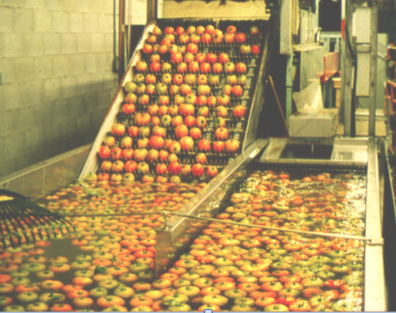
A lot of folks in the food system are concerned about the potential for FDA’s Food Safety Modernization Act (FSMA), and associated rules, to negatively impact businesses. There’s been a bunch of rhetoric and uncertainty around the final rules and what will be needed to comply. The majority of the content of the proposed Produce and Preventive Controls Rules summarizes the industry’s best practices and lists the references behind decisions.tomato_dump_tank

Not much in there that’s a surprise for folks who have been paying attention.

The focus of FSMA is on identifying hazards, putting steps in place to manage them and actually doing it. The best businesses are already doing this.

There are some specifics like manure incorporation and what a qualified individual is (who is supposed to be responsible for written plans) that need to be worked out. But employing practices and putting systems in place based on the best available science goes a long way in the absence of a regulation.

Back in the day when we were working with produce farmers and packers in Ontario (that’s in Canada) that’s what we tried to do – to stay ahead of the market requirements and regulation.

It’s not a unique approach – the almond industry took a similar path, so did Florida tomato growers and leafy greens producers in California and Arizona to some extent.

According to Lancaster Online, Pennsylvania farmers, through ag educators might be focusing on the uncertainty.

Ag educator Jeff Stoltzfus said he has learned a lot about food safety in the past five years.

But when it comes to the U.S. Food and Drug Administration’s efforts to overhaul food safety regulations, he’s still trying to figure out the impact it will have on the growers he works with.

“What we don’t know is more than what we do know,” he told a group of growers gathered recently at Yoder’s Restaurant for New Holland Vegetable Day.

Keeping good records, he said, could be the most important thing for growers to protect themselves in case a problem arises.

“Records are going to be very important and policies will be even more important, especially if you’re taking stuff from other growers.”

I disagree – actually employing the correct risk-reduction practices based would top my list. The documentation is nice and shows a regulator or a buyer that you know what you’re talking about – but doing it is more important.

Food Safety Talk 54: Rubber dingus

Food Safety Talk, a bi-weekly podcast for food safety nerds, by food safety nerds. The podcast is hosted by Ben Chapman and barfblog contributor Don Schaffner, Extension Specialist in Food Science and Professor at Rutgers University. Every two weeks or so, Ben and Don get together virtually and talk for about an hour.  They talk about what’s on their minds or in the news regarding food safety, and popular culture. They strive to be relevant, funny and informative — sometimes they succeed. You can download the audio recordings right from the website, or subscribe using iTunes.

The show started with Don sharing his recent Systematic experience. Ben then wanted some help with a prevalence calculation, as prompted by his undergraduate lecturer Ronald Brooks. The guys then reminisced about their high school teachers before turning on the freezing weather and frozen food, thanks to AFFI-CON 2014.

In answer to a listener question on the 4-hour rule, Don shared his recent JFP paper. Similar calculations (also by Don) have been used by a Conference for Food Protection (CFP) committee to develop guidance on lack of temperature control during emergency situations. That guidance will be presented as part of the 2014 CFP.

Thanks to the book “I Wear the Black Hat”, Ben has really gotten back into heavy metal, especially Metallica, while Don’s been re-reading The Sandman. This got the guys into a discussion of DC Comics versus Marvel Comics.

In the IAFP History segment the guys covered the 1980’s, which saw the introduction of new technologies, like vacuum packaging and irradiation, the emergence of new pathogens, such as E. coli O157:H7, Listeria monocytogenes and Campylobacter, as well as zero tolerance).

The guys then speculated about the Salmonella Stanley outbreak linked to raw cashew cheese, before turning their attention to the Fox and Donkey meat scandal in China and the potential zoonotic food safety risks associated with foxes.

Ben then got a buzz from the 12 Surprising things you can make with a coffee pot, because it reminded of his college days. He’s considering including the poaching chicken in a coffee maker as part of the dishwasher cooking research project discussed on earlier episodes. While there was plenty of wacky stuff on the interwebs over the holidays, this Wall Street Journal article about a frog in a Pret A Manger salad got Don all jumpy about Pret A Manger’s knowledge about pesticides and food safety.

The guys finished the show discussing the Food Safety News article on “How to Break a Foodborne Illness Story.”

In the after dark, Ben shared his work habits and this turned into a discussion of Don and Ben’s favourite Starbucks. The guys then shared some movies and TV shows they like, including Saving Mr Banks, American Hustle, Back to the Future (I, II and III), Honey, I shrunk the Kids, Despicable Me, Call the Midwife and Last Tango in Halifax.

Are you cereus?

Our usual evening schedule is dinner, a bit of hockey on TV and then wind the kids down with books or a bath before bed. Sometimes it takes 20 minutes to get them to sleep, sometimes 2 hrs. After losing a few meals by leaving our dinner leftovers out for too long due to an extended bedtime routine, we’re now in the habit of refrigerating extras before we sit down to eat.

Tonight’s risotto was packed up and chilling to avoid growing Bacillus cereus (linked to rice dishes 50 per cent of the time).

Bacillus cereus is sort of a fun pathogen (except for those who are affected by it): Two different toxic proteins can be produced by the bacteria as it grows. The one that causes vomit is preformed in food, the one that causes diarrhea is released by the bacteria as it grows in the body.

Turns out that toxin stability in food also plays a part in illnesses.

Effect of temperatures on the growth, toxin production, and heat resistance of bacillus cereus in cooked rice
Foodborne Pathogens and Disease. February 2014, 11(2): 133-137. doi:10.1089/fpd.2013.1609
WangJun, DingTian, and OhDeog-Hwan

ABSTRACT
Bacillus cereus is capable of producing enterotoxin and emetic toxin, and Bacillus foodborne illnesses occur due to the consumption of food contaminated with endospores. The objectives of this study were to investigate the growth and toxin production of B. cereus in cooked rice and to determine the effect of temperature on toxin destruction. Cooked rice inoculated with B. cereus was stored at 15, 25, 35, and 45°C or treated at 80, 90, and 100°C. The results indicated that emetic toxin was produced faster than enterotoxin (which was not detected below 15°C) at all the storage temperatures (15–45°C) during the first 72 h. Emetic toxin persisted at 100°C for 2 h, although enterotoxin was easily to be destroyed by this treatment within 15 min. In addition, B. cereus in cooked rice stored at a warm temperature for a period was not inactivated due to survival of the thermostable endospores. These data indicate that the contaminated cooked rice with B. cereus might present a potential risk to consumers. Results from this study may help enhance the safety of such food, and provide valuable and reliable information for risk assessment and management, associated with the problem of B. cereus in cooked rice.

And from the sort of obvious file, the authors say, “These data indicate that the contaminated cooked rice with B. cereus might present a potential risk to consumers.” Uh huh. It’s not just the data, but the many recorded outbreaks.

New research shows 35 per cent of sampled street food in Yangon contaminated

According to new research, a lot of the street food in Yangon, Myanmar (below, exactly as shown) contains Staphylococcus aureus and Bacillus cereus. If not held at safe temperatures, the quick meals could be a particularly awesome place to create foodborne toxins.food-vendors1

The findings highlight the scale of the city’s food hygiene problem: More than one-third of the 150 samples collected were positive for either Staphylococcus aureas or Bacillus cereus, two common types of bacteria that can lead to food poisoning. Almost one-quarter contained dangerous levels of the bacteria, researchers found.
The results of the research were released at the 42nd Myanmar Health Research Congress, held at the Department of Medical Research (Lower Myanmar) from January 6 to 10.

Dr Thaung Hla, deputy director of the biological toxicology research division at the National Poison Control Centre, conducted the research with three colleagues. The aim was to pinpoint just how frequently dangerous organisms are found in roadside foods.
Thirty samples from each of the five downtown townships were collected and tested. Of the 150 samples, 52, or around 35 per cent, contained either Staphylococcus auras (sic -ben) or Bacillus cereus.

The lack of enforcement means it is generally a case of buyer beware. Ma Su Su from Bahan township said she tries to avoid eating street food because of the frequency with which it makes her fall ill. It is easy to see how bacteria could be transmitted through street food, she said, because vendors do not wear gloves and wash plates and utensils in dirty water. 

The sub heading of the article is fun – especially considering the etiology of the pathogens:

New research has confirmed what many of us have already learned the hard way – that consuming Yangon’s street food can end in food poisoning, particularly for those who have not built up immunity to the many types of bacteria on offer. 

Sounds like there’s a perception that the street food is nasty. Building up immunity to Bacillus cereus only works for some types of illnesses, the ones linked to a cyclic peptide toxin that causes vomit – it is preformed in temperature abused food. And acquired immunity is pretty unlikely for staph enterotoxin (also preformed in food).

Employees fingered in Norovirus outbreak linked to bread

A massive norovirus outbreak amongst school children in Japan has been, according to health authorities, linked to three factory staff who handled bread as part of their jobs. Japan News reports that norovirus was detected in stool samples of the three staff members – signs of the virus were not founds in an additional 16 food handlers who also submitted samples.hlebozavod-0024

The bakery is suspected to have been the cause of a mass food poisoning that affected many primary schools in the city, according to the Hamamatsu city government.
The city government announced Sunday that workers at Hofuku, a company that produced bread deemed to be the cause of the norovirus outbreak, were found to be infected with the virus.

Yoshinao Terada, chief of the city government’s living and health section, said at a press conference, “It is highly likely that persons with the virus took part in the production process leading to contamination of the bread.”

The company ordered the three workers to stay home from work and specialists began sterilizing the plant. 

Asymptomatic norovirus carriers have been linked to lots of outbreaks in the past.  It’s also possible that the individuals were ill, recovered, and still shedding viruses in their stool. My NoroCORE colleague Robert Atmar and colleagues reported in 2008 that noro could be recovered from folks infected with the virus for up to 56 days (with a median of 28 days) – long after symptoms subsided.

Regardless, there are some hygiene issues going on at Hofuku.

We like the social media stuff: barfblog is now active on Facebook

Someone asked me about the history of barfblog this week – stuff like how it started and where the name came from.

Here’s how I remember it: Doug had been editing a bunch of daily listservs (FSNet, Agnet, Animalnet and FFnet) in some form since 1993. These were a big source of food safety-related news for risk managers (folks in industry, academia and the regulatory agencies) Screen Shot 2014-01-17 at 1.28.41 PM before Google Alerts, RSS feeds and Twitter existed. Beyond sharing what was going on in the food safety world, Doug encouraged the students and staff who worked for him to write evidence-based commentary and submit op-eds and letters to the major publications (back when there were actual newspapers).

I came along in 2000 and became a news junkie and jumped into the whole share-your-thoughts-in-an-interesting-way thing. Even with my grammar, spelling and general logic challenges. In 2005, when self-publishing was all the rage, we decided to start a forum to post stories about food safety experiences, the stuff that others didn’t publish or didn’t fit the format of the traditional newspapers.

And we started a blog. It wasn’t really a blog at the start, but a forum. And it got bombarded by porn spam. So we left it for a while and relaunched the whole thing in 2007.

But it needed a name.

Christian, a particularly creative undergraduate, came up with the name – barfblog (all in lowercase as Dave Stanley always told Doug uppercase was a waste in e-mail, and he agrees) – and then created a video of him guzzling vermouth and actually barfing.

The idea was (and still is) to write stories about what makes people barf and take current news items and highlight what we thought was important – based on the literature and our experiences.

Doug’s more concise description is this:

Every time I talk to someone on a plane, train or automobile, they find out what I do, and then proceed to tell me their worst barf story. barfblog.com was created to capture those stories, except most people don’t want to be bothered writing, so we did it for them.

Since 2007 we’ve embraced social media as a channel to carry out that dialogue and increase discussion. But we’ve really sucked at Facebook. Until now. We’ve got a somewhat new, but now active space where we’ll be posting our, uh, blog posts as well as pictures and links. And we’re looking for folks to jump in on the discussions.
Check out barfblog on Facebook at Facebook.com/safefoodblog