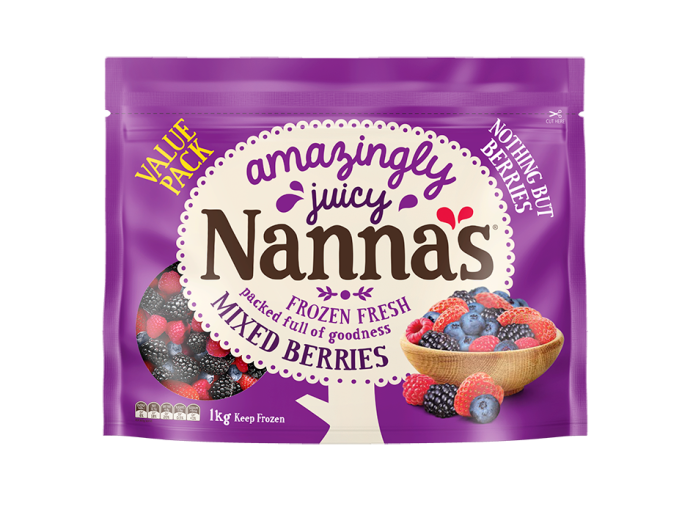
At least 4 sick: consumers warned to throw out Nanna’s Frozen Berry 1kg packets linked to Hepatitis A outbreak

In a just-published follow-up to the Hepatitis A link to Nanna’s frozen berries – sourced from China and Chile — angry consumers have taken to social media after four hepatitis A cases sparked a health warning about a frozen berries product.

395692-443c1b42-b3ce-11e4-b41b-d516c533d6a5The Internet sorta works for some, in Australia, I guess.

It’s Saturday afternoon here and the company says it will publish adverts in the Monday papers? It really is 1978 here (for some).

The Department of Health is calling on the company to recall the product after three Victorian adults and one in New South Wales were diagnosed with the disease.

Customers this morning blasted the company for not issuing any advice on their web channels.

Some customers were frustrated after they saw a Valentine’s Day post on the Nannas Facebook page was quickly removed as news of the outbreak came to the fore.

Others posting on the Facebook page demanded a refund on any medical check-ups they might need to undergo.

nanna's.berriesOne wrote: “You have nothing on your Facebook page and are still promoting the contaminated product on your website. This is completely unacceptable, negligent.”

Another said she was “unhappy” after she had eaten the mixed berries only yesterday and asked for “further information on the recall issued and how to go about refund and medical tests.”

And another said she found it “highly irresponsible” for a Valentine’s Day post to be added “but no post regarding the potential Hepatitis A risk.”

Hepatitis A, Listeria for hospital patients, Salmonella: is anyone responsible for food safety in Australia?

A day after New South Wales (that’s a state in Australia) revealed that one had died and at least 23 sickened from Salmonella in food served at aged facilities, one kilogram bags of Nanna’s frozen mixed berries are being pulled off supermarket shelves across Australia because of a link to the virus Hepatitis A.

frozen.strawberryHave any of these 6-figure bureaucrats seen the numerous stories linking Hep-A to frozen berries that have been circulating for at least two years?

Stores are being advised and there will be advertisements in national newspapers on Monday.

That’s because the Internet sucks in Australia, so people still newspapers.

1978.

The berries came from China and Chile and were packed at Patties, a company based at Bairnsdale, in eastern Victoria.

The company has been contacted for comment.

Dr Rosemary Lester, the state’s chief health officer, said frozen berries had been implicated in past outbreaks of Hepatitis A.

“Hepatitis A virus infection is uncommon and normally associated with travel to countries affected by endemic Hepatitis A,” she said.

“The only common link between the cases is consumption of this product. There is no overseas travel or common restaurant exposure.

“Sampling of the product will be undertaken to identify the virus but it is difficult to find Hepatitis A virus, even in a contaminated batch.”

The berries have a two-year shelf life and any product purchased from October 2014 onwards should be thrown out.

In a seperate recall, a number of hospitals have been told to throw out a chocolate mousse product, found in routine tests, to contain listeria.

The mousse, which had a use-by date of February 14, 2015, was supplied to the Austin Hospital, St Vincent’s Private, St Vincent’s Mercy, Brunswick Private, the Royal Children’s Hospital, Ballarat Health Services, Caulfield Hospital, Sandringham Hospital, Frankston Hospital and Rosebud Hospital.

Vaccination works: Hepatitis A rates fall in US children, rise in adults

As all children attending two schools in Portsmouth, UK will be vaccinated against Hepatitis A in light of a potential outbreak, researchers at the U.S. Centers for Disease Control report that adults are particularly at risk for Hep A infections.

hepatitis.ABackground. In recent years, few US adults have had exposure and resultant immunity to hepatitis A virus (HAV). Further, persons with liver disease have an increased risk of adverse consequences if they are infected with HAV.

Methods. This study used 1999–2011 National Notifiable Diseases Surveillance System and Multiple Cause of Death data to assess trends in the incidence of HAV infection, HAV-related hospitalization, and HAV-related mortality.

Results. During 1999–2011, the incidence of HAV infection declined from 6.0 cases/100 000 to 0.4 cases/100 000. Similar declines were seen by sex and age, but persons aged ≥80 years had the highest incidence of HAV infection in 2011 (0.22 cases/100 000). HAV-related hospitalizations increased from 7.3% in 1999 to 24.5% in 2011. The mean age of hospitalized cases increased from 36.0 years in 1999 to 45.1 years in 2011. While HAV-related mortality declined, the mean age at death among decedents with HAV infection increased from 48.0 years in 1999 to 76.2 years in 2011. The median age range of decedents who had HAV infection and a liver-related condition was 51.0 to 68.0 years.

Conclusions. Although vaccine-preventable, HAV-related hospitalizations increased greatly, mostly among adults, and liver-related conditions were frequently reported among HAV-infected individuals who died. Public health efforts should focus on the need to assess protection from hepatitis A among adults, including those with liver disease.

Trends in disease and complications of hepatitis A virus infection in the United States, 1999–2011: a new concern for adults

Journal of Infectious Diseases [ahead of print]

Kathleen N. Ly and R. Monina Klevens

http://jid.oxfordjournals.org/content/early/2015/01/29/infdis.jiu834.abstract

Jersey officials plan database of restaurant health inspection reports, higher fines for violations

Link

Spurred on by the outbreak of Hepatitis A linked to a food server at Rosa’s Restaurant and Catering, Hamilton Township in New Jersey is taking steps to ensure that every consumer knows just how safe — or unsafe — food establishments are, with an online database of food inspection reports scheduled to go live within the next few months.

jon.stewart.handwashing.2002“Accountability is everything,” township health officer Jeff Plunkett said on Friday. He said a new ordinance is also being drafted to increase fines for health code violations.

The new database will allow customers to simply search for the name of a restaurant to view its health inspection reports, Mayor Kelly Yaede said Friday.

“This is an initiative we’ve been working on for a year,” Yaede said, attributing the concept to one proposed by San Francisco Mayor Ed Lee at the 2014 U.S. Conference of Mayors.

“The number one goal of our health office is to maintain the public safety of our residents,” Yaede said. “This tool makes these restaurant inspection reports more readily available to individuals when they’re making a choice of whether they’re going to patronize a restaurant.”

It isn’t clear whether a restaurant’s entire history or recent history of inspection reports will be available, Yaede said.

“As much information as we have that’s accessible will be released to the public,” Yaede said.

The software will hopefully provide an incentive for restaurants to maintain clean bills of health: It could provide a sales boost for the cleanliest establishments and motivation for less cleanly restaurants to fix problems, Yaede said.

“It would be a positive tool for a majority of restaurants in Hamilton to help them promote their business,” Yaede said.

“And if you don’t have a good report? There’s more of a bite in it for enforcement,” Plunkett said.

Hep A is fecal-oral: Rosa’s Restaurant cited with handwashing violations shortly before Hepatitis A outbreak

Any time there is an outbreak of Hepatitis A, it’s not just a lack of vaccination, not just about identifying those at risk and giving them a shot, it’s about poop.

hepatitis.ASpecifically, that person making your salad went #2 and failed to properly wash their hands.

The Trentonian reports that the month before a Rosa’s Restaurant employee was diagnosed with Hepatitis A — sending residents scrambling for vaccinations — the eatery was cited for numerous handwashing violations.

According to an Oct. 8 food inspection report obtained by The Trentonian through a public records request, the restaurant was listed as out of compliance for employees conducting handwashing in a timely manner, workers performing proper handwashing and the business providing paper towel for handwashing facilities.

Also marked as a violation, an employee was observed making sandwiches and handling rolls with his bare hands, while another worker was shredding and handling lettuce with his bare hands, the report states.

“Due to the number of critical violations, the person in charge is not demonstrating proper knowledge of food safety principles pertaining to this operation,” Hamilton Township food inspector Kelly A. Thomas wrote in her report, which gave the restaurant a conditionally satisfactory evaluation. “No proof of food handling certification was available on-site at time of inspection.”

In response to the October report and some of the continued handwashing violations throughout the years, restaurant owner Rosa Spera said in an email on Friday that her establishment has four handwashing sinks.

“On past inspections some of the signs reminding workers to wash their hands have been missing,” Spera stated. “Unfortunately, sometimes people remove the

After the first case of Hepatitis A was reported in late November, officials disclosed three other Hamilton area residents contracted the virus that had eaten at Rosa’s during the time period the worker was affected.

MrHankyHowever, township officials previously stated that it does not know with any certainty that any of the three cases had any link to or is a direct result of the original incident.

Spera said in the email it’s “unfortunate” that one of her workers got sick in November.

“When he did, he reported immediately to a doctor, not to work,” Spera stated. “When I learned of it, I took immediate action to take every precaution. With the guidance of the Hamilton Health Department, we threw away all open food and had the township observe our deep cleaning of all food areas.”

Jeff Plunkett, the township’s health officer, said in an interview on Tuesday, that the restaurant was closed for approximately seven to eight hours on Dec. 1.

“They had to remove the entire staff, bring an entire staff new that hadn’t worked there during that period of communicability when the gentleman was sick,” Plunkett said. “The entire place was clean and sanitized and witnessed by an inspector who was there the entire time.”

But even as the health inspector stressed the importance of wearing gloves on Dec. 1, Thomas stated in her report that she observed an employee slicing and handling bread with his bare hands. Two days later, Thomas stated she observed employees doing prep work scramble to put on gloves as she walked through the doors, while another employee put on gloves without washing his hands first, inspection documents read.


Make Hep A vaccinations mandatory for everyone, especially those who serve food

Guelph, the town and the university, is like every other cow-town, eager to blow itself (it’s in Canada).

hepatitis.AThe Guelph Mercury says in an op-ed the Wellington-Dufferin-Guelph Public Health board received a review this week of the agency’s response to a public health scare arising from a local restaurant staffer being diagnosed with hepatitis A.

The board heard that the organization was quickly informed by the worker’s physician of the diagnosis and made prompt, effective and smart moves upon receipt of that information.

Among other correct and timely moves the board heard the agency made in this case was using a variety of media formats to spread the word of this situation and to communicate times and locations where concerned residents could obtain vaccinations at rapidly convened clinics.

(They contacted barfblog.com to get an estimation of reach; how the hell do I know, we just put stuff out there.)

The organization also adjusted quickly and resourcefully to meet higher than anticipated public demand for vaccines, the board heard.

By the account of the board, it was a case well-handled by health unit staff — and commendations were offered to that team following the briefing.

An earlier story declared the response to the Hepatitis A outbreak was public health’s finest hour.

When a family doctor alerted Wellington-Dufferin-Guelph Public Health that he had a patient with hepatitis A, the health protection and prevention agency leapt into action.

Dr. Nicola Mercer, the local medical officer of health, painted a picture of a responsive staff and an amicable public to the board of health Wednesday as she described the series of events that led to some 1,400 vaccinations being administered after a food handler at the popular Marj’s Kitchen in Alma was diagnosed with the hepatitis A virus.

Mercer said she received the call from the physician on Jan. 21.

“Normally you wouldn’t hear about a hepatitis A case,” Mercer said. “But in this case, the patient was a food handler who had worked the entire time of being infectious.”

After examining the lab work, staff determined the individual was infectious between Jan. 2 and Jan. 20 and that potentially 4,000 people had been exposed.

A number of things happened in tandem. Staff interviewed all staff at Marj’s Kitchen and administered vaccinations since these were the people most at risk of infection.

Lost in the platitudes is a simple message: make Hepatitis A vaccinations mandatory for everybody, especially food service workers.

Sudbury, Ontario Casey’s patrons potentially exposed to hep A

Growing up in the bustling metropolis of Port Hope, Ontario (that’s in Canada) with it’s population of 10,000 hosers, restaurant choices were limited. We often made the 10km drive to Cobourg, where Casey’s was the place to be. I can trace 30lbs of my body mass to their chicken wings, ribs and potato skins.

A Sudbury, Ontario (that’s also in Canada) Casey’s restaurant is, according to the Sudbury Star, dealing with a hepatitis A situation, with over 1000 patrons lining up for post exposure shots.default

Sudburians and others who dined at a popular restaurant last month clearly took a warning to heart that was issued last week by the Sudbury & District Health Unit. Anyone who ate at Casey’s Bar & Grill from Jan. 1 to 20, especially from Jan. 15-20, was urged to get assessed and have a hepatitis A vaccination after a restaurant employee was confirmed as having the illness.

By Monday morning, nurses at the health unit had administered 1,056 hepatitis A shots in three days of free clinics and they weren’t finished. They were working extended hours Monday, but were to return to their normal 8:30 a.m.-4:30 p.m. routine Tuesday. Holly Browne said the vaccination, which usually costs $60 for adults and $40 for children, is most effective two weeks after exposure although the incubation period for hepatitis A is 50 days.

The health unit fielded more than 1,000 phone calls in three days, screening those who ate at Casey’s from Jan. 1-14 and offering vaccinations to those who dined there from Jan. 15-20. The health unit was notified that the employee had contracted hepatitis A by a laboratory that did blood testing on the person. Hepatitis A is a reportable disease.

Casey’s issued a statement after the health unit reported the case of hepatitis A infection Thursday. It said the affected employee will be on sick leave until fully recovered. Casey’s voluntarily closed its restaurant Thursday and reopened Friday after undergoing a thorough, third-party sanitization of kitchen equipment and the entire restaurant. Its employees attended a vaccination clinic Thursday.


Say it ain’t so: Over 100 tourists got hep A from strawberries in Egypt, 2013

A multistate outbreak of hepatitis A virus (HAV) among European travelers returning from Egypt occurred between November 2012 and April 2013.

chocolate-food-luxury-strawberry-Favim.com-538433A total of 14 European Union (EU)-European Free Trade Association (EFTA) countries reported 107 cases. Twenty-one cases from six countries were affected by strains of sub-genotype IB harbouring identical RNA sequences, suggesting a common source outbreak.

An international outbreak investigation team interviewed a number of cases with a trawling questionnaire to generate hypotheses on potential exposures. Some of these exposures were further tested in a case–control study based on a more specific questionnaire. Both trawling and case–control questionnaires aimed to collect cases’ vaccination details as well as epidemiological information. Most cases participating in either questionnaire (35/43) had been staying in all-inclusive hotels located along the Red Sea.

The case–control study found cases associated with exposure to strawberries or mango (multivariable analysis p value: 0.04). None of the 43 cases interviewed in any of the two questionnaires had been vaccinated. The most common reasons for non-vaccination was unawareness that HAV vaccination was recommended (23/43, 53%) and perceiving low infection risk in all-inclusive luxury resorts (19/43, 44%). Vaccination had not been recommended to five of the six cases who sought travel medical advice before travelling.

Public health authorities should strongly reinforce measures to remind travellers, travel agencies and healthcare providers of the importance of vaccination before visiting HAV-endemic areas, including Egypt.


Multistate foodborne hepatitis A outbreak among European tourists returning from Egypt– need for reinforced vaccination recommendations, November 2012 to April 2013

Eurosurveillance, Volume 20, Issue 4, 29 January 2015

http://www.eurosurveillance.org/ViewArticle.aspx?ArticleId=21018

Transparency? Hepatitis A outbreaks in Belize, UK schools

The Ministry of Health is working to contain a localized outbreak of Hepatitis A at a government school in Buena Vista, Cayo.

hepatitis.AAccording to reports, there was one case of the virus reported before Christmas, and since then at least 20 more cases

The outbreak in a public school has been kept under the radar by the Ministry of Health. When the media asked Ministry of Health C.E.O. Peter Allen about it, he was surprised by the fact that the news had gotten out. But, of course, he claims that the Ministry seems to have the situation under control.

“I don’t know why I am surprised that the media knows more about these things than I ever expect them to but indeed, we appear to have an outbreak of Hepatitis A in that particular school.”

The UK is a tad more forthcoming, noting that vaccinations are being offered to staff and children at a school in Portsmouth after a case of Hepatitis A was discovered.

A pupil at Isambard Brunel Junior School contracted the illness, which is often associated with foreign travel.

Public Health England (PHE) has recommended vaccinations for those who have been in close contact with the child, including a class at the school.

And so it goes: Marj’s closes following hepatitis A exposure event

When a restaurant’s food safety practices are called into question isn’t usually good business. The restaurant industry isn’t the most stable at the best of times.

Anecdotally, vocal and passionate community members support a local diner or meeting place, even after illnesses; but sales still often plummet.

In 2010, salmonellosis hit 60+ patrons of a Durham, NC BBQ joint, Bullocks. Sam Poley, marketing director for the Durham Convention & Visitors Bureau said, “This is a long-standing restaurant … 58 years in business … never had anything less than an ‘A’ health rating.” Sales dropped 80% and the usually busy restaurant was close to empty.logo

Three days after being linked to a hepatitis A exposure (where an ill cook was diagnosed with the virus, Marj’s, the Alma, Ontario institution closed it’s doors. According to CTV, owner Keith McLean released the following statement:

There are several factors for Marj’s Village Kitchen Inc. closing, economic times, the remote location for winter traffic, the restaurant has been struggling financially and now the reputation has been tainted.

There has been a serious cash flow problem resulting from this last incident. It is important that staff and patrons seek medical attention, even though the chances are next to nil of contracting this condition from Marj’s.

There has been an outpouring of concern about Marj’s. Management would thank those individuals for their past patronage plus their well wishes. Thank you sincerely.