19 sick, including 4 UK health inspectors at restaurant featured on Hairy Bikers’ show

It’s ironical that food safety meetings often feature meals of risky foods – like the bowl of raw sprouts in Taiwan last month.

But enacting scientific knowledge in a public setting makes people squirm. Especially if you’re a polite Canadian.

Didn’t work out so well for 10 public health inspectors in the UK after hairy.bikersfour of them fell ill after a night out.

The south Indian restaurant has been closed until further notice until tests confirm the source of an outbreak which has claimed 19 victims in total.

The restaurant, in Leicester, has received five-star ratings in its last three council inspections – the most recent of which was just last month. It has also won awards for its service and standards and has featured on Hairy Bikers’ Best Of British BBC2 show.

I have no idea what the Hairy Bikers show is, but from the title, I can imagine myself yelling at the TV, get a muffler.

What makes people sick in restaurants? Sick employees

U.S. researchers write in the current Journal of Food Protection that food workers are the primary source of many outbreaks of foodborne illness.

Over half of all foodborne disease outbreaks reported to the Centers for Disease Control and Prevention are associated with eating in restaurants or delicatessens.

Data on restaurant-associated foodborne disease outbreaks reported by sites participating in the Foodborne Diseases Active Surveillance Network (FoodNet) were analyzed to characterize resaurnat.sick.waitresscontributing factors reported in foodborne disease outbreaks and the levels of evidence used to identify these factors. Of 457 foodborne disease outbreaks reported in 2006 and 2007 by FoodNet sites, 300 (66%) were restaurant associated, and of these 295 (98%) had at least one reported contributing factor. One to nine (with a median of two) contributing factors were reported per outbreak. Of the 257 outbreaks with a single etiology reported, contributing factors associated with food worker health and hygiene were reported for 165 outbreaks (64%), factors associated with food preparation practices within the establishment were reported for 88 outbreaks (34%), and factors associated with contamination introduced before reaching the restaurant were reported for 56 outbreaks (22%). The pronounced role of food workers in propagating outbreaks makes it clear that more work is needed to address prevention at the local level. Food workers should be instructed not to prepare food while ill to prevent the risk of transmitting pathogens.

Contributing factors in restaurant-associated foodborne disease outbreaks, FoodNet SITES, 2006 and 2007
11.Nov.13
Journal of Food Protection
Gould, L. Hannah; Rosenblum, Ida; Nicholas, David; Phan, Quyen; Jones, Timothy F.

Roadkill at restaurants; man sold deer, raccoons and other Indiana wildlife to Chicago restaurants

A Chicago man was arrested Monday after police made the unsavory discovery he was illegally selling Indiana wildlife to food markets in the Windy City.

Alexander Moy, 47, is being held in the Starke County Jail in Knox, Ind., roughly 90 minutes east of Chicago and is charged with two counts of up-roadkill_lgbuying and selling wildlife. Both offenses are Class D felonies, according to NBC Chicago.

Lt. Thomas Torsell of the DNR said Moy illegally bought the wildlife from hunters and fishermen and in turn sold the products to marketplaces in Chicago, particularly to eateries in Chinatown and possibly other parts of the city.

“We’re talking about some fish, turtles, raccoons and white-tailed deer,” Torsell said according to CBS Chicago.

The Northwest Indiana Times reports Moy told officials with the DNR the raccoons and turtles were mostly used for soup while the deer was “mixed in with other meat.”

Grades come to Louisville food trucks; owners applaud

Max Balliet’s Holey Moley food truck has been inspected six times this year, passing the health department review without fail. Still, he hears the uninformed slights and innuendo — food trucks are dirty, messy, fly-by-night grease pits, potential salmonella breeders on wheels.

That’s why nobody is happier than Balliet that Louisville is requiring the city’s 49 registered food truck vendors to post health grades in their rest.inspec.grade.louisvillewindows.

“Being able to display our score is a good thing,” he said Monday. “Right now there’s no way for us to prove we’ve been inspected at all.”

Louisville’s Department of Public Health and Wellness has always required food trucks to follow the same health regulations as restaurants. But, until now, they haven’t had to participate in the city’s ABC Food Placard Program, the system that displays brightly colored letter grades based on cleanliness and food handling.

Food truck say the visible grades will help their credibility. “It’s going to be way better for business, for sure,” said Robb Ross, owner of French Indo-Canada Food Truck. Customers such as Donnie Guinn, who bought lunch Monday from Urban Kitchen at Bardstown Road and Midland Avenue, predicted the new rule would improve food quality in Louisville. “I think it’s a good thing, man,” he said. Skip Brewer agreed, saying he liked the idea of being able to see a score in the window the moment he walked up to order his food. “If every other place in Louisville has to have it, so should the food trucks.”

Restaurants in China spike meals with opiates to keep diners coming back?

Two south Chinese restaurants were found to be serving their food with poppy seed powder–which contains addictive substances like codeine and morphine–to ensure diners would come back for more.

Officials with the Food and Drug Administration (FDA) in Guangzhou Province checked 70 restaurants last year, and found that two were using poppy-seedsmarinade sachets containing poppy powder, Yangcheng Evening News reported.

Zhan Ke, who works for the Guangzhou FDA Restaurant Division, told the paper that heavily seasoned or aromatic sauces may contain poppy seeds. In their spot check, the inspectors targeted soup base, home-made chilli sauce, brine, and curry sauce.  Tests revealed several substances, that could damage the digestive and nervous systems, including codeine, morphine, papaverine, noscapine, and thebaine.

In 2012, inspectors in Jiangsu Province sampled over 400 hotpot soup bases, and found 10 percent contained poppy seed ingredients, according to a report by Oriental Daily earlier this year.  Also, many seasoning stores in Beijing sell poppy seeds and many noodle shops and barbeque stands were big buyers.

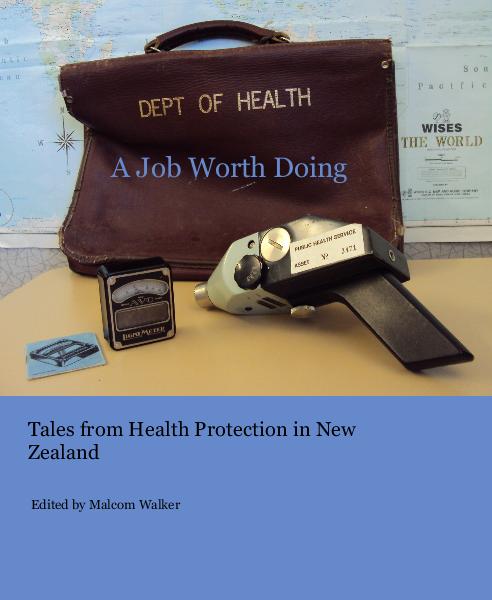
A Job Worth Doing – Tales from Health Protection in New Zealand

Canterbury District Health Board protection officer Malcolm Walker has released a new book documenting the things food inspectors encounter — a weta in an ice cream, shotgun pellets in a steak, live maggots in a pie A Job Worth Doing - Tales from Health Protection in New Zealandand a sliced mouse in a bread loaf.

The sliced mouse, an incident in Whanganui, occurred after a bakery’s pest control programme resulted in a mouse dying in a baking tray. The dough was dropped on top and the mouse was baked into the loaf. The mouse passed through the bread slicer and was perfectly sectioned.

The book also covers officers’ responses to the February 2011 Christchurch earthquake – which was a lot worse than most of the world realizes.

Restaurant inspection grading scam in NZ

People want some sort of grading system for the places where they spend their money on food.

There are lots of disclosure systems – A,B,C; red, yellow, green, numbers, web-based – and they can all be improved.

But in the absence of a credible system, someone will fill the vacuum, bataligrades-300x196often with quackery or scams.

As reported by the Sunday-Star Times in New Zealand, a company set up by a convicted identity thief and a banned company director is under investigation, after they teamed up in a “tick” scheme for hygiene standards that drew in hundreds of businesses nationwide.

The Companies Office is looking into the activities of the Hygiene Foundation – including investigating those at the top of its management structure – after complaints from former employees and clients. The company has denied any wrongdoing, with a representative maintaining that the company is above board.

However, a Sunday Star-Times investigation has uncovered that: One of those running the Hygiene Foundation is Lance Ryan, aka Lance Jared Thompson, who was convicted of stealing the names of five dead people to claim welfare payments in 2005. The other is alleged to be David Blake, aka David Colin Hughey, who is currently serving a five-year director’s ban after he was found to be running a company while an undischarged bankrupt. It is illegal to manage a business for three years while bankrupt.

The company falsely listed big-name clients such as Pizza Hut owners Restaurant Brands and Southern Cross Hospitals on its website It handed out certification to its “cleanliness” program to some parties without undertaking any hygiene tests, to build a client base.

The company failed to pay many of its staff, and has since been ordered to pay almost $200,000 in unpaid wages and compensation through the Employment Relations Authority. The Hygiene Foundation Ltd was set up in 2012 with Ryan as its owner. It has since passed through several pairs of hands and is now wholly owned by another of Ryan’s companies – the Investment Foundation – of which David Blake’s wife Hayley Blake is also a shareholder. It promoted itself as a cleanliness advisory firm, offering a “White Tick Program” to clients that recognised they had met certain hygiene criteria via tests carried out by its technicians, potentially achieving the standards with equipment lent by the foundation itself. Companies could display the tick once certified.

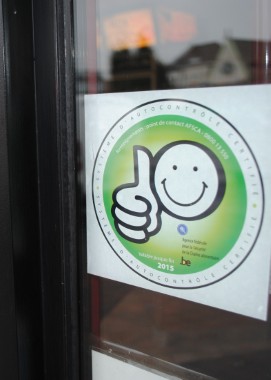
However, former employees say the certificates were often handed out without any testing and the scheme was essentially a scam. Sharon Zer, who was hired as a regional manager on a salary of $78,000, said she and her colleagues were told to sign up customers for free in order to belgium.rest.inspect.13gain membership numbers before their hygiene testing equipment had even arrived. Companies were listed as members and got certificates, but never had the swab or air testing promised – essentially getting a “tick” for nothing. “
When the Sunday Star-Times visited the Foundation’s premises on Albert St, Auckland, its offices were empty and signs taken down. A man present at the address said he “had nothing to do with the company” and was just “using the space”. On Wednesday, David Blake said he was no longer involved with the company and was now working in “sales”. The next day, his phone line was disconnected. Lance Ryan’s phone was also disconnected by Thursday. However, he replied to an email denying the allegations in this story – saying the company had not acted illegally in any way. He denied that David Blake ever ran the Hygiene Foundation. “He worked for the company. He’s totally allowed to do that,” he said. Ryan said the White Tick system was completely above board. ” We spent in the tens of thousands of dollars on imported top-of-the-range equipment,” he said The company was no longer trading, he said. Its license had been sold to a third party and previous management “no longer had any say in the business”. Ryan said while he had “a past”, he had changed his name for a legitimate reason – both he and Blake were being blackmailed, he said. “If someone has a complaint about my actions as a director I encourage them to take it to the Companies’ Office or sue me directly. I did nothing wrong,” he said. “The Hygiene Foundation was not doing anything illegal.”

Here’s a more rigorous suggestion for disclosure in NZ.

Filion, K. and Powell, D.A. 2011. Designing a national restaurant inspection disclosure system for New Zealand.
 
Journal of Food Protection 74(11): 1869-1874
.

The World Health Organization estimates that up to 30% of individuals in developed countries become ill from contaminated food or water each year, and up to 70% of these illnesses are estimated to be linked to food service facilities. The aim of restaurant inspections is to reduce foodborne outbreaks and enhance consumer confidence in food service. Inspection disclosure systems have been developed as tools for consumers and incentives for food service operators. Disclosure systems are common in developed countries but are inconsistently used, possibly because previous research has not determined the best format for disclosing inspection results. This study was conducted to develop a consistent, compelling, and trusted inspection disclosure system for New Zealand. Existing international and national disclosure systems were evaluated. Two cards, a letter grade (A, B, C, or F) and a gauge (speedometer style), were designed to represent a restaurant’s inspection result and were provided to 371 premises in six districts for 3 months. Operators (n = 269) and consumers (n = 991) were interviewed to determine which card design best communicated inspection results. Less than half of the consumers noticed cards before entering the premises; these data indicated that the letter attracted more initial attention (78%) than the gauge (45%). Fifty-eight percent (38) of the operators with the gauge preferred the letter; and 79% (47) of the operators with letter preferred the letter. Eighty-eight percent (133) of the consumers in gauge districts preferred the letter, and 72% (161) of those in letter districts preferring the letter. Based on these data, the letter method was recommended for a national disclosure system for New Zealand. http://www.ingentaconnect.com/content/iafp/jfp/2011/00000074/00000011/art00010

China expands use of QR codes for restaurant food safety info

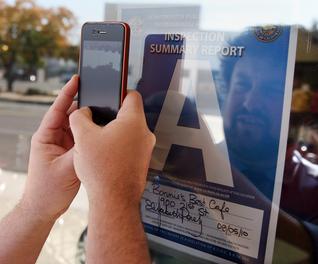
The Haidian district of Beijing has 7,533 restaurants that have recently publicized their food safety information by providing quick response (QR) codes that can be scanned using cell phones. Customers who text “a” to 10658081 or log on iot.10086.cn/ewm-sj/ can download the food safety qr.code.rest.inspection.gradeapp. By scanning the QR code on restaurants’ menus or business licenses, customers can check information about the restaurant, including whether food additives are used in dishes and whether the business has breached food safety regulations in the past.

Calgary Wendy’s shut down over health violations

Brisbane is like Calgary, 20 years ago – a cow-town flush with resource money and trying to act sophisticated but still overrun with bogans (fubar).

The Wendy’s on Macleod Trail and 70 Ave. in Calgary was visited by inspectors last Wednesday, who uncovered16 safety violations.

The issues included an employee who didn’t wash their hands while handling raw meat, raw hamburger in a cooler that was too fubarfeat__spanwarm, black mold and water damage in the staff room and grease and oil on the floor.

“The reason that the restaurant has been closed is not because someone has been made ill, it is because we have an older building that requires repairs,” says Lisa Deletroz, spokesperson for Wendy’s Canada. “Part of those repairs involves making it a safer working environment.”

Employees at the affected location have been reassigned and will undergo additional training, and the restaurant will have to be visited by health inspectors again before it can reopen.

‘No excuse for negligent practices’ seven Ireland food businesses served closure orders in September

The Food Safety Authority of Ireland (FSAI) has reported that seven closure orders were served on food businesses during the month of September for breaches of food safety legislation. The orders ireland.pubwere issued by environmental health officers in the Health Service Executive.

Three closure orders were served under the FSAI Act, 1998 on:
• Davak Superstores (grocery), 17 Bolton Street, Drogheda, Louth
• 10 Thousand Restaurant, 39 Middle Abbey Street, Dublin 1
• Tasty Grill (restaurant), 39 Richmond Street South, Dublin 2

Four closure orders were served under the EC (Official Control of Foodstuffs) Regulations, 2010 on:
• The Morning Star Food Hall (grocery) (Closed area: Store area only), Townparks, Commons Road, Navan, Co. Meath
• Utterly Nutty (bakery/confectionery), Bakery Mews, Kenmare, Kerry
• Tralee Central Hotel, Maine Street, Tralee, Kerry
• Planet Spice (restaurant), 51 Church Street, Tullamore, Offaly

Also during the month, successful prosecutions were brought against:
A1 Cafe Limited, Cafe India, Patrick’s Court, Patrick Street, Tullamore, Offaly
Mr John Muldowney, The Old Bank House Restaurant, 17 Main Street, Portlaoise, Laois

Commenting on these latest closure orders, Prof. Alan Reilly, Chief Executive, FSAI, stated that vigilance is always required in relation to food safety and that standards must not be permitted to slip to such levels that consumer health is put at risk.

“While most food businesses are committed to high standards for the health of their customers, this is not always the case.  We’re urging food businesses to make sure that they have a food safety management system in place and that it is consulted on a regular basis and updated, where necessary, to ensure non-compliance issues and breaches of food safety legislation don’t occur.  There is absolutely no excuse for negligent practices.”