I don’t like the idea of backyard chickens, or chooks.
They are Salmonella factories.
The latest numbers from the U.S. Centers for Disease Control has more than 1,000 Americans sick from backyard chicks and two deaths; 605 have been hospitalized.
In a related twist, duck eggs bought at a UK village fair have been linked to the death of Mr. Tavakoli, of Lindholme, Doncaster.
BBC News reports there has been a second case of salmonella involving someone who also said they ate duck eggs from the same farm – although this has not been confirmed as the source of infection.
The supplier of the eggs believes the salmonella came from elsewhere (magic)
The Food Standards Agency said eggs with the British Lion Mark were virtually free of salmonella, however this only applies to hens’ eggs.
Vulnerable groups are advised to avoid raw or lightly cooked duck eggs (above, right, are duck eggs from my friend and collaborator, Kate the vet, at Kansas State; we did research together but my department chair in firing me said I didn’t play well with others; what an asshole).
The U.S. Centers for Disease Control reports in August 2018, two Oregon patients with diagnosed Salmonella infection were interviewed using a standard enteric illness questionnaire; both patients reported having eaten raw cake mix.
Standardized interview questionnaire data collected from 207 Oregon patients with salmonellosis in 2017 indicated a 5% rate of consumption of raw “cake mix or cornbread mix” (Oregon Health Authority, unpublished data, 2017). The binomial probability that both 2018 patients were exposed to raw cake mix by chance was determined to be 0.003, prompting the Oregon Health Authority (OHA) to collect and test the contents of 43 boxes of unopened cake mix of various brands from six retail locations. OHA sent samples to the Institute for Environmental Health Laboratories in Lake Forest Park, Washington, for pathogen testing. Salmonella Agbeni was isolated from an unopened box of white cake mix from manufacturer A, and whole genome sequencing (WGS) data describing the isolate were uploaded to the U.S. National Library of Medicine’s National Center for Biotechnology Information (NCBI) website (https://www.ncbi.nlm.nih.gov/pathogensexternal icon). OHA used the NCBI database to compare sequence data with the cake mix isolate (PNUSAS056022) and then consulted CDC’s System for Enteric Disease Response, Investigation, and Coordination (SEDRIC), a web-based, outbreak investigation tool designed for collaborative, multistate investigations of enteric disease outbreaks.* On October 19, OHA determined that clinical isolates from four patients from Maryland, Ohio, and Wisconsin, with specimen isolation dates ranging from June to September 2018, were genetically related to the Salmonella Agbeni isolate from the unopened box of white cake mix, within four single nucleotide polymorphisms (SNPs).
On October 22, 2018, OHA notified state public health counterparts in the three states of this finding and inquired about raw cake mix exposures among their patients. The Wisconsin patient reported having consumed an entire box of raw white cake mix over several days during the likely exposure period. In addition, WGS analysis indicated that this clinical isolate was closely related genetically (within one SNP) to the isolate cultured from the Oregon white cake mix. On October 25, CDC requested officials in Maryland, Ohio, and Wisconsin to interview patients using a questionnaire with specific questions about baking exposures.
On October 31, the Food and Drug Administration (FDA) initiated an investigation of manufacturer A with regard to the Salmonella-positive white cake mix. In addition to the investigation and document collection, FDA collected samples including an ingredient (flour), finished cake mix, and environmental samples. All collected samples tested negative for Salmonella. On November 5, a voluntary recall of manufacturer A’s classic white, classic butter golden, signature confetti, and classic yellow cake mixes was announced because they might be contaminated with Salmonella bacteria.
On January 14, 2019, CDC declared this outbreak, which totaled seven cases in five states,† to be over (1). This is the first time that OHA used WGS data on the publicly available NCBI website to detect a multistate outbreak associated with a widely distributed consumer product, which resulted in product action. WGS of food and environmental isolates and subsequent analysis on the NCBI and SEDRIC platforms are emerging as useful tools in identifying outbreaks associated with widely distributed products with long shelf lives and low background rates of consumption, such as raw cake mix. Detection of these outbreaks is typically difficult and relies mainly upon epidemiologic evidence from investigation of a larger number of cases (2–4). These efforts also highlight the value of collaboration between public health epidemiologists and laboratorians as well as the use of new technological tools for outbreak detection. During outbreak or cluster investigations, food and environmental samples should be collected as quickly as possible whenever practical, particularly when epidemiologic data suggest an association. WGS, in conjunction with the NCBI website and SEDRIC, can be used to identify genetically related isolates quickly.
US: Notes from the field: Multistate outbreak of salmonella Agbeni associated with consumption of raw cake mix – five states, 2018
Emergency units on the island received several patients reporting food poisoning symptoms after eating at the restaurant, which as then identified as the source of the illness.
The Balearic Islands’ public health department says the number of cases could rise even higher because some are not reported immediately when initial symptoms are less severe.
Proceedings against the restaurant have been opened by local government bodies.
Thousands of British holidaymakers visit Majorca each year with many heading to resorts like Magaluf and Palma Nova that are just a short bus or taxi ride from the capital.
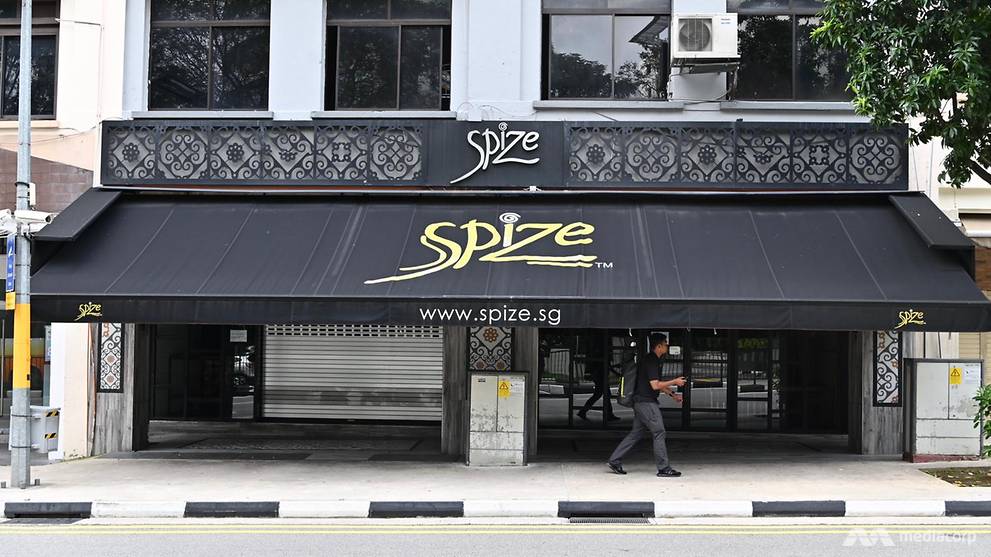
Mohamad Fadli Mohd Saleh, 38, an auxiliary police officer, died of sepsis and multi-organ failure a week after eating from a bento box prepared by Spize.
This was about five hours after the food had been prepared at Spize’s River Valley outlet between 9.30am and 10.30am.
A post-mortem initially stated the cause of Fadli’s death as cardiorespiratory failure.
A subsequent report found that Fadli had died of sepsis and multi-organ failure following acute gastroenteritis.
Seven separate suspected food-borne incidents were linked to Spize between Nov. 6 and 9.
Numbers
211 people consumed food from Spize.
73 people fell sick
47 people of them were hospitalised, including Fadli
36 tested positive for salmonella
The other 35 have recovered from salmonella.
The salmonella outbreak was described as “unusually severe”.
Salmonella is a “self-limiting disease”, with an incubation period of between 12 and 36 hours.
This Spize incident had an immediate incubation period that was much shorter, within just eight hours, and there was a high hospitalisation rate.
The possibility of there being a virulent strain of pathogens was ruled out after an investigation.
The severity of those affected was perhaps due to the increased bacteria loads of the contaminated food item.
Details of packed bento:
There were three types of rice placed in the bento boxes:
Indonesian rice, which included egg fried rice, prawn omelette mung beans and tofu;
Malaysian rice, which included kampung fried rice, chicken sambal and stir-fried morning glory; and
Chinese rice, which was egg fried rice with Chinese sausage, omelette, crispy fish and other ingredients.
State coroner Kamala Ponnampalam said in her case findings Aug 23/19, “The joint investigations by the agencies uncovered several alarming lapses in the food handling and food preparation methods which directly contributed to the outbreak of acute gastroenteritis,” said the coroner.
Strains of salmonella were found on the ready-to-eat bento sets at Spize’s River Valley Road outlet, where the food was prepared.
The bacteria was also found on raw food items and commonly touched surfaces such as a door handle leading to a cold room and the cold room rack at the restaurant.
“This was suggestive of cross-contamination with raw meat, borne by the food handlers,” said the coroner.
“There was also faecal matter detected in the ready-to-eat food (belacan egg fried rice) and on the kitchen tools like the chopping board and knife used in the chicken rice preparation which points to poor hygiene practices, either in the handling of unclean raw meat, or in poor personal hygiene.”
Seven of the 34 food handlers were not registered with NEA and had not attended the basic food hygiene course.
There was no soap provided at the restaurant’s basin, so it was likely that the food handlers did not wash their hands with soap before handling cooked ingredients, preparing meals, after handling raw ingredients, or after touching other parts of the kitchen.
This could have led to cross-contamination of salmonella bacteria between the raw ingredients and cooked food, the court heard.
Gastroenteritis caused from infections with Salmonella enterica (salmonellosis) causes significant morbidity in Australia. In addition to acute gastroenteritis, approximately 8.8% of people develop irritable bowel syndrome (IBS) and 8.5% of people develop reactive arthritis (ReA). We estimated the economic cost of salmonellosis and associated sequel illnesses in Australia in a typical year circa 2015.
We estimated incidence, hospitalizations, other health care usage, absenteeism, and premature mortality for four age groups using a variety of complementary data sets. We calculated direct costs (health care) and indirect costs (lost productivity and premature mortality) by using Monte Carlo simulation to estimate 90% credible intervals (CrI) around our point estimates.
We estimated that 90,833 cases, 4,312 hospitalizations, and 19 deaths occurred from salmonellosis in Australia circa 2015 at a direct cost of AUD 23.8 million (90% CrI, 19.3 to 28.9 million) and a total cost of AUD 124.4 million (90% CrI, 107.4 to 143.1 million). When IBS and ReA were included, the estimated direct cost was 35.7 million (90% CrI, 29.9 to 42.7 million) and the total cost was AUD 146.8 million (90% CrI, 127.8 to 167.9 million).
Foodborne infections were responsible for AUD 88.9 million (90% CrI, 63.9 to 112.4 million) from acute salmonellosis and AUD 104.8 million (90% CrI, 75.5 to 132.3 million) when IBS and ReA were included. Targeted interventions to prevent illness could considerably reduce costs and societal impact from Salmonella infections and sequel illnesses in Australia.
Cost of salmonella infections in Australia, 2015
September 2019
Journal of Food Protection vol. 82 no. 9
LAURA FORD,1 PHILIP HAYWOOD,2 MARTYN D. KIRK,1 EMILY LANCSAR,3 DEBORAH A. WILLIAMSON,4 and KATHRYN GLASS1*
Norman Sharpless and Frank Yiannas of the U.S. Food and Drug Administration write that fresh papayas are most often eaten raw, without cooking or processing to eliminate microbial hazards; and therefore, the way they are grown, harvested, packed, held, processed and distributed is crucial to minimizing the risk of contamination with human pathogens.
Since 2011, American consumers have been exposed to eight outbreaks caused by Salmonella serotypes linked to imported, fresh papaya. And, just this June we started an investigation into an outbreak of Salmonella Uganda illnesses tied to the consumption of whole, fresh papaya imported from Mexico. While the 2019 outbreak is ongoing, the first seven outbreaks accounted for almost 500 reported cases of illness, more than 100 hospitalizations, and two deaths.
This trend has to stop. The pattern of recurrent outbreaks we have observed since 2011, including the 2019 illnesses, have involved Salmonella infections traced back to, or are suspected of being associated with, papaya grown in Mexico. The recurring nature of these outbreaks is a clear indication that more must be done within all sectors of the papaya industry to protect its customers and to meet its legal obligations. This includes growers, importers and even retailers that can and must do more.
This is why today we have issued a letter calling on all sectors of the papaya industry to take actions to prevent these outbreaks in the future. We are urging growers, packers, shippers and retailers in the papaya industry to review their operations and make all necessary changes to strengthen public health safeguards.
Our letter calls on the papaya industry to assess the factors that make their crops vulnerable to contamination. If a foodborne pathogen is identified in the crop or growing environment, a root cause analysis should be performed to determine the likely source of contamination. Procedures and practices that minimize that contamination must be implemented.
We are strongly encouraging the papaya industry to examine the use and monitoring of water used to grow, spray (pesticides, fungicides), move, rinse or wax crops to identify and minimize risks from potential hazards. All sectors of the industry should adopt tools and practices needed to enhance traceability since papayas are a perishable commodity, to more rapidly facilitate the tracking of involved product to expedite its removal from commerce, prevent additional consumer exposures, and properly focus any recall actions.
And finally, they should fund and actively engage in food safety research to identify the potential sources and routes of contamination by microbial pathogens and develop data-driven and risk-based preventive controls.
In response to this most recent Salmonella Uganda outbreak, the FDA deployed an inspection team to the packing house and farm that was linked to the contaminated papayas via traceback and epidemiological evidence. The findings of those visits will be made public when their investigation is complete. We have also increased sampling and screening of papayas at the border. In addition, the FDA is actively collaborating with our counterparts in the Mexican government regarding this current outbreak through the agency’s Latin America Office to determine ways to further our collaborative prevention efforts.
The U.S. Federal Food, Drug, and Cosmetic Act prohibits food producers from introducing, or delivering for introduction, into interstate commerce adulterated foods (meaning foods that are potentially harmful to consumers). Additionally, there are new requirements under the FDA Food Safety Modernization Act (FSMA). The Produce Safety Rule under FSMA sets science- and risk-based minimum standards for domestic and foreign farms for the safe growing, harvesting, packing and holding of covered produce, which includes papayas. Another FSMA rule, the Foreign Supplier Verification Program (FSVP) makes importers responsible for verifying that the foods they bring into the U.S., including papayas, have been produced in a manner that meets applicable U.S. safety standards.
After a few months of retreating and thinking about next steps for barfblog, and focusing on consumer food safety observations in our new kitchens, I’m getting back in the posting mix.
And still, one of my favorite emails (after the weekly MMWR notification) is FDA’s updated warning letters. There’s so much to be learned in these beyond the fun stuff like peeling the skin off of a bearded dragon (not a euphemism).
Here’s my favorite from today’s update, courtesy of Sunshine International Foods Inc – a tahini processor.
There are a few nuggets in this one but my big takeaway is that the letter provides a fantastic blueprint for all other tahini processors to follow if they want to meet what FDA expects. Including that you absolutely need to include Salmonella as a known or reasonably foreseeable hazard in a preventive control plan.
Oh and if you are a retailer or food service buyer, looking through these warning letter alerts are probably a good idea – I’d be making vendor decisions based on these (and asking my current suppliers how they are different from the folks who receive them).
Your hazard analysis did not identify a known or reasonably foreseeable hazard for each type of food manufactured, processed, packed, or held at your facility to determine whether there are any hazards requiring a preventive control, as required by 21 CFR 117.130(a)(1). The hazard evaluation must include an evaluation of environmental pathogens whenever a ready-to-eat (RTE) food is exposed to the environment, as required by 21 CFR 117.130(c)(1)(ii). Your RTE tahini products made from natural sesame seeds are exposed to the processing environment following pasteurization and prior to packaging, and your repackaged RTE tahini products are exposed to the processing environment throughout the processing of these products. Although you have identified “Microbial Growth Staphylococcus Aureus” as a potential significant food safety hazard in your hazard analyses for your RTE tahini products (including RTE tahini manufactured from natural sesame seeds with creation date 5-01-18, RTE flavored tahini manufactured from natural sesame seeds with creation date 5-01-18, repackaged RTE tahini with creation date 5-01-18, and RTE flavored tahini using raw tahini received at your facility with revision date 3-6-19), these hazard analyses do not identify contamination of RTE tahini with the environmental pathogen of Salmonella as a known or reasonably foreseeable hazard for each type of food manufactured, processed, packed, or held at your facility to determine whether it is a hazard requiring a preventive control.
Also, folks should do better on cleaning and sanitizing the hard to get spots where Salmonella or Listeria might be living.
1. All food-contact surfaces, including utensils and food-contact surfaces of equipment, must be cleaned as frequently as necessary to protect again contamination of food, as required by 21 CFR 117.35(d). However, our investigators observed the following conditions:
a. Hardened tahini was present around the gasket between a stainless-steel pipe feeding from the hold/pasteurizer tank to the hopper for the retail jar filler located in the Pasteurizer/Filling/Packing Room.
b. Soft tahini was observed around and beneath the lid seams to the retail line filler hopper in the Pasteurizer/Filling/Packing Room.
c. Soft and hardened tahini were observed inside the retail line filler hopper and (b)(4) filler heads.
d. Soft tahini was observed inside the square mixer and grinding/milling hopper in the Roasting/Milling Room.
e. Chocolate tahini was observed inside the stainless-steel pipe feeding into the (b)(4) in the Pasteurizer/Filling/Packing Room.
Shreyas Tanna of Health Gazette reports that 24 people in the UK and eight in Ireland have been sickened with Salmonella Bredeney linked to cooked, chilled pork from Romania.
Infections from this outbreak have been reported from 2017 till 2019.
We’ve done extensive work on this topic dating back to 2006 (search barfblog.com), but new tools, like whole genome sequencing, mean additional outbreaks have been identified. A summary paper of recent outbreaks has just been published. Abstract below:
Frozen raw breaded chicken products (FRBCP) have been identified as a risk factor for Salmonella infection in Canada. In 2017, Canada implemented whole genome sequencing (WGS) for clinical and non-clinical Salmonella isolates, which increased understanding of the relatedness of Salmonella isolates, resulting in an increased number of Salmonella outbreak investigations. A total of 18 outbreaks and 584 laboratory-confirmed cases have been associated with FRBCP or chicken since 2017. The introduction of WGS provided the evidence needed to support a new requirement to control the risk of Salmonella in FRBCP produced for retail sale.
Outbreak of salmonella illness associated with frozen raw breaded chicken products in Canada 2015-2019
Decreased susceptibility to azithromycin is rare among Salmonella serotypes that cause human infections in the United States. If antibiotic treatment is indicated, azithromycin is recommended as an oral therapy.
What is added by this report?
During June 2018–March 2019, an outbreak caused by multidrug-resistant Salmonella Newport with decreased susceptibility to azithromycin led to 255 infections and 60 hospitalizations. Infections were linked to Mexican-style soft cheese obtained in Mexico and beef obtained in the United States.
What are the implications for public health practice?
Whole genome sequencing can be used in Salmonella outbreak investigations for rapid prediction of antimicrobial resistance and can link cases to each other and to possible sources of infection.
Outbreak of salmonella Newport infections with decreased susceptibility to azithromycin linked to beef obtained in the United States and soft cheese obtained in Mexico—United States 2018-2019

 They are Salmonella factories.