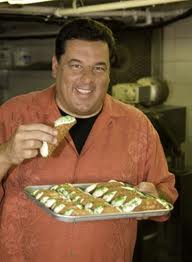
Careful with that cannoli; Australian salmonella sick now at 73; custard at retail tests positive

Thirteen more people have tested positive for a strain of salmonella linked to custard-filled cakes.

Health authorities will interview each of them to determine whether they had consumed any of the products linked to the current outbreak.

Vili’s custard berliners and St George Cakes & Gelati custard eclairs and cannolis were withdrawn from sale last Friday, after SA Health established they were the common denominator in 60 salmonella cases.

At least 29 of those cases had required hospital treatment.

The 13 new cases would have been sick before the public health warning was issued on Friday but test results were completed today.

SA Health also has confirmed that two custard-filled product samples from St George Cakes & Gelati, purchased at retail stores, have tested positive for Salmonella Typhimurium phage type 9, which is the strain found in the current outbreak.

Seaweed delicacy in Thailand kills 23-year-old NZ woman, two others in hospital

The New Zealand Herald is reporting that a dream Overseas Experience has turned to tragedy for three young New Zealand women after food poisoning killed one and left the other two in hospital.

Sarah Carter, 23, died on Sunday, reportedly after eating a seaweed delicacy at a market in Chiang Mai, Thailand – just hours before her mother could get to her bedside.

Her friends Amanda Eliason and Emma Langlands, both 23, also suffered food poisoning and were last night still in Chiang Mai Ram Hospital.

Amanda remained in the intensive care unit while Emma was yesterday moved into her own room and was now eating.

"We’ve just been on a rollercoaster from hell," Emma’s father, Richard, said last night. "Three of them went over, but one’s not coming back. It’s just horrific. These girls are so beautiful, professional and sensible. It’s a terrible, terrible tragedy.

"I just can’t understand how this happened … they’re all such amazing, hugely intelligent girls."

The three friends – who were on their OE after finishing their studies at Wellington’s Victoria University – were rushed to hospital last Friday when they became ill after eating what is thought to have been toxic seaweed.

Two days later, Sarah was dead.

Yesterday her father, Richard Carter of Auckland, told a news website that his daughter had "touched the hearts of everyone she knew."

* There are several types of edible seaweed used in many countries.
* The high iodine content can produce iodine toxicity if large amounts are consumed.
* Rotting seaweed is also a potent source of hydrogen sulfide, a highly toxic gas which can cause vomiting and diarrhoea, but is rarely fatal.
* Most edible seaweed is marine algae – most freshwater algae is toxic.While marine algae is not generally toxic, some do contain acids that irritate the digestion canal, while others can have a laxative effect.
* Is a staple food in most parts of Asia and is used in soups, salads and as a side dish.
* Recognised in many Western countries, as being used in sushi and in spirulina.

People say they will pay more for safer food, will they? Someone needs to test at retail

Willingness-to-pay studies are excellent indicators of what people think they will do in imaginary situations.

Willingness-to-pay studies are terrible indicators of what people will actually do at the grocery store.

Brian Roe, professor of agricultural, environmental and development economics at Ohio State University (isn’t that The OSU?) and Mario Teisl of the University of Maine report in the journal Food Policy, that based on surveys from 3,511 individuals, Americans would be willing to pay about a dollar per person each year, or an estimated $305 million in the aggregate, for a 10 percent reduction in the likelihood that hamburger they buy in the supermarket is contaminated by E. coli.

A monkey just flew out of Wayne Campbell’s butt (see video below from last week’s Saturday Night Live).

By comparison, a 2008 U.S. Department of Agriculture analysis estimated the value of eradicating a specific type of E. coli contamination from all food sources would result in a benefit valued at $446 million.

In the questionnaire, they set up six hypothetical scenarios around the purchase of either a package of hotdogs or a pound of hamburger. They set prices for the packages – both "status quo" foods and those treated with either ethylene gas processing or electron beam irradiation to reduce contaminants – and then laid out a variety of probabilities that the treated or untreated food packages contained contamination with either E. coli or listeria, another pathogen that can cause food-borne (sic) illness.

They followed by asking respondents to choose one of three actions: buy the food treated with the pathogen-reducing technology, buy their usual brand, or stop buying this product altogether.

The results showed that consumers will reach a limit to how much they want to pay to reduce their chances of getting sick. If the treated product cost only 10 cents more than an untreated package, about 60 percent of respondents said they’d buy the improved product. But when that higher price reached $1.60 more per package, less than a third would opt for the treated product.

The structure of the survey also allowed researchers to see the influence of human behavior and opinions on likely illness outcomes.

"If the food industry were forced to put technology in place that lowered the presence of E. coli and that ramped up prices to the extent where everybody had to pay about a dollar more out of pocket each year for hamburger, we’re saying that, according to this model, that would be about an equal tradeoff for the U.S. population. And if the technology costs only about 10 cents per person instead, that would seem like a good deal to most people," he said.

"If regulators could become more comfortable with this measurement process, agencies might change the way they conduct their cost-benefit analysis. And that would be an interest of ours, to see if our work and others’ work in this area will eventually change the way people attack these questions."

So it’s more about changing the way estimates are done. Estimates are lousy surrogates. I’m all for marketing food safety – at retail, food service, markets, everywhere. Brag about test results, use big signs, smart phone readers, just be able to back it up.
 

FDA details hazards at sprout producer; who was the auditor

Why are these problems always found after the outbreak?

The U.S. Food and Drug Administration shows up after the outbreak, which is why retailers like Jimmy John’s hire third-party auditors to verify the safety of their suppliers. Someone may want to ask Jimmy John’s, how does someone become eligible to supply ingredients for the sandwich artists? Any food safety criteria?

Can’t wait to find out who the third-party auditor of this sprout outfit was – and yet another reason company’s with their names on product, like Jimmy John’s, should be using their own people who may actually care about the brand. Or making people barf.

According to CIDRAP, FDA says it found a variety of possible contamination sources responsible for the salmonella-in-sprouts outbreak that has sickened 125 people, primarily in Indiana and primarily related to eating sandwiches from Jimmy John’s.

The FDA findings are detailed in a Form 483 report the the agency released following its inspection at Tiny Greens Organic Farm of Urbana, Ill. In December the firm recalled alfalfa sprouts and Spicy Sprouts (a mixture of alfalfa, radish, and clover sprouts) after they were implicated in an investigation of Salmonella cases in people who got sick after eating at Jimmy John’s restaurants.

The latest update from the Centers for Disease Control and Prevention, on Jan 14, put the size of the outbreak at 125 cases in 22 states and Washington, DC. The FDA found a Salmonella isolate matching the outbreak strain, known as I 4,[5],12:i:-, in a sample of runoff water from the company.

The FDA’s 6-page inspection report says the company grew sprouts in "soil from the organic material decomposed outside" without using any monitored "kill step" on it.

These were among the other FDA findings:

* An "amphibian/reptile" was kept in the reception room of the firm, which adjoined the production area.
* The firm couldn’t show that its antimicrobial treatment for seeds, which was not specifically described in the report, was equivalent to the recommended treatment with a bleach solution.
* Employees stored their lunches, including such items as raw bacon, in the same cooler where finished sprouts were stored.
* Organic matter was seen on a table where sprouts were packaged, and a "biofilm-like buildup" was seen on sprouting trays after they were cleaned.
* What looked like mold was seen on walls and ceiling in a mung-bean sprouting room.
* Condensation dripped from the ceiling in production areas throughout the inspection period, which lasted close to a month.
* An outside lab that the firm used to test its water and sprouts used a method that was not validated for detecting Salmonella in those items.


Sentencing next for fish bar operator who sickened 5 with E. coli

A U.K. court was told yesterday that Wrexham librarian Karen Morrisroe (right, exactly as shown) spent three months in hospital – where she also picked up the hospital superbug, MRSA – and had been psychologically damaged as a result of E. coli O157 after eating a veggie burger and chips from the Llay Fish Bar in 2009.

Anthony Vines, prosecuting, told the court there were five primary cases of E. coli which could be linked to the takeaway, although there were secondary infections.

Council officers found pizza toppings at the takeaway covered in flies, a lack of handwashing materials and clothes in handbasins which were also put over frozen doner kebabs, and inadequate training.

Karen Morrisroe said her illness had resulted in “unbearable stomach pains,” being severely dehydrated, suffering kidney failure and a small seizure. Other victims included an 11-month-old baby, two three-year-old girls and a five-year-old child.?

??Mr Justice Griffith-Williams said he would sentence Ramazan Aslan, former operator of the Llay Fish Bar, next week after reading all background reports. But in granting him bail, he told him that he should not interpret that as meaning there would not be a prison sentence.
 

Australian state hammers raw milk huckster

Sydney’s Bondi Beach is a lovely, groovy place.

But not so groovy for raw milk hucksters, as a man was found guilty of 43 charges relating to breaches of the Food Act and fined $53,000 for various offences relating to the sale of unpasteurised milk and unpasteurised dairy products.

The products were manufactured at the defendant’s Bondi Junction residence and sold over the Internet and at an organic food market in Sydney’s Bondi Junction.

Additional offences include the sale of other goods including chocolate, pumpkin seeds and cranberries that were labelled with health claims in contravention of the Food Standards Code.

Primary Industries minister Steve Whan said the court found that the defendant "in a display of deceptive and deceitful conduct, sold unpasteurised dairy products that were deliberately mislabelled and camouflaged as cosmetic products when the intention was they be used for human consumption."

"There is sound scientific evidence pointing to the risks associated with consuming raw milk. To ensure that cow’s milk and cow’s milk products sold in New South Wales are safe they go through the NSW Food Authority’s stringent food safety management programs, which includes pasteurisation."

Mr Whan said the issue of the sale of unpasteurised milk products in NSW was a divisive one amongst the some sectors of the dairy industry and advocate groups, but the NSW Government “made no apologies for giving paramount consideration to the public interest and the need to protect public health.”

In sentencing, Chief Industrial Magistrate GJT Hart said the evidence provided suggested the defendant had no scientific, medical or other qualification or expertise in the field.

"The Defendant appears to have a propensity for adopting, and then advocating with vigour, the teachings of the unqualified, whilst preferring to ignore the available literature produced by people with relevant scientific qualifications.”
 

60 sickened, 30 hospitalized with salmonella from custard in South Australia

Someone finally asked, and when South Australia Health said a lot of people were sick from salmonella in custard, it really was a lot.

ABC news (that’s Australian not American) reports at least 60 people have fallen ill, nearly half of them needing to be admitted to hospital.

SA Health’s investigation has linked the infections to Vili’s custard-filled berliner buns and St George Cakes and Gelati’s custard-filled cannolis and eclairs in Adelaide.

Kevin Buckett from SA Health says they expect more test results later in the week, adding,

"We’re continuing to interview the 60 or so people that were notified to us last week and obviously the more we interview the better chance we have to get a good track on what common foods people have eaten."

Food fraud: labels and local mean little

Last week, a west Australian egg wholesaler was fined $50,000 in federal court for misleading the public by labeling cartons of eggs as "free range" when they knew a substantial proportion of the eggs were not free range.

Last month, two Arizona residents plead guilty to 13 felony offenses for their roles in purchasing and then re-selling farm-raised Asian catfish and Lake Victoria perch falsely labeled as grouper, sole or snapper; selling foreign farm-raised shrimp falsely labeled as U.S. wild caught shrimp and selling shrimp that falsely claimed to be larger and more expensive than they actually were; and for buying fish they knew had been illegally imported into the United States. Some of the fish tested positive for malachite green and Enrofloxin, both of which are considered health hazards and banned from U.S. food products.
Last fall, the Washington Post reported expensive sheep’s milk cheese in a Manhattan market was really made from cow’s milk, a jar of "Sturgeon caviar" was Mississippi paddlefish, and some honey is diluted with sugar beets or corn syrup, but still market as 100 percent pure at a premium price.

Last year, an NBCLA undercover investigation revealed that some farmers at southern California markets are making false claims and flat-out lies about the produce they’re selling.

NBCLA’s investigation began this summer, when we bought produce at farmers markets across the LA area, and then made surprise visits to farms where we were told the produce was being grown.

We found farms full of weeds, or dry dirt, instead of rows of the vegetables that were being sold at the markets. In fact, farmers markets are closely regulated by state law. Farmers who sell at these markets are supposed to sell produce they’ve grown themselves, and they can’t make false claims about their produce.

We did find plenty of vendors doing just that, like Underwood Farms, which sells produce at 14 markets, all grown on a family farm in Moorpark.

But our investigation also uncovered vendors who are selling stuff they didn’t grow, like Frutos Farms, which sells at seven different farmers markets in LA and Orange counties.

Frutos Farm’s state permit to sell produce at farmers markets says their farm is in Cypress.

NBCLA asked owner Jesse Frutos, "Everything you sell at farmers markets is grown in your Cypress field?"

Jesse responded, "Correct…everything."

But when NBCLA made a surprise visit to the Cypress field listed on its permit, Frutos couldn’t show us most of the produce he was selling, such as celery, garlic, and avocados.

So NBCLA asked, "Do you grow avocados here?"

"Avocados? No, not here on the lot. … That I’ll be honest. That stuff came from somewhere else," Frutos said.

Somewhere else? NBCLA’s undercover cameras followed Jesse’s trucks on farmers market days, and saw him going to the big wholesale produce warehouses in downtown LA.

We saw him loading up his truck, with boxes of produce from big commercial farms as far away as Mexico. He bought many of the types of items we saw him selling at the farmers markets.

After documenting this, NBCLA asked Jesse, "You are selling some things at farmers markets that you didn’t grow, that you got at wholesale produce markets?"

Jesse admitted, "Yes."

By the end of our investigation, we found vendors who make false claims selling at more than two dozen farmers markets.

Food fraud has been around a long time.

A recent paper in the British Food Journal reinforces the idea despite scientific sophistication, rules to control food fraud are only as good as the enforcement that backs them up.

In the egg case, Justice Tony North found the conduct involved a high level of dishonesty and was very difficult to detect because once the eggs were in the cartons it was impossible to determine if they were free range or not.
As today’s society grapples with how best to validate that food is indeed what it says it is — and safe — and as the huskers and buskers emerge with cure-alls, I turn to the words of Madeleine Ferrières a professor of social history at the University of Avignon, France, in Sacred Cow, Mad Cow: A History of Food Fears, first published in French in 2002, but translated into English in 2006:

"All human beings before us questioned the contents of their plates. … And we are often too blinded by this amnesia to view our present food situation clearly. This amnesia is very convenient. It allows us to reinvent the past and construct a complaisant, retrospective mythology."

View more videos at: http://www.nbclosangeles.com.

More complex food carts need to play by the same rules as other food businesses

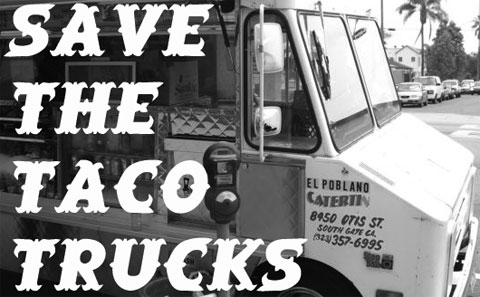
It looks like take-out food choices in Raleigh are about to get more varied with the expansion of what will be allowed to be sold from a food truck or cart. Currently folks looking for a mid-day or late night quick meal have been limited to hot dogs and sausages but a revisiting of local rules will open the door for some more complex foods – such as italian meals, gourmet burgers and tacos – to be sold by mobile food vendors.

According to the Raleigh Public Record, much of the debate has focused on business implications (should a food cart selling pizza be allowed to park directly outside of a pizza restaurant, etc.). According to the vocal pro-food truck lobby, they want operate just like a regular commercial food business which will include regular visits from environmental health officer:

Mike Stenke, owner of the Klausie’s pizza truck, has led the charge for allowing the trucks to park on city streets and is not satisfied with private parking lots. He said in a free marketplace, the city should not be protecting anyone.
Stenke said he is disappointed with the slow progress. He is in favor of limiting the number of food trucks, having regular health inspections and setting up proximity rules – as long as he has the opportunity to sell food.
Food trucks are regulated by the county like any other commercial kitchen.

I love food carts, and usually try to pick up some local specialities at some when travelling. I’m all for the inclusion of new types of foods. But there are increased risks associated with doing something other than a ready-to-eat food at a card. With complex foods (other than just reheating cooked meats) comes complicated (and potentially risky) preparation and handling steps. Multiple raw ingredients need to be kept at the right temperature, operators have to avoid cross-contamination, clean and sanitize their equipment and, keep bacteria and viruses off of their hands. All within the confines of a cart or trailer. It can be yummy, but making the meals safely is a tricky activity. And as a customer I want to know how the truck or cart does when it comes to inspection.

 It took Los Angeles 12 years to apply their restaurant grading system to mobile vendors (of which there are 6,000 in Los Angeles County).

Health officials have been inspecting food trucks, stands and carts for years but this is the first time the vendors will receive letter grades. The new rules require food truck operators to explain to customers why their trucks received less than an A.

It’s unclear exactly which direction the council committee tasked with drafting rules and guidelines will go when it comes to addressing food safety and communicating inspection results to the public but I’d like to see the mobile units to receive letter grades and have their inspections posted online just like every other foodservice business. Currently a summary of the inspections exist (see an example here — I want to know whether the place has a thermometer or not) but scores aren’t provided.

Operators must know (and care) about the risks associated with the products they sell, and be responsible with sharing this information with their customers by and support a reasonable way to do this.


Norovirus chef serves worm pizza to sick kids

U.K. chef Heston Blumenthal is attempting to ensure some children in hospital get their required intake of protein, by dishing up pizzas topped with deep fried worms.

Blumenthal’s interest in the children’s diets was sparked by a visit to Liverpool’s Alder Hey hospital where he noticed pizza on the menu.

“Thick dough and a thin layer of dried cheese and tomato on it, with potato waffles and baked beans. Where’s the protein?”

“The kids loved it,” Blumenthal said. “One kid didn’t like it. I’d injected one with ketchup. He said: ‘I don’t like that. It’s not the worm – I don’t like the ketchup’.”

Is there a protein shortage in the U.K.?