FDA with expanded powers buckles to industry demands on antibiotic testing?***

I got a phone call about this story about 10 days ago while visiting family in Minnesota. I checked it out, thought there was merit, but there were many agendas at play.

The N.Y. Times apparently got the same phone call, checked it out, and is running with a story tonight about government and industry and antibiotic residues in culled dairy cattle.

It’s not clear who’s an advocate for what in these kinds of stories. Excerpts below.

Each year, U.S. inspectors find illegal levels of antibiotics in hundreds of older dairy cows bound for the slaughterhouse. Concerned that those antibiotics might also be contaminating the milk Americans drink, the Food and Drug Administration intended to begin tests this month on the milk from farms that had repeatedly sold cows tainted by drug residue.

But the testing plan met with fierce protest from the dairy industry, which said that it could force farmers to needlessly dump millions of gallons of milk while they waited for test results. Industry officials and state regulators said the testing program was poorly conceived and could lead to costly recalls that could be avoided with a better plan for testing.

In response, the F.D.A. postponed the testing, and now the two sides are sparring over how much danger the antibiotics pose and the best way to ensure that the drugs do not end up in the milk supply.

“What has been served up, up to this point, by Food and Drug has been potentially very damaging to innocent dairy farmers,” said John J. Wilson, a senior vice president for Dairy Farmers of America, the nation’s largest dairy cooperative. He said that that the nation’s milk was safe and that there was little reason to think that the slaughterhouse findings would be replicated in tests of the milk supply.”

But food safety advocates said that the F.D.A.’s preliminary findings raised issues about the possible overuse of antibiotics in livestock, which many fear could undermine the effectiveness of drugs to combat human illnesses.”

The F.D.A. said that it would confer with the industry before deciding how to proceed. “The agency remains committed to gathering the information necessary to address its concern with respect to this important potential public health issue,” it said in a statement.

The concerns of federal regulators stem from tests done by the Department of Agriculture on dairy cows sent to be slaughtered at meat plants. For years, those tests have found a small but persistent number of animals with drug residues, mostly antibiotics, that violate legal limits.

The tests found 788 dairy cows with residue violations in 2008, the most recent year for which data was available. That was a tiny fraction of the 2.6 million dairy cows slaughtered that year, but regulators say the violations are warning signs because the problem persists from year to year and some of the drugs detected are not approved for use in dairy cows.
“F.D.A. is concerned that the same poor management practices which led to the meat residues may also result in drug residues in milk,” the agency said in a document explaining its plan to the industry. In the same document, the F.D.A. said it believed that the nation’s milk supply was safe.

Today, every truckload of milk is tested for four to six antibiotics that are commonly used on dairy farms. The list includes drugs like penicillin and ampicillin, which are also prescribed for people. Each year, only a small number of truckloads are found to be “hot milk,” containing trace amounts of antibiotics. In those cases, the milk is destroyed.

But dairy farmers use many more drugs that are not regularly tested for in milk. Regulators are concerned because some of those other drugs have been showing up in the slaughterhouse testing.

Federal officials have discussed expanded testing for years. But industry executives said that it was not until last month that the F.D.A. told them it was finally going to begin.

The agency said that it planned to test milk from about 900 dairy farms that had repeatedly been caught sending cows to slaughter with illegal levels of drugs in their systems.

It said it would test for about two dozen antibiotics beyond the six that are typically tested for. The testing would also look for a painkiller and anti-inflammatory drug popular on dairy farms, called flunixin, which often shows up in the slaughterhouse testing.

The problem, from the industry’s point of view, is the lengthy time it takes for test results.

Listeria can target heart

This is sorta cool – unless you contract a subset of listeria and have heart problems.

Listeria is everywhere, as Michael McCain of Maple Leaf Foods likes to remind everyone, but Nancy Freitag, from the University of Illinois, Chicago, reports in the Journal of Medical Microbiology that some listeria strains had modified surface proteins that helped target the heart.

"A significant number – about 10% – of L. monocytogenes infections involve the heart. In these cases, death rate from cardiac illness is estimated to be up to 35%, yet very little is known about how these bacteria infect heart tissues."

Scientists in the United States discovered that mice infected with the strains had up to 15 times more bacteria in their hearts than those exposed to other forms of listeria.

The bug has an unusual ability to grow in low temperatures and can be found in a wide range of foods including soft cheeses, cold meat products, raw vegetables, fish, salads and unpasteurized milk.

Pregnant women are especially susceptible to listeria, which can cause them to miscarry.

Has the iPhone changed the way people poop?

Old question. I don’t need no stinkin’ iPhone, I haul my 17-inch MacBook Pro computer to the bathroom, as some started football quests observed on Sunday. Been doing it for a decade (thank you, wireless).

When Chapman first got a blackberry in 2005, he e-mailed me and proudly proclaimed, “I’m in the bathroom” (but not exactly like that).

A new study reveals that 27 per cent of Americans use their mobile devices to check Facebook while in the bathroom.

One commentator wrote, “Some people engage in personal reflection, others scribble on walls and some like to look at pictures of ex-girlfriends and wonder how things could have been. I say good for them. Enjoy your Poopbook.”

Me, I’m a bigger fan of clean sheets and working in bed.

As noted by Canadian comedy troupe Kids in the Hall long before these mobile devices became widely available (like the landline phones by the toilets in fancy hotel rooms) there’s nothing like clean sheets, a mug of cold beer on a hot day, and a good dump in the morning. These are some of life’s greatest contemplative moments and should be used to check e-mail. Or improve your putting. Whatever, just wash your damn hands.
 

If it’s not Scottish, it’s crap; Burns Supper and haggis

In time for tonight’s annual Burns Supper honoring the birth of the Scottish poet Robert Burns, government types have once again invited U.S. regulators to revise a decades-old ban on haggis.

The iconic Scottish dish is been barred in the U.S. because its food safety department prohibits the use of sheep lungs in food products.
 

Colbert battles to boost plunging Food Network ratings with recall

Last week, Stephen Colbert announced a recall of his fictional cookbook, "I Eat America (And So Can You!)" due to a production error beyond his control (right).

Apparently drawing on outbreaks of salmonella and campylobacter involving raw, frozen, breaded chicken thingies, Colbert said his recipe for Chicken Col-Don Bleu may actually need to be cooked.

He might as well be on the Food Network, what with it’s terrible food safety, is finally reaching the outer limits of food porn – ratings are going down.

Food Network and sister network HGTV — Scripps Networks’ two biggest money-makers — are seeing troubling signs that their core female fans are starting to look elsewhere for entertaining fare. After years of growth, both networks experienced their first major ratings falloff at the end of last year.

In the fourth quarter, Food Network, which helped launch the careers of celebrity chefs Sandra Lee and Rachael Ray, posted a 10.3 percent drop among viewers ages 25 to 54, considered a key category for advertisers.

Most troubling, primetime ratings for women — the primary audience for both channels — were down in December. Food Network ratings among women ages 18 to 49, and 25 to 54, fell 9 percent last month.

Part of the challenge for the food-focused channel is shifting tastes, with viewers going for edgier culinary "reality" competition shows.

I suggest a reality food safety show where the barfing and crapping and sometimes life-long gifts of foodborne illness are displayed in their glory. Would probably work on youtube.

The Colbert Report Mon – Thurs 11:30pm / 10:30c
Sign Off – I Eat America (And So Can You!) Recall
www.colbertnation.com
Colbert Report Full Episodes Political Humor & Satire Blog Video Archive

Restaurant inspection grades prominently displayed better for diners and operators

Ten years to the month after the City of Toronto (that’s in Canada) launched its red-yellow-green restaurant inspection disclosure system, New York City issued a progress report on its 6-month-old A-B-C disclosure system and concludes – high-fives all around.

The New York City Department of Health and Mental Hygiene said that its new sanitation regime has significantly exceeded the department’s expectations. … Of the 10,000 restaurants that received grade cards during the first six months under the new rules, 87 per cent had received either A or B grades, and 57 percent had received A’s.

Many restaurants improved upon their first scores, the department said. Among those scoring a B on the first inspection (a score of 14 to 27 violation points), close to 44 percent earned an A grade on the second inspection, the department said. And 72 percent of the restaurants that scored a C on the first inspection (the equivalent of 28 or more violation points) improved to an A or B grade.

Apparently the letter grades have captured public interest. The department said that its new restaurant-inspection Web site has received more than 40,000 page views each month, a fivefold increase over the previous year, and the previous Web site.

These results mirror almost exactly what has happened in Toronto over the past 10 years.

DineSafe is Toronto Public Health’s Food Premises Inspection and Disclosure system. Under this program, restaurants post colour-coded inspection results at the front entrances of restaurants and results are also posted on a searchable website. The DineSafe website now lists 14,755 food establishments, and diners can easily and quickly check the inspection status of any location on the site.

“In the past 10 years, DineSafe has increased the transparency of the restaurant inspection process and led to a significant improvement in food safety,” said Medical Officer of Health Dr. David McKeown. “I am proud of the program, and congratulate our public health inspectors and restaurant owners and operators who work together every day to make our food safer.”

Prior to the implementation of DineSafe, less than 50 per cent of restaurants passed their first inspection. After the first year of the program, 78 per cent of the premises inspected received a green pass, and compliance with all food safety regulations has now risen to 91 per cent.

“DineSafe has increased the efficiency of the system as the vast majority of restaurants pass their first inspection without the need for a re-inspection, meaning our inspectors can now visit more places,” said Dr. McKeown. Any premise that receives a yellow conditional pass is re-inspected within 48 hours. Depending on the type of operation, each premise requires between one and three mandatory inspections a year.
In 2006, the City further strengthened food safety in Toronto by passing a Food Handler Training bylaw that ensures every restaurant has a certified food handler on site at all times. To date, TPH has certified 38,331 employees on safe food handling practices.

Filion, K. and Powell, D.A. 2009. The use of restaurant inspection disclosure systems as a means of communicating food safety information. Journal of Foodservice 20: 287-297.

Abstract

??The World Health Organization estimates that up to 30% of individuals in developed countries become ill from food or water each year. Up to 70% of these illnesses are estimated to be linked to food prepared at foodservice establishments. Consumer confidence in the safety of food prepared in restaurants is fragile, varying significantly from year to year, with many consumers attributing foodborne illness to foodservice. One of the key drivers of restaurant choice is consumer perception of the hygiene of a restaurant. Restaurant hygiene information is something consumers desire, and when available, may use to make dining decisions.
 

Frozen turkey in a bag reduces cross contamination risk

Turkey after holidays is cheaper and often more appreciated.

With the football final four on television for an exhausting seven hours yesterday (note the HDTV picture at the right, with some sort of cartoon character apparently farting), I took the opportunity to try out the frozen Kroger Private Selection Ready-Roast Turkey.

I usually buy whatever is the least processed because of cost (food processing is all about adding water and air and charging more), but there was a bunch of these turkeys leftover after the holidays, and I had a $4-off coupon, so figured it cost about $0.50 a pound.

Borrowing from Pete Snyder’s why-not-cook-from-frozen, the bird arrives trimmed, stuffed and frozen, inside of some plastic bag. This is particularly nifty because it eliminates cross-contamination risks. Take the bag containing the turkey, put in a roasting pan, make a few slices in the plastic and cook for about 4 hours. After confirming a proper temperature was reached with a tip-sensitive digital thermometer (I went to about 175F because of the stuffing, not just piping hot), slice and serve with homemade whole wheat rolls from scratch, drink more beer and wine and watch bad football. Converse (not the shoes).

The spices and stuffing overwhelmed the flavor somewhat and I didn’t serve on a decorative serving platter, but overall the convenience – and reduced cross-contamination risk – worked well.
 

Pasteurization protects people

A Kansas State colleague was telling us about his travels during the winter break, including a visit to a daughter-in-law who is seriously committed to providing her young children – and his grandchildren – with raw or unpasteurized goat’s milk.

I said we’d update the table of outbreaks and he could provide it, as information, without the lectures, to his daughter, and possibly leverage the future health of his grandchildren, although that kind of discussion wouldn’t go very far (even though several of the outbreaks involve raw goat’s milk).

Columnist Stephen Hume of the Vancouver Sun writes today that he doesn’t believe claims that pasteurizing milk destroys its nutritional value or that it’s a conspiracy of big agribusiness and big government to promote the interests of big pharma.

I see pasteurization of dairy products as a blessing. It prevents our return to a dreadful past in which diseases transmitted by raw milk afflicted hundreds of thousands every year. In fact, they still do in many parts of the world where people can’t get pasteurized dairy products. …

Raw milk advocates who trumpet the health benefits of unpasteurized products are in fact the beneficiaries of precisely the public health “conspiracy” to pasteurize that so many deride and vilify.

I’m all for personal choice, and there are lots of risky foods out there. Choice is the reason raw milk farmer Alice Jongerden in British Columbia can risk public health, waste tremendous public health resources that could be better used elsewhere, and take up time in the Supreme Court of B.C. by asking judges to set aside a 2010 court order that prohibits her from producing and packaging unpasteurized dairy products.
I choose not to consume raw dairy because the pasteurized alternatives offer an easy disease control option, and I try not to inflict food poisoning risks on my children, who don’t have much of a choice.

An updated list of outbreaks related to raw and unpasteurized milk and products is available at:

http://bites.ksu.edu/rawmilk
 

Food poison risk from poultry packaging

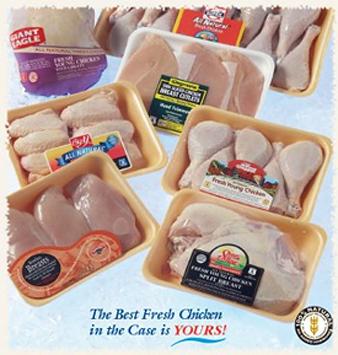
Food safety types in Birmingham, U.K. have found that 40 per cent of all plastic packaging containing chicken in Birmingham contained food poisoning bacteria.

In a survey of 20 supermarkets, convenience stores and butcher’s shops throughout the city, food safety officials found that eight were contaminated on the outside of the packet.

They also found seven chickens were contaminated inside the wrapping, while one tested positive for salmonella. There was no link between those infected inside and outside the packaging.

Team manager Nick Lowe said, “Our message to consumers is that handling the packaging should be regarded as just as likely to cause food poisoning and touching the raw meat.”

Once handled in a supermarket the bacteria can be passed on through trolley handles, shopping bags and transferred to other foods. In one supermarket a pool of juice collected on the chiller shelf was also contaminated.
 

Failure to make councils check school toilets ‘risks poisoning’

Whenever there’s an outbreak of norovirus or some other tummy upset that forces large numbers of students to call in sick, check the bathrooms.

Are the tools for proper handwashing – running water, soap and paper towel – actually available?

And while a report titled, A Response to School Toilets: Best Practice Guidance for Primary and Secondary Schools in Wales, may not make exciting bathroom reading, continual attention to hygiene basics consistently reduces the numbers of people barfing.

Consumer Focus Wales (CFW) made the same point today, arguing that children face an increased risk of contracting and spreading deadly bugs because councils will not be forced to check school toilet hygiene.

As part of the South Wales E.coli public inquiry, Professor Hugh Pennington recommended that every council should have a program of audits to ensure all schools have adequate toilet and handwashing facilities.

Jennie Bibbings, CFW’s senior policy advocate, said: “In the current financial climate school toilets might be a low priority but hygiene standards could suffer and the risk of illness among school children increases.

The public inquiry into the 2005 E. coli O157 outbreak in South Wales heard shocking evidence about the state of school toilets. In some of the schools in the outbreak area there was no running hot water or even soap for children to wash their hands.

Peter Clarke, Wales’ first Children’s Commissioner, had highlighted concerns about the lack of soap and toilet paper in some schools in 2004 – a year before butcher William Tudor caused the E.coli O157 outbreak.

And his successor Mr Towler again highlighted the sub-standard facilities in his third annual report last year.

“Currently I’m seeing inequality across the country with some schools having made considerable improvement while other pupils feel so strongly about it they refuse to use the toilet during the school day.”

Consumer Focus Wales said it should also include standards for staff facilities because successive food hygiene inspection reports have revealed variable performance among school canteens in the provision of hand washing facilities.”