Pre-packaged sandwiches stored at wrong temps in Ireland

Almost one in three pre-packed sandwiches are stored or displayed at the wrong temperature, increasing the risk of food poisoning, the Food Safety Authority of Ireland (FSAI) has warned.

The authority has just published a study into the microbiological safety of pre-packed sandwiches. While the findings show that 99% of sandwiches were satisfactory when tested for the foodborne bacteria, Listeria, there was concern over the storage of these food items.

Altogether, 29% of pre-packed sandwiches were being stored or displayed at temperatures higher than five degrees Celsius. Pre-packed sandwiches should be stored at five degrees Celsius or cooler, as this stops or slows down the growth of bacteria.

Meanwhile the study found that four of the five sandwiches, which were classified as unsatisfactory or unacceptable/potentially hazardous, were stored above eight degrees Celsius, with one sandwich displayed unrefrigerated at almost 18 degrees Celsius.

The study involved the testing of 948 pre-packaged sandwiches from retailers and caterers across the country. Sandwiches made to order, unwrapped sandwiches and sandwiches which receive heat-treatment, e.g. toasted sandwiches and paninis. were excluded from study.
 

Food service workers show up when sick; excuse me while I barf

A new report says more than 60 per cent of restaurant employees choose to show up for work instead of staying home when they’re sick because they have no insurance and no paid sick time.

Kim Severson of the New York Times writes the report, called “Serving While Sick,” is based on more than 4,000 surveys and hundreds of interviews with employers and employees. It is intended to put pressure on the restaurant industry to improve conditions for its workers. The Restaurant Opportunities Centers United is one of two groups presenting the report at a Congressional briefing today.
 

Fruit compote likely suspect as Winnipeg Folklorama E. coli outbreak fells 37

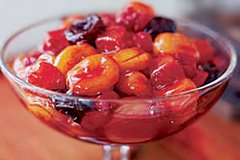
Fruit compote may be the most likely culprit which sickened visitors to the Russian pavilion at Folklorama this past August, according to a report published by the Winnipeg Health Region.

The report details the probable cause of the verotoxigenic E-coli and its effect on 37 people who either attended the pavilion or who fell victim to secondary spread of the E. coli bacterium. Only three of the total 40 cases were not linked to the pavilion. In addition, the report offers a number of recommendations designed to reduce the risk of E-coli outbreaks in the future.
According to the "VTEC Outbreak 2010 Report," each person who was treated was interviewed to find the common connection with the pavilion. A study was then undertaken to determine the identity of the specific food item which was contaminated with E-coli, with 33 out of 34 people who attended the pavilion taking part.

Five patients were hospitalized with one case admitted to ICU and seventeen people visited an emergency room. There was one case of hemolytic uremic syndrome. VIP tour group attendees who had not been ill were asked to volunteer to be controls in the study.

The study looked at foods such as borscht, meatballs, a rice dish, and Russian juice (fruit compote). These four items were served together on the "Russian Combination platter." Analysis narrowed down the mostly likely choice to the compote over other sources, partially because the compote was served with both the vegetarian and non-vegetarian platters.

The most plausible source of contamination of the compote juice could have either been from cross-contamination from raw or undercooked ground beef – which is the most common source of E. coli in food products – which was also being handled at the same time in the kitchen or from E. coli contaminated apples used to make the compote.

Interviews with the kitchen staff revealed that most of the food was cooked in a pressure cooker. However, the compote juice was cooked in a separate pot. It was prepared by adding washed, unpeeled apples, blueberries and blackberries to boiling water. The fruit was bought fresh from a supermarket in Winnipeg.

Once boiled for five to 10 minutes, the compote juice was decanted into large 10-litre plastic pails. The boiled compote was then refrigerated until served cold. A new batch of compote was made every day. The only other food item that may have been cooked in the same pot was rice. The fruit was washed before boiling, kitchen staff wore gloves and practiced proper hand washing, and pots were washed and sanitized between use.

UK salmonella-in-sprout outbreak sickens 125

The Food Standards Agency has updated its advice to people on the handling and cooking of raw bean sprouts following more cases of food poisoning linked to an outbreak of salmonella.

An investigation by the Health Protection Agency has now identified 106 cases of Salmonella Bareilly in England, Wales and Northern Ireland since the beginning of August with possible links to raw bean sprouts. Health Protection Scotland has investigated 19 confirmed cases in Scotland during the same period.

The investigation is ongoing and no conclusive source has been identified.
 

I’m from government and here to help

“Hi, I’m from the government, I’m here to help” is the worst thing to say to a farmer.

We discovered that decades ago by hanging out with farmers, and help them develop meaningful, but non-intrusive on-farm food safety programs.

I don’t understand why a whole bunch of food safety types waste enormous amounts of energy and goodwill lobbying Washington and asking the feds to do more.

Walmart, Costco and McDonald’s do more to advance food safety in a day than the U.S. Food and Drug Administration does in a year. All those people doing the Potomac two-step in Washington, wanting more food safety inspections, and ignoring the advice of former Food and Drug Administration food safety czar David Acheson, who last year said there is a lot more to ensuring a food supply than writing laws, and that “food safety is cultural,” are getting exactly what is to be expected.

The New York Times reports this morning that a delay in sending safety inspectors to egg farms after this summer’s salmonella outbreak and egg recall can be traced in part to a parking mistake outside a pair of Pennsylvania henhouses, according to industry executives and state government officials.

Marilyn F. Balmer, a top egg expert for the Food and Drug Administration, was training inspectors in July to enforce the agency’s new egg safety rule when she parked the van she was driving near a henhouse at a farm in Manheim, Pa. She did it again during another session at a farm in Lancaster.

Ms. Balmer was in Pennsylvania to teach inspectors about how to keep germs away from poultry flocks, known as biosecurity. But the industry executives and state officials said she was breaking a basic biosecurity rule: keep vehicles, which may have driven through manure on rural roads or other farms, as far from the hens as possible.

All of that prompted the F.D.A. to re-evaluate the training program, contributing to a delay in preparing the inspectors to enforce the new safety rule. The rule went into effect July 12, but inspections began only last week at farms not involved in the recall.
 

Tour de France winner Contador tests positive for clenbuterol

For years, I had a picture of Olympic cycling from 1976 in Montreal on my bedroom wall. I tore down bikes and rebuilt them. I still have fantasies of regularly cycling again (the bike trailer with the kid is helping).

As a sport, cycling seems hopeless with all the doping. While investigators are stepping up their case against Lance Armstrong, three-time Tour de France winner Alberto Contador, tested positive for clenbuterol during the Tour.

The veterinarians in the readership know clenbuterol is a non-steroidal β2 adrenergic agonist[1] with some structural and pharmacological similarities to epinephrine and salbutamol, but its effects are more potent and longer-lasting as a stimulant and thermogenic drug. It causes an increase in aerobic capacity, central nervous system stimulation, and an increase in blood pressure and oxygen transportation. It increases the rate at which fats are metabolized, simultaneously increasing the body’s BMR. It is commonly used for smooth muscle relaxant properties. This means that it is a bronchodilator and tocolytic. It is usually used in dosages anywhere from 20-60 micrograms a day when prescribed. A dose of about 120 μg should never be exceeded in a day[citation needed]. It is also prescribed for treatment of horses; however, equestrian usage is usually the liquid form of clenbuterol. Clenbuterol is also a sympathomimetic in the peripheral nervous system.

Clenbuterol is used worldwide for the treatment of allergic respiratory disease in horses, as it is a bronchodilator. A common trade name is Ventipulmin. Particularly in North America it is also known by the slang term ‘bute.’ It can be used both orally and intravenously. It is also a non-steroidal anabolic and metabolism accelerator, through a mechanism not well understood. Its ability to increase the muscle-to-fat body ratio makes its illegal use in livestock popular to obtain leaner meats.

As of fall, 2006, clenbuterol is not an ingredient of any therapeutic drug approved by the U.S. Food and Drug Administration[2] and is now banned for IOC-tested athletes.
 

I’ll take my hamburger at 160F, verified with a thermometer

Food safety has never been Mark Bittman’s strong point. But food porn triumphs, so who cares if a few people barf.

In the on-going saga of demonstrating that most so-called chefs are food safety morons, Bittman, a columnist with the N.Y. Times who apparently has a new book out, blogged about his experience ordering a burger in Toronto (that’s in Canada) the other night night, where he said to the staff,

“I begged the waitress for a really rare burger and she said, “When you ask for rare they make it medium rare,” and I said, "I know, that’s how it often is, and though I’d prefer it rare I don’t mind it medium rare, but if it’s medium I’m going to be unhappy," and she said, "Then you’ll be very happy." And it came out well done. And I wasn’t unhappy at all, I just didn’t eat much of it. I ate fries and roasted beets."

Bittman has also said in the past that "if you grind your own beef, you can make a mixture and taste it raw," adding that, "To reassure the queasy, there’s little difference, safety-wise, between raw beef and rare beef: salmonella is killed at 160 degrees, and rare beef is cooked to 125 degrees."

This is food safety idiocracy. Any food safety advice in Bittman’s book should be disregarded as fantasy.

Buy local but ignore locavore nonsense

My friend Ron Doering (left, exactly as shown) and I have exchanged barbs over the years but we can agree on the headline for his latest column: Buy local but ignore the locavores nonsense.

Doering, the first president of the Canadian Food Inspection Agency and the only one whose name I can remember now that the post is awarded to revolving civil servants – one of the last presidents did something with stamps or coins before food safety – practices food law in Ottawa (that’s in Canada) and shares his thoughts in a monthly column for Food in Canada.

Doering was gracious enough to share his regulator insights with my food safety risk analysis class when I was teaching in Guelph (also in Canada) and he touched on all the nuances that food safety critics or outsiders like me seem to miss.

Then we had beers.

Doering writes that buying local makes a good deal of sense when the natural conditions support the seasonal production of good, fresh local food. Who wouldn’t buy our local asparagus in June and fresh sweet corn and tomatoes in August? Canadians have always supported roadside stands of blueberries and local fruits and vegetables; we have always loved our local fish and local summer and autumn farmers’ markets.

What is new is the pretentious elevation of this simple idea by the chattering culinary class to the status of a comprehensive creed, which, they assert, can make a major contribution to a more sustainable food system. Locavores focus on the concept of the food mile to condemn the current system of globalized trade. They dream of a return to an earlier time when the food supply wasn’t controlled by big bad agribusiness.

It’s like hanging out with the mommies at the local park, the ones who would never talk to me except that I have a cute kid, a hipster bicycle trailer and a wedding band so I’m apparently not a threat, and they start telling me all their food pornography and preferences for junior. Am I really a bad parent because I refuse to buy organic?

Doering also writes that with their simplistic focus on food miles, locavores ignore other factors of sustainability. I was in a very chic restaurant in Tucson, Ariz. where the smug chef righteously proclaimed that all his ingredients were locally grown. He was quite offended when I asked him about the environmental and other costs of importing all that fresh water to grow that food in the Arizona desert. And how is it more sustainable to deny developing countries the opportunity to export their tropical fruits and vegetables?

Enjoy that coffee this morning from your backyard coffee tree.
 

Former President Carter hospitalized with “stomach virus”

Former President Jimmy Carter is reportedly resting at Cleveland hospital after feeling ill with symptoms resembling a norovirus infection.

Carter’s grandson, Georgia state Sen. Jason Carter, said his 85-year-old grandfather was doing fine. 

"He’s definitely resting comfortably and expected to continue his book tour this week," Jason Carter said. "I haven’t talked to him, but nobody in the family is concerned."

Carter is scheduled to appear tonight in Durham NC as part of a national book tour.