“Extreme gastric distress” knocks symphony conductor out of commission

According to the New York Times, The Chicago Symphony Orchestra’s lovefest with its new music director, Riccardo Muti, came to a sudden halt on Sunday, when the maestro canceled two weeks of concerts to seek treatment in Milan for what the orchestra called “extreme gastric distress.”

Mr. Muti suffered some discomfort while leading the orchestra on Friday, felt stomach pain at a rehearsal on Saturday and withdrew just before a gala concert on Saturday evening.
“He just couldn’t do it,” said Mary Lou Falcone, a spokeswoman for Mr. Muti and the orchestra, who said the maestro suffered severe stomach pain. The orchestra was able to perform without him.

Mr. Muti had been with the Chicago Symphony for only two weeks, beginning his tenure as its new music director after a lengthy courtship and much hoopla accompanying his arrival. “I cannot express the depth of my regret,” he said in a statement issued by the orchestra.
 
Extreme gastric distress sounds like something the percussion section could use.


Salmonella outbreak in New Zealand sourced to farms?

There’s some sort of salmonella outbreak going on in New Zealand and health types think contact with farm animals could be to blame.

The Southland Times reports that health authorities are reporting an increase in stomach diseases in the Southland area and are warning farmers to be careful when handling newborn lambs and calves.

Southern District Health Board medical officer of health Dr Marion Poore said most of the gastroenteric diseases noted so far this spring were in relation to farm workers or young children living on farms.

She said the onset of spring could bring an increased risk for those in rural communities.

Piping hot is not science-based

Andrew Wadge, the chief scientist at the U.K. Food Standards Agency wrote in summing up the year – even though it’s early October – that the Agency remains committed “to using the best available science to develop our policies, delivery and advice. This will always be a core principle of the Agency.”

But the Agency, in all its Orwellian glory, still insists that to make sure your turkey is cooked properly:
* check it’s piping hot all the way through;
* cut into the thickest part to check that none of the meat is pink; and,
* if juices run out, they should be clear.

Color is a lousy indicator of anything. Telling Brits to cook their turkey until it is “piping hot” is not science; it may be a line from Mary Poppins. Use a tip-sensitive digital thermometer and stick it in.

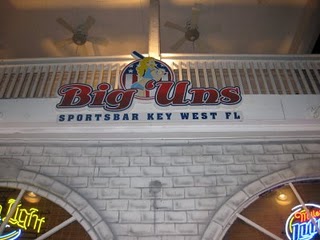
Sports bar in Florida Keys closed because of lotsa mice poop

As I continue to search out my inner Jimmy Buffet or Keith Richards, I was saddened to hear that a Duval Street bar and restaurant in the Florida Keys was busted by state authorities on Thursday for having a dirty kitchen.

The Big ‘Uns Sports Bar and Grill at 218 Duval St. was closed after inspectors found fresh rat droppings, everywhere.

That included 27 "fresh" and "semi fresh" rodent droppings under the cook line, reach-in coolers, pizza oven and a prep table.

Big ‘Uns remained closed and shuttered on Friday, missing out on 2,000-plus cruise ship passengers flooding the lower end of Duval.
 

Call for mandatory display of food grades in Wales

Even the BBC is realizing that asking food businesses in Wales to voluntarily display the results of their inspection rating is, uh, hopeless.

The public will be able to access ratings through a searchable database, which will be overseen by the Food Standards Agency.

Food safety campaigners like Maria Battle, a senior director of Consumer Focus Wales, welcomed the principle of the scheme but said it was under-mined by the practice of voluntary display

"And if it is a low food rating – below three – then it’s very, very rare that they display their rating. And they’re the businesses that people would choose not to eat in."

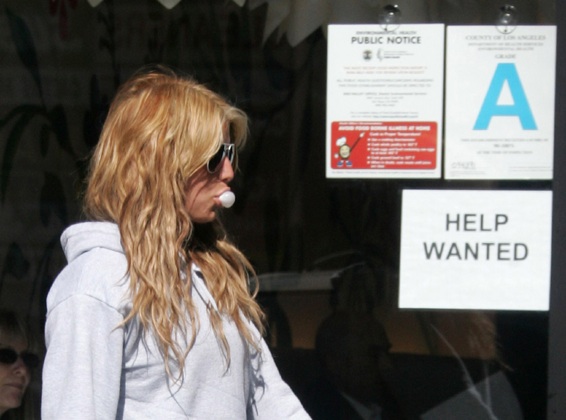
However Battle and others overstate their case when they say that "Mandatory display in Los Angeles resulted in an immediate 20% reduction in food-related illnesses – people being hospitalized. That saved hundreds of thousands of pounds and also a lot of preventable human suffering."

That’s become an oft-quoted stat, especially as New York City has gone through the angst of going public, but the paper is so full of holes I’m not sure how it got published.

The real benefit of public displays of food service inspection grades is the public shame and embarrassment, which may force operators to do better, and that people talk about it, so it enhances the overall microbial food safety culture. We’ve written a couple of papers about the topic based on research we did, but they’re not published yet, so I won’t violate my own advice and do science by press release.

Professor Hugh Pennington, who chaired the inquiry into the 2005 E.coli outbreak in South Wales which claimed the life of five-year-old schoolboy Mason Jones, five years ago this week, said,

"In principle I’m a believer in having this system as a mandatory system because it is self-evident that commercial pressure on a business – like fewer customers going in – is a very strong incentive for them to up their game."

The U.K. Food Standards Agency, which also told consumers they should cook raw sprouts until they are piping hot to avoid salmonella, is confident that voluntary display will work as consumers will draw their own conclusions when businesses choose not to display their Food Hygiene Ratings.

There is no published research that I know of which supports this statement.

We have published a review of why restaurant inspection disclosure is important. And there’s a few more things coming out.

Filion, K. and Powell, D.A. 2009. The use of restaurant inspection disclosure systems as a means of communicating food safety information. Journal of Foodservice 20: 287-297.

Abstract

??The World Health Organization estimates that up to 30% of individuals in developed countries become ill from food or water each year. Up to 70% of these illnesses are estimated to be linked to food prepared at foodservice establishments. Consumer confidence in the safety of food prepared in restaurants is fragile, varying significantly from year to year, with many consumers attributing foodborne illness to foodservice. One of the key drivers of restaurant choice is consumer perception of the hygiene of a restaurant. Restaurant hygiene information is something consumers desire, and when available, may use to make dining decisions.
 

Wales starts restaurant inspection disclosure; mom of E. coli child death says system sucks

I know golf is boring. I only play the game when I don’t want to be with my wife. I like my wife, I don’t golf anymore.

The golf world is all a twitter with the Ryder Cup being held in Newport, Wales. Amy and Sorenne and I were there in January to visit the Powell family tree.

But in the food safety world, Wales is probably most famous for its terrible food safety failings in 2005.

Sharon Mills, the mother of 5-year-old Mason Jones, who was tragically killed in a 2005 E. coli outbreak in Wales that sickened 160 school kids, said the U.K. Food Standards Agency is putting the interests of businesses before public safety.

Abby Alford of the Western Mail reports that Mills comments came as the roll-out of a new food hygiene rating scheme, which will grade the cleanliness of more than 30,000 Welsh food retailers, began Friday.

Ms Mills, of Deri, near Bargoed, Caerphilly, said: “The FSA’s decision not to base ratings on existing environmental health inspection reports provides a get-out clause to failing restaurants, cafes, shops, pubs and takeaways, as does the decision not to make it mandatory for them to display their rating.”

Environmental health officers in the 22 local authorities have been told to award the food hygiene ratings from 0 for the worst to five for the best, based on routine inspections carried out after today. Businesses are inspected at six, 12 and 18-month intervals depending on the risk they pose. After their next inspection their rating will be uploaded to a dedicated website www.food.gov.uk/ratings.
Ms Mills said it would be months before the ratings would be made available to the public.

An FSA spokeswoman said it was not feasible to launch the scheme with all Welsh food businesses listed from the outset. But she added that within a 12-month period the highest risk categories of food businesses would have been visited at least once and their score ratings would be available.

Regarding mandatory display of the ratings, she said it would have required a change in legislation, which would have resulted in an “unwelcome delay” in implementing the scheme.

This is bureaucratic nonsense which the FSA has become famous for, especially its piping hot cooking recommendation.

Ms Mills said,

“It was this soft-touch approach which allowed William Tudor to continue trading and which ultimately led to the 2005 outbreak which cost Mason his life.”

Buddy’s Gourmet Meals

Buddy is my new roommates’ pet snake. It is an albino something-breed and his once-a-week nutrition consists of Gourmet Rodent meals (I am not making this up, that is the actual name on the bag of frozen rats).

Being aware of the dangers associated with frozen foods for reptiles – and reptiles themselves – every Friday (and Saturday just to be safe) I thoroughly wipe down the area where my roommate thaws out the poor little rat for the weekly feed.

Today, I came across a warning from the Public Health Agency of Canada regarding a salmonella outbreak from frozen rodents that may be associated to the outbreak in July here in the U.S.

The warning says all the usual things about cleaning reptile-areas and washing hands, but I have some problems regarding some of their tips, such as:

“Sealing frozen reptile food products in a plastic bag and place in a covered garbage can.”

How is the frozen food supposed to stay frozen in a garbage can? Or, if they mean the empty bag, why would it be important to seal it up before throwing it away?

Another thing they might want to include on their advice list is how exactly to clean “surfaces that come into contact with reptiles.” Will regular soap and water work? And what should be used on non-hard surfaces such as couches or carpets? 

For us newly-introduced-to-the-world-of-reptiles people, information like this is important and needs to be clear.
 

Sprouts sicken lots

Sprouts seem to be making barf in lots of places.

In addition to the 125 confirmed cases in the U.K., both New York and California today issued recalls for poop on sprouts.

The New York State Department of Agriculture & Markets alerted consumers that Essex Farm Inc. located at 120 Essex St. #32 & 33, in New York, New York, is recalling all packages of "Soybean Sprouts" due to the presence of Listeria monocytogenes.

Meanwhile, the California Department of Public Health today warned consumers not to eat Banner Mountain Alfalfa Sprouts because they might be contaminated with salmonella.

Consumers should discard the sprouts or return them to the place of purchase. No illnesses have been associated with the Banner Mountain product at this time, according to the CDPH.

The recalled alfalfa sprouts are packaged in four-ounce, clear, flexible, clamshell plastic containers with green labels containing sell by dates from September 7 to October 8, 2010.
 

Salmonella outbreak in Oklahoma students

The Oklahoma state health department has confirmed 10 children at four different Mustang elementary schools have contracted the same strain of Salmonella. The first case was spotted Sept. 2 and the last case was reported Sept. 13. The Health Department has teams in Mustang trying to determine the cause of the outbreak. No children have been hospitalized.

In a letter to parents and guardians, Mustang Public Schools said, and I’m not making this up,

“Mustang Public Schools’ Child Nutrition Department has a stellar record, and we want to assure our parents salmonellosis is not necessarily related to food preparation. Salmonella begins with a contaminated product, and we are working diligently with the State Department of Health officials to determine the origin of the cases.

OK, what’s it related too?
 

Third-party food-safety audits fall under intense scrutiny

I spent the morning hanging out with a couple of visiting food safety types from Jordan. What was striking was how much we agreed that arguments about government turf, the inadequacy of audits, and the failure of food safety messages with consumers and other humans was a global phenomenon.

Beth Weise writes in tomorrow’s USA Today that if you’ve never heard of a third-party food-safety audit, you’re not alone. Few Americans know or care what they are. To the companies that produce much of our food, they’re an important tool to make sure it’s safe and wholesome — but critics say the certificates the auditors issue often aren’t worth the paper they’re printed on.

Recent foodborne illness outbreaks have raised questions in Congress and elsewhere about the effectiveness of these audits and the impartialness of the process.

Auditors are the eyes and ears of a company buying food from a producer. A frozen-pizza maker hires an auditor to make sure the company it buys tomato sauce from has a clean, safe and well-run plant. But many problems — including dead chickens, rats, manure and salmonella — can fall through the cracks of their visits.

Last year, the Peanut Corp. of America, whose products sickened over 600 and may have killed as many as nine, got a "superior" rating at its Texas plant even as it was churning out peanut paste tainted with salmonella.

And last week Congress showed that one of Wright County Egg’s egg-packing plants got a "superior" rating from the same company on June 8, just two months before Wright became part of the largest known egg recall in the United States.

The company, AIB International (of Manhattan, Kansas, sigh), lists five standards on its website that inspectors expect to see in a "facility that maintains a food-safe processing environment." They are: ensuring that raw materials are safely stored and handled; equipment, buildings and grounds are properly maintained; cleaning and sanitizing is adequate; pests monitored and managed; and staffers are working together to deliver a safe final product.

When FDA inspectors actually went into Wright County’s henhouses at its Galt, Iowa, plant, they found vermin, filthy dead chickens and manure oozing out of doorways. More than 1,600 people were sickened in a salmonella enteritidis outbreak linked to the farm, and over 550 million eggs were recalled due to contamination at this plant and at nearby Hillandale Farms, where lesser problems were found.

"Superior" clearly doesn’t mean much, says Rep. Bart Stupak, D-Mich. "How many dead mice do you have to find in your food before you get an ‘Excellent’ rating?"

Third-party food audits, like restaurant inspection, are a snapshot in time. Given the international sourcing of ingredients, audits are a requirement, but so is internal food safety intelligence to make sense of audits that are useful and audits that are chicken poop.

The third-party food safety audit scheme that processors and retailers insisted upon is no better than a financial Ponzi scheme. The vast number of facilities and suppliers means audits are required, but people have been replaced by paper.

Audits, inspections, training and systems are no substitute for developing a strong food safety culture, farm-to-fork, and marketing food safety directly to consumers rather than the local/natural/organic hucksterism is a way to further reinforce the food safety culture.

After the salmonella-in-peanut paste crap, Costco, a retail store, which previously limited AIB’s inspections to its bakery vendors, has now instructed suppliers to not use AIB at all.

“The American Institute of Baking is bakery experts,” said R. Craig Wilson, the top safety official at Costco. “But you stick them in a peanut butter plant or in a beef plant, they are stuffed.”

Or as Mansour Samadpour of Seattle said at the time,

“The contributions of third-party audits to food safety is the same as the contribution of mail-order diploma mills to education.”

I asked weeks ago, who were the buyers of DeCoster eggs who used AIB audits to justify putting salmonella on grocery store shelves? Any retailers want to step forward?

And market food safety at retail so consumers can choose the poop they wish to purchase.