
There’s no problems at Brandt meat plant except for the 23 sick from salmonella in headcheese and the undercooking

Sarah Schmidt of Postmedia News writes tonight in a story that will appear across Canada tomorrow that federal meat inspectors didn’t find any problems that needed fixing at a meat-processing plant in the months leading up to last week’s massive recall of Brandt deli meats.

The Canadian Food Inspection Agency only identified sanitation issues, deficiencies in the company’s environmental testing program and possible undercooking after public-health officials linked a salmonella outbreak linked to Brandt meat, Postmedia News has learned.

The July 31 national recall of all ready-to-eat meats manufactured by G. Brandt Meat Packers at its Mississauga, Ont., plant followed 23 confirmed cases of salmonella associated with Brandt headcheese by public-heath authorities in British Columbia and one case in Ontario. It was B.C. health officials — not the government meat inspector stationed at the plant — who first alerted CFIA brass to take a closer look at the plant.

As a result of the investigation launched on July 14, CFIA issued the first of nine corrective action reports, including one singling out how well the meat was cooked and related record-keeping.

The case raises questions about the state of Canada’s meat inspection system two years after 22 Canadians died following the consumption of listeria-tainted Maple Leaf deli meats, also produced at a federally inspected plant.

In addition to finding salmonella in headcheese products manufactured at the Brandt plant, CFIA also found Listeria monocytogenes in the company’s Ham Suelze.

Caroline Spivak, a spokeswoman for Brandt Meat Packers, emphasized there have been no positive salmonella product tests for any deli meats other than headcheese. See, it’s just the headcheese, and if you eat that stuff, who knows what risks you are taking.

"There’s always a CFIA inspector that tests the product, so the company stands by its product and is not in the habit of undercooking their food.”

But they did. And got caught. Sorta.
 

Mystery Mexican-style restaurant chain ‘A’ source of Salmonella Hartford and Baildon; 155 sick across US since April

On July 12, 2010, the U.S. Centers for Disease Control and research partners presented data and a press release that concluded nearly 1 out of every 25 restaurant-associated foodborne outbreaks with identified food sources between 1998 and 2008 could be traced back to contaminated salsa or guacamole, more than double the rate during the previous decade.

Today, CDC revealed there are two multistate outbreaks of Salmonella infections, each involving a different Salmonella serotype: Hartford and Baildon, and that the sick people have been showing up since April and the numbers peaked in June.

Salsa and guac must be on the CDC’s mind because they’ve fingered “a Mexican-style fast food restaurant chain, Restaurant Chain A,” as associated with some illnesses. And if it’s been narrowed to a single chain restaurant, it’s probably a supply issue; salsa safety begins with the ingredients, on the farm.

Among persons eating at Restaurant Chain A, no specific food item or ingredient was found to be associated with illness for either outbreak. The numbers of new cases for the Salmonella Hartford outbreak have declined substantially since a peak in early June 2010. The numbers of new cases for the Salmonella Baildon outbreak have declined substantially since a peak in late June 2010. The number of new cases of illness associated with these outbreak strains appears to have returned to baseline, indicating the outbreaks are not ongoing.

In both outbreaks, the FDA worked with CDC and state partners to conduct a traceback investigation. The tracebacks focused on produce that ill individuals reported eating and that had been implicated in previous outbreaks of salmonellosis. The extensive traceback effort was initiated to determine if a common source or supplier could be identified to help focus the epidemiologic investigations. No common food source was identified in either traceback. The FDA also sampled and tested produce items and did not find either outbreak strain. As with previous outbreaks in which contaminated produce may be the factor, produce tracebacks present substantial challenges because of the short shelf life of the product and the industry’s comingling of product from multiple sources.

CDC stressed:

• There are over 2,500 serotypes of Salmonella.Hartford and Baildon are very rare serotypes of Salmonella.

• CDC used its Emergency Operation Center facilities and mobilized employee and student volunteers to conduct two large case-control studies within several weeks of each other. These studies involve calling thousands of U.S. residents to screen them for eligibility into the study and, once determined eligible, interviewing them about the foods they had eaten during a certain period. These studies are not possible unless people who are called agree to be interviewed. CDC thanks every person who participated in these telephone interviews.

• The Mexican-style fast food Restaurant Chain A, as well as their food suppliers and distributors, were very cooperative in providing extensive information to public health officials as various leads were explored.
 

Always the bugs: Alexander the Great died from dirty water

Styx was a terrible band that I actually went to see in Toronto in 1979.

South Park has an episode where Cartman has to sing the entire Styx song, Come Sail Away, whenever he starts the song.

Alexander the Great (356–323 BC) was killed by a deadly bacterium found in the River Styx, rather than by a fever brought on by an all-night drinking binge in ancient Babylon, scientists believe.

The Sydney Morning Herald reports that researchers in the US.. have found a striking correlation between the symptoms he suffered before his death in 323BC, and the effects of the highly toxic bacterium.

Alexander fell ill during a party at the palace of Nebuchadnezzar II in Babylon, in modern Iraq. He complained of a ”sudden, sword-stabbing agony in the liver” and had to be taken to bed where, over the next 12 days, he developed a high fever and excruciating pains in his joints.

His condition worsened, he fell into a coma, and is believed to have died on June 10 or 11, 323BC – just shy of his 33rd birthday. Historians have speculated that his death was brought about by the heavy drinking, typhoid, malaria, acute pancreatitis, West Nile fever or poisoning.

But experts who have reviewed the circumstances of his death believe instead that he may have been killed by calicheamicin, a dangerous compound produced by bacteria.

Antoinette Hayes, co-author of the Stanford University research paper and a toxicologist at Pfizer Research in the US., said,

”It is extremely toxic. It is a metabolite – one of hundreds produced by soil bacteria. It grows on limestone, and there’s a lot of limestone in Greece.”
 

Smearing feces on toddler slide introduced crypto into pool in Wales; 106 sickened in 2009

An Aug. 2009 outbreak of cryptosporidium amongst children and adults who swam at the Merthyr Tydfil centre in Wales was caused by the smearing of feces on the toddler slide on Aug. 22, 2009.

Officials said it was important people with diarrhea did not go swimming.

A total of 45 cases of the illness were confirmed through laboratory testing and the pool was closed for three weeks following the confirmation of the outbreak. Over 100 people were estimated to have been sickened during the outbreak.

The report (which is available through the BBC story) also said,

"Gaps and weaknesses in policies and operational procedures and non-adherence to procedures in relation to incidents such as fecal accidents are also likely to have contributed to spreading cryptosporidium contamination widely at the time."
 

Down on the Corner: water turtles sold on Texas street corners illegal

kfoxtv.com reports that baby water turtles are sold on the side of the road all across the Borderland, but not everyone knows it’s illegal to sell them.

Water turtles pose a health risk, according to officials. Even the sale of aquatic turtles at pet stores is a violation of city ordinance. Health officials say they can spread salmonella.

Martin Castellon from West El Paso said,

"When I saw the turtles, they looked pretty cute, and then I thought about my girl and I wonder if she might want a little pet or something like that.”

What Castellon saw was a car parked at the Burger King on North Mesa with a sign advertising water turtles. And he wasn’t the only one who thought they were cute. This seller was open for business but illegally.

When a KFOX crew went up to the sellers they didn’t want to be interviewed and started packing up to leave. We let Castellon know about the situation.

"I did not know that. I’ve just been caught in a crime? Am I being punked?" said Castellon.

For some awesome lip-synching and old-timey costumes, check out the CCR video for Down on the Corner. It’s not about turtles.
 

Undercooked eggs in rattlesnake cake linked to salmonella outbreak at fancy Colorado restaurant; dozens sick

I don’t know what rattlesnake cake is but like other cakes, it contains eggs – eggs that need to be cooked to reduce the risk of salmonella.

CBS4 in Denver reports more than two dozen people who ate at The Fort in Morrison, Colorado, last month got sick (there’s a photo gallery and it apparently involves patrons wearing hats).

Officials believe it was caused by undercooking eggs — in particular for one specialty of the house. So far there are eight confirmed cases of salmonella and 20 listed as probable.
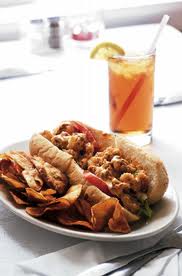
The Fort is designed like, uh, a fort from the 1800s and its cuisine reflects the period. In 1997 at the Summit of the Eight, then President Bill Clinton and Russian President Boris Yeltsin were among those who dined there.

According to the menu, the “Diamondback Rattlesnake Cake (similar to a crab cake) topped with a sweet and spicy avacodo relish and cilantro micro greens, served with Dixon chile aoli. $25 (subject to availability).”

Dr. Mark Johnson, Jefferson County Health executive director, said

"Testing did show that the batter that was used in preparation of one of the foods did have eggs in it that did test positive for the same type salmonella that the case had."

The restaurant quickly removed the item from its menu, but one person CBS4 spoke to who did not eat the rattlesnake cakes became ill with the salmonella bacteria and had to be hospitalized several days.

Through reservations the Jefferson County Health Department tracked down some 90 people who dined at the restaurant. It did not issue a public warning and the restaurant was not closed.

Holly Arnold Kinney, who describes herself as the Proprietress of The Fort Restaurant, said in a statement,

"Our deepest sympathy goes out to our customers who were affected by this illness. We hold the highest standards and consider each customer a guest in our home, The Fort. These were isolated confirmed cases of food borne illness. The one food item suspected was immediately removed from our menu. We are working closely with the Jefferson County Health Department adhering to all recommendations to make our preparation of food as safe as possible. There are no other concerns. I’m sorry we are not able to provide you with an on-air interview. Contact the Jefferson County Health Department for any other information."

The Proprietress scores well for a strong opening statement of empathy but low for the fluff about standards, especially if 27 people are barfing and especially if the cause is something as routine as eggs. The Proprietress demonstrates how the rattlesnake cakes are made on The Today show, below, in April.
 

Visit msnbc.com for Breaking News, World News, and News about the Economy

Handwashing at hospital in Ireland gets worse, not better

With all the attention being paid to handwashing, especially in hospitals, it’s unique when compliance rates get worse rather than better (unless the evaluation techniques are becoming more rigorous).

The Irish Examiner reports an independent hygiene audit of a Dublin hospital has found a drop in standards since it was last assessed two years ago.

The unannounced inspection of the Royal Victoria Eye and Ear Hospital by health watchdog, the Health Information and Quality Authority (HIQA), concluded it had "not maintained its level of performance in relation to the delivery of hygiene services" since it was inspected in 2008.

* Bathrooms/washrooms were visibly unclean in three areas visited (out-patients and emergency departments share these facilities).

* Patients’ personal items were observed in bathrooms/washrooms in one of the areas visited.

* While overall, ward kitchen areas visited were clean, separate hand-wash sinks were not compliant with best practice and in one kitchen no soap was available.

* Clinical waste was stored centrally in a locked unit at the rear of the hospital, however, hazard notices were only observed on one of the locked doors and special hazardous clinical waste was not segregated from this waste.

* Waste destruction documentation was incomplete and the organisation did not demonstrate a consistent approach for monitoring this documentation.

* The majority of handwash sinks in the areas visited did not comply with guidelines for hand hygiene and hand-washing technique — essential for infection control — did not always comply with best practice.

Bugs apparently respect boundaries in the food court

The River Valley Mall in Lancaster, Ohio, may never be the same after the Cajun Experience was shut down for nearly two weeks after a health inspector found violations, including bugs and a malfunctioning cooler.

Fairfield County Environmental Health Director Larry Hanna said the Cajun Experience has since reopened, and the violations did not extend to any of its neighbors within the mall.

A person who answered the phone at Cajun Experience on Tuesday hung up on The Eagle-Gazette without answering questions.
 

Leafy greens cone of silence; some hometowners don’t believe it; need to provide stool sample to health unit

The Sacramento Bee in California reports that the latest E. coli O157:H7 in lettuce recall prompted Bee readers to express disbelief that state public health officials had not received any reports that anyone had gotten sick from potentially tainted bags of pre-packaged salad mix.

One Sacramento woman said she and her son were hospitalized after eating the salad, which was the subject of a recall. Several other callers also said that, without a doubt, they had eaten from a bag of bad product.

But none of those who contacted The Bee said they had taken the time to call local health officials (those are the tools, right and left, to provide a stool sample; thanks, Ben).

If consumers suspect that tainted food has made them ill, they should contact their doctor, said state Public Health Department spokesman Ralph Montaño. A doctor can help determine whether tainted food was potentially the cause and if necessary contact the county public health department.

Cockroach for breakfast ‘just gross’ even if in lovely New Zealand

Eleven-year-old Ariana Lee was disgusted to find a cockroach in her breakfast boysenberries.

APN News & Media reports that the Rotorua girl and her family (right, pic from APN) were having cereal and boysenberries for breakfast on Wednesday when they made the stomach-turning discovery.

Ariana’s mother, Zarnia Lee, said her husband, Jymel Webber, who is visually impaired, was the first to open the tin of Pams boysenberries in syrup and eat from it. Her son Taine, 11, and daughter Tayla, 9, also ate some and when Ariana emptied the last of them from the tin into her cereal, she noticed something black fall into her bowl.

When she looked closer, she realised it was a cockroach and screamed for her mother.

"The cockroach was pretty purple, I could tell it had been in there a while," Mrs Lee said.

Mrs Lee rang Pams’ customer service hotline and gave the details of her complaint. She received a letter of apology from Pams and two $10 vouchers for Pak’N Save.