Kings Of Leon cancel St Louis gig after ‘pigeon poop’ drama

This is not rock ’n roll.

There’s all these new bands that have the same whiny sound, nothing distinctive, and lyrically they write like self-obsessed babies.

Now one group is acting like babies.

Kings Of Leon cancelled an outdoor gig in St Louis on Friday (July 23) after a pigeon pooped on bassist Jared Followill’s head.??

Gigwise.com reports the band were three songs into their set at the Verizon Wireless Amphitheater when they announced that the concert was being halted due to “safety concerns.”

”??No further explanation was given at the time, but drummer Nathan Followill later revealed more details on Twitter.??

“So sorry St. Louis. We had to bail, pigeons shitting in jareds mouth and it was too unsanitary to continue,” Nathan wrote.??

The drummer apologized again, but was bombarded with criticism from the band’s fans.??

Responding to the disapproval, he added: “Don’t take it out on Jared, it’s the ****ing venues fault. You may enjoy being shit on but we don’t. ??“Sorry for all who travelled many miles.”

The incident has inspired the creation of the seemingly hoax Twitter account, twitter.com/KOLPigeon.?? Fox2now had originally cited heat as the cause for the cancellation. It is not clear if the concert will be rescheduled.

If it really was pigeon poop, there’s a low-tech solution. Wear a ball cap.

Raw-food raid highlights a hunger; ‘how can we not have the freedom to choose what we eat?’ one says. Regulators say the rules exist for safety and fairness

Watch the police in this action video raiding an organic grocery store. I was hoping one of them would hold their gun sideways so I’d really know they were serious as they walked through crates of arugula.

With no warning one weekday morning, investigators entered an organic grocery with a search warrant and ordered the hemp-clad workers to put down their buckets of mashed coconut cream and to step away from the nuts.

Then, guns drawn, four officers fanned out across Rawesome Foods in Venice. Skirting past the arugula and peering under crates of zucchini, they found the raid’s target inside a walk-in refrigerator: unmarked jugs of raw milk.

The Los Angeles Times has a feature on Sunday about how cartons of raw goat and cow milk and blocks of unpasteurized goat cheese were among the groceries seized in the June 30 raid by federal, state and local authorities — the latest salvo in the heated food fight over what people can put in their mouths.

On one side are government regulators, who say they are enforcing rules designed to protect consumers from unsafe foods and to provide a level playing field for producers. On the other side are "healthy food" consumers — a faction of foodies who challenge government science and seek food in its most pure form.

"This is not about restricting the public’s rights," said Nicole Neeser, program manager for dairy, meat and poultry inspection at the Minnesota Department of Agriculture. "This is about making sure people are safe."

In the case of Rawesome, regulators allege that the group broke the law by failing to have the proper permits to sell food to the public. While the raid was happening at Rawesome, another went down at one of its suppliers, Healthy Family Farms in Ventura County. California agriculture officials said farm owner Sharon Palmer’s processing plant had not met standards to obtain a license.
 

Iowa farmers’ market outbreak linked to guacamole, salsa and uncooked tamales

Associated Press reports tonight that recent illnesses connected to an Iowa farmers’ market are linked to Mexican foods sold by a common vendor,  La Reyna Supermarket & Taqueria of Iowa City.

The products were sold at farmers’ markets in Linn, Johnson and Dubuque counties and may be contaminated with salmonella. The departments say any guacamole, salsa and uncooked tamales should be thrown away and not eaten. The salmonella investigation was initiated by Linn County Public Health officials and illnesses were traced to products produced by the restaurant in Johnson County.

Bittman’s blog gets it right this time when it comes to botulism risks

Last year renwoned New York Times food dude Mark Bittman posted a recipe for a botulism surprise (disguised as a garlic-in-oil product) that was ammended after a few letters about safety. Today, one of Bittman’s colleagues and contributors to his blog, Kerri Conan writes about a way to make "quick pickles" apparently the wrong way.

According to Conan, to make the skillet pickles:

Start with trimmed whole or sliced vegetables (in this case green beans but I later made a batch with beets) and a hot skillet filmed with olive oil. Add some aromatics (the first garlic from the garden for the first; the other got a mixture of sesame and grape seed oils with scallions). When the seasoning just starts to sputter, toss in the veg. Move them around in the pan a bit so the color brightens evenly, then stir in a splash each of water and vinegar (I used sherry v. for the beans and rice v. for the beets, but your call).

Bring the whole lot to a boil and cook until the vegetables are about two clicks less tender than you eventually want them. Remove the pan from the heat to cool. Empty everything into a jar and chill, shaking the contents often. Polish them off in a few days.

Conan’s recipe sounds a bit more like a salad, but included in this post (unlike Mark’s last year) is the addition of a refrigeration step for preserving the product, and the mention of eating it within a couple of days. Chilling is a good tip, green beans with the addition of a "splash" of vinegar with a bunch of oil left on the counter for a few days could result in a serious public health issue. The pathogen of concern, Clostridium botulinum, could exist as spores on the suggested ingredients. Heating the foods may activate the spores and placing the flavor-making components into certain oils can create the perfect environment (oxygen-free and low acid) for cell growth and botulinum toxin formation.

Salmonella increase in Ontario probably related to frozen chicken thingies, but no one will say

In the interest of open and transparent discussion, Ontario public health types are asking the public to sit quietly and obey food safety rules because they are the critical control point when it comes to raw, frozen chicken thingies.

Dr. Vera Etches, associate medical officer of health with.Ottawa Public Health (OPH, that’s in Canada) said,

"Since the first of June, 23 cases of salmonella have been reported to OPH, almost double the number of cases typically seen this time of year. A significant number of these cases appear to be related to undercooked or inappropriately stored processed chicken products."

OPH is reminding residents to use safe food handling and cooking practices when preparing all food, and specifically, processed chicken products such as chicken strips, nuggets and burgers.

I’m waiting for the day when a public health type will stop blaming consumers and ask the industry, why is their salmonella in your frozen, cooked product, and stop selling raw and cooked product side-by-side because they look the same.

Laws don’t make food safe, people do

A new state law in South Dakota has state regulators adding new requirements to help ensure safety at local farmers markets.

After taking effect July 1, local food vendors that work out of their home kitchens and not commercial kitchens will now have to label their products with ingredients, contact information and submit their recipes for testing to help ensure better safety.

State Representative Jacqueline Sly, R-Rapid City, the prime sponsor of the bill that became law, said,

"In this day in age with looking at food safety and allergies, we want to protect producers and consumers. I know it’s a little more work, but in the long run it would be worth it if there were people who got sick."

Joan Hegerfeld-Baker, an Extension food safety specialist in Brookings, said,

"There are a lot of people who really haven’t learned properly. There are shortcuts people are starting to use that are not safe. You want people to use safe, tested methods."

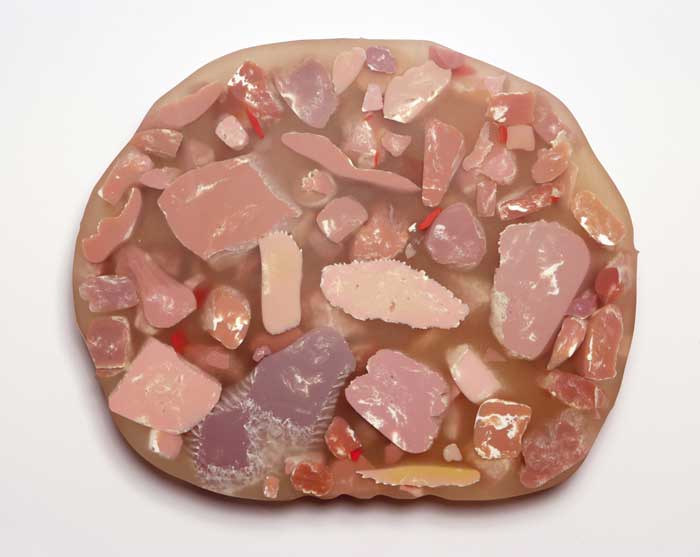
Headcheese sickens 18 in Ontario and B.C. with salmonella

The sickies stepping forward now number 18 and the Public Health Agency of Canada says people shouldn’t eat Freybe brand headcheese produced by G. Brandt Meat Packers in Mississauga, Ont.

The headcheese was distributed nationally by Freybe Gourmet Foods Ltd., but it is sliced and packaged at deli counters in various stores so consumers may not be aware of the brand they bought.

How can anyone consider headcheese a gourmet food?
 

The beard stays, you go; gastrointestinal anthrax after an animal-hide drumming event — New Hampshire and Massachusetts, 2009

We often host drum circles out on the large lawn where we beat on large animal hides and get into touch with our inner obscure jazz that NPR helps us find. Or Phish live albums.

Or not.

On December 24, 2009, a woman aged 24 years from New Hampshire was confirmed to have gastrointestinal anthrax on the basis of clinical findings and a Bacillus anthracis blood culture isolate. Her symptoms began on December 5.

One day before symptom onset, she had participated in a drumming event at a community organization’s building where animal-hide drums of multiple ages and origins were played. This report describes the case and subsequent investigation, which identified 84 persons potentially exposed to anthrax, including those persons at the drumming event and those who lived or worked at the event site. Review of New Hampshire disease surveillance data and clinical microbiology records for periods before and after the event identified no additional anthrax cases. Initial qualitative environmental testing of the event site yielded three positive samples (two from drum heads and one composite sample of three electrical outlets in the main drumming room). Wider, targeted, semi-quantitative environmental testing of the site and additional drums yielded six positive samples (two from one drum and four from environmental locations in the building).

These results suggested that aerosolization of spores from drumheads had occurred. All isolates obtained from environmental and drum samples matched the patient’s isolate by multiple-locus variable-number tandem repeat analysis using eight loci (MLVA-8). Public health agencies and persons with exposure to animal-hide drums should be aware of the potential, although remote, risk for anthrax exposure associated with these drums.

A total of 72 persons attended the December 4 event, and a total of 59 drums were present, including 17 drums that participants brought from home. Volunteers set up drums and prepared a vegetarian meal; participants ate dinner in the main drumming room (Figure) before beginning the drumming circle, which lasted 2 hours.

Happy cows come from British Columbia, too

I like having a glass of wine with my dinner every now and then. It tastes good and they say it’s good for you, so I don’t even have to feel guilty about it.

Apparently, a group of farmers in British Columbia think the health benefits also apply to cattle. The idea is a variation of the Kobe beef, where cattle are fed beer. Unlike Kobe beef, the wine is not fed every day.

“It’s during the final 90 days leading up to their slaughter that they are fed red wine supplied by a number of wineries in the Okanagan Valley.”

The final product is sweeter-tasting meat that is supposedly more tender. Plus, the cows get to die buzzed.

I wonder, if they did this with dairy cows, would wine and cheese parties become obsolete?

Listeria paper from Canada sucks; why aren’t government types attacking BS listeria advice from Toronto Sick Kids Hospital instead of babbling about collaboration?

Academic publishing is like the Tina Fey flick, Mean Girls. Reviewers are catty, bitchy, and snarly, all because the nerds are in power and can hide behind the cloak of anonymity.

For some reason, I usually get called in to review lousy papers, probably because I have no hesitation saying, ‘this work sucks; I could write a better paper with my butt cheeks’ or something like that.

There are so many bad papers out there.

Some geniuses at Health Canada and the Canadian Food Inspection Agency decided that after 23 people died of listeria in Maple Leaf cold colds in 2008, rather than write a paper about all the mistakes that were made, they would write a paper entitled, Changing Regulation: Canada’s New Thinking on Listeria.

I have a problem with anyone who says they speak on behalf of all Canadian women, or Canadians, or other groups. Industry, don’t pay attention to this – go above and beyond because you’re going to lose money when the outbreak happens, not the bureaucrats.

The Health Canada and CFIA types proudly proclaim they’d never heard of listeria in Sara Lee hot dogs in 1998, or any other outbreak, until it happened in Canada. Now the government types have introduced what they call enhanced testing requirements.

The authors find it necessary to say that,

“Consumers also have an important role to play in the farm-to-fork continuum. That role calls for Canadians to learn and adopt safe food handling, avoidance of certain high-risk foods, and preparation practices. To this effect, Health Canada has and will continue to undertake the development of science-based consumer education material which will help create an understanding of food safety issues within the context of the public’s right to know about the potential dangers in food, and industry’s responsibility for producing a safe food. A combination of all these approaches are currently being adopted and/or developed to improve the control of L. monocytogenes in RTE foods sold in Canada.”

Wow. Guess it was the consumers’ fault that 23 died from eating crappy Maple Leaf deli meat. Or the dieticians at the aged home facilities who though it would be a bright idea to serve unheated cold-cuts to immunocomprimised old people.

This is Health Canada, the agency that still recommends whole poultry be cooked to 180F, while the U.S. recommends 165F. Are the laws of physics somehow different north of the 49th parallel? We’ve asked, and no one at Health Canada will explain, So why should they be believed on anything else?

And instead of writing crappy papers about collaborations devoid of fact, why isn’t Health Canada and the food safety types at CFIA cracking down on the BS emanating from Toronto’s Hospital for Sick Kids, which says that cold-cuts are fine for expectant moms despite a treasure-trove of scientific evidence to the contrary.

The paper concludes,

“We feel that we have learned valuable lessons from the Maple Leaf listeriosis outbreak, which occurred in 2008. We have used these lessons to help us develop CFIA Directives for federally registered meat and poultry plants. We are also learning from industry and we will use their “Best Practices” document to further develop our policies on Listeria control. By all parties working together in a non-competitive and trusting manner, we feel that we can make great strides in Listeria control and continue along a path to reducing the burden of foodborne listeriosis in Canada.”

OMG This made it into a scientific paper? I feel lots of things, but I don’t ’write them in journal articles. Here’s some tips. None of which were discussed in the so-called scientific paper:

• put warning labels on cold-cuts and other high-risk foods for expectant moms
• make listeria testing results public
• make food safety training mandatory (and then we’ll work on making it better).

And the paper is below, with the catty comments from reviewers.

I could write a better paper with my butt cheeks.
sites/default/files/Farber et al 2010_listeria.pdf