Family speaks out after Salmonella death; 15 sick in outbreak linked to Kentucky restaurant

Steve Davis, 61, of Hanson, Kentucky, died just weeks ago from Salmonella. His aunt tells 14 News that he was just the first of four family members who got infected.

“We’re going to miss Steve,” says Joyce Elieff. Joyce is still learning how to live without her nephew, Steve. “He always ended with, ‘If I can do anything for ya, call me,’ and ‘I love you, Aunt Joyce.’ That’s hard,” Joyce shares. 

Steve and his brother, Gary, ate at Casa Mexicana in Madisonville a few weeks ago. About a week after their meal, Steve got salmonella and died in the hospital.  Gary was also mexican-food-tacoinfected and hospitalized. “It’s just something I never would have thought of,” Joyce says.  Then, shortly after helping clean Steve’s home, a third family member, Joyce’s son, Johnny, also got salmonella. Soon after that, Joyce says the doctors told her that she also had the illness. “I was very careful and I still ended up with it. I just thank God that my son and my nephew are OK. …

“I didn’t even realize that was possible before now. That’s why I want people to realize how contagious it is. You just really can’t be too careful.” 
14 News, WFIE, Evansville, Henderson, Owensboro

6 sick: federal health types publicly absent in Canadian E. coli burger outbreak

The Canadian Food Inspection Agency announced late Wednesday night that certain Compliments brand Super 8 Beef Burgers were being recalled because they may be contaminated with E. coli O157:H7.

They said people were sick but wouldn’t say how many; that’s up to either the e.coli.O157.belmont.oct.13Public Health Agency of Canada or Health Canada (who knows the difference).

The silence has been deafening.

However, a spokesman for Ontario’s health ministry told the Weyburn Review there have been six confirmed cases of illness in that province associated with the beef in question. Of the six people, four were hospitalized; of the four, one is still in hospital. All are recovering, the ministry said.

From 8 to 1: US shutdown hampers foodborne illness tracking

The U.S. government shutdown is, according to NPR, pushing the nation’s food safety system to its limits.

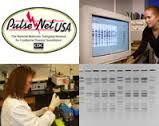
There is normally a team of eight people overseeing Pulsenet, the critical foodborne illness tracking database. Centers for Disease Control Director Tom Frieden said pulsenetpost-shutdown, there’s only one. Some research and reference labs have gone from a staff of 80 to 2, and staff at the 20 quarantine stations dotted along the country’s borders and ports has been reduced by 85 percent.

The CDC is currently monitoring about 30 clusters of foodborne illnesses around the country, which is typical at any given time. About half the CDC staffers involved in surveillance and outbreak response have also been furloughed.

Hand sanitizers didn’t protect Iowa kids against crypto after petting cows

This is why the UK says, handwashing with soap and water only at any petting farm or zoo.

A recent cluster of cryptosporidium cases cropped up after a Iowa preschool class visited a farm, Dr. Patricia Quinlisk, the Iowa Department of Public Health’s medical director, reported this morning. “While on the farm, the children petted cows and cow_hug_cumberlandate snacks,” Quinlisk wrote in a weekly email to public-health officials statewide. “The children did use hand sanitizer before eating; however, hand sanitizers are not particularly effective against crypto. Please continue to encourage handwashing with soap and water whenever possible.”

The Des Moines Register reports the parasite sickened hundreds of Iowans this summer, mainly via tainted swimming-pool water. Many of the patients suffered severe diarrhea. The outbreak has slowed now that most public pools have closed for the season. But infections also can happen in other ways, including contact with infected animals.

Quinlisk did not identify the preschool or say how many children became ill.

On Sept. 12, the state health department reported that there had been 861 confirmed or probable cases in Iowa so far in 2013. In all of 2012, there were 328 such cases.

Go evidence or go home: some online journals will publish fake science, for a fee

A long time ago in a galaxy far, far away – Canada – we ran the national food safety info line.

You can imagine rotary phones, but it was a tad more sophisticated.

The question we grappled with was, who’s evidence is right?

We came up with specific guidelines for how to answer questions based on the preponderance of scientific evidence, and were completely transparent about the the.sting.publishinglimitations, using a sound risk analysis framework.

When answers in the scientific literature seemed, uh, weird or missing, we’d go do our own original research and fill in the gaps.

We questioned everything and still do. It’s good for science, but can be hard on relationships.

Any time some hack said, here’s the science to prove something, we would question it.

Apparently with good reason.

As reported by NPR, an elaborate sting carried out by Science found that many online journals are ready to publish bad research in exchange for a credit card number.

The business model of these “predatory publishers” is a scientific version of those phishes from Nigerians who want help transferring a few million dollars into your bank account.

To find out just how common predatory publishing is, Science contributor John Bohannon sent a deliberately faked research article 305 times to online journals. More than half the journals that supposedly reviewed the fake paper accepted it.
“This sting operation,” Bohannan , reveals “the contours of an emerging Wild West in academic publishing.”

Online scientific journals are springing up at a great rate. There are thousands out there. Many, such as PLOS, are totally respectable. This “open access” model is making good science more accessible than ever before, without making users pay the hefty subscription fees of traditional print journals.

(It should be noted that Science is among these legacy print journals, charging subscription fees and putting much of its online content behind a pay wall.)

But the Internet has also opened the door to clever imitators who collect fees from scientists eager to get published. “It’s the equivalent of paying someone to publish the.sting.noseyour work on their blog,” Bohannan tells Shots.

Bohannan says his experiment shows many of these online journals didn’t notice fatal flaws in a paper that should be spotted by “anyone with more than high-school knowledge of chemistry.” And in some cases, even when one of their reviewers pointed out mistakes, the journal accepted the paper anyway — and then asked for hundreds or thousands of dollars in publication fees from the author.

A journalist with an Oxford University PhD in molecular biology, Bohannan fabricated a paper purporting to discover a chemical extracted from lichen that kills cancer cells. Its authors were fake too — nonexistent researchers with African-sounding names based at the fictitious Wassee Institute of Medicine in Asmara, a city in Eritrea.

With help from collaborators at Harvard, Bohannan made the paper look as science-y as possible – but larded it with fundamental errors in method, data and conclusions.

The highest density of acceptances was from journals based in India, where academics are under intense pressure to publish in order to get promotions and bonuses.

“Peer review is in a worse state than anyone guessed,” he says.

The Internet and open access are great tools, but like any technology, hucksters will be there to exploit the tool for personal (PhD) gain.

Maybe the peer-review system needs to open up, and the Internet can help with that.

Re-labeling worsens food safety confusion

What’s in a label?

Not much, and it’s been shown to be a lousy vehicle for food information, but in the absence of any food safety marketing, it’s one of the only tools available.

Dr. Richard Schabas, Medical Officer of Health for Hastings and Prince Edward (that’s in Ontario, Canada) is calling for federal OLYMPUS DIGITAL CAMERAfood inspection changes following a local case of listeriosis this summer that was caused by blue cheese.

Public health officials say the Belleville resident, who went to hospital, became ill after eating some blue cheese purchased at Bibs Wholesale Meats.

Schabas says the store owner had changed the label on the cheese and purchasers did not recognize a recall of the original label, since the cheese wasn’t marked as “re-labelled.”

Schabas met with officials of the Canadian Food Inspection agency this week and is writing to the federal government calling for a requirement that re-labelled products be identified as such.

Risk factors associated with Salmonella and Listeria monocytogenes contamination of produce fields

Cornell graduate student Laura Strawn and colleagues write in this month’s Applied and Environmental Microbiology (October 2013, volume 79, issue 20):

Identification of management practices associated with preharvest pathogen contamination of produce fields is crucial to the laura.strawndevelopment of effective Good Agricultural Practices (GAPs).

A cross-sectional study was conducted to (i) determine management practices associated with a Salmonella or Listeria monocytogenes positive field and (ii) quantify the frequency of these pathogens in irrigation and non-irrigation water sources. Over five weeks, 21 produce farms in New York State were visited. Field-level management practices were recorded for 263 fields, and 600 environmental samples (soil, drag swab, and water) were collected and analyzed for Salmonella and L. monocytogenes. Management practices were evaluated for their association with the presence of a pathogen-positive field. Salmonella and L. monocytogenes were detected in 6.1% and 17.5% of fields (n=263), and 11% and 30% of water samples (n=74), respectively. The majority of pathogen-positive water samples were from non-irrigation surface water sources. Multivariate analysis showed that manure application within a year laura.strawn.onfarm.oct.13 increased the odds of a Salmonella-positive field (odds ratio [OR] 16.7), while presence of a buffer zone had a protective effect (OR 0.1). Irrigation (within 3 days of sample collection, OR 6.0), reported wildlife observation (within 3 days of sample collection, OR 6.1), and soil cultivation (within 7 days of sample collection, OR 2.9) all increased the likelihood of an L. monocytogenes-positive field.

Our findings provide new data that will assist growers with science-based evaluation of their current GAPs and implementation of preventive controls that reduce the risk of preharvest contamination.

15 sick, 1 dead; Salmonella outbreak linked to Kentucky restaurant

A salmonella outbreak in Kentucky that has sickened 15 and killed one has been linked to Casa Mexicana, a Madisonville restaurant.

Health Department Director Denise Beach says eight cases have been matched to Casa Mexicana. Beach adds that four others are pending.

WFIE NBC reports three cases have been reported in Webster County and one in Muhlenberg County, but it’s not yet known if they are linked to the Hopkins County mexican-food-tacooutbreak.

Health officials who visited Casa Mexicana say they found numerous violations which prompted them to test food samples and shut down the restaurant for at least a day.
Beach says there is no further risk to the community. Casa Mexicana is now on an increased inspection schedule.

Is bottled water safer? ‘Heavy levels of bacteria’ in one Canadian product

The province’s chief medical officer of health is warning Ontarians not to consume bottled water manufactured by a Caledon-based company due to bacterial contamination.

Dr. Arlene King is also warning businesses not to serve the products.

Tests of water samples taken from Blue Glass Water Co. Ltd.’s products revealed heavy Caledon Clear Waterlevels of bacteria, according to the Ministry of Health.

King says there is a potential health threat posed by the products manufactured by the company also known as Caledon Clear Water Corporation.

According to the ministry, Blue Glass Water Co. Ltd. was ordered to stop its operations related to bottling, processing and distributing water on July 25.

However, public health units have identified the products in food establishments in Hamilton, Niagara and in Toronto.

The ministry is advising consumers and businesses to check labels on bottles for: “Bottled at source by Blue Glass Water Co. Ltd.“ or “Bottled at source by Caledon Clear Water Corp.”

No illnesses have been reported to date.