
Florida Tomato Good Agricultural Practices (T-GAPs) mandate the removal of dirt and debris from tomatoes during harvest but do not provide any specific regulations or guidance; thus, the current practice of using cloths needs to be evaluated. This study examined Salmonella transfer from inoculated green tomatoes to uninoculated cloths and from inoculated cloths to uninoculated tomatoes, upon single and multiple touches.
 Tomatoes were spot inoculated with a rifampin-resistant Salmonella cocktail (107 CFU per tomato) and were touched with cloth (clean, dirty-dry, dirty-wet) at 0, 1, or 24 h postinoculation. Salmonella was enumerated on tryptic soy agar, followed by enrichments when necessary. The transfer direction was then reversed by touching freshly inoculated cloths with uninoculated tomatoes. Transfer coefficients (TCs) were then calculated. Salmonella TCs from inoculated tomato and cloth were highest when the inoculum was wet (0.44 ± 0.13 to 0.32 ± 0.12), regardless of the condition of the cloth. Although Salmonella TCs from inoculated tomato to uninoculated cloth decreased significantly when the inoculum was dried (0.17 ± 0.23 to 0.01 ± 0.00), low levels of Salmonella were detected on cloth even after 24 h of drying. Inoculated dirty cloth did not transfer more Salmonella compared with inoculated clean cloth, and Salmonella survival was not higher on dirty cloth. When inoculated clean cloth (wet) was touched with 25 tomatoes, significantly higher levels of Salmonella were transferred to the first, second, and fourth tomatoes (0.03 ± 0.10 to 0.09 ± 0.02). However, inoculated dirty-wet (below limit of detection) and dirty-dry (0.00 to 0.04 ± 0.01) cloths transferred similar levels of Salmonella to all 25 tomatoes.
Results indicate a low risk of potential Salmonella contamination when the same cloth is used multiple times for debris removal, especially under high moisture levels. Results also show that the use of dirty cloths did not increase the risk of Salmonella cross-contamination.
Journal of Food Protection®, Number 7, July 2014, pp. 1052-1240, pp. 1062-1068(7)
Sreedharan, Aswathy1; Schneider, Keith R.2; Danyluk, Michelle D.3
http://www.ingentaconnect.com/content/iafp/jfp/2014/00000077/00000007/art00002
 cleaning up from the previous diners.
 clean with a sopping wet dish towel.
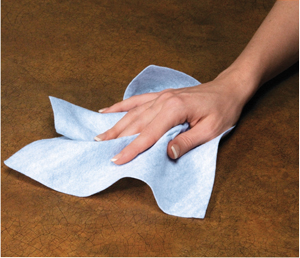 cleaned with or soaked in? They usually point to some sorta sanitary solution, but aren’t too knowledgeable about how often it’s changed or cleaned. Same with those aprons the chefs are always wiping their hands on – I have dreams of large sample sizes.
.jpg) Phyllis Fenn, a standardization officer with the Alabama Department of Public Health’s bureau of environmental services, has seen the same thing – too often.
Phyllis Fenn, a standardization officer with the Alabama Department of Public Health’s bureau of environmental services, has seen the same thing – too often..jpeg) She said the certification class helps restaurants reduce food-related illnesses as well as teaching them about the proper temperatures to cook and hold food (the temperature of food that sits out at a buffet) and proper hygiene.
She said the certification class helps restaurants reduce food-related illnesses as well as teaching them about the proper temperatures to cook and hold food (the temperature of food that sits out at a buffet) and proper hygiene.