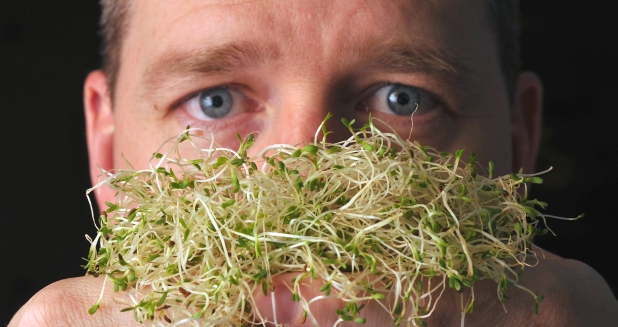
Raw is risky: Fresh herbs can be contaminated

I’m not a fan of the guac, ever since a hungover former partner spewed vile smelling green stuff at the side of the road decades ago.

And I’m wary of fresh herbs, based on previous outbreaks.

So is the U.S. Food and Drug Administration which on Feb. 23, 2018, revealed details on just how many bacteria are hiding in fresh, store-bought herbs. The agency plans to continue testing herbs through 2019 to thoroughly assess their “rates of bacterial contamination.”

The plan is to test 1,600 samples of items “typically eaten without having undergone a ‘kill step,’ such as cooking, to reduce or eliminate bacteria.” These items include fresh cilantro, parsley, and basil.

This first round of results revealed that of the 139 fresh herb samples tested, four tested positive for salmonella and three contained E. coli bacteria.

The Packer noted the testing found  no pathogens in the U.S. herbs versus imported herbs.

In the same period, the FDA found that three of the 58 U.S.-processed avocado products that were tested had listeria, and one of the 49 imported samples had listeria.

From 1996 to 2015, the FDA linked 2,699 illnesses and 84 hospitalizations to fresh herbs.

The FDA also plans to sample processed avocado for similar reasons – from 2005 to 2015, 525 illnesses were linked to avocados in 12 separate outbreaks. Of 107 avocado and guacamole samples in the initial results, four contained listeria. Avocados, the FDA notes, “have a high moisture content and a non-acidic pH level, conditions that can support the growth of harmful bacteria.”

E. coli spread in cattle caused by water troughs

Krishna Ramanujan of the Cornell Chronicle reports:

A major study led by Cornell researchers reveals for the first time that water troughs on farms are a conduit for the spread of toxic E. coli in cattle, which can then spread the pathogen to people through bacteria in feces. The study was published Feb. 7 in the journal PLOS ONE.
“Water troughs appeared in our mathematical model as a place where water can get contaminated and a potential place where we could break the cycle,” said Renata Ivanek, associate professor of epidemiology in the College of Veterinary Medicine and the paper’s senior author. The hypothesis was then tested in the field – with surprising results.
People commonly acquire infections from shiga toxin-producing E. coli through cow feces-contaminated beef and salad greens. The main shiga toxin-producing strain, E. coli 0157:H7, causes more than 63,000 illnesses per year and about 20 deaths, according to the Centers for Disease Control. Though cows carry and spread E. coli 0157:H7 when they defecate, the bacteria do not make them sick.
“Farmers do not see a problem because there are no clinical signs in cows; it is totally invisible,” Ivanek said.
A vaccine to reduce bacterial shedding in cows exists, but the beef industry has little incentive to use it, partly due to cost, and the industry does not benefit from labeling beef as “E. coli safe,” Ivanek said. So Ivanek and a research team of 20 co-authors conducted a study to identify other ways to reduce the bacteria’s prevalence in cattle, which can vary over the year from zero to 100 percent of cows in a feedlot carrying the bacteria, with rates generally rising in the summer.
The researchers ran mathematical modeling studies to see if they could pinpoint areas in the farm where infections might spread between cattle. They found that water in a trough, especially in summer months, could heat and promote pathogen replication, causing more cows to acquire the bacteria when they drink. The researchers hypothesized that frequently changing the water in the summer could keep the water colder, limiting bacterial growth.
On most farms, water troughs automatically refill when they get low enough, and farmers can adjust the water levels so they refill more often. This tact saves water and keeps it fresher while ensuring cows still have enough to drink.
The group ran control trials in a feedlot over two summers. This involved reducing the water volume in troughs in randomly selected treatment pens and leaving the volume unchanged in control pens. They expected that reducing the water levels in troughs would prevent the spread of E. coli. Instead they found that it increased spread; in the treatment pens, the odds of finding shiga toxin-producing E. coli in cows was about 30 percent higher than in the control pens.
“Our modeling studies did pick up the right parts of the system,” Ivanek said, “but the mechanism that we postulated is the opposite from what we thought.”
More study is needed to determine why more water in troughs reduced E. coli in cows, but Ivanek questions whether the lower volume made it easier for cows to swallow debris at the bottom of tanks, or whether a fuller tank reduced E. coli concentrations.
The study will trigger more research on environmental sources of E. coli spread in cattle, Ivanek said.
Next steps include repeating the results in other feedlots, evaluating the effectiveness and cost benefit of using more water to reduce E. coli, investigating how seasons and temperatures play a role in prevalence of E. coli, and understanding the actual mechanisms that led to the results.
Wendy Beauvais, a postdoctoral researcher in Ivanek’s lab, is the paper’s first author. Co-authors included researchers from Texas A&M University, West Texas A&M University and Texas Tech University.
The study was funded by the U.S. Department of Agriculture, the National Institutes of Health and the Texas Veterinary Medical Foundation.


New class of antibiotics may be capable of killing superbugs

When I was younger my mother got me a job in a hospital as a nurse’s aide while I finished my studies at university. As part of my duties I had to ensure patients that had methicillin-resistant Staphylococcus aureus (MRSA) were well taken care of. I was in my second year of University at that time and was vaguely familiar with this bug. Then came vancomycin resistant Enterococcus (VRE).
I left.

Anne Stych of Biz Women reports

Scientists studying microorganisms living in soil have discovered a new class of antibiotics that could kill deadly superbugs without triggering resistance.
The discovery leads researchers to believe there’s “a reservoir of antibiotics in the environment we haven’t accessed yet,” said Sean Brady, an associate professor at Rockefeller University in New York, who led the study.
The research, published in the journal Nature Microbiology, said the newly-discovered antibiotics kill superbugs including methicillin-resistant Staphylococcus aureus (MRSA), a potentially deadly infection that is resistant to several antibiotics.
A team led by Brady discovered the new class of antibiotics, called malacidins, while cloning and sequencing DNA from microorganisms in soil samples contributed by people across the United States, The Washington Post reported.
They were looking for microorganisms with a known gene that acts as an “on/off” switch and makes it more difficult for microbes to develop antibiotic resistance, per the Post.
The World Health Organization (WHO) last month called antibiotic resistance a “serious situation” worldwide in both low-income and high-income countries.
The organization’s research showed that resistance to commonly-used antibiotics varied widely among the 22 reporting countries, with resistance to penicillin in bacterial pneumonia cases ranging from zero to 51 percent, while E coli bacteria antibiotic resistance levels ranged from 8 percent to 65.
According to the U.S. Centers for Disease Control and Prevention, each year at least 2 million people in the United States become infected with bacteria that are resistant to antibiotics. At least 23,000 people die as a direct result, while many more die of conditions that were complicated by an antibiotic-resistant infection.
Worldwide, deaths from antibiotic-resistant infections are predicted to reach10 million a year by 2050, per the Post.
“Some of the world’s most common — and potentially most dangerous — infections are proving drug-resistant,“ said Dr . Marc Sprenger, director of the WHO Antimicrobial Resistance Secretariat. “And most worrying of all, pathogens don’t respect national borders. That’s why WHO is encouraging all countries to set up good surveillance systems for detecting drug resistance that can provide data to this global system.”
Researchers said although the discovery is promising and reveals the untapped biodiversity of our ecosystem, it will take years for the new class of antibiotics to be developed for practical use.


Yup, they get into produce seeds, especially sprouts: Salmonella and E. coli internalization

Vegetable seeds contaminated with bacterial pathogens have been linked to fresh-produce-associated outbreaks of gastrointestinal infections. This study was undertaken to observe the physiological behavior of Salmonella enterica and enterohemorrhagic Escherichia coli (EHEC) cells artificially internalized into vegetable seeds during the germination process.

Surface-decontaminated seeds of alfalfa, fenugreek, lettuce, and tomato were vacuum-infiltrated with four individual strains of Salmonella or EHEC. Contaminated seeds were germinated at 25°C for 9 days, and different sprout/seedling tissues were microbiologically analyzed every other day. The internalization of Salmonella and EHEC cells into vegetable seeds was confirmed by the absence of pathogens in seed-rinsing water and the presence of pathogens in seed homogenates after post-internalization seed surface decontamination.

Results show that 317 (62%) and 343 (67%) of the 512 collected sprout/seedling tissue samples were positive for Salmonella and EHEC, respectively. The average Salmonella populations were significantly larger (P < 0.05) than the EHEC populations. Significantly larger Salmonella populations were recovered from the cotyledon and seed coat tissues, followed by the root tissues, but the mean EHEC populations from all sampled tissue sections were statistically similar, except in pre-germinated seeds. Three Salmonella and two EHEC strains had significantly larger cell populations on sprout/seedling tissues than other strains used in the study.

Salmonella and EHEC populations from fenugreek and alfalfa tissues were significantly larger than those from tomato and lettuce tissues. The study showed the fate of internalized human pathogens on germinating vegetable seeds and sprout/seedling tissues and emphasized the importance of using pathogen-free seeds for sprout production.

Fate of Salmonella enterica and Enterohemorrhagic Escherichia coli cells artificially internalized into vegetable seeds during germination

Appl. Environ. Microbiol. January 2018 84:e01888-17; Accepted manuscript posted online 27 October 2017, doi:10.1128/AEM.01888-17

Da Liu, Yue Cui, Ronald Walcott and Jinru Chen

http://aem.asm.org/content/84/1/e01888-17.abstract?etoc


California sisters fighting to recover from E. coli

The Public Health Agency of Canada may think Shiga-toxin producing E. coli is no biggie, but tell that to the Niles sisters of southern California, who were both hospitalized with hemolytic uremic syndrome (HUS).

ABC 30 reports that Mariska and Willow were active and healthy kids with no medical history. Their parents thought it was a terrible case of the flu. Originally their pediatrician thought it was norovirus. But after days of worsening symptoms, they were admitted to Valley Children’s Hospital with E. coli.

13-year-old Mariska Niles is finally starting to improve after 16 days in the hospital. She’s had more blood transfusions than she can count along with excruciating stomach pain and she was hallucinating.

The sisters were diagnosed with E. coli HUS or typical hemolytic uremic syndrome but the girls had unique cases.

Dr. Molly Dorfman said, “There’s was pretty atypical. Particularly the severity of Willow’s case was very very severe.”

This form of bacteria usually originates from contaminated food or water products. Pinpointing the exact source has been difficult. They haven’t traveled anywhere recently. The family hadn’t eaten out lately. It’s likely other family members also ate what the girls did but did not become violently ill. Even more puzzling, Mariska and Willow rarely eat the same things.

9-year-old Willow’s kidney’s still are not working. She has been debilitated by toxins from the infection, and at one point couldn’t wake up. Both sisters have had blood transfusion and dialysis.

Steam with your melons? If it makes produce safer, why not

Abstract

The purpose of this study was evaluation of the effectiveness of superheated steam (SHS) on inactivation of foodborne pathogens on cantaloupes and watermelons.

Saturated steam (SS) treatment was performed at 100 °C and that of SHS at 150 and 200 °C. Escherichia coli O157:H7, Salmonella Typhimurium and Listeria monocytogenes-inoculated cantaloupes and watermelons were exposed for a maximum of 30 s and 10 s, respectively. Populations of the three pathogens on cantaloupes and watermelons were reduced by more than 5 log after 200 °C steam treatment for 30 s and 10 s, respectively. After SHS treatment of cantaloupes and watermelons for each maximum treatment time, color and maximum load values were not significantly different from those of untreated controls. By using a noncontact 3D surface profiler, we found that surface characteristics, especially surface roughness, is the main reason for differences in microbial inactivation between cantaloupes and watermelons. The results of this study suggest that SHS treatment can be used as an antimicrobial intervention for cantaloupes and watermelons without inducing quality deterioration.

Comparison of the effect of saturated and superheated steam on the inactivation of Escherichia coli O157:H7, Salmonella Typhimurium and Listeria monocytogenes on cantaloupe and watermelon surfaces, Korea, April 2017 to October 2017, Food Microbiology, Volume 72

Sun-Ah Kwon, Won-Jae Song, Dong-Hyun Kang

http://www.sciencedirect.com/science/article/pii/S0740002017303805?_rdoc=1&_fmt=high&_origin=gateway&_docanchor=&md5=b8429449ccfc9c30159a5f9aeaa92ffb&ccp=y

Hucksterism fail: Ells out as CEO at Chipotle

Joe Rubino of The Denver Post writes the man who turned a tiny burrito shop near the University of Denver into an international brand will soon be out as Chipotle Mexican Grill’s CEO.

Steve Ells, the founder of the Denver-based fast-casual chain, will leave his post as chairman and CEO to become executive chairman after a replacement has been found, the company announced Wednesday.

A committee that includes Ells and directors Ali Namvar and Robin Hickenlooper, wife of Colorado Gov. John Hickenlooper, has been formed to find a leader with demonstrated turnaround expertise, the company said.

Whoever takes the job will be tasked with helping the chain climb out of protracted market malaise caused, in part, by outbreaks of foodborne illness linked to some of its restaurants, first in 2015, then again earlier this year. 

Co-CEO Monty Moran stepped down in December, leaving Ells with control of the company as it faced pressures from activist investor Bill Ackman, whose Pershing Square Capital hedge fund took a nearly 10 percent stake in September 2016. Ackman said then that he wanted improvement in Chipotle’s “operations, cost structure, management and strategy.”

What’s in your weed?

In Hawaii, one of the testing labs certified by the state to check the quality of medical marijuana said they found contamination in more than half of the samples from the black market.   

The lab, Steep Hill Hawaii, says over 50 percent of the black market product had contaminants that included mold, yeast, and pesticides. 

The lab says that doesn’t mean all homegrown products are bad, but patients should be aware of what’s in their medicine. 

“I personally was shocked to find out how much stuff was in black market cannabis that you would never expect. E. coli, which comes from fecal matter. Salmonella, which comes from raw egg and chicken. We found that on product we tested,” said Michael Covington, of Steep Hill Hawaii. 

In Canada, CannaDrinks may be all the rage in some parts of the world, but there are some serious health concerns surrounding new products being formulated.

Sure it sounds cool, to order some cannabis-infused drinks at the bar for you and your buddies. However, a leading food safety expert is warning that these cool drinks may be dangerous, and the public (apparently) needs to take note.

While a $245 million deal was penned between Constellation Brands and Canopy Growth last week, for a 10 percent stake of CP, Canada’s largest cannabis producer, to produce the new CannaDrinks, Rick Holley claims the drinks are problematic, “[Producers] could screw this all up if they don’t get into the mechanics of how to safely prepare and develop new food products,” he said, adding, “They could kill people!”

BNN reported that Constellation Brands told them via email that the company, “has a long-standing commitment to producing products with the highest quality standards and that comply with all regulations.”

According to Lawrence Goodridge, a McGill University food safety expert (Larry, you’re an expert), alcohol has the advantage of killing bacteria and toxins in sealed bottles or cans, whereas cannabis-infused products may not, “Because cannabis is a plant, there are certain concerns — like the possibility of pesticides used in production, or the type of fertilizer used, or the potential presence of heavy metals that could be toxic to humans,” said Goodridge, adding that, “Bacteria like e-coli or listeria that could be on the plant and that could make it onto the food, whether it is drinks or edibles, the risk is the same — but alcohol is special because we know that helps to kill some of those toxins.”

Also, Sikora et al. identified a case of Hepatitis A associated with cannabis use.

We identified a case of acute Hepatitis A virus (HAV) infection linked to cannabis use. The local Public Health department received report of a man in his mid-20s with a classic presentation of hepatitis – jaundice, abdominal pain, vomiting, general malaise, and dark urine – as well as elevated serum aminotransferase levels and a positive anti-HAV IgM. Upon questioning, he reported no contact with ill individuals, or travel outside his metropolitan area. His exclusive source of water was the local municipal supply. He reported consuming mainly pre-packaged lower risk foods from large chain-style supermarket stores and eating at several local restaurants. While administering the questionnaire, the investigator identified that the patient smoked cannabis. Upon request, the patient agreed to provide a sample of cannabis for testing purposes. A viral elution of fresh cannabis leaves was completed. The sequences derived from the patient’s serum sample and the eluate from the cannabis leaves were identical, but did not match any other HAV sub-genotype 1B sequences from Canadian isolates within the National Microbiology Laboratory database. Hepatitis A virus can survive >60 days when dried and kept at room temperature and low humidity; HAV can remain infectious in water at room temperature for 300 days. It cannot be concluded with certainty that the cannabis was the source of the hepatitis A; however, as other sources were excluded, or were of lesser probability, the association of cannabis with his disease acquisition remains strong.

 

Ready-to-eat meals may be popular but have risks

Eugene Boisvert of Au News writes that more than 40 per cent of ready-to-eat meals tested by South Australian health types contained an unsatisfactory level of bacteria, according to survey results published in the Eastern Health Authority’s annual report this month.

The SA Health survey said one of the tested meals contained 310 times the safe level of Bacillus cereus, and another had almost 13 times the safe level of E. coli, which comes from feces.

Out of 98 meals bought at local supermarkets and shops with a shelf life of 10 or more days, 42 had an unsatisfactory microorganism count.

Eastern Health Authority chief executive Michael Livori said more small businesses were trying to capitalise on the growing popularity of ready-to-eat meals without understanding the health risks involved.

“Most manufacturers who are normally in this business will (understand the risks) but there’s an increase in small businesses or retailers getting into this realm but not without risk,” Mr Livori said.

The SA Health survey and subsequent report, published in June, was sparked by Eastern Health Authority concerns about the standard of manufacturing processes of ready-to-eat meals.

The SA Health report recommended measures to prevent bacteria growing in ready-to-eat meals, including that they be heated to at least 90C for 10 minutes when being cooked.

Meanwhile, the Eastern Health Authority issued 10 businesses with prohibition orders in 2016/17, banning them from preparing, selling or transporting food until they cleaned up their act, compared with three in the previous two financial years.

85 sick with shiga-toxin E. coli at Marines base

About 85 U.S. Marines-in-training remained ill last week after an apparent shiga-toxin producing E. coli outbreak at Marine Corps Recruit Depot San Diego and Camp Pendleton amid a week-old outbreak of diarrheal illnesses at the military installations, authorities reported.

Among the medical cases were 19 new ones diagnosed since Oct. 31, 2017, according to MCRD public affairs. In all, 16 recruits were receiving treatment at an off-base hospital, with the remainder being cared for at military medical facilities.

Base officials initially announced a total of about 300 cases of intestinal ailments at the 2 San Diego-area installations on Oct. 30, 2017.

 That tally was down to roughly 215 a day later. The cause or causes of the debilitating bacterial exposure remain under investigation.