7 children sick with E. coli O26: France’s Leclerc recalls ‘Our regions have talent’ cheese

French food retailer Leclerc has issued a recall of a brand of cheese made with raw milk that has been linked by the authorities to cases of E.coli O26 among young children.s

Leclerc, France’s biggest supermarket chain by market share, said on its website that it was withdrawing Reblochon cheese supplied by cheesemaker Chabert in the Savoy region and sold under the “Nos regions ont du talent” (“Our regions have talent”) brand.

The move came after the French health authorities linked seven cases of E. coli O26 bacteria among children between one-and-a-half and three years to the cheese, which is a creamy speciality of the French Alps.

“The investigations conducted by the health authorities have confirmed an epidemiological link between these cases and the consumption of whole Reblochon cheese made with raw milk under the brand and sold by the Leclerc chain in several regions,” France’s health and agriculture ministries said in a joint statement.

The ministries said that six of the seven cases of infection involved hemolytic-uremic syndrome, a potentially serious condition that can cause kidney failure among young children.

Six children were taken to hospital and one is yet to return home, the health ministry added in an emailed response.

If six of the seven cases have HUS, there are dozens more that are sick.

E. coli O26 triggers recall of cheese sold in Avoca, Ireland

A notice issued on the Food Safety Authority of Ireland’s website read: “Following detection of shiga toxin-producing Eschericia coli O26 in a raw milk cheese, the above batch of Camembert de Normandie cheese is being recalled by La Fromagerie du Plessis.

“A point-of-sale recall notice is displayed in Avoca stores which sold the affected batch advising customers not to eat this batch.”

The affected product is the Camembert de Normandie au lait cru, 250g with approval number FR 14 608 001 CE.

The batch code is 260218DS0 with a use-by date of May 2, 2018.

Pennsylvania family coping with daughter’s E. coli death

Jaccii Farris of 69 News reports a community rallies around a Bucks County family who is dealing with a heartbreaking loss.

They say their preschool-aged daughter died because of the E. coli bacteria.

Someone close to the Robert family started a YouCaring page to help with medical expenses after three members of the family were stricken by the bacteria back in April.

The pictures of the family of four posted on the site are from a happier time. 

Now, members of the community are coming to their side at their darkest hour.

According to the website, on April 15th the Robert’s son Tyler was hospitalized at Children’s Hospital of Philadelphia with a strain of E. coli that impacts the kidneys.

But soon after he was admitted, his mother and sister Hailey became ill.

Hailey was also admitted to CHOP.

Over the next two weeks, the family posted daily updates. Tyler was doing better, but Hailey was struggling.

May 2 came the hardest post a mother could make. Hailey lost her battle against the bacteria.

The Pennsylvania Department of Health confirms that an E. coli death occurred at CHOP, but would not name the victim due to HIPAA.

Officials say the death is not related to the recent E. coli cases associated with lettuce from the Yuma, Arizona region. 
Bucks County family loses daughter to E. coli

Melboune beware: Shit with dangerous E. coli can survive a long time in river sediment

Bed sediment resuspension is a potential source of faecal microorganisms in the water column of estuaries. As such, it is important to identify the survival of faecal microorganisms in these bed sediments and understand how bed sediment resuspension impacts the quality of estuarine waters.

This study explores the effect of bed sediment resuspension on Escherichia coli on concentrations in the water column and the persistence of E. coli in the water column and bed sediments of the Yarra River estuary in South‐Eastern Australia. Using sediment cores, we identified that the resuspension of both surficial sediments (e.g., by tidal movements) and deeper bed sediments (e.g., by large storm events) can increase E. coli concentrations in the water column by up to 20 times in estuaries in oceanic climates. Bed sediment resuspension can result in increased E. coli concentrations in the water column even up to 24 days after E. coli first enters the estuarine water.

This study demonstrates that faecal microorganisms, such as E. coli, can persist for extended periods in estuarine bed sediments, which may then be re‐entrained into the water column via recreational activities, high flow events, or tidal fluctuations. If the survival and resuspension processes observed here hold true for pathogenic microorganisms, the resuspension of bed sediments may indeed represent an increased public health risk.

Escherichia coli survival and transfer in estuarine bed sediments

C. Schang, A. Lintern, P. L. M. Cook, G. Rooney, R. Coleman, H. M. Murphy, A. Deletic, D. McCarthy

https://doi.org/10.1002/rra.3281

https://onlinelibrary.wiley.com/doi/full/10.1002/rra.3281

The silence from the leafy greens lobby is deafening: A tale of two women with E. coli

A listing of 78 outbreaks linked to leafy greens since 1995 is posted here.

Maggie Menditto, the executive administrator of the McDowell Foundation for social justice, writes in the New York Times that before my illness, I was a healthy 22-year-old just out of college. But at some point, my doctors speculated, I must have eaten leafy greens contaminated by E. coli bacteria.

My mother had driven me to my local emergency room in the middle of the night after several days of unbearable abdominal cramps and a startling amount of blood coming out of new and terrifying places. The doctor on call thought it was probably just a bad case of colitis.

As the sun began to rise, I was asked if I’d like to go home and take Imodium or if I’d like to stay in the hospital. Given the severity of my pain, I was surprised that I was even given a choice. I allowed myself to be wheeled upstairs with a needle in my vein administering a steady stream of antibiotics, a common treatment for colitis.

But that weekend, I took a turn for the worse, throwing up every hour until there was nothing left in my system but sticky green bile. An infectious disease doctor was called in, my stool sample tested, and I was finally given a diagnosis of E. coli infection.

Doctors don’t know for sure how I became infected with E. coli — at the time, last October, the outbreak tied to romaine lettuce was still several months in the future — but we do have some clues. I’m a vegetarian, so we know it didn’t come from eating meat. Although none of my family members got sick, my father also tested positive for E. coli. The only food we remembered sharing was a batch of arugula from a local farmers’ market about five days before I became ill, making it the most likely culprit.

The antibiotics were immediately stopped, as they have been linked to an increased likelihood of developing dangerous complications from the bacterial infection. But by then the signs were already beginning to show. My platelet count was dropping at a dangerous rate, my kidney function had begun to falter. I had developed hemolytic uremic syndrome, a life-threatening complication of E. coli infection.

I was treated to the first ambulance ride of my life to transfer to Georgetown University Hospital, where I would remain hospitalized for the next 33 days.

In the critical care unit, I was strapped into several machines that would monitor my vitals. The next morning, a doctor came in and inserted a temporary access catheter into the right side of my neck. I was wheeled down to a lower level of the hospital for the first of my six plasmapheresis treatments, a particularly draining experience in which blood was removed, cleaned and then returned to my body via a large tube in my neck.

A team of hematologists, nephrologists, infectious disease specialists and a general physician visited every morning. They’d ask, “How are you feeling, Frances?”

Everyone knows me as Maggie, but in an annoying quirk of my hospitalization, my medical records and wristband all bear my legal name, Frances. “One name for each grandmother,” my mom reasoned when my parents decided to christen me Frances Margaret. An unintended consequence of their thoughtfulness is that I have spent much of my life correcting people who called me Frances. “It’s Maggie, short for Margaret, my middle name,” I said.

But in the hospital, it helped to have a second persona. Frances put on a brave face during the hours of treatment in sterilized facilities, while Maggie drew inward, refusing books and music or anything else that reminded me of who I was outside the hospital walls. From where I sat, pinned to machines by the needles in my veins, in a body I hardly recognized, and with a label on my wrist displaying a name that wasn’t mine, I couldn’t be sure that it was me this was really happening to. I listened patiently as doctors and nurses and technicians came into my room to offer Frances their well wishes, draw blood, or discuss what medications she should take or what procedures might make her body strong once more.

During my first week of hospitalization, the kidney doctors debated whether to begin the dialysis process, sticking to the typical “wait-and-see” approach. But by the end of the week there was no question. I had gained 30 pounds from all the excess fluid and could hardly stand up and walk on my own. I began my first of many three-hour-long dialysis treatments, where they siphoned off the liquid, doing the work of my kidneys that I had so long taken for granted.

I had mostly avoided social media since getting sick, but one day, I logged onto Facebook to see that across the country, people I knew and people I didn’t — a pair of girls I once babysat for, a football team in Rhode Island — were praying for Maggie, hoping Maggie pulled through. The more people that worried about me, the sicker I must be, I thought.

The dialysis continued for three weeks with tiny but measurable results. My platelet counts began to climb, and I started to pee again. But it wasn’t enough to impress the nephrologists, who decided to surgically place a catheter in my chest, to both drain and administer fluids.

Doctors began discussing a kidney transplant and temporary home-care dialysis training. I was sent home for a weekend to rest up before my first training for an eventual dialysis machine to be brought to my parents’ house, but we didn’t get that far. I went to bed after dinner and woke up in an ambulance racing back to the hospital I had just left. My blood pressure had begun a dangerous rise as my kidneys began to start working again, and I had the first of three seizures that night.

The next few days are mostly lost from memory, but some hazy images survive. Waking up in a tube to discover I was getting an M.R.I. A nurse delicately pulling glue from my hair from where the technicians had inserted sensors. My hospital bed being wheeled out of the operating room after the catheter was removed from inside my chest. The sharp lines of the white hallway walls, every corner offering a shadowy descent into someone else’s hospital story.

Through my half-closed lids, I see a rare pocket of sunlight at the end of the corridor. Briefly I feel the warmth of its gaze as we trek on through the seemingly endless maze of the hospital’s hallways and locked doors. The dryness in my mouth is the first clue that I’m back in my body, that my kidneys have begun to heal themselves at an admirable pace.

My mom finds me soon after, as I’m attempting to drink water from a clear plastic straw. She reaches out and holds it in place. The nurse comes in to tell us that it all went well, that Frances’s vitals look good, that we’ll be ready to transfer her back upstairs soon.

“She goes by Maggie,” my mom says.

“Oh, I’m sorry,” the nurse says, glancing down at her chart before stepping back into the hall, “Maggie.”

I turn to smile at my mom. It doesn’t matter what they call me anymore. She holds my hand as we’re guided back upstairs to my hospital room for the last time.

Sometimes now, in my apartment, on the train, while walking down a crowded street, I like to run my fingers over the fresh scars lining my collarbone. Now that the toxins have left my system, now that my body has built itself back up, I have only the scars to remind me that Frances was tested, that Maggie survived. That it really happened to me.

Altoona, Penn. Area High School student Mia Zlupko was shocked when doctors told her some scary news.

“All the doctors came in, and it was kind of like a big surprise like ‘It’s E. coli,'” Mia said.

The 16-year-old is a dancer who enjoys eating healthy. It’s not uncommon for her to grab a salad from the store, which is exactly what she did earlier this month. However, after eating it she became sick and was throwing up with abdominal pain.

“It was a scary process and I wouldn’t want to go through it again,” she said. “I know everyone else wouldn’t want to go through it.”

After four days in the hospital no one could figure out what exactly was wrong.

Just as Mia was heading home she learned her diagnosis. A relief for her mom Tina.

“Had we not gone back to the doctor and then gone to the emergency room, she could have gotten much sicker very quickly,” Tina Zlupko explained.

Now the teen is hoping to share an important message with others so no one else has to go through what she did.

“I’m definitely more aware and I want other people to be aware about it,” Mia said.

The CDC advisory now includes chopped and bagged romaine lettuce, as well as whole heads and hearts of romaine lettuce.

So far at least 64 people have been infected in 16 states. Pennsylvania is one place that has been hit the hardest with at least 12 people infected.

Officials think the outbreak is coming from Yuma, Arizona. They warn people not to eat any romaine lettuce unless you know where it’s from.

Always use a thermometer: 244 sickened by shiga toxin-producing E. coli at US Marine training base

In Nov. 2017, over 200 U.S. Marines-in-training were sickened by shiga-toxin producing E. coli at Marine Corps Recruit Depot San Diego and Camp Pendleton.

That outbreak was blamed on undercooked beef prepared by a civilian contractor, according to the results of an investigation.

First rule of public health (substitute military or any other organization): make public health look good.

According to Healio, the outbreak occurred in October and November among newly enlisted men at Marine Corps Recruit Depot, San Diego, and Camp Pendleton, a nearby base where recruits conduct weapons and field training, according to Amelia A. Keaton, MD, MS, EIS officer in the CDC’s Outbreak Response and Prevention Branch.

The outbreak involved Shiga toxin-producing E coli (STEC) — a major cause of foodborne illness in the United States each year and the pathogen responsible for the current multistate outbreak of E. coli linked to romaine lettuce. In all, 244 male recruits are suspected of being sickened, including 15 who developed a life-threatening complication of STEC infections called hemolytic uremic syndrome (HUS). Among those who developed HUS, six were deemed critically ill but none died, Keaton told Infectious Disease News during the CDC’s annual EIS conference.

She said the outbreak presented several challenges for investigators and highlighted some unique risk factors among military trainees living in close quarters.

“Nobody on our team had a military background, so we first wanted to understand what their training environment is like,” Keaton said. “Do they have any unique exposures that people in the general public don’t have? We wanted to get a sense of what day-to-day life was like for these guys and what risk factors for infection they were exposed to.”

Keaton and colleagues interviewed 43 case patients and 135 healthy controls, plus Marine officers, food workers and staff. They observed food preparation practices and studied recruit sleeping quarters, bathroom facilities and cafeterias where meals were served to around 2,000 to 3,000 recruits at a time, Keaton said.

Although they were unable to directly test any meat, through interviews investigators found that ill recruits were 2.4 times likelier to report consuming undercooked beef than healthy controls. Moreover, Keaton said investigators directly observed beef being undercooked.

According to Keaton, most dining facilities on military bases are run by civilian contractors, including the facilities involved in this outbreak, which offered the same menu prepared by the same company. The Navy is in charge of inspecting such facilities once a month, she said.

“A lot of people reported eating meals that were visibly undercooked,” Keaton said. “When we observed food preparation, we saw that food workers were cooking a large number of hamburger patties and a large number of meals. Because such a large number of meals are being prepared, they’re only able to check foods intermittently with a meat thermometer. In some instances, we saw there were temperature abuses where they weren’t necessarily cooking to temperatures recommended by California state law.”

The role of meat in foodborne disease

Meat has featured prominently as a source of foodborne disease and a public health concern. For about the past 20 years the risk management paradigm has dominated international thinking about food safety. Control through the supply chain is supported by risk management concepts, as the public health risk at the point of consumption becomes the accepted outcome-based measure.

Foodborne pathogens can be detected at several points in the supply chain and determining the source of where these pathogens arise and how they behave throughout meat production and processing are important parts of risk-based approaches. Recent improvements in molecular and genetic based technologies and data analysis for investigating source attribution and pathogen behaviour have enabled greater insights into how foodborne outbreaks occur and where controls can be implemented. These new approaches will improve our understanding of the role of meat in foodborne disease and are expected to have a significant impact on our understanding in the next few years.

The role of meat in foodborne disease: Is there a coming revolution in risk assessment and management?

Meat Science

Narelle Fega, Ian Jenson

https://doi.org/10.1016/j.meatsci.2018.04.018

https://www.sciencedirect.com/science/article/pii/S0309174018300731

Nanobot viruses tag and round up bacteria in food and water

A PR which continues with the we’re-all-hosts-on-a-viral-planet themed, but gives some advice about how to work with nature to achieve goals.

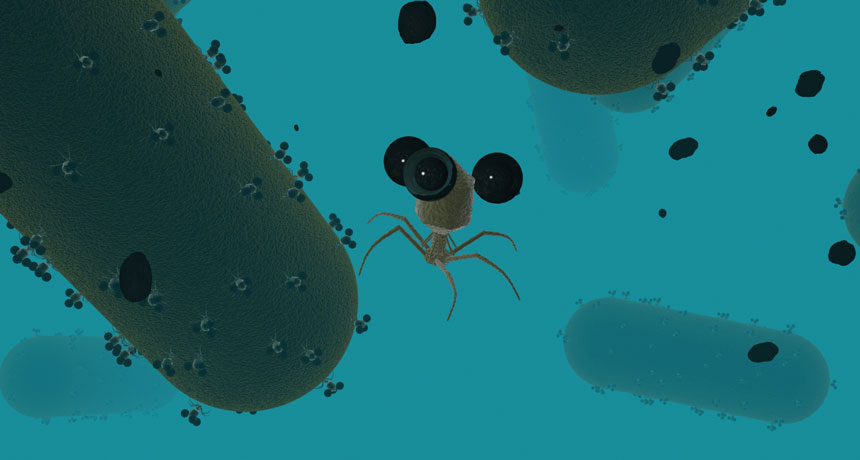
Viruses engineered into “nanobots” can find and separate bacteria from food or water.

These viruses, called bacteriophages or just phages, naturally latch onto bacteria to infect them (SN: 7/12/03, p. 26). By tweaking the phages’ DNA and decking them out with magnetic nanoparticles, researchers created a tool that could both corral bacteria and force them to reveal themselves. These modifications can boost the sensitivity and speed of rooting out bacteria in tainted food or water, the researchers reported March 20 at the annual meeting of the American Chemical Society.

“You’re taking the power of what evolution has done … to bind bacteria, and then we’re just helping that out a little bit,” said Sam Nugen, a food and biosystems engineer who leads the team designing these phages at Cornell University.

Competing technologies for detecting bacteria use antibodies, the product of an immune response. But these are expensive to produce and work best in a narrow temperature and pH range. In contrast, phages “exist everywhere,” making them potentially more broadly useful as bacteria hunters, Nugen said. “They’ve had to evolve to bind well in much broader conditions than antibodies.”

Phages identify and grab bacteria using proteins on their leglike tail fibers, which form a strong bond with compounds on the bacterial cell surface. To infect the cell, the phage injects its genetic material. This hijacks the cell, forcing its machinery to produce phage clones.

Nugen and collaborators programmed phages to tag E. coli bacteria. The team’s engineered phages contained extra DNA that told the bacteria to make an easily detectable enzyme. When the infection caused the bacterial cells to rupture and release the new phages, a chemical reaction involving the enzyme produced a measurable signal: light, color or an electric current. For example, the phages exposed E. coli in milk and orange juice by turning the liquids red or pink.

The researchers also loaded the phages with nanoparticles with a magnetic iron and cobalt core. Once the phages latched onto the bacteria, researchers could use a magnet to round the bacteria up even before the bacteria ruptured and announced their presence. This allowed the researchers to detect low concentrations of bacteria: less than 10 E. coli cells in half a cup of water. Conventional methods grow the bacteria into colonies to find them, which can take up to two days. But using the phages, Nugen and his colleagues skipped this step and found the cells within a few hours.

Using phages for magnetic separation would be “really nice for food and environmental samples because they tend to be really dirty,” said Michael Wiederoder, a bioengineer at the U.S. Army Natick Soldier Research, Development and Engineering Center in Massachusetts, who was not involved in the research. The salt, sugar and fats in food can slow the reactions of antibody-based tests, he said.

Also, the phages infect only bacteria that can reproduce, allowing testers to tell the difference between live cells and those killed by antibiotics, heat or chlorine. With food, “whether the bacteria are alive or dead is the difference between you getting sick and not,” Wiederoder said.

The nanobots could also prove useful for blood or other human samples. There, phages would provide a way to find resistant bacteria left alive after a course of antibiotics.

The next challenge: tinkering with the phages to tune which bacteria they go after. In nature, phages prey on specific species. But in food, it may be helpful to detect several common offenders, like E. coli, Salmonella and Listeria, or, alternatively, to have greater discrimination to find only the pathogenic E. coli and leave the rest.

Risk is not low if cause is not known: 5, then 19, now 34 sick and 1 dead sick in E. coli outbreak linked to Edmonton restaurant

If the E. coli-romaine lettuce made it to an Alaskan prison, maybe it made it to an Edmonton restaurant.

Just asking.

According to the Toronto Star, one person has died and more than 30 people have fallen ill following an E. coli outbreak that Alberta Health Services has called “extremely complex” to investigate.

In a statement, AHS says it has expanded its investigation into the source of an outbreak of E. coli, beyond cases directly linked to an Edmonton restaurant late last month.

While 21 of these lab-confirmed cases are linked to Mama Nita’s Binalot restaurant in Edmonton, AHS no longer has public health concerns related to the restaurant.

The number of lab-confirmed cases of E. coli has increased to 34, including 11 patients who have needed hospital care, and one patient who has died likely due to E. coli infection.

“This outbreak is extremely complex, however AHS, in partnership with other provincial and federal agencies, is doing all we can to protect the health of Albertans,” said Dr. Chris Sikora, a medical officer of health in the Edmonton zone, in a statement. “The risk of illness remains very low.”

AHS has not yet identified the source of these cases, but believes they are linked to the initial outbreak.

The risk is not low if the cause is not known.

AHS has worked closely with the owners of Mama Nita’s Binalot since it was identified that a cluster of people with lab-confirmed E. coli ate at the restaurant. AHS says the owners have taken significant steps to manage this issue, including voluntarily closing until AHS was confident the restaurant could reopen without presenting a risk to the public.

Canadian E. coli cases believed to have been caused by deer meat

Cured deer meat is believed to be behind a series of E. coli cases in Tavistock, Oxford County, in Ontario, Canada.

Public Health says they can’t confirm it yet, but they believe the illnesses were caused by the meat which was sourced and processed from two private hunt camps in December 2017.

The first case was reported by a Tavistock resident in mid-February with the second coming a month later in March and a third in the first week of April.

They say laboratory results, expected later this week, will confirm if E.coli is present in the deer meat.