They had one of those, the New Zealand Food Safety Authority; government reinvents wheel

The New Zealand government is to set up an independent food safety advice group to recommend regulatory changes in the wake of last year’s global recall of dairy products over a false botulism scare.

barf.o.meter.dec.12The Food Safety and Assurance Advisory Council was one of 29 recommendations from the Government Inquiry into the Whey Protein Concentrate Contamination Incident released in December last year, Food Safety Minister Nikki Kaye said Wednesday.

“At the moment there is no independent group that looks at the whole of New Zealand’s food safety and assurance system and is able to provide high-level independent advice and risk analysis,” Kaye said in a statement.

“This council is being set up to do this and will report to the director-general of the Ministry for Primary Industries. It will provide a valuable sounding board for new ideas and contribute to raising consumer and market confidence in New Zealand’s food,” she said.

She also expected the six-member expert panel to identify current and future trends, risks and issues that may impact on the country’s food safety and assurance system.

Dairy giant Fonterra pleaded guilty in a New Zealand court last month to four food safety-related charges connected to global recall of whey protein concentrate over the false botulism scare, which happened in August last year.

Fonterra is also fighting a civil case brought by French food giant Danone, which is claiming compensation of 350 million euros (483.59 million U.S. dollars) for the scare.

Is it safe to keep a pig’s head with baked goods? Judge reserves decision on New Zealand bakery

The Bulls Bakery could be closed down because of problems with food safety, including a pig’s head kept with baked goods.

In Wanganui District Court on April 11, Judge David Cameron heard the Rangitikei District Council’s case for closing the High St business run by Santhya Sun.

pig.headJudge Cameron reserved his judgment until this week.

However, Mr Sun said he had tried hard to remedy problems and the council was unfairly targeting him.

Over the past year an inspector found mould growing on meat, rice and a tin of syrup, uncovered food, cooked and uncooked found placed together and a pig’s head from a home kill in the freezer with loose cakes like doughnuts and eclairs. Other problems included a pastry flan base uncovered with a plate of mince left on top, a mincer with old encrusted meat on it, fly spotting, and a sick baby playing with kitchen implements.

The council ordered the shop closed in December 2013 because of the unsafe food practices, but the owner defied the order and reopened it.

In January council did not renew Mr Sun’s registration and gave chief executive Ross McNeill the go-ahead to prosecute him.

Fancy food ain’t safe food – NZ edition

As New York City somewhat quietly enacted its first paid sick leave law on April 1, wedding guests and eight serving staff at the exclusive Northern Club in Auckland, New Zealand fell sick in a suspected norovirus outbreak.

The wedding was held at the club in Princes St, central Auckland, on Saturday, March 29. People began to fall ill two days later.
norovirus-2Dr Hoskins said the club had alerted the Auckland Regional Public Health Service.

He said the service’s investigation was still in progress, and he did not know last night how many of the 100 guests had become ill.

Contact details had been obtained for 77 guests, of whom 44 had been interviewed.

Club’s president Tenby Powell (no relation) said that although the health service’s investigation had not yet identified the source of the outbreak, “we are very confident it’s got nothing to do with the Northern Club’s food handling processes”.

The eight affected employees were serving staff – “they serve plates” – and none of the food preparation staff had been affected.

Uh-huh.

‘Tip of iceburg’ 7 sick from Campylobacter linked to NZ raw milk

A recent outbreak of Campylobacter in Timaru, New Zealand, has been blamed on raw milk.

Seven people have been confirmed as having Campylobacter after purchasing raw milk from a farm on the outskirts of Timaru.

South Canterbury Medical Officer of Health Dr Daniel Williams believes the seven cases colbert.raw.milkare the tip the iceberg.

”Drinking raw milk is risky for your health. It can contain disease-causing bacteria and other organisms which can lead to gastroenteritis and other illnesses, some of which can be life-threatening,” Dr Williams said.

Dr Williams said even drinking raw milk from suppliers with the highest hygiene and safety standards can be dangerous as any raw cow milk can contain bugs.

New Zealand legislation allows producers to sell up to five litres of raw milk daily at the farm gate to buyers who purchase it for themselves or their family.

Some NZ fruit potentially contaminated with Hepatitis A

The Ministry for Primary Industries (MPI) is cautioning New Zealand consumers of a small quantity of fresh fruit sold in late February and early March that there is a relatively low risk that this fruit had been contaminated with Hepatitis A virus.

MPI Deputy Director General Scott Gallacher says, “We have been advised that a person packing some varieties of apples and peaches in a Hawke’s Bay New-Zealand-Royal-Gala-Red-Apple-2pcs1packhouse has been diagnosed with Hepatitis A.

“This worker handled Royal Gala and New Zealand Beauty apples and Golden Queen peaches over a four day period while they would have been infectious. Hepatitis A virus can remain infectious on the surface of fruit for some months and transmit infection to other handlers and consumers.”

Mr Gallacher says while some potentially affected fruit has been traced and withdrawn from sale, it is expected that approximately 1400 cartons have been sold, with fruit either consumed or still in some people’s homes.

Mr Gallacher says all fruit involved in this case was for domestic New Zealand supply and has not been exported.

New Zealand council alarm at food stall risk

Food stalls at the Chinese Lantern Festival, Pasifika, Diwali and other major events will be nearly unregulated for food safety under a major law reform, says Auckland Council, which is concerned about the potential for large-scale food poisoning.

Council officials say legislation before Parliament which introduces new food safety regulations would exempt small vendors serving tens of sorenne.hockey.feb.14thousands of meals at large events.

They made the comments as submissions resumed on the long-awaited Food Bill, which was first introduced to Parliament in 2010.

The bill stalled amid speculation that it would put an end to sausage sizzles and cake stalls, introduce crippling costs for small horticultural producers, and give multinational corporations more control over New Zealand’s food sources.

The Government amended the bill in 2012 to address some of these problems and ensure that small-scale sellers such as farmers’ markets and fundraising stalls would not be captured by the law change.

Auckland Council said it supported most of the changes, but it was worried small vendors would be exempted from controls on food safety at large events such as the Chinese Lantern Festival, attended by more than 100,000 people.

Environmental health team leader Alan Ahmu told a select committee yesterday that officials were not concerned about school fairs or fund-raisers.

Wait, what? Little kids are one of the more vulnerable populations for foodborne illness.

I spent 16 hours this weekend becoming a level 1 coach for ice hockey in Australia, building on the 32 or so hours in Canada, at least 5 years behind the bench, and decades of experience, all because parents expect the best for their kids.

So why wouldn’t they expect the best for their kids at school?

Instead of moaning about why certain groups or people should be exempt from food safety rules, make it mandatory, and figure out the best way to folklorama.infosheet.10provide information to people (hint – it won’t be found in government).

If a minimal level of competency is required to coach hockey, a minimal level of competency should be required to make food for other people.

Investigating the potential benefits of on-site food safety training for Folklorama, a temporary food service event

Mancini, Roberto1; Murray, Leigh2; Chapman, Benjamin J.3; Powell, Douglas A.4

Source: Journal of Food Protection®, Volume 75, Number 10, October 2012 , pp. 1829-1834(6)

Abstract:

Folklorama in Winnipeg, Manitoba, Canada, is a 14-day temporary food service event that explores the many different cultural realms of food, food preparation, and entertainment. In 2010, the Russian pavilion at Folklorama was implicated in a foodborne outbreak of Escherichia coli O157 that caused 37 illnesses and 18 hospitalizations. The ethnic nature and diversity of foods prepared within each pavilion presents a unique problem for food inspectors, as each culture prepares food in their own very unique way. The Manitoba Department of Health and Folklorama Board of Directors realized a need to implement a food safety information delivery program that would be more effective than a 2-h food safety course delivered via PowerPoint slides. The food operators and event coordinators of five randomly chosen pavilions selling potentially hazardous food were trained on-site, in their work environment, focusing on critical control points specific to their menu. A control group (five pavilions) did not receive on-site food safety training and were assessed concurrently. Public health inspections for all 10 pavilions were performed by Certified Public Health Inspectors employed with Manitoba Health. Critical infractions were assessed by means of standardized food protection inspection reports. The results suggest no statistically significant difference in food inspection scores between the trained and control groups. However, it was found that inspection report results increased for both the control and trained groups from the first inspection to the second, implying that public health inspections are necessary in correcting unsafe food safety practices. The results further show that in this case, the 2-h food safety course delivered via slides was sufficient to pass public health inspections. Further evaluations of alternative food safety training approaches are warranted.

Campylobacter cases spike in NZ; cross-contamination fingered

A spike in the number of people struck down by a foodborne illness in the MidCentral District Health Board region is most likely the result of cross contamination from poultry meat.

New figures from the Institute of Environmental Science and Research for December show a high number of campylobacteriosis cases, with get.that.finger.out.of.your.ear.airplane49 notified in the MidCentral region.

It is a significant increase compared to previous months, which typically have about 20 to 30 cases.

Massey University Infectious Disease Research Centre director Nigel French said the “urban campylobacter season” was in full swing and was generally when most cases of cross contamination from poultry meat occurred. “There are a whole lot of possible reasons why you might see an increase but November to February is the time when you see most cases of campylobacteriosis in urban areas,” he said.

“In rural areas you tend to see more cases in spring, particularly associated with calving season.”

53 sickened; contaminated water led to norovirus outbreak in NZ last year

An acute norovirus outbreak in the Cardrona township of New Zealand during last year’s ski season was caused by sewage contamination of drinking water and the wider environment, a peer-reviewed investigation says.

The month-long outbreak of norovirus that caused at least 53 cases of diarrhoea, vomiting norovirus-2and nausea was only the third documented waterborne transmission in New Zealand.

Crucially, the report also says a strategy is “urgently required” to decrease environmental contamination of drinking water supplies, improve sewage disposal and manage drinking water.

The report, in the New Zealand Medical Association journal by Dr Derek Bell, Susan Jack and Joanne Hewitt, discusses the investigation of the waterborne gastroenteritis outbreak that infected at least 53 people in and around Cardrona in mid-August and early September last year.

The Southern District Health Board yesterday confirmed the article, which mentions a hotel and resort in “southern New Zealand”, referenced the Cardrona township, the hotel and accommodation providers in the village.

Cardrona Hotel, under new management earlier this year, has a supply from a bore and the hotel water system supplies water to neighbouring properties via 11 water access points. Another township accommodation provider, Benbrae, has an independent water supply and sewage system.

Public Health South investigated, interviewing 66 people, collecting samples, visiting the site, inspecting premises and water supplies.

The illness lasted, on average, for 36 hours and the cases included 12 Cardrona residents.

Hotel drinking water samples and the hotel bore were positive for norovirus, a drinking tap from the neighbouring accommodation was positive, and river samples and water downstream of the wastewater disposal field were positive.

A supply runs from a 14-metre deep bore, the water is chlorinated and pumped to holding tanks, then gravity-fed to the hotel and other access points. There was inadequate chlorination, an ineffective chlorine pump and there was surface flooding contamination, the article says.

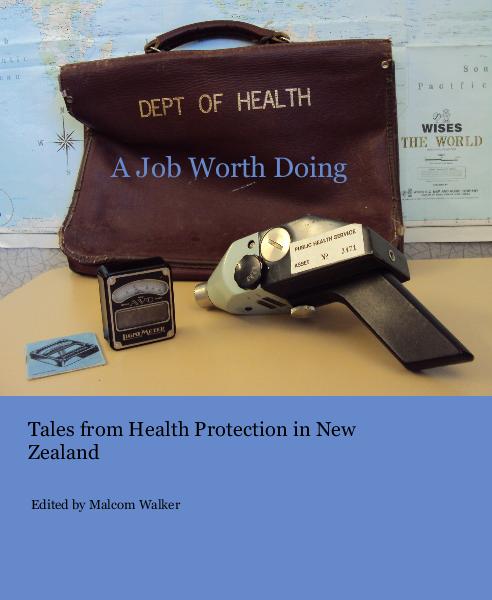
A Job Worth Doing – Tales from Health Protection in New Zealand

Canterbury District Health Board protection officer Malcolm Walker has released a new book documenting the things food inspectors encounter — a weta in an ice cream, shotgun pellets in a steak, live maggots in a pie A Job Worth Doing - Tales from Health Protection in New Zealandand a sliced mouse in a bread loaf.

The sliced mouse, an incident in Whanganui, occurred after a bakery’s pest control programme resulted in a mouse dying in a baking tray. The dough was dropped on top and the mouse was baked into the loaf. The mouse passed through the bread slicer and was perfectly sectioned.

The book also covers officers’ responses to the February 2011 Christchurch earthquake – which was a lot worse than most of the world realizes.

Restaurant inspection grading scam in NZ

People want some sort of grading system for the places where they spend their money on food.

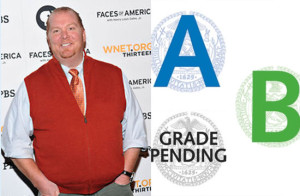
There are lots of disclosure systems – A,B,C; red, yellow, green, numbers, web-based – and they can all be improved.

But in the absence of a credible system, someone will fill the vacuum, bataligrades-300x196often with quackery or scams.
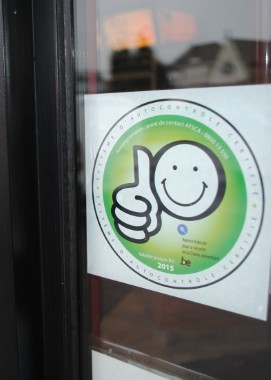
As reported by the Sunday-Star Times in New Zealand, a company set up by a convicted identity thief and a banned company director is under investigation, after they teamed up in a “tick” scheme for hygiene standards that drew in hundreds of businesses nationwide.

The Companies Office is looking into the activities of the Hygiene Foundation – including investigating those at the top of its management structure – after complaints from former employees and clients. The company has denied any wrongdoing, with a representative maintaining that the company is above board.

However, a Sunday Star-Times investigation has uncovered that: One of those running the Hygiene Foundation is Lance Ryan, aka Lance Jared Thompson, who was convicted of stealing the names of five dead people to claim welfare payments in 2005. The other is alleged to be David Blake, aka David Colin Hughey, who is currently serving a five-year director’s ban after he was found to be running a company while an undischarged bankrupt. It is illegal to manage a business for three years while bankrupt.

The company falsely listed big-name clients such as Pizza Hut owners Restaurant Brands and Southern Cross Hospitals on its website It handed out certification to its “cleanliness” program to some parties without undertaking any hygiene tests, to build a client base.

The company failed to pay many of its staff, and has since been ordered to pay almost $200,000 in unpaid wages and compensation through the Employment Relations Authority. The Hygiene Foundation Ltd was set up in 2012 with Ryan as its owner. It has since passed through several pairs of hands and is now wholly owned by another of Ryan’s companies – the Investment Foundation – of which David Blake’s wife Hayley Blake is also a shareholder. It promoted itself as a cleanliness advisory firm, offering a “White Tick Program” to clients that recognised they had met certain hygiene criteria via tests carried out by its technicians, potentially achieving the standards with equipment lent by the foundation itself. Companies could display the tick once certified.

However, former employees say the certificates were often handed out without any testing and the scheme was essentially a scam. Sharon Zer, who was hired as a regional manager on a salary of $78,000, said she and her colleagues were told to sign up customers for free in order to belgium.rest.inspect.13gain membership numbers before their hygiene testing equipment had even arrived. Companies were listed as members and got certificates, but never had the swab or air testing promised – essentially getting a “tick” for nothing. “
When the Sunday Star-Times visited the Foundation’s premises on Albert St, Auckland, its offices were empty and signs taken down. A man present at the address said he “had nothing to do with the company” and was just “using the space”. On Wednesday, David Blake said he was no longer involved with the company and was now working in “sales”. The next day, his phone line was disconnected. Lance Ryan’s phone was also disconnected by Thursday. However, he replied to an email denying the allegations in this story – saying the company had not acted illegally in any way. He denied that David Blake ever ran the Hygiene Foundation. “He worked for the company. He’s totally allowed to do that,” he said. Ryan said the White Tick system was completely above board. ” We spent in the tens of thousands of dollars on imported top-of-the-range equipment,” he said The company was no longer trading, he said. Its license had been sold to a third party and previous management “no longer had any say in the business”. Ryan said while he had “a past”, he had changed his name for a legitimate reason – both he and Blake were being blackmailed, he said. “If someone has a complaint about my actions as a director I encourage them to take it to the Companies’ Office or sue me directly. I did nothing wrong,” he said. “The Hygiene Foundation was not doing anything illegal.”

Here’s a more rigorous suggestion for disclosure in NZ.

Filion, K. and Powell, D.A. 2011. Designing a national restaurant inspection disclosure system for New Zealand.
 
Journal of Food Protection 74(11): 1869-1874
.

The World Health Organization estimates that up to 30% of individuals in developed countries become ill from contaminated food or water each year, and up to 70% of these illnesses are estimated to be linked to food service facilities. The aim of restaurant inspections is to reduce foodborne outbreaks and enhance consumer confidence in food service. Inspection disclosure systems have been developed as tools for consumers and incentives for food service operators. Disclosure systems are common in developed countries but are inconsistently used, possibly because previous research has not determined the best format for disclosing inspection results. This study was conducted to develop a consistent, compelling, and trusted inspection disclosure system for New Zealand. Existing international and national disclosure systems were evaluated. Two cards, a letter grade (A, B, C, or F) and a gauge (speedometer style), were designed to represent a restaurant’s inspection result and were provided to 371 premises in six districts for 3 months. Operators (n = 269) and consumers (n = 991) were interviewed to determine which card design best communicated inspection results. Less than half of the consumers noticed cards before entering the premises; these data indicated that the letter attracted more initial attention (78%) than the gauge (45%). Fifty-eight percent (38) of the operators with the gauge preferred the letter; and 79% (47) of the operators with letter preferred the letter. Eighty-eight percent (133) of the consumers in gauge districts preferred the letter, and 72% (161) of those in letter districts preferring the letter. Based on these data, the letter method was recommended for a national disclosure system for New Zealand. http://www.ingentaconnect.com/content/iafp/jfp/2011/00000074/00000011/art00010