Who steals sheep? New Zealanders

Cunning sheep rustlers have captured and presumably butchered 30 pregnant ewes from a park on the fringes of central Auckland that is well known for its daffodils and lambs.

Cornwall Park.nzjpeg“It’s disgusting behaviour,” the park’s farm manager Peter Maxwell said on Tuesday after returning from a flock headcount.

“Thirty ewes have gone missing in the past month, all pregnant, some carrying two or even three lambs.

“To think that there are people out there targeting these animals, rounding them up and presumably killing them for food, is very distressing.”

Police are working with Cornwall Park management after a series of incidents over the past few weeks during which sheep rustlers have used dogs and traps to round up and capture sheep after dark.

Last Wednesday passers-by disturbed three men and three large dogs capturing newborn lambs.

“One of the dogs was standing on a lamb and the men were working to round up the sheep,” Mr Maxwell said.

“This is difficult work so it’s obviously highly planned.”

Pair deny hospital Listeria charges in NZ

A Napier food company director and factory manager have pleaded not guilty to charges relating to a deadly outbreak of listeriosis in 2012.

listeriaLast year, Bay Cuisine was charged with 153 charges under the Food Act, while director Garth Wise faced four indictments, and factory manager Christopher Mackie six. On Thursday, Wise and Mackie’s defence counsel entered not-guilty pleas to all the charges at Napier District Court, after two elderly patients died at Hawke’s Bay Hospital from eating meat contaminated with listeria in June and July 2012.

The three defendants will face a judge-alone trial at Hastings District Court in about 12 months’ time.

Company officials in NZ Listeria outbreak to face trial in 2015

The factory manager and a company director implicated in a deadly outbreak of listeriosis are accused of trying to deceive the Ministry for Primary Industries over laboratory reports on suspect meat.

amy.pregnant.listeriaIn the Napier District Court yesterday, lawyers entered not guilty pleas for Napier company Bay Cuisine, its director Garth Wise, and factory manager Christopher Mackie.

Wise, 53, faces four charges, Mackie, 41, six, and the company 153 charges.

The three parties will face a judge-alone trial in the Hastings District Court after May.

One of the charges the men face carries a maximum sentence of five years in prison and a fine of $100,000.

The outbreak, which occurred in mid-2012, claimed the life of 68-year-old Patricia Hutchinson on June 9 that year, and contributed to the death of an 81-year-old woman on July 9. Two other people were infected.

Listeria was found in pre-packaged ready-to-eat meats that had been supplied to Hawke’s Bay Hospital. Listeria was also found at the Bay Cuisine factory. The company was the sole supplier of pre-packaged meats to the hospital. 

Horror stories on the menu in south New Zealand

Vermin, food past its best before date and no hand-washing facilities in kitchens are just some of the horror stories uncovered in Invercargill eateries and shops.

barf.o.meter.dec.12A report commissioned by the Invercargill City Council has uncovered the dirty secrets in 39 food premises in the city.

The damning document shows the problems are not just isolated to takeaway shops, with three grocery stores, a delicatessen, a health shop, cafes, restaurants and dairies all involved in the sting.

Invercargill City Council environmental health manager John Youngson said the report was a surprise and a disappointment, a sentiment shared by the hospitality industry.

Among the problems listed in the report are food being stored in refrigerators and freezers with temperatures too high, ice cream scoops not dried properly, encouraging bacterial growth, and in one case a mice infestation was found.

Three premises did not have hand-washing facilities and two premises did not have soap, towels and nail brushes for washing hands with.

Youngson’s biggest concern was the four food premises with high-risk temperature issues, a danger for food poisoning, he said.

Invercargill Mayor Tim Shadbolt said he was shocked by the report, which he had not seen, and would move swiftly to fix the issues.

Eateries will now have to provide food management plans and the council would look at bringing in a rating system, so people could easily see how the food premises scored on health and safety.

Hospitality New Zealand board member and Winton publican John McHugh said he believed the rating system would be extremely effective.

This may help.

Filion, K. and Powell, D.A. 2011. Designing a national restaurant inspection disclosure system for New Zealand. Journal of Food Protection 74(11): 1869-1874
.

The World Health Organization estimates that up to 30% of individuals in developed countries become ill from contaminated food or water each year, and up to 70% of these illnesses are estimated to be linked to food service facilities. The aim of restaurant inspections is to reduce foodborne outbreaks and enhance consumer confidence in food service. Inspection disclosure systems have been developed as barf.scaletools for consumers and incentives for food service operators. Disclosure systems are common in developed countries but are inconsistently used, possibly because previous research has not determined the best format for disclosing inspection results. This study was conducted to develop a consistent, compelling, and trusted inspection disclosure system for New Zealand. Existing international and national disclosure systems were evaluated. Two cards, a letter grade (A, B, C, or F) and a gauge (speedometer style), were designed to represent a restaurant’s inspection result and were provided to 371 premises in six districts for 3 months. Operators (n = 269) and consumers (n = 991) were interviewed to determine which card design best communicated inspection results. Less than half of the consumers noticed cards before entering the premises; these data indicated that the letter attracted more initial attention (78%) than the gauge (45%). Fifty-eight percent (38) of the operators with the gauge preferred the letter; and 79% (47) of the operators with letter preferred the letter. Eighty-eight percent (133) of the consumers in gauge districts preferred the letter, and 72% (161) of those in letter districts preferring the letter. Based on these data, the letter method was recommended for a national disclosure system for New Zealand.

New Zealand fears over food regulation

Primary industry bosses fear New Zealand’s “world-class” food safety regulatory system is in danger of being swapped for a costly and inflexible set of rules, which do nothing to raise performance and will only dent competitiveness.

belushiAn inquiry into food safety regulation governing the dairy industry last December found it was not a factor in last year’s botulism false alarm.

In fact, it found the system to be “as good as any in the world”.

Still, the Government Inquiry into the Whey Protein Concentrate Contamination Incident (WPC80) came back with a raft of action points to bolster the system and safeguard against future food safety threats.

Industry bosses fear the fox being let loose in the chicken coop as officials from the Ministry of Primary Industries are left to work through the detailed implementation of 29 recommendations.

These include recasting procedures for food recalls and moving legal responsibility for crisis response plans to officials. Two new quangos will be set up to highlight and provide advice to officials on how to deal with future food safety risks.

Discussions involving 150 primary sector executives conducted by consultancy firm KPMG has found little confidence in officialdom to get the balance right in any shakeup.

Transcripts released to the Herald quote one participant, from the horticultural industry, who believed the botulism false positive was a “political scare” rather than one based on any real risk to consumers in foreign markets.

In the meat industry, there is unease that well-signalled moves to cut out government middlemen from basic inspection tasks at processing plants could be stymied. Last year the industry paid AgriQuality $87 million for post mortem inspections of carcases for meat quality which the industry believes could be carried out by its own employees.

Meat Industry Association chief executive Tim Ritchie says whether a government or company inspector carries out the task is irrelevant to food safety but he worries the frenzied atmosphere surrounding food safety in the dairy industry could lead officials to block the move.

Because people need edumacating: New Zealand seeks proposals for Food Safety Science Centre

New Zealand dairy producer Fonterra made a mess of a supposed botulism positive test, and then decided to keep it secret, leading to a $150,000 fine. pink.floyd.educationWhile paying attention to verification and validity, the NZ government also decided the plebs need educating. 
Science and Innovation Minister Steven Joyce and Food Safety Minister Nikki Kaye have invited seven organisations to participate in a Request for Proposals (RfP) to host the Food Safety Science and Research Centre. “The Centre is being established to promote, co-ordinate, and deliver food safety science and research, in response to a key recommendation from the Government Inquiry into the Whey Protein Concentrate (WPC) Contamination incident,” Ms Kaye says. “Progress on establishing the Centre is integral to ensuring New Zealand’s food safety system remains among the best in the world by focusing on cutting-edge, internationally recognized research into key aspects of food safety. The RfP can be found here: www.msi.govt.nz/get-funded/research-organisations/new-zealand-food-safety-science-and-research-centre/

Unlabeled irradiated Australian tomatoes now on NZ shelves

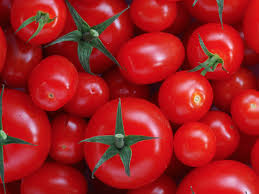
New Zealanders are being urged to once again ask their retailer if their tomatoes have been treated with radiation, as, according to this story, large volumes of unlabelled irradiated Australian tomatoes hit local shelves.

tomato.irradiationThe story says currently there are tonnes of irradiated Australian tomatoes being imported into New Zealand vegetable markets and food retail outlets nationwide, according to Tomatoes New Zealand.

Food retailers and the hospitality sector are legally required to label or indicate where imported irradiated Australian tomatoes are sold or served. However many are unaware that they have a responsibility to their customers to label the produce as irradiated.

Alasdair MacLeod, Chair of Tomatoes New Zealand, said; “We are asking all food and hospitality retailers, including catering companies, to clearly label their irradiated produce at point of sale and on their menus to avoid any public confusion.”

“We are also urging people to register their complaints with the Ministry for Primary Industries via their hotline number and/or email should they believe irradiated Australian tomatoes are being sold without any labeling or signage provided.”

Tomatoes New Zealand is calling on those importing, selling or serving tomatoes to comply with the New Zealand Food Standards Code, which states all food that has been irradiated, or food that contains irradiated ingredients or components, be labeled or have a label displayed on or close to it stating that it has been treated with ionizing radiation.

Unlike Australia, New Zealand does not have mandatory country of origin labeling of fresh produce – so unless retailers clearly label irradiated Australian tomatoes, consumers won’t be able to distinguish irradiated tomatoes from New Zealand tomatoes which are never irradiated.

New Zealand already accepts a number of irradiated tropical fruit from Australia that we don’t grow in New Zealand such as mango, papaya and custard apple. These fruits are required to have mandatory labelling.

Fonterra fined $150,000 for keeping quiet on botulism

Fonterra has been fined $150,000d by The New Zealand Markets Disciplinary Tribunal for breaching continuous disclosure requirements to the NZX during the dairy manufacturer and exporter’s botulism false alarm last August.

fonterra.aug.13Auckland-based Fonterra undertook a world wide recall after it quarantined several batches of whey protein concentrate last August on concern it was contaminated with a potentially dangerous strain of Clostridium bacteria, capable of causing botulism. The strain was ultimately shown to be harmless.

The dairy company first knew of the potential contamination on Wednesday July 31 but did not make the information public or inform the market until just after midnight on Friday August 2. Options in New Zealand’s largest company trade on the Fonterra Shareholders’ Market and allow dairy farmers to trade shares between themselves in a private market, while units in the Fonterra Shareholders’ Fund give ordinary investors access to the dividend stream.

Fonterra Shareholders’ Fund units closed at $7.12 on Friday August 2, before the company announced the contamination. When the market reopened on Monday August 5 the units traded at an intraday low of $6.50 and closed at $6.86, the tribunal said. A similar reaction was observed on the private dairy farmers’ share trading market.

It’s a culture thing; New Zealand restaurant’s Filipino delicacy prompts SPCA probe

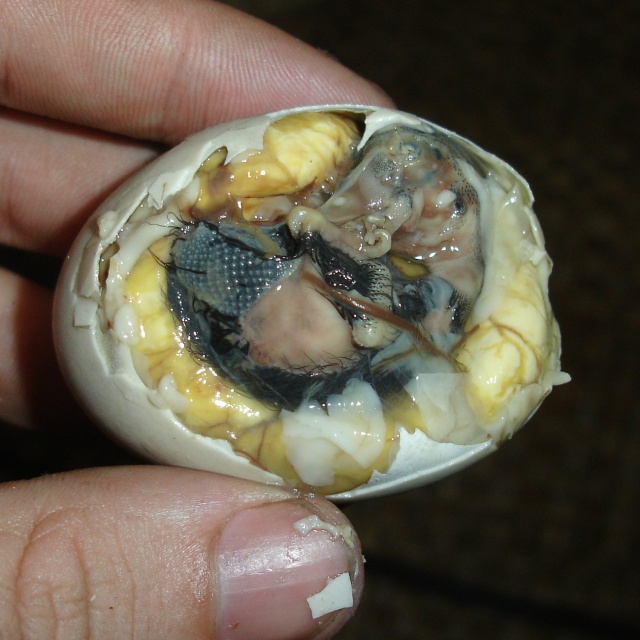
Before Viagra, there was duck embryos, with feathers and a beak, and considered a Filipino delicacy believed to boost male fertility and libido.

An Auckland, New Zealand restaurant serving duck eggs with developing embryo has been cleared by the SPCA for possible cruelty against unhatched ducklings but its suppliers are now being investigated.

balutThe society said it received complaints following a Herald report that Island Joe’s Hawaiian Barbecue in Onehunga had put balut on the menu, and an investigator was sent to the premises.

The restaurant said that with the ongoing investigation, it would be serving balut as just a “blackboard special”.

Ms Kalin said the restaurant had not breached the Animal Welfare Act and the society was satisfied with the practices employed there, and was now turning its investigation to the suppliers. The fertilized duck egg is boiled and served hot, and diners consume the broth, yolk and young chick with salt or a chilli, garlic and vinegar sauce.

“The eggs arrive at the restaurant in a chilled state and are placed in the refrigerator and accordingly the embryos would not be alive at the time of boiling,” she said.

Island Joe’s owner Cecilia Tan said staff had also received calls accusing the restaurant of being “cruel” and “heartless”, with some using profanities. She said the SPCA investigator had thought that “maybe we drop the egg with a live duck squirming in boiling water”.

Massey University sociologist Paul Spoonley, who has done studies on food introduced by migrant communities, believed the complaints were due to “a lack of cultural understanding”.

Cafe hygiene link to councilors’ norovirus in NZ

Poor hygiene may have been responsible for a norovirus outbreak that knocked out seven Hutt city councillors.

Four property developers also contracted the severe stomach bug after being invited to the council-hosted event at Reka Cafe, in the Dowse Art Museum on April 28.

nepotism-bushOne of Reka’s cooks started to feel sick while working but did not display stomach bug symptoms until the next day, Annette Nesdale, of Regional Public Health, said.

Wait, councilors meeting with property developers? I may barf.