
Spices are something people, food service and even manufacturers may pooh-pooh when considering the risks of microbial contamination. Black pepper, white 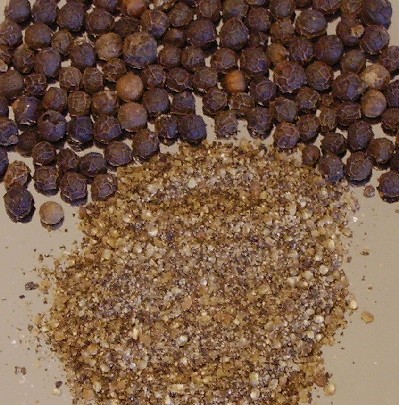 pepper, red pepper, rainbow pepper, curry, anise, fennel, turmeric, broccoli powder and mixtures. Don’t get me started on herbs. Van Doren et al. review spice related outbreaks in Food Microbiology; abstract below:
This review identified fourteen reported illness outbreaks attributed to consumption of pathogen-contaminated spice during the period 1973-2010. Countries reporting outbreaks included Canada, Denmark, England and Wales, France, Germany, New Zealand, Norway, Serbia, and the United States. Together, these outbreaks resulted in 1,946 reported human illnesses, 128 hospitalizations and two deaths. Infants/children were the primary population segments impacted by 36% (5/14) of spice-attributed outbreaks. Four outbreaks were associated with multiple organisms. Salmonella enterica subspecies enterica was identified as the causative agent in 71% (10/14) of outbreaks, accounting for 87% of reported illnesses.Bacillus spp. was identified as the causative agent in 29% (4/10) of outbreaks, accounting for 13% of illnesses. 71% (10/14) of outbreaks were associated with spices classified as fruits or seeds of the source plant. Consumption of ready-to-eat foods prepared with spices applied after the final food manufacturing pathogen reduction step accounted for 70% of illnesses. Pathogen growth in spiced food is suspected to have played a role in some outbreaks, but it was not likely a contributing factor in three of the largerSalmonella outbreaks, which involved low-moisture foods. Root causes of  spice contamination included contributions from both early and late stages of the farm-to-table continuum.
Food MicrobiologyJane M. Van Doren, Karen P. Neil, Mickey Parish, Laura
Gieraltowski, L. Gould hannah, Kathy L. Gombas.
.jpg)
.jpg) produce company A salami products.
produce company A salami products. .jpg) prompted WADOH to collect data on items purchased by patients based on membership card records. Information gathered from these cards, with patient permission, helped determine the brand name and purchase dates of implicated products. Based on this information, USDA-FSIS traced back lots of ingredients, which helped FDA identify lots of black and red pepper used to produce the contaminated salami products. As this investigation demonstrates, membership and shopper cards can provide critical information to quickly identify potentially contaminated foods and should be considered for use in future foodborne disease outbreak investigations.
prompted WADOH to collect data on items purchased by patients based on membership card records. Information gathered from these cards, with patient permission, helped determine the brand name and purchase dates of implicated products. Based on this information, USDA-FSIS traced back lots of ingredients, which helped FDA identify lots of black and red pepper used to produce the contaminated salami products. As this investigation demonstrates, membership and shopper cards can provide critical information to quickly identify potentially contaminated foods and should be considered for use in future foodborne disease outbreak investigations.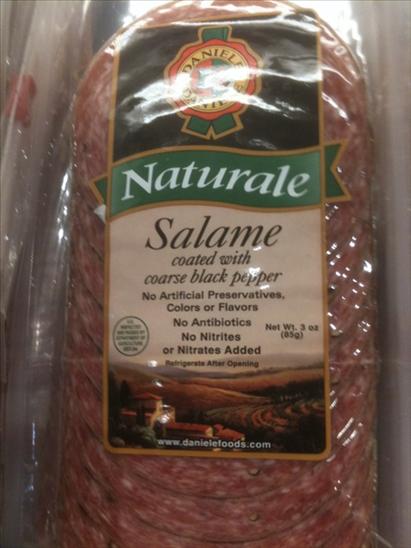 Five days after Daniele’s initial recall of all black-pepper coated salami products on January 23/10, tests by the Rhode Island Department of Health found the outbreak strain of Salmonella Montevideo in an open container of black pepper used to coat salami products. On Jan. 29/10, I found a 3oz. package of the shredded product on store shelves in Minneapolis. Daniele had not listed this product on their initial recall list. For some reason, Daniele Inc. had decided that this product was still safe to sell to adults and children even after every other black-pepper coated product was recalled and a test of the company’s black pepper returned positive for Salmonella.
 Henke (left, exactly as shown) is an avid fan of foodborne disease epidemiology and food safety, and spends most of his free time angering his friends with his interest in food production and careful scrutiny of food safety practices.
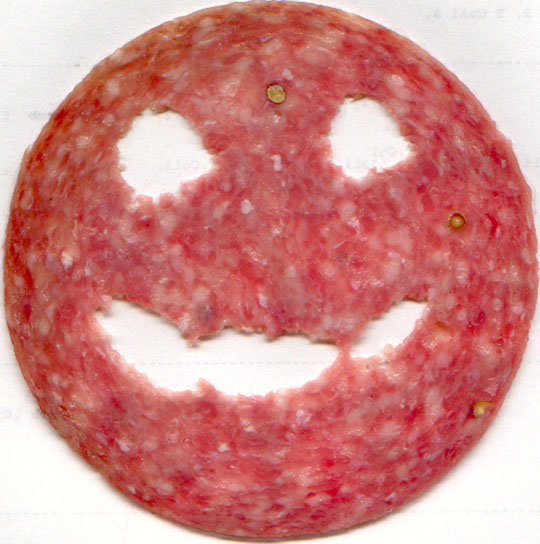 sickened by Salmonella in imported black pepper used in the preparation of salami and other types of Italian sausage made by a Rhode Island company.
 Last month, officials at the Rhode Island Department of Health said they thought the contamination was caused by tainted black pepper that was used to coat the salami. Tests showed that the same strain of Salmonella involved in the outbreak was present in two open containers of black pepper at Daniele’s plant in Burrillville, R.I.