Feds inspect Pennsylvania farm linked to 2014 Listeria outbreak

Dan Nephin of Lancaster Online reports that federal food inspectors, armed with a court order and escorted by police, inspected a Lancaster County farm on Monday linked in March to tainted milk said to be responsible for a person’s death.

colbert.raw.milkAmos Miller, who owns Miller’s Organic Farm, had denied inspectors access in April, but relented in the face of a court order from a federal judge.

U.S. District Judge Edward G. Smith issued the order June 30 after the U.S. Department of Agriculture asked the court to enforce its inspection efforts.

“I didn’t want to give them the green light,” Miller said Monday afternoon at the farm.

Two meat inspectors, accompanied by an Upper Leacock Township police officer, inspected the farm for about three hours, he said. The inspectors had left by around noon.

The inspectors didn’t take anything and allowed the farm to continue operating, he said.

The USDA was unable to provide information about Monday’s inspection.

The farm sells a range of foods, from raw milk from several animals — including camels — to fermented vegetables to meat from grass-fed animals.

Miller described his roughly 2,000 customers across the country as a private membership association that does not sell to the public. As such, he said, he doesn’t believe the farm is subject to federal inspections.

“We don’t want to be against the government. We’re just concerned that they’re taking our freedoms away,” Miller said.

In court documents filed last month opposing the inspection, Miller said his membership “mistrust the status of the regulatory framework of the federal government and believe that said framework causes more harm to American citizens than good.”

He also argued the private membership association is a form of “expressive association” subject to First Amendment protections.

According to the Centers for Disease Control and Prevention posting, the farm was the likely source of raw chocolate milk responsible for a death in Florida and an illness in California.

The death and illness occurred in 2014, but was only linked to Miller’s in January, after the U.S. Food and Drug Administration notified the agency that genome sequencing of listeria from Miller’s raw chocolate milk was closely related to listeria from the two people, according to the agency.

Do you wanna take the risk? Do ya? Raw goat’s milk recalled for E. coli

Anneli Fogt of the Vashon-Maury Island Beachcomber reports Vashon’s Burton Hill Farm & Dairy is voluntarily recalling its Grade A Raw Goat Milk due to concerns it could be contaminated with E. coli, Washington State Department of Health officials reported.

Vashon's Burton Hill Farm & Dairy
According to the recall notice, the toxin-producing E. coli was found in a milk sample from a batch of goat milk that was not sold to the public. However, it is possible that subsequent batches could contain the harmful bacteria, hence the voluntary recall.

Burton Hill Farm owner Collin Medeiros said on Friday that he has tracked down and informed via phone or email all Vashon customers potentially affected by the recall.

“It’s pretty devastating and really shocking,” Medeiros said. “We will not be selling raw milk until the source and cause of the contamination can be found and completely removed. We are working with Washington State Department of Agriculture and private consultants to do this.”

He said that the problem is likely the farm’s bulk tank where the milk is held, and can be “remedied quickly.”

As of Friday, Medeiros was not aware of any illnesses in connection with the farm’s recalled milk.

Medeiros said the recall has been “a wake-up call” that has him rethinking the farm’s selling of raw milk, which inherently comes with risks and a warning label about the potential for bacterial growth.

“Raw milk is an unstable product. It’s very nutritious for humans, but that also makes it a perfect breeding ground for other living things,” he said. “There is calculated risk for both the consumer and producer, so the question is, do we want to take this risk?”

NZ: Tb testing important for food safety

Dr Paul Livingstone, research leader for TBfree New Zealand, writes in this op-ed that the small but rising number of New Zealanders drinking unpasteurised milk supplied directly from dairy herds need to have as much protection from being infected with bovine Tb as it is possible to provide.

symptoms-for-tuberculosis-in-cattleWhen an animal in the Mt Cargill area reacted positive to a Tb test in May, the Ministry for Primary Industries – New Zealand’s food safety regulator – halted the supply of raw milk.

The ministry made the decision to prevent raw milk sales from Tb-infected dairy herds until they had tested free from Tb for five years. MPI’s decision was based on historical data that showed there is a very low risk of a previously infected herd being found with latent infection up to five years after being Tb-free.

The TBfree New Zealand programme run by Ospri uses Tb testing, animal movement and possum control towards the goal of eradicating bovine Tb. It employs a small range of diagnostic tests to detect tuberculosis infection in our cattle herds.

All tests are based on measuring an animal’s immune response to tuberculin, which is a standardised protein extract derived from killed Tb bacteria (Mycobacterium bovis). In general, this response is measurably different between infected and non-infected animals.

Tuberculin tests can be applied directly to an animal with an injected skin test, or can be carried out in a laboratory using a blood sample taken from the animal.

The Tb skin test on average detects 85% of infected cattle. Thus, if there is one infected animal in a herd, there is an 85% chance that the herd will be found infected and subjected to further testing. If there are two infected cattle in a herd, then there is a 98% chance of detecting the herd as infected and subjecting it to further Tb testing.

Once a herd is infected, it is subject to a regime of increased skin and blood testing to clear infection from the herd as fast as possible. This has proven to be very effective. About 60% of infected herds are clear of infection within two Tb tests and 95% of herds clear infection within five Tb tests. However, in rare instances, a cow may be infected with Tb, yet appear clinically normal and not respond to any of the Tb tests.

Following a chronic stressful event, usually associated with a combination of events such as feed shortage or introduction of new herd mates during late pregnancy or early lactation, a latently infected animal may quickly convert into one that becomes a major shedder of Tb bacteria. This can happen via a number of routes including the udder, leading to Tb infected milk.

Hence the importance of requiring five years of testing freedom before allowing raw milk sales, to guard against such an event.

The Tb testing programme for cattle in New Zealand is based on long and thorough research, proven in the field. In any one year, a large proportion of the national cattle population (4.41million animals in 2014-15) is skin tested for Tb.

During the decade to 2013-14, about 52,850,000 cattle were Tb tested nationally and 52,840,000 of these gave negative test results. That is a 99.98% accuracy (what we term “specificity”) rate.

Of about 9650 cattle that were taken nationally as Tb reactors out of that nearly 53million, 2630 showed gross lesions of Tb at slaughter. A further proportion of those not showing gross lesions (anywhere between 10% and 20%) will be infected but not showing visible lesions, due to early stages of infection. Such gross lesion rates are generally within the ranges seen in overseas countries.

There is high confidence that the testing regime is working.

New Zealand is getting into the latter stages of its Tb eradication programme, where a more intensive approach to eradicating Tb in herds is required to clear infection quickly. It is, therefore, not surprising in the latter stages of a programme that lesion rates in Tb reactors fall as the overall amount of Tb in the population is reducing.

As part of the Tb-free programme we are constantly looking at ways to improve how we our work, and Tb testing is no exception.

Research is under way into a new tuberculin used in the reactor that is much more specific at targeting bovine Tb. The research is now 18 months into a trial and is looking promising in helping to reduce the false positive incidence.

Dad says ‘I don’t want to drag this out’ Raw milk probable cause of Australian 3-year-old’s death

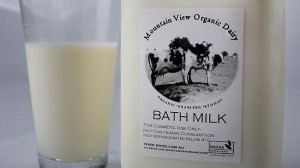
In late 2014, three children in the Australian state of Victoria developed hemolytic uremic syndrome linked to Shiga-toxin toxin producing E. coli in unpasteurized bath milk produced by Mountain View farm. One child died, and two others developed cryptosporidiosis.

mountain.view.dairyThe Victorian government quickly banned the sale of so-called bath milk, which although labeled as not fit for human consumption, was a widely recognized way for Australian consumers to access raw milk.

What followed was a despicable whisper campaign that the child who died had an underlying medical condition, it wasn’t Shiga-toxin producing E. coli (STEC), farmers were losing access to lucrative markets – anything but the basic and sometimes deadly biology of STECs and everything involving fantasy and fairytales.

Today, a coroner heard unpasteurised milk was the probable cause of death of a three-year-old Victorian child who had no previous medical issues.

The toddler’s father told police he had given his son small amounts of Mountain View Organic Bath Milk on rare occasions in the months leading up to his October 2014 death.

The Coroner’s Court yesterday heard a Department of Health investigation, a forensic pathologist’s report and a subsequent outbreak of illnesses among four other children who drank the raw milk had all established its consumption as being the likely cause of the tragedy.

The child’s death prompted a health warning and led the State Government to introduce tough laws making unpasteurised milk sold in Victoria undrinkable.

After hearing details of the investigations Coroner Audrey Jamieson yesterday said she was satisfied issues that would have warranted a full hearing into the death had already been dealt with and she could make a determination on the balance of probabilities.

But after lawyer Rose Raniolo representing Mountain View Farm said she wanted to review a hospital form in which the boy’s parents listed everything he had consumed, Coroner Jamieson granted her seven days to put forward any additional information before making a final decision on whether a public hearing was required.

colbert.raw_.milk_3-300x212-300x212Coroner’s solicitor Rebecca Cohen told the court the three-year-old had been a healthy child until suffering gasto symptoms on September 30, 2014, and being admitted to Frankston Hospital four days later.

He was transferred to Monash Medical Centre on October 6, where it was found his entire large bowel was infected. The boy passed away shortly after.

Ms Cohen told the court a Victorian Institute of Forensic Medicine autopsy was consistent with tests taken during the toddler’s medical treatment, finding the same genetic traces in his bowel that lead to hemolytic uraemic syndrome (HUS), a rare and dangerous infection stemming from E. coli bacteria which can be present in raw milk.

In the weeks following the death the Department ordered tests on samples from 39 bottles of Mountain View Dairy milk and found that shiga toxin which produces E. coli bacteria was cultured in one sample.

The department’s investigation stated that although HUS infections were usually an “exceptionally rare occurrence” it was dealing with two non-fatal cases at the same time as the death — and the only link was that all three children had consumed the same unpasteurised milk.

Two cases of cryptosporidium also reported among young raw milk drinkers in the same area within a 10 days of two HUS cases reinforced the pathology evidence, Ms Cohen said.

Ms Cohen emphasised that at no time was there any suggestion Mountain View Farm breached regulations, and no prosecution had even been considered against the producer.

She said that during a police investigation the toddler’s father told officers he purchased Mountain View Organic Bath Milk in the months before his son became ill.

“(The father) understood the milk was labelled not to be drunk, but he noted it looked like every other milk container,” Ms Cohen said.

“Due to his intolerance to dairy, (the child) would only drink very small amounts of the unpasteurised milk, and only on odd occasions. “(The father) said it only amounted one-eigth of a sippy cup, and only twice per month at a maximum.”

Ms Raniolo said she disagreed with a recommendation for the coroner to rule unpasteurised milk as the probable cause of the death, stating the child drank it too rarely for it to be considered as the cause.

After a separate review cleared the hospitals’ of any concerns over the treatment of the child, the toddler’s emotional father told the coroner he now wanted the probes to be finished.

“To me it was a big deal watching everything that unfolded, and I do still struggle with the idea that it was treated as seriously as possible. But, I understand it was not likely to have changed the outcome. I don’t want to get involved in this any further, I don’t want to drag this out.”

 

Listeria and raw milk cheese: A risk assessment involving sheep

Semisoft cheese made from raw sheep’s milk is traditionally and economically important in southern Europe. However, raw milk cheese is also a known vehicle of human listeriosis and contamination of sheep cheese with Listeria monocytogenes has been reported.

sheep.milk.cheeseIn the present study, we have developed and applied a quantitative risk assessment model, based on available evidence and challenge testing, to estimate risk of invasive listeriosis due to consumption of an artisanal sheep cheese made with raw milk collected from a single flock in central Italy.

In the model, contamination of milk may originate from the farm environment or from mastitic animals, with potential growth of the pathogen in bulk milk and during cheese ripening. Based on the 48-day challenge test of a local semisoft raw sheep’s milk cheese we found limited growth only during the initial phase of ripening (24 hours) and no growth or limited decline during the following ripening period. In our simulation, in the baseline scenario, 2.2% of cheese servings are estimated to have at least 1 colony forming unit (CFU) per gram. Of these, 15.1% would be above the current E.U. limit of 100 CFU/g (5.2% would exceed 1,000 CFU/g). Risk of invasive listeriosis per random serving is estimated in the 10−12 range (mean) for healthy adults, and in the 10−10 range (mean) for vulnerable populations.

When small flocks (10–36 animals) are combined with the presence of a sheep with undetected subclinical mastitis, risk of listeriosis increases and such flocks may represent a public health risk.

Risk assessment of human listeriosis from semisoft cheeses made from raw sheep’s milk in Lazio and Tuscany

Roberto Condoleo, Ziad Mezher, Selene Marozzi, Antonella Guzzon, Roberto Fischetti, Matteo Senese, Stefania Sette, Luca Bucchini

Risk Analysis, June 2016, doi:10.1111/risa.12649

http://onlinelibrary.wiley.com/doi/10.1111/risa.12649/abstract;jsessionid=519D74728E4A34E1CE300B856B99D54B.f04t04

Maybe public health should crowd fund: More than $4000 has been raised in NZ to save cows after TB found

A Givealitte page has been set up by a group called Friends of Holy Cow, the farm run by Mr MacNeille at Reynoldstown in Port Chalmers.

bovine.tbThe group says the farming family need financial support to keep the herd “while they work through the options”.

The friends say the cows cost about $115 a day to feed.

“Holy Cow have been an amazing supplier to our community for many years, and we want to support them through this transition,” the group says.

So far $4230 has been pledged by nearly 70 donors on the page called ‘Keep Holy Cow going’.

The raw milk operation remains shut down and as things stand the cows are due to be slaughtered by the end of the week.

“I spend, let’s just say … 60 hours a week with these girls – they are lovely hard-working, nice cows,” Mr MacNeille said.

“It’s the worst thing in the world.”

The farmer sold raw milk from his farmgate until the Ministry for Primary Industries issued a notice of direction to cease supplying and selling raw milk last week.

The heifer, which was not part of the milking herd, tested positive for bovine tuberculosis after routine testing by Ospri.

The industry good body notified the ministry and the herd’s Tb-free status was suspended, Ministry for Primary Industries director, animals and animal products, Mat Stone said.

Sytone added that while the ministry sympathises with the farmer, the most important thing was protecting customers from risks.

Australian state regulator defends decision to approve unpasteurized cold-pressed milk

The New South Wales Food Authority has defended its decision to approve the sale of an unpasteurised milk product, saying the company involved was subject to a two year, rigorous approval process.

cold.pressed.milkIt is being marketed as “cold pressed raw milk” and leading experts have expressed concern about a lack of research proving the cold pressure process was as effective as traditional pasteurisation.

But CEO of the New South Wales Food Authority Dr Lisa Szabo said the product had been approved only after two years of rigorous consultation.

“We asked them ‘well what are the hazards that they’re trying to control in the milk’, and this company had a really strong and comprehensive list of the microbiological hazards that they wanted to control,” Dr Szabo said.

Dr Szabo worked as a research scientist with the CSIRO and said “for five years of my time there I spent doing research on high pressure, and in particular its effect on micro-organisms.

“So I have a great deal of confidence that this particular processing technology can inactivate micro-organisms.”

High pressure processing has been used for other products for a long time and Dr Nidhi Bansal from the University of Queensland’s School of Agriculture and Food Sciences said it has been quite successful.

“Obviously it hasn’t been commercialised for milk yet. So there could be some concern about it, but as long as the company can prove that it is microbiologically safe then I don’t see an issue with that,” Dr Bansal said.

Saxon Joye, the owner of the company approved to sell unpasteurised milk and said his product was not quite “raw milk,” it had just not gone through the traditional pasteurisation process, where milk is exposed to high temperatures.

“We take our raw milk, and we put it under our cold pressure. If there’s any harmful pathogens or bacteria, we remove it during that process,” he said.

“Good herd management, hygienic milking techniques and the cold pressure method have meant we can put 100 per cent safe, raw milk onto supermarket shelves,” said Mr Joye.

“The bottles of milk are placed under enormous water pressure, squashed in about 15 per cent, to remove the harmful micro-organisms.”

Professor Peter Collignon, a leading infectious disease physician and microbiologist, said he was concerned about the lack of research showing the efficacy of cold pressure.

“I do worry this is a marketing exercise for raw milk but without the science to show the process is anywhere near as good as pasteurisation,” he said.

“The [data and research] that shows [cold-pressure is just as good as pasteurisation] needs to be robust and available for all to see, including the public, and needs independent verification.”

The Food Authority’s spokeswoman did not directly answer questions about releasing data to support its decision to approve the new method.

Pasteurization works, and Salmonella is not a magical ingredient of raw milk

My version of the 90-10 rule: 90 per cent of time is spent on 10 per cent of participants, whether it’s hockey parents, graduate students, or public health.

napoleon.raw.milkSo once again, raw milk and cream produced by a Fresno County-based dairy company were recalled Monday due to salmonella, the California Department of Food and Agriculture said.

Salmonella was detected by the CDFA in Organic Pastures Dairy’s Raw Heavy Cream, Raw Whole Milk and Raw Skim Milk with the “USE BY” date of June 1, 2016.

The dairy products should be immediately pulled from retail shelves and consumers are urged to throw out any products in their homes, the CDFA said.

The salmonella bacteria was found during a follow-up test to an earlier recall. On May 9, Organic Pastures Dairy’s products with “USE BY” date May 18, 2016, were recalled also due to salmonella.

Straight outta Compton: So rad it’s selling raw milk

A Compton resident was cited for selling unpasteurized milk mixed with alcohol over the weekend, authorities said. Los Angeles County Sheriff’s deputies conducted patrol checks on Jan. 21 along the 400 blocks of West Bennett and West Caldwell streets, as well as the 600 block of West Raymond Street,…

straight_outta_comptonA Compton resident was cited for selling unpasteurized milk mixed with alcohol over the weekend, authorities said.

On Saturday, deputies conducted another check and found about 40 people, including children, under a makeshift carport who appeared to be drinking milk from Styrofoam cups.

There were several cows and goats at the site but no pasteurization equipment, and a table with sugar and chocolate to flavor the milk, according to the Sheriff’s Department.

Doering: Label raw milk cheese

Ronald L. Doering, BA, LL.B. MA, LL.D., a past president of the Canadian Food Inspection Agency and now counsel in the Ottawa offices of Gowling WLG, writes in his Food in Canada column that the science keeps piling up.

ron.doeringIt is not safe to consume raw milk and its products. The U.S. Food and Drug Administration (FDA) recently announced studies that show again that pathogens from raw milk including tuberculosis, diphtheria, typhoid, Salmonella, Listeria, and many other bacterial infections make it unsafe for human consumption. A comprehensive study was released last month by Belgian authorities that concluded that “raw milk poses a realistic health threat due to possible contamination with human pathogens.” Interestingly, the same study found that there was “no substantial change in the nutritional value of raw milk or other benefits associated with raw milk consumption,” but that’s a story for another day. And, of course, the unfortunate proof keeps coming, with hundreds of outbreaks, many deaths and thousands of illnesses just in the last few years due to raw milk and raw milk cheese.

Just because raw milk and raw milk cheese are not as safe as if they were pasteurized doesn’t necessarily mean that they should be banned. That is why regulations around the world are so inconsistent. The sale of raw milk is illegal in Scotland, but legal in England, Wales and Northern Ireland (indeed our future king will drink nothing else, a fact that could be used by both sides of the debate!). South of the border the states are roughly evenly divided, but interstate commerce is banned. Raw milk and most raw milk cheeses are banned in Australia but legal in New Zealand. In Canada, the sale of raw milk directly to consumers is prohibited by a variety of provincial provisions and it is a federal crime to sell unpasteurized milk under B.08.002.2(1) of the Food and Drug Regulations.

Canada continues to allow the sale of raw milk cheeses aged over 60 days, but provides this clear warning: “Health Canada’s ongoing advice to pregnant women, children, older adults and people with a weakened immune system is to avoid eating cheese made from raw milk as it does present a higher risk of foodborne illness than pasteurized milk cheeses. If consumers are unsure whether a cheese is made from pasteurized milk, they should check the label or ask the retailer.”

raw-milk-cheeseWhen I first wrote about this issue three years ago I pointed out the regulatory absurdity of the last sentence in the Health Canada (HC) warning. There is no requirement to label and most retailers have no idea if the cheese is made from raw milk, and have no means to determine if it is. At the time I received an informal response to my article from a senior official advising me that before moving to mandatory labelling, HC was going to partner with FDA to do a risk assessment of raw milk cheese, focusing specifically on the risk of illness from Listeria monocytogenes. The results of this risk assessment were released last summer: “The risk of listeriosis from the consumption of soft-ripened cheese made from raw milk is substantially larger than that for consumption of soft-ripened cheese made from pasteurized milk and the 60-day aging regulation actually increases the risk of listeriosis for consumption of raw milk cheeses.” The risk was found to be from 50 to 160 times greater. This resulted in HC issuing a Voluntary Guidance to manufacturers that included suggestions to industry to do regular testing of both the raw milk and the cheese and that “Manufacturers should consider labelling their products with the words ‘made from raw or unpasteurized milk’ on the front panel display and/or in the list of the ingredients.”

The Guidance document seeks feedback from stakeholders before developing new “policy and/or regulatory options.” Here’s mine, again: stop the bureaucratic dithering and do what the Americans, Brits and Europeans have already done – make it mandatory for all manufacturers to label their raw milk cheeses. It’s useless, as they say, to try to reason someone out of something they didn’t reason themselves into, so if we can’t stop people from consuming raw milk and its products, then let’s at least ensure that it is not consumed unknowingly particularly by children, the elderly or expectant mothers. HC now requires unpasteurized juice to be labelled. Who’s against mandatory labelling of raw milk cheese?