
New cheese alert after child’s E. coli death

A three-year-old girl from Dunbartonshire who died from E. coli O157 was among 20 confirmed cases that emerged in July and linked to Dunsyre Blue cheese made by South Lanarkshire-based Errington Cheese.
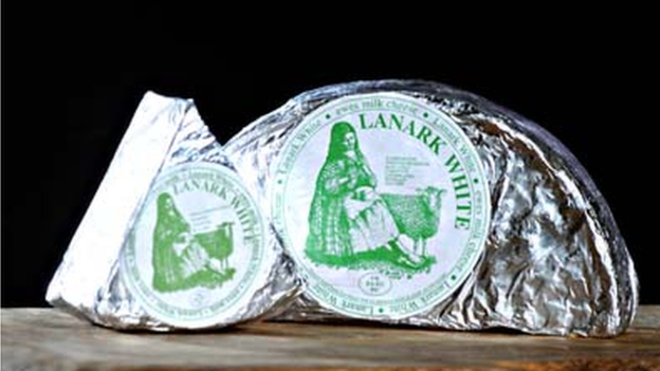
e-coli-o157-cheeseOn Saturday, Food Standards Scotland ordered the withdrawal from sale of batch G14 of Lanark White (unpasteurized) ewe milk cheese, adding, “A sample from a batch of Lanark White submitted for testing by South Lanarkshire Council has tested positive for E. coli O157. Although this organism may not carry shiga toxins, it is associated with human disease in the UK, so this cheese is a potential risk to health. FSS has issued a FAFA [Food Alert for Action] calling for this product to be immediately recalled from sale.”

The order to withdraw the cheese from sale was made after Errington refused to issue its own voluntary recall.

The company said the cheese had been on the market for three weeks with no reported cases of illness.

In a statement on its website, it said: “When we were told of the presumptive E. coli O157 result we immediately consulted experts in dairy microbiology.

“The experts told us they were confused and concerned by the testing methodology adopted by the laboratory.

“We have given careful consideration to this and to the fact that the cheese has been on the market for three weeks now with absolutely no reported incidence of illness.

“We have arranged for the sample of the same cheese tested by the authorities to be tested and the results will be ready on Monday when we will review the situation.”

Health Protection Scotland previously said that epidemiological investigations had “identified Dunsyre Blue cheese as the most likely cause of the outbreak”.

It added: “Despite extensive investigation, including looking for other possible food sources, no other link to a majority of cases could be established.”

Errington Cheese disputed the link, maintaining there was no conclusive evidence linking its products to the outbreak.

In a statement on its website last month it said that testing had shown it to be “completely clear of E. coli O157.”

Professor Hugh Pennington, the country’s leading expert on E. coli, told the Herald Scotland it could be difficult to identify it in any product suspected of causing food poisoning as by the time the illness comes to light, the food is usually all consumed or thrown away.

“Even if some of the batch (of food) is available for testing the bug might not be evenly distributed through a whole product, and so you might test part of the product that has been left or not been eaten yet and not find it – that doesn’t prove it wasn’t there in the bit that has been eaten,” he said.

“Scientifically it is sometimes quite complicated to come to a straightforward conclusion. The cheese manufacturers rightly say what is the evidence – but the regulatory authorities might never be able to come up with that.”

Joanna Blythman, investigative food journalist and the Sunday Herald’s food critic, said she believed there was a prejudice in Scotland against raw milk products, adding, “The (Dunsyre Blue) case puts a chill round everyone who wants to make a small scale artisan food. Meanwhile, the real prime suspects for large scale food poisoning are our industrial food producers.”

Stick to journalism. Illness per meal and type of food consumer and processing technique would have to be factored into any comparison of one food and artisan products.
Pathogens in raw sheep’s milk cheese

Italy is one of the main producers and exporters of cheese made from unpasteurized sheep milk. Since raw milk and its derived products are known sources of human infections, cheese produced from raw sheep milk could pose a microbiological threat to public health. Hence, the objectives of the study were: to characterize the potential risk of the presence of pathogens Escherichia coli O157, Listeria monocytogenes, and Salmonella in raw ovine milk destined for cheese production obtained from all the sheep farms (n = 24) in the Marches region (Central Italy) that directly transform raw milk into cheeses and to evaluate the equivalence between the analytical methods applied.

gene-wilder-sheepA three-step molecular method (simultaneous culture enrichment, species-specific DNA magnetic isolation, and multiplex real-time polymerase chain reaction) was used for milk (n = 143) and cheese (n = 5) analysis over a 3-year period. L. monocytogenes was not detected on any of the farms, while E. coli O157 was found on three farms, although only using the molecular method. Four farms tested positive for Salmonella spp., and Salmonella enterica subsp. diarizonae serovar 61:k:1,5,7 was isolated in one of those cases.

This information highlights the need to develop preventative measures to guarantee a high level of consumer safety for this specific product line, and the molecular method could be a time-saving and sensitive tool to be used in routine diagnosis.

Presence of Escherichia coli O157, Salmonella spp., and Listeria monocytogenes in raw ovine milk destined for cheese production and evaluation of the equivalence between the analytical methods applied

Foodborne Pathogens and Disease, ahead of print. doi:10.1089/fpd.2016.2159.

G Amagliani, A Petruzzelli, E Carloni, F Tonucci, M Foglini, E Micci, M Ricci, S di Lullo, L Rotundo, G Brandi

http://online.liebertpub.com/doi/abs/10.1089/fpd.2016.2159

Child dies from E. coli O157 in Scotland linked to blue cheese

Is there a way to mediate the values between protecting public health and protecting business?

dunshyre.blueMy suggestion would be the company stop asserting that testing found nothing – because that means shit – and Food Safety Scotland get the legal plug out of its ass and go public with whatever information they have.

So while the Scottish company at the centre of an E. coli O157 recall related to its raw milk Dunsyre blue cheese continues to say it’s innocent, and Food Standards Scotland isn’t talking, maybe this will help focus the participants on what matters.

A child has died following the outbreak of E. coli O157 in Scotland, one of 20 confirmed cases of infection – detected between 2 and 15 July – 11 of whom had received hospital treatment.

Health officials are investigating possible links to Dunsyre blue cheese, which is made with unpasteurised milk.

South Lanarkshire-based Errington Cheese, which makes Dunsyre blue, said last month that testing had shown it to be “completely clear of E. coli O157”.

Health Protection Scotland said that epidemiological investigations had “identified Dunsyre Blue cheese as the most likely cause of the outbreak”.

It added: “Despite extensive investigation, including looking for other possible food sources, no other link to a majority of cases could be established.”

Testing don’t prove shit.

Dr Alison Smith-Palmer, from Health Protection Scotland’s Incident Management Team (IMT), said: “On behalf of the IMT, I would like to take this opportunity to extend our deepest sympathies to the family of the child who has died.

“Our thoughts are with them at this time and we ask that their privacy be respected.

“All confirmed cases became unwell prior to the end of July. As there have been no new cases since then the IMT will now stand down and work to produce its final report.”

It is understood that the final report could take up to six months to produce.

In a statement issued last month on its website, Errington Cheese said its own tests had shown the product to be clear of the bug.

“All our testing, covering a period of almost six months from 21 March to date, is completely clear of E. coli O157,” the statement said.

“All authority testing is negative for E. coli O157. All customer testing for E. coli O157 is negative. All farm testing for E. coli O157 is negative.”

The statement added: “From what we can gather all cases had an onset of symptoms between 1st -15th July (2 week period).

“However, our cheese was available over a 8/9 week period.

“From this we conclude that the outbreak was more likely to have been caused by something with a shorter shelf-life or not by a food at all.”

9 sick: Salmonella outbreak linked to raw milk in Utah

Alex Stuckey of The Salt Lake Tribune reports nine people who drank raw milk from Heber Valley Milk in the past five months have contracted salmonella.

Heber Valley MilkThe Utah Department of Health on Tuesday said health officials currently are investigating the outbreak. A raw milk sample collected from the Wasatch County dairy last week tested positive for Salmonella Saintpaul. But a more recent sample showed no signs of the infection, so the dairy has resumed sales.

Grant Kohler, owner of the dairy, said he is working with the state Department of Agriculture and Food to determine the cause of the outbreak.

“We don’t know what the cause was and we’re not 100 percent sure that it’s our place,” Kohler said. “We will do whatever we need to do to make sure we’re selling a safe product.”

Epi works but needs to be stronger than ‘some people ate the cheese ’ Cheese firm in Scotland linked to E. coli outbreak threatens legal action

Victoria Weldon of Herald Scotland writes that a cheese firm at the centre of an E.coli outbreak is threatening legal action to prevent a ban on sales of its popular delicacy.

dunsyre.blue.cheeseDunsyre Blue, a mould ripened, gourmet cheese from Lanarkshire, is suspected of being the source of last month’s outbreak which struck down 16 people, hospitalising two.

Makers Errington Cheese were initially forced to recall two batches but claim they have now been ordered to halt all sales or face enforcement action.

It follows fresh tests carried out by FSS identifying genes that, while not confirmation of E.coli, indicate a “presumptive positive” result for naturally occurring bacteria strains.

Company founder Humphrey Errington claims the ban is “unprecedented” and argues that scientific evidence suggests presumptive positive results are notoriously inconclusive, adding, “The behaviour of FSS is monstrous. They blamed our cheese for this outbreak in the absence of any hard evidence and have refused to share with us details of their investigation. We had independent tests carried out two weeks ago that showed the suspected batches of cheese were not contaminated. We shared these results with FSS and they said nothing to restore public trust in the product.”

Errington said the ban on Dunsyre Blue, which accounts for about two-thirds of the company’s revenue, was a “catastrophe” and revealed that his lawyers will decide today whether or not to take legal action.

“I’m afraid I can see this ending up in the courts,” he told the Sunday Times.

Dunsyre Blue is characterised by its chunky blue-green moulds and is favoured by the Queen and Michelin-starred restaurants, including an eaterie run by renowned chef Andrew Fairlie at Gleneagles resort in Perthshire.

It became the focus of the health scare after 14 people in Scotland and two in England were struck down with E.coli in July, suffering stomach cramps, diarrhoea, vomiting and fever.

By the end of the month, health officials announced that Dunsyre Blue was the most likely cause of the outbreak.

However, questions are now being asked over the strength of evidence linking the cheese to the outbreak.

Hugh Pennington, professor of bacteriology at the University of Aberdeen, said: “I don’t know if Dunsyre Blue was the cause or not, but if you’re going to accuse Errington’s cheese of being the vector of the outbreak, then without further ado effectively destroy his business, then I think you should have stronger evidence than just ‘some people ate the cheese’.”

A spokesman for FSS said that all victims had been contaminated with the same strain of E.coli O157 and that “there is a strong link with certain batches [C22 and D14] of Dunsyre Blue cheese”.

He added: “Dunsyre Blue cheese remains the most likely source of this outbreak, with confirmed cases becoming unwell between July 2 and 15. It would not be appropriate to respond in more detail as investigations have not yet concluded.”

2 Detroit kids sick with E. coli from raw milk

Two metro Detroit children have been infected with E. coli, authorities said Friday.

Spew milkThe Michigan Department of Health and Human Services says the cause is unpasteurized milk. The separate cases have been reported in Oakland and Wayne counties.

Officials are now reminding residents of the potential risks associated with consuming raw milk.

“The public should be aware that raw milk and other unpasteurized dairy products have not been heat treated and, therefore, pose a potentially serious risk to human health,” said Dr. Eden Wells, chief medical executive for MDHHS.

Brucellosis linked to unpasteurized camel milk in Israel

Two patients have been hospitalized at Meir Medical and another patient at Schneider Hospital in Petach Tikvah, suffering from brucellosis linked to the consumption of unpasteurized camel milk produced by the dairy company “Genesis.”

camel.milkLast week, two children were hospitalized for mild to moderate condition at Ichilov Hospital, following a drinking camel’s milk marketed by the company. Following the admission office ordered destroyed four tons of camel milk.

Amir Shreibman (64) and his wife, Kfar Sava have suffered in recent weeks from a high fever. “Four months ago we started to drink camel’s milk of Genesis, after we were convinced that it had medicinal properties,” he said. “They told us that many people drink this milk, and everything was fine. We did not think anything would happen to us, even if unpasteurized milk.”

Brucellosis linked to raw milk cheese, coupled with Lyme disease, leaves woman bedridden

Reve Fisher of Opposing Views writes a vacation in Greece may have been the factor that left an English woman in debilitating pain.

brucellosis.cheeseWhile in Kos, Greece, with her family in 2013, Sam Philpott ate a “significant amount” of unpasteurized goat cheese in sandwiches, on pizzas, and as part of salads.

A few weeks later, she experienced a number of troubling symptoms, such as constant vomiting and nausea, migraines, intense weakness, fevers, exhaustion, and horrific pain. Three years later, she is barely able to walk.

“Who knew that [unpasteurized] cheese; that is delicious and has brought me much momentary happiness, could cause the mind numbing and wanting to end my life type of pain that I have been suffering with,” she said, as reported by The Mirror. “With each mouthful, to my unfortunate complete lack of knowledge and utter surprise, I was ingesting the bacteria that has led to my being bedridden.”

Sam is receiving intravenous therapy treatment at Sponaugle Wellness Institute in Oldsmar, Florida, a facility with an “incredible” success rate for treating patients with Lyme disease, as said on the family’s Go Fund Me page.

However, it is recommended that patients with Lyme disease be diagnosed within six months for the clinic’s regular treatment to be effective. The 22-year-old has been struggling with health ailments for six years.

In 2010, she was bitten by a tick while in Weimar, California, and developed intense joint pain, nausea, anxiety, depression, and poor concentration afterwards. By 2012, she needed a walking frame. Her 51-year-old mother became her full-time caregiver.

“At the clinic, they have said she is one of the worst patients they have seen, in terms of how far her illness has progressed,” said Joe Philpott, Sam’s 24-year-old brother. “It’s a kick in the teeth, but she has faith they’ll be able to help. She just wants to go back to studying and get her life back.”

Sam is receiving medication for both Brucellosis and Lyme disease, as her symptoms match both conditions.

“Doctors believe that she more than likely contracted brucellosis the summer she was in Kos – so they think it is linked to eating cheese,” Joe explained.

2 stricken with Listeria in France, unpasteurized cheese recalled

The Puillet cheese factory, located in Roanne, France withdrew its products from sale after detection of Listeria monocytogenes. Two people from the retirement home of Belmont-de-la-Loire have been infected.

camembert_franceListeria has been detected in Camembert cheese made from cow’s milk from a local dairy.

The presence of bacteria was detected after 2 people from the retirement home of Belmont-de-la-Loire, returned after a meal on June 23, 2016. The investigation by the DDPP Loire (Department for Protection of Populations) revealed that the infection had come from cheese consumed during the meal.

The manager of the dairy remains dubious: “We do not know where it comes from or how it could be contaminated. It’s been over 20 years since we started (the business) and it never happened before. It is really hurting our business.”

Human Milk 4 Human Babies: Australian mothers giving breast milk to strangers’ babies through Facebook

Kathryn Powley of the Herald Sun writes that hundreds of Victorian women have donated breast milk so other mums never have to feed their babies artificial formula.

breast.milk.donateBut health officials are warning of potential risks of informal breast milk sharing.

Cranbourne mum Kim Pennell bought a special deep freezer and started stocking it with donated breast milk ahead of the birth four weeks ago of daughter Lucy.

Little Lucy is thriving on other mother’s milk sourced through a 1450-member Victorian Facebook group that is part of an international movement called “Human Milk 4 Human Babies”.

Ms Pennell, 33, said many donors offered blood tests to show they were healthy. But she operated on trust.

“You go to the mum’s house, meet her, have a coffee and a good chat. They meet your baby, you meet their baby. If something doesn’t feel right, there’s no obligation to take the milk.”

The mum of four — Hannah-Kate, Zoe, Holly and Lucy — said she had struggled to breastfeed and believed formula had led to Zoe’s cow’s milk protein intolerance and sleep problems. Ms Pennell was some people found breast milk “icky” but it the natural food to give babies.

“Even though these babies aren’t breastfed, they’re getting human milk,” she said.

About six women had donated Lucy’s 100 litres, including Ballarat’s Natalie McGrath, 37, mum to Jessica, 4, and six-month-old Thomas.

Mrs McGrath said she had too much milk for Thomas and, believing breast milk was best, had provided about eight litres to four women.

She knew of women who had donated an impressive 60 litres.

“It’s mums helping mums. It’s a very supportive community out there,” she said.

She was happy to provide blood tests showing she was free of transmittable diseases.

But Department of Health and Human Services spokesman Tim Vainoras said mums accessing informal human milk donations should be aware of potential health risks.

“The milk can be affected by a range of factors,” he said, “including lifestyle habits, such as drinking alcohol and smoking, personal hygiene, as well as correct storage and transportation.”

He said viruses and bacteria could be transmitted through unpasteurised breast milk and there was no guarantee that donated product was safe and suitable for consumption.

Mr Vainora said Mercy Health had a breast milk bank that provided pasteurised donor human milk for their hospitalised sick and premature babies.