
Rodeos can be risky — and not just for riders.
As reported by researchers from Utah and the U.S. Centers for Disease Control, in summer 2009, the Utah Department of Health investigated an outbreak of Shiga-toxigenic Escherichia coli (STEC) O157:H7 (O157) illness associated with attendance at multiple rodeos.
Patients were interviewed regarding exposures during the week before illness onset. A ground beef traceback investigation was performed. Ground beef samples from patient homes and a grocery store were tested for STEC O157. Rodeo managers were interviewed 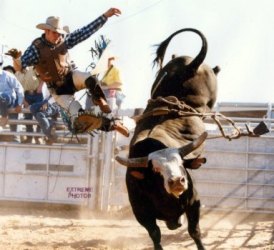 regarding food vendors present and cattle used at the rodeos. Environmental samples were collected from rodeo grounds. Two-enzyme pulsed-field gel electrophoresis (PFGE) and multiple-locus variable-number tandem repeat analysis (MLVA) were performed on isolates.
Fourteen patients with primary STEC O157 illness were reported in this outbreak. Isolates from all patients were indistinguishable by PFGE. Isolates from nine patients had identical MLVA patterns (main outbreak strain), and five had minor differences. Thirteen (93%) patients reported ground beef consumption during the week before illness onset. Results of the ground beef traceback investigation and ground beef sampling were negative. Of 12 primary patients asked specifically about rodeo attendance, all reported having attended a rodeo during the week before illness onset; four rodeos were mentioned. All four rodeos had used bulls from the same cattle supplier. An isolate of STEC O157 identified from a dirt sample collected from the bullpens of one of the attended rodeos was indistinguishable by PFGE and MLVA from the main outbreak strain.
Recommendations were provided to rodeo management to keep livestock and manure separate from rodeo attendees. This is the first reported STEC O157 outbreak associated with attendance at multiple rodeos. Public health officials should be aware of the potential for rodeo-associated STEC illness.
Foodborne Pathogens and Disease. doi:10.1089/fpd.2011.0884
William A. Lanier, Julia M. Hall, Rachel K. Herlihy, Robert T. Rolfs, Jennifer M. Wagner, Lori H. Smith, Eija K. Hyytia-Trees
http://www.liebertonline.com/doi/abs/10.1089/fpd.2011.0884
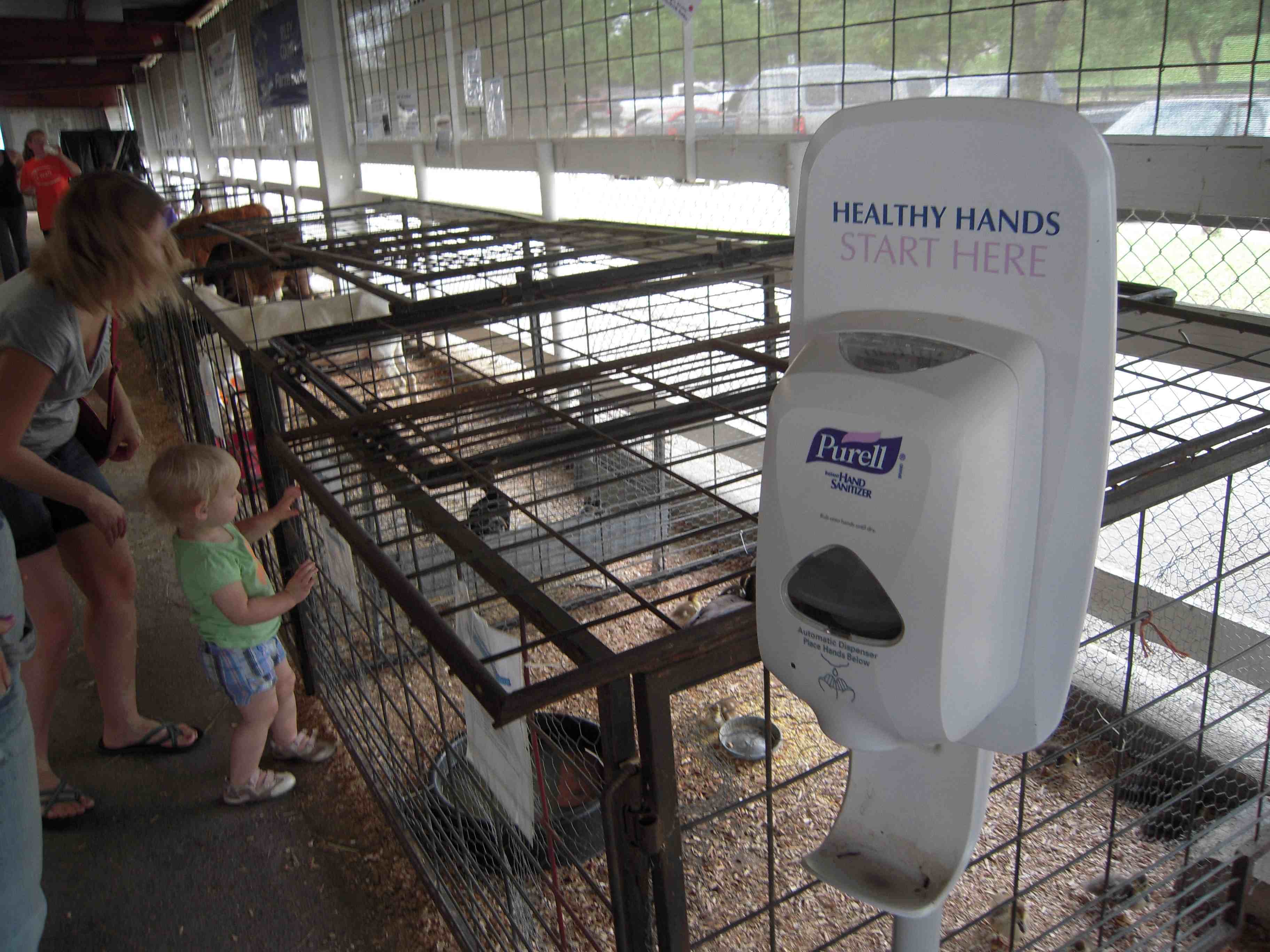
 We’ve done this before, but now there are a couple of public health students interested in doing some formal work to decrease the risk of dangerous bugs passing from animals to humans, or humans to animals, so we introduced them to the petting zoo/fair concept, and the hygiene measures available.
 In 1999, 159 people, mainly children, were sickened with E. coli O157:H7 traced to goat and sheep at the 1999 Western Fair in London, Ontario
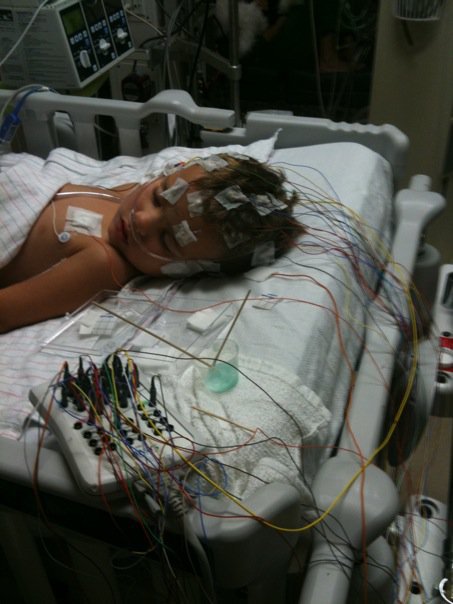
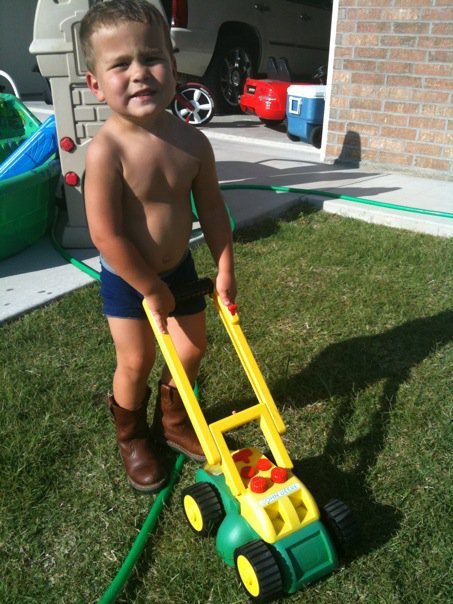
  So, how best to motivate fair managers to provide petting zoos that are microbiologically safe? Should the urban public be allowed to interact with livestock at all? Should petting zoos be inspected, as restaurants are, and the results displayed? We’ll be looking, and hoping that Bubba improves. Bubba has his own Facebook page at