
Shopping for food is competitive sport in Brisbane.
There are bargains to be had, but limited by geography – I’m on a bicycle – time and seasonality.
And the prices change almost daily for no apparent reason other than supply and demand.
The majority of Australians hate the megalomart duopoly of Coles and Woolworths but within a 2-mile radius, I can choose amongst five fruit and veg places, three butchers, three 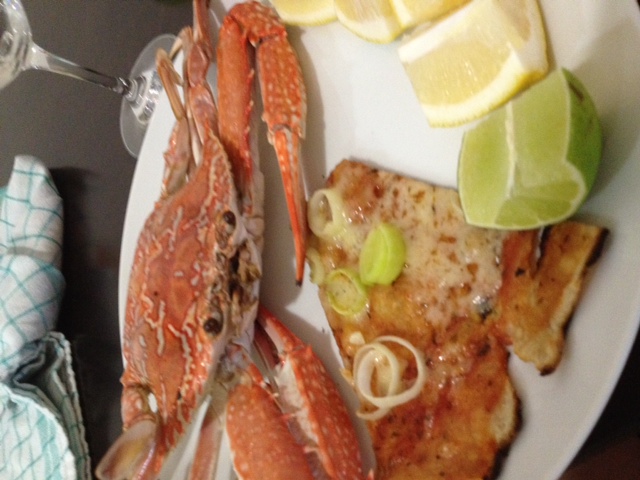 bakeries, the ubiquitous Coles and Woolworths, and my favorite, the Dutton Park Fish Market.
Dutton Park is a suburb adjacent to the University of Queensland and the fish market is literally a non-descript hole in the wall down and around from a semi-popular restaurant on the way to the uni. They don’t advertise because they have trouble meeting demand. But they do send e-mails saying what’s in and what’s on special.
That gets back to the competitive sport of shopping.
Two days ago the price of oysters went from $15 a dozen to $20 for two dozen. I told Amy we were having oysters, and she invited over a colleague for dinner last night.
We went through 48 oysters, two blue swimmer crabs and some homemade Napoletana leek pizza.
As a man of large appetites, I wanted more. So after early morning swimming lessons for the daughter, Sorenne and I biked off again to visit with Paul the fishmonger (Sorenne likes the live mud crabs, and the fishheads).
Saturday lunch was more oysters, more blue swimmers, and some Hervey Bay scallops, served with a grated, marinated carrot and beet salad.
All this is on my mind because of the recent death of a South Bend, Indiana, man from vibrio after eating raw frozen shrimp.
Health officials interviewed the man’s wife and determined that he had eaten shrimp from a 16-ounce bag of frozen, raw, peeled and cleaned shrimp sold under the Harvest of the Sea brand. Testing on a second bag of the same brand of shrimp found in the man’s freezer determined that it contained the bacteria afflicting the man.
Felger said that bag of shrimp came from a Martin’s Super Markets store in South Bend. The supermarket chain voluntarily pulled the shrimp from its freezers in during the weekend of Feb. 17-18 after learning that it could possibly be contaminated. But the store didn’t issue a voluntary recall to customers until March 3 because they didn’t have all of the information they needed until then, the company’s advertising manager, Dave Mayfield, told WSBT.
He said that once they got the facts, they issued the recall.
Test results confirming the bacteria were in the shrimp were received last Friday, and the next day Martin’s Supermarket emailed its recall notice to South Bend-area media.
Felger said he believes Martin’s Super Markets acted appropriately by pulling the product once they were notified.
I buy the crabs cooked. The oysters and scallops I grill for about 90 seconds, along with a (small) dollop of garlic butter loaded with homegrown basil and rosemary, and a dab of hot sauce. .jpg) I temped a scallop today because I’d never grilled fresh ones before – 140F. Probably a bit high but tasted great.
I temped a scallop today because I’d never grilled fresh ones before – 140F. Probably a bit high but tasted great.
Paul can talk lovingly about his product, I can write food porn about the preparation, but neither of us – nor anyone else – knows which raw seafood might be carrying a dangerous bacterium, virus or parasite. I pay attention to cross-contamination. And I cook seafood, verified using a tip-sensitive digital thermometer.
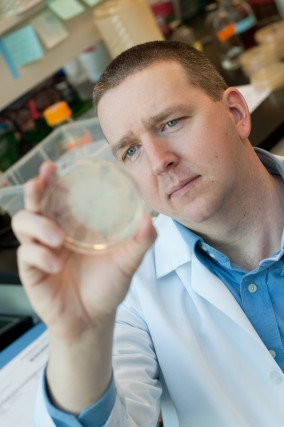 included lox, smoked tuna, candied salmon and fish jerky.
(1)(1).jpg) about the really, really young? Or the super-young. The uber-young?
about the really, really young? Or the super-young. The uber-young? possessing AMR, full-length InlA, LGI1, and serotypes frequently associated with listeriosis suggest B.C. consumers are exposed to high-risk strains.
 conclusion of arm-chair epidemiologists.
 importing bodies and show which types of aquatic animals, and from which countries, are most often failing inspection. The study identified a lack of inspection in the U.S. compared to its peers: only 2 percent of all seafood imported into the U.S. is tested for contamination, while the European Union, Japan and Canada inspect as much as 50 percent, 18 percent, and 15 percent of certain imported seafood products. When testing in the U.S. does occur, residues of drugs used in aquaculture, or "fish farms," are sometimes found; above certain concentrations, these drugs are harmful to humans.
 that “independent” tests reveal toxins in the local catch.
 falsely labeled as U.S. wild caught shrimp and selling shrimp that falsely claimed to be larger and more expensive than they actually were; and for buying fish they knew had been illegally imported into the United States. Some of the fish tested positive for malachite green and Enrofloxin, both of which are considered health hazards and banned from U.S. food products.
.jpg) Orange counties.
Orange counties. cartons it was impossible to determine if they were free range or not.
 Tweeting about the overseas illness, Miss Moore wrote, "Food poisoning is the worst. It will be a long time before I can even look at a piece of fish."
.jpg) I know, why would anyone buy seafood in the geographic center of the U.S., where the mussels are flown in from Canada, but they’re delicious.
I know, why would anyone buy seafood in the geographic center of the U.S., where the mussels are flown in from Canada, but they’re delicious. Being in Kansas, I ordered the mussels from Prince Edward Island (that’s in Canada) and the featured white wine from Australia, which, to our ultimate surprise, cost $15 a glass. The extent to which restaurants will go to rip people off, especially in a crappy economy, apparently knows no bounds. I take responsibility, but won’t be going back.