
Two years in Kansas; barfblog turns 1; what’s next?

On the seminal 1978 live album, You Had to Be There, Jimmy Buffett introduces one of his songs by saying (and this is a paraphrase cause my turntable is in a garage in Guelph and Chapman took all my good vinyl),

"People ask me, how can you write those sensitive songs and then that trash, and I say, sometimes I feel real sensitive and sometimes I feel real trashy."

That’s how I approach barfblog. Sometimes I’ve got information that I just have to get out there that’s snarky, insightful and relevant, and sometimes I just feel real trashy.

In the first year of barfblog.com, we posted 825 entries, increased the number of unique monthly visitors from 1,000 to 40,000 per month, got picked up by the N.Y. Times, David Letterman and dozens of other new and traditional media outlets, and sold a few hundred T-shirts (it’s better than door-to-door chocolate sales to fund students).

We influenced the formation of public policy in many ways but our favorite was getting mentioned in the Wales E. coli inquiry, where I used the Bill Murray Groundhog Day analogy. And I got to meet Bill Murray in Manhattan and give him a poop shirt. Showing that microwaves may be a lousy way to cook pot pies was kinda fun. Safest food in the world? Shurley you must be joking.

The Internet means, unlike Jimmy in 1978, you don’t have to be here … in Manhattan (Kansas). But you can subscribe. http://barfblog.foodsafety.ksu.edu/subscribe.html

What’s next? You’ll find out soon enough.

And I’m still with that girl.

Fecal facial latest skin treatment

The N.Y. Post reports that for just $216, Shizuka Bernstein will slather your face in feces for a full 50 minutes — what she calls the "Geisha Facial" — at her Midtown New York spa, Shizuka.

It’s bird poop.

The ancient Japanese cleanser – geishas and kabuki dancers have been using the bird poop to wash off their heavy white makeup since the 18th century – contains guanine, which supposedly removes pollutants and blackheads, and helps even out skin tone.

The exotic excrement comes in a powder form, directly from Japan, and is sterilized with UV light to kill bacteria.

Marilyn Phillips, a 58-yearold Upper West Sider who had a Geisha Facial late last week, said,

"I figure if poop was good for the soil, it’s good for your face. And it doesn’t smell at all. I’d say hair coloring smells way worse."

32-year-old massage therapist Andrea Nieto who went in for the facial last week, said,

"You wouldn’t even know it was nightingale droppings. And after, my skin was softer than it had been in a really long time. And it looked clearer to me, too. But you gotta wonder how they figured to use these things. Who put 2 and 2 together like that?"

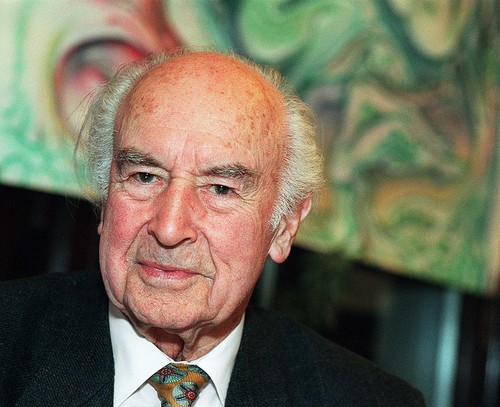
Albert Hofmann, the father of LSD, dies at 102

Albert Hofmann, the mystical Swiss chemist who gave the world LSD, the most powerful psychotropic substance known, died Tuesday at his hilltop home near Basel, Switzerland. He was 102.

I mention this because a lot of people come to barfblog because of this groovy LSD-inspired picture. And Amy and I watched a fairly heady documentary about psychedlics last week.

According to the obituary in the N.Y. Times:

Dr. Hofmann first synthesized the compound lysergic acid diethylamide in 1938 but did not discover its psychopharmacological effects until five years later, when he accidentally ingested the substance that became known to the 1960s counterculture as acid.
He then took LSD hundreds of times, but regarded it as a powerful and potentially dangerous psychotropic drug that demanded respect. More important to him than the pleasures of the psychedelic experience was the drug’s value as a revelatory aid for contemplating and understanding what he saw as humanity’s oneness with nature. That perception, of union, which came to Dr. Hofmann as almost a religious epiphany while still a child, directed much of his personal and professional life.

“It happened on a May morning — I have forgotten the year — but I can still point to the exact spot where it occurred, on a forest path on Martinsberg above Baden,” he wrote in “LSD: My Problem Child.” “As I strolled through the freshly greened woods filled with bird song and lit up by the morning sun, all at once everything appeared in an uncommonly clear light.

“It shone with the most beautiful radiance, speaking to the heart, as though it wanted to encompass me in its majesty. I was filled with an indescribable sensation of joy, oneness and blissful security.”

He earned his Ph.D. there in 1929, when he was just 23. He then took a job with Sandoz Laboratories in Basel, attracted by a program there that sought to synthesize pharmacological compounds from medicinally important plants.

It was during his work on the ergot fungus, which grows in rye kernels, that he stumbled on LSD, accidentally ingesting a trace of the compound one Friday afternoon in April 1943. Soon he experienced an altered state of consciousness similar to the one he had experienced as a child.

On the following Monday, he deliberately swallowed a dose of LSD and rode his bicycle home as the effects of the drug overwhelmed him. That day, April 19, later became memorialized by LSD enthusiasts as “bicycle day.”


McDonald’s praised for handwashing and food safety

Howard Levitt, counsel to Lang Michener LLP, an employment lawyer who practises in seven Canadian provinces and author of The Law of Dismissal for Human Resources Professionals, writes that he is a McDonald’s convert.

Levitt says that rather then succumb to the human rights "police," McDonald’s fought back to protect the right of Canadians to eat safe food. It and Canadians lost.
What Levitt learned from this decision is McDonald’s is a stickler for cleanliness: Employees must wash their hands after every break, after cleaning their work area, before entering the production area, before putting on gloves, after shaking hands, after touching a door handle and on it goes. It is so focused on being sanitary that apart from all the previously mentioned instances, a bell goes off every hour, telling employees to wash their hands.

Besides good corporate citizenry, this reflects the law. It ensured McDonalds complied with the B.C. Health Act and the B.C. Centre for Disease Control’s Food Protection Guidelines.

But Beena Dat could not comply. A skin condition prevented her from wearing gloves or regularly washing her hands. She went on disability and unsuccessfully attempted to return to work three separate times. Her specialist, Dr. Kit-son, opined he had no doubt, if she attempted to return to work, her "hands would disintegrate in a week." She could not return to any job involving exposure to soap and water, in his view, thereby eliminating "restaurant work of any kind."

Dat complained to the B.C. Human Rights Tribunal who appointed Judy Parrack to decide the case, who decided Mc-Donald’s should have cross-examined the specialist rather than taking his medical report at face value.

She also considered whether it was possible pieces of different jobs could have been extracted to create a position Ms. Dat could perform without frequently having to wash her hands.

This is despite Ms. Parrack’s acknowledging all jobs at Mc-Donald’s require handwashing and, depending on how busy a section is, any position might quickly take over for another.

Notably, Ms. Parrack found McDonald’s liable for not attempting to construct such a position and awarded $50,000 in damages, including $25,000 for injury to Ms. Dat’s "dignity, feelings and self-respect."

Worst of all, McDonald’s was ordered to "cease the discriminatory conduct or similar conduct and refrain from committing such conduct in the future." One might think consumer safety should supercede the right of an employee with unclean hands!
A colleague says maybe the judge should eat at McDonald’s and be served only with dirty hands.

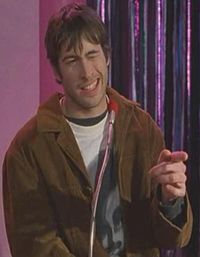
A Jason Lee stink palm pretzel, perhaps?

In the name of science: women wanted to eat chocolate for a year

Scientists in the UK are seeking 150 women to eat chocolate every day for a year in the cause of medical research.

The trial, at the University of East Anglia in Norwich, eastern England, will test whether a natural compound found in cocoa, the main ingredient of chocolate, could cut the risk of heart disease among women with diabetes.
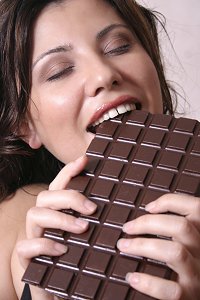
A Belgian confectionist has created the special chocolate bar containing high levels of flavonoids — a plant compound that has been shown to reduce heart risk factors — to be used in the experiment. Soy, another natural source of flavonoids, has also been added to the bar.

Participants, who must be postmenopausal women under the age of 70, will have their risk of heart disease tested on five occasions during the year to see whether change occurs.

Don’t barf in public; it’s against the law

City council in Windsor, Ontario (Canada) wants to make it illegal to vomit in public in an attempt to control late-night rowdiness.

Council was also set to discuss a mandatory 2 a.m. closing-time for hotdog vendors.

Apparently that’s to keep munchie-driven zombies from roaming the streets.

Patrick Lacey, 25, said,

"What are they really going to do about vomiting in public? …  you can’t stop someone from throwing up. Throwing up in public is embarrassing enough as it is; you don’t need to get arrested."

I can’t wait for the next norovirus outbreak to hit Windsor.

How celebs impact food sales: poultry production in the UK

The Independant (UK) ( had an assortment of free range egg articles yesterday, including one from Joanna Lumley. Doug says that Joanna Lumley is famous; in a Coronation Street kind of way, I guess.

Lumley writes that: Sixty-two per cent of hens in the UK still endure life sentences of frustration and deprivation in the battery cage. How can we let such cruelty continue? For the past two years, Compassion in World Farming has been engaging with the corporate world, persuading big players to abandon battery eggs and pledge to use eggs from more humane systems – at least from barn-kept hens, though free-range is best.

Celebs getting involved with poultry standards isn’t a new issue in the UK: back in January, Jamie Oliver and Hugh Fearnley-Whittingstall took part in documentaries discussing poultry-raising standards and urging the public to switch to consumption of a more humane product.  Soon after the documentaries aired, Joanna Blythman (Jan 13, 2008) wrote that she didn’t see the latest celebrity chef campaign yielding any better results [than past efforts]:

The current round of public breast-beating on factory-farmed poultry provokes a sense of déja vu. If Britain really was concerned enough to support more progressive farming methods with its purse, then we would have seen an improvement in animal welfare by now. 

But Blythman was apparently wrong.  In February it was reported that sales of factory-farmed chickens slumped post-documentary campaign to raise awareness implore consumers to pay more to improve the animals’ welfare.  According to the Independent (Feb 28, 2008):

Sales of free-range poultry shot up by 35 per cent last month compared with January 2007, while sales of standard indoor birds fell by 7 per cent, according to a survey of 25,000 shoppers by the market research company TNS.

Celeb endorsements of food issues isn’t strictly a British tactic either. Pam Anderson was famously linked to PETA animal welfare protests at KFC outlets a few years ago and maybe the threat of these protests resulted in Burger King’s animal welfare systems?  In a Burger King press release PETA Vice President, Bruce Friedrich was quoted as saying “The BURGER KING brand’s influence has moved the entire animal industry. The availability of cage free products is growing, a credit to BKC’s leadership on the issue.”  California, hot bed of US celebrity action will be voting on animal welfare legislation, "The Prevention of Farm Animal Cruelty Act" which would mandate roomier housing for pregnant sows, veal calves and laying hens.
The message to the food industry is that celebs (no matter how minor, or how British) can make a stir (whether around animal welfare, local diets, food safety, etc.) and really affect purchasing habits.  So be prepared and find a way to work alongside them on the issues; you can’t ignore them.

Mystery meat

From pepperoni to prosciutto, sausages and cured meats from continental Europe are going to be targeted by UK inspectors amid several Salmonella incidents reported to the Health Protection Agency and linked to the products.

French, Italian, Belgium, and Dutch markets are listed as targets in the briefing documents sent to food safety departments across Sussex. Farmers’ markets and town markets will also be visited for samples.

Inspectors across Sussex will take hundreds of samples of biltong, continental sausages such as salamis, pepperoni and mettwurst and cured meat like proscuitto during the next 12 months.

Apart from specialist meats, egg mixes from restaurants and takeaways as well as packaged nuts will be tested.

From road apples to Prairie oysters

Swanky Auckland restaurant Euro served up a recipe for Metro Food Critic Testicles in an advertisement that finished — "balls to them" — before inviting people to try the place for themselves.

The Nourish Group, which owns Auckland restaurants Euro and the Jervois Steak House and Saloon, and Pravda in Wellington, took out a full page ad in the Herald on Sunday banning what it claimed were "out of step" Metro reviewers from its premises after the restaurants were left out of a top 50 list of New Zealand eateries.

Los Angeles drowning in road apples

Not just the title of the 1991 album by Canadian rockers, The Tragically Hip, road apples is slang for horse shit.

And Los Angeles has lots of it (and doesn’t even freeze to use as a makeshit hockey puck).

Bloomberg reports that zoning restrictions have resulted in the closure of all the traditional "manure mulcher" businesses in Los Angeles County, forcing stables to haul their horse poop to ordinary land fills, which charge up to US$47 a ton, or roughly five times what the mulchers used to charge.

L.A. County is home to about 45,000 horses and almost 10 million people. Horses generate an estimated US$900-million a year in revenue from things such as riding lessons, blacksmiths, feed sales.

But more about the Hip.

Released in 1991, the original title of the record was Saskadelphia, but the record label considered it "too Canadian." As a joke, they re-titled it Road Apples, slang for horse dung. After the album was released, they created the Another Roadside Attraction festival — another joke referring to "road apples."

The album is often cited by fans and critics as the band’s finest work. As with most Tragically Hip albums, Canadian themes appear in the album’s lyrics. "Three Pistols" is an English translation of the name of the Quebec town Trois-Pistoles, and refers to Tom Thomson, a Canadian painter, as well as Remembrance Day, the Canadian commemorative day for its war dead. "The Luxury" refers to the fleur-de-lis, provincial symbol of Quebec, while "Born in the Water" is about the controversy surrounding Ontario municipalities (particularly Sault Ste. Marie) declaring themselves "English-only" in the dying days of the Meech Lake Accord debate.

Three Pistols is used in the opening and closing credits of our safefoodcafe videos. Like this one: