
Don Schaffner, guest barfblogger: Looking for ugly in the food industry

One of my favorite books of all time is "Out of Control" by Kevin Kelley.  It’s a non-fiction book that deals with understanding complex  systems.  Kelley is a bit of a polymath.  He was a hippie, who edited the hippie bible, the whole earth catalog.  He was there at the beginning of the internet with the creation of the Whole Earth ‘Lectric Linkup.  I’ve starting reading his blog recently, and he  always has something interesting to say… like how to build foam robots.

Anyway, he recently blogged about "Looking For Ugly" where he writes "Preventing errors within extremely complicated technological systems is often elusive. The more complex the system, the more complex the pattern of error".  He’s writing generally, but I immediately thought about the food system.

Kelley goes on to write specifically about the airline industry, saying "The safety of aircraft is so essential it is regulated in hopes that regulation can decrease errors. Error prevention enforced by  legal penalties presents a problem, though: severe penalties discourages disclosure of problems early
enough to be remedied.  To counter that human tendency, the US FAA has generally allowed airlines to admit errors they find without punishing them."

Hmmm.  "severe penalties discourages disclosure of problems early enough to be remedied".  Sounds to me like he’s talking about a "zero tolerance" vs. regulatory limit for Listeria.

Of course the counter argument (for the airline industry) also maps well to the food industry, as Kelley writes "The general agreement in the industry is that a policy of unpunished infractions encourages quicker repairs and reduces the chances of major failures. Of course not punishing companies for
safety violations rubs some people the wrong way."

Yup.  He’s nailed it.  This idea dovetails nicely with Doug’s call to "make all data of Listeria testing in plants public so others in the industry can improve and consumer confidence can be enhanced with data not just words."

27 ill with E. coli at Michigan State; links with another 8 cases in MI

One of the advantages of DNA fingerprinting of bugs that make people sick is that previously hidden patterns emerge.

If Canadians stopped using stagecoaches to transport samples – or developed any kind of urgency around the listeria outbreak – maybe links would have emerged earlier and lives saved.

The outbreak of E. coli O157:H7 at Michigan State University took a new twist Tuesday when state health officials announced that the same strain of O157 has been linked to at least eight other cases throughout the state, including one at the University of Michigan and five at the Lenawee County Jail.

The findings have led investigators to believe that the patients all got ill from ingesting the same contaminated food source.

The Detroit News reports that,

“Within the last two weeks, 27 students at MSU fell ill with bloody diarrhea, including seven who needed to be hospitalized. Stool samples in eight of the patients showed that E. coli O157:H7 was the culprit. …

“Lab test results, called DNA fingerprinting, for three MSU students matched those of patients who became sick from E. coli in Washtenaw, St. Clair, Wayne and Lenawee counties since Sept. 8.”

DNA fingerprinting is a wonderful tool – when used in a timely fashion.
 

Should doctors’ scrubs be as clean as their hands?

The New York Times reports that,

“Amid growing concerns about hospital infections and a rise in drug-resistant bacteria, the attire of doctors, nurses and other health care workers — worn both inside and outside the hospital — is getting more attention. While infection control experts have published extensive research on the benefits of hand washing and equipment sterilization in hospitals, little is known about the role that ties, white coats, long sleeves and soiled scrubs play in the spread of bacteria.

“The discussion was reignited this year when the British National Health Service imposed a “bare below the elbows” rule barring doctors from wearing ties and long sleeves, both of which are known to accumulate germs as doctors move from patient to patient.

“But while some data suggest that doctors’ garments are crawling with germs, there’s no evidence that clothing plays a role in the spread of hospital infections.”

Apparently there are some textiles being manufactured with  antimicrobial components. I really have no opinion. But when it comes to Scrubs, Everything Comes Down to Poo.


Dane Cook and his pooping dog give up apartment

TMZ reports that Dane Cook has given up his fight to live in what he believes is an apartment that has a supernatural force.

“Cook was evicted from a West Hollywood apartment last August after a jury decided the "comedian" habitually violated the rules requiring him to pick up his dog’s crap.

“As reported yesterday, Cook threw a Hail Mary at the judge, arguing that hizzoner should block the eviction because the apartment building had almost paranormal qualities — John Belushi and Steve Martin both lived there, and Cook believed if he moved out his creative juices stop flowing and a bad case of writer’s block would ruin his career. Did anyone see "Employee of the Month?"

Cook has apparently abandoned the appeal.

Dog poop contains common pathogens such as tapeworms, roundworms, cryptosporidium, salmonella, E.coli, and many others.  Owners, clean up after your dogs and wash your damn hands.

It’s gotten so bad that the Israeli city of Petah Tikva, a suburb of Tel Aviv, has started a six-month trial program where it is matching the DNA of dog poop, either in special containers or found on the street, to a database of registered dogs and their owners.

“Owners who scoop up their dogs’ droppings and place them in specially marked bins on Petah Tikva’s streets will be eligible for rewards of pet food coupons and dog toys.
“But droppings found underfoot in the street and matched through the DNA database to a registered pet could earn its owner a municipal fine.”
 

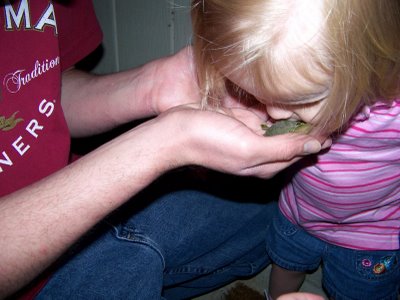
Stop kissing turtles: 100 US kids sickened in new Salmonella outbreak

Growing up in late-1960s suburbia, my parents thought dogs should run on farms like their dogs had, and cats were a nuisance.

So I had a turtle.

Turtles were inexpensive, popular, and low maintenance, with an array of groovy pre-molded plastic housing designs to choose from. Invariably they would escape, only to be found days later behind the couch along with the skeleton of the class bunny my younger sister brought home from kindergarten one weekend.

But eventually, replacement turtles became harder to come by. Reports started surfacing that people with pet turtles were getting sick. In 1975, the U.S. Food and Drug Administration (FDA) banned commercial distribution of turtles less than 4 inches in length, and it has been estimated that the FDA ban prevents some 100,000 cases of salmonellosis among children each year.

Maybe I got sick from my turtle.

Maybe I picked up my turtle, rolled around on the carpet with it, pet it a bit, and then stuck my finger in my mouth. Maybe in my emotionally vacant adolescence I kissed my turtle. Who can remember?

Last week the U.K. noted an increase in reptile-related Salmonella cases. Today, media outlets are reporting,

A multi-state salmonella outbreak among people handling turtles, that includes California and Los Angeles County, was announced Tuesday by officials at the County of Los Angeles Department of Public Health Veterinary Public Health.

Over 100 people, mostly children were infected by the same strain and 24 of them had to be hospitalized officials at the Center for Disease Control reported.

Eleven cases of the infection were reported in Southern California that included eight cases in Los Angeles County, officials at L.A. county Public Health reported.

Many human exposures were indirect. One baby became ill after being bathed in a sink where turtle feces had been discarded. Two girls fell ill after swimming in an un-chlorinated pool where turtles had been swimming.
 

4 dead, 53,000 sick from melamine in Chinese baby powder; companies knew for months

The Associated Press reports that four babies have died and almost 53,000 have been sickened from melamine in baby formula in China that now appears to date back to Dec. 2007.

An investigation by the State Council, China’s Cabinet, has found that for eight months, China’s biggest producer of powdered milk, Sanlu Group Co. “did not inform the government and did not take proper measures, therefore making the situation worse.”


Melamine, which can cause kidney stones and kidney failure in babies, has since been found in infant formula and other milk products from 22 of China’s dairy companies.

Also, Li Changjiang, who headed the General Administration of Quality Supervision, Inspection and Quarantine since 2001, has resigned, a year after he and the government promised to overhaul the system.
 

Play cold-cut cannon and shoot down stupid listeria statements

CanWest is reporting that a new website that allows people to shoot down pictures of Agriculture Minister Gerry Ritz with a cannon firing cold cuts has surfaced on the Internet, as calls for his resignation continue to grow over jokes he made during the deadly listeriosis outbreak.

Set against a backdrop of Parliament Hill, the satirical website – www.deathby1000coldcuts.info – invites participants to "fire salami slices from your cold cut cannon over the skies of Parliament to defend the honour of Canada and the sensibilities of your fellow citizens!"

Groundhog Day continues for Hugh Pennington; lashes out a delay in E. coli reporting — again (and again and again)

In November 1996, over 400 fell ill and 21 — largely pensioners who had attended a church supper — were eventually killed in Scotland from infection with E. coli O157:H7.

Health authorities quickly linked the outbreak to cooked meat sold by family butchers John Barr & Son in Wishaw, who had been in business for 28 years and in September was awarded the title of Scottish Butcher of the Year. … It was concluded by investigators that the contamination occurred probably because knives used to separate raw product were also being used to open packages of cooked product.”

Professor Hugh Pennington was called in to handle a public inquiry.

Then another E. coli O157 outbreak struck, this time in Wales in 2005, killing a five-year-old and sickening some 150 schoolchildren. Another public inquiry was held earlier this year, chaired again by Prof. Pennington.

Then another outbreak of E. coli O157:H7 in Scotland killed one and sickened seven in Aug. 2007, again in cold cuts, and again Prof. Pennington said there was no excuse for allowing contaminated cold meat to be sold.

Yesterday, Prof Pennington told the Sunday Mail that a Scottish hospital taking three days to report three cases of E. coli O157 to the local public team was unacceptable, adding,

"I’d only find a delay of hours acceptable. Finding the source must be done quickly, especially after what happened in Wishaw years ago."

Maybe one day the good prof will awaken from this repeating nightmare.


Local equals safe – with some exceptions

Fluid leaking from a garbage truck in the streets of Tularosa, New Mexico, tested positive for E. coli a few days ago.

The vehicle was inspected after residents noticed the leak.

Tularosa Mayor Ray Córdova then inspected the vehicle and smelled something extremely foul coming from it.  That’s when he told residents to take samples of the fluid so he could send it off to a lab for testing.

Those tests came back positive for the E. coli bacteria…

On Thursday Alamo Disposal owner Art Cardiel said the leak came from a crack in the truck.  However he also said believes the E. coli is coming from the bacteria in people’s trash and not the truck itself.

"In this area, a lot of people grow their own fruit because there’s a lot of water," Cardiel said.  "Now how am I supposed to have any control over what I put in my truck that comes out of their trash cans?"

The owner of the company, Alamo Disposal, has been given 10 days to fix the leak.

In the meantime, this fluid can continue to leak into people’s gardens, contaminating produce – “fresh and local” produce.

Local producers tend to be more careful because it is often their own families, friends and neighbors who will eat the produce.

Be on the safe side, stock up now on local tomatoes, peppers and other fresh produce and preserve them for the winter.

Be on the safe side? Really? What if there’s a truck with E. coli-contaminated fluids leaking around?


Grossology: The (Impolite) Science of the Human Body

That’s the name of an exhibit set to open yesterday at the South Florida Science Museum and expected to topple previous attendance records.

The Palm Beach Post reports The exhibition is based on a series of books by science teacher Sylvia Branzei whose research found that the average person swallows a quart of snot per day.

Other features of the exhibit include:

• guess the correct sequence of events that sets off barfing at the Vomit Center;

• match horrible odors to their correct source at Y U Stink;

• learn how vibrations of skin around the anus create a fart sound at Toot Toot; and,

• scale a 12-foot wall of pimples, warts and other skin blemishes.

Jennifer Cooper, a science educator at the museum, said,

"This is kind of a learning-in-disguise exhibit. They’re learning without feeling like they’re learning."

And you wonder why we call it barfblog.