
E. coli toll linked to firefighter fundraiser in Calif. grows to 13

Butte County Health Officer Dr. Mark Lundberg said Thursday that the number of cases of E. coli amongst the 300 or so who attended a barbecue fundraiser Sept. 6 in Forest Ranch to benefit the volunteer fire department has grown to 13.
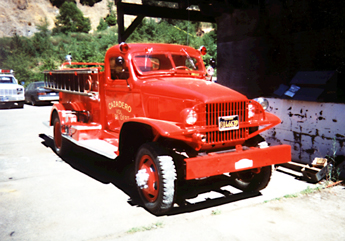
Action News reports,

One of the infected is a 6-year-old girl named Olivia.  She and her family have been sick for several days.  They learned of the E.coli outbreak on Action News at Eleven Wednesday night.  Thursday afternoon, Olivia was airlifted to U.C. Davis Medical Center in Sacramento where she will be cared for in the pediatric intensive care unit.  Her family says she was diagnosed with kidney decline, which could lead to kidney failure.

Olivia’s mother, Kimberli Titus says she, her daughter and her mother have made three trips to the emergency room this week.  They have been extremely sick, and until seeing the story on Action News, they couldn’t figure out what was wrong.  "She’s weaker, and weaker every day and she can’t even lift her head.  And she does not feel well."

The food for the BBQ was purchased from Cash-N-Carry in Chico. 

Health officials are still trying to determine what food made people sick. Among items on the menu at the barbecue were chicken, potato salad, beans, hot dogs, veggie burgers, chips and tri-tip, he said. People who became ill are being asked what they ate at the fundraiser.

 

Doug Powell and Randy Phebus talk Salmonella in dog food

Or we try too. Look, we’re not the most photogenic, or brief, but there’s some decent info and pretty pictures of dogs.

Certain lots of Pedigree dog food and other pet food have been recalled after it was discovered that Salmonella could be present in the product. So here’s some considerations to prevent spreading Salmonella around your home if you have a pet or contaminated food and treats.


Impact of listeria on infants in B.C. documented

A new report shows that of the 78 residents of the Canadian province of British Columbia who contracted listeriosis in the past six years, 10 per cent were pregnant women whose infections put them at high risk of miscarriage or stillbirth.

The majority — nearly 60 per cent — of pregnant women diagnosed with listeriosis either miscarry or have stillbirths.

In a case described in the current B.C. Medical Journal, a pregnant woman in her 30s went to a Lower Mainland hospital complaining of a stiff neck, fever, back pain and headache. After arriving, she delivered a stillborn baby at 21 weeks gestation.

The authors wrote,

"Health care providers [want] better information for themselves and resources they could share with pregnant women. … The information provided to pregnant women by health care providers needs to be targeted and clear," and that as a result of the spring survey, BCCDC will start a project to better inform health care providers and their patients about food safety risks during pregnancy.

It’s a national embarrassment that statistics on listeriosis in Canada are either not available or hopelessly unreliable. Further, the call to action probably never would have gotten noticed were it not for the 24 deaths and dozens of illnesses in the Maple Leaf listeria outbreak. Pregnant women and other at-risk populations deserve better.
 

Reasons to avoid raw shellfish

Me, I love a bowl of mussels with a white wine and tomato sauce (go figure) and a thick bread for dipping. That’s me (right) indulging while in New Zealand. Kansas isn’t exactly the seafood capital of the U.S., and I chuckle when I see mussels from Prince Edward Island (that’s in Canada) advertized in Manhattan (Kansas).

But I also take my seafood cooked. Here’s why:

Hinerwadel’s in North Syracuse, New York served up some raw clams earlier in September that is responsible for at least 160 illnesses. The clams apparently originated in Maine.

And at least 40 people the Valencia region of Spain have contracted Hepatitis A after eating frozen shellfish from Peru. They were probably thawed and either served raw or undercooked.

Don’t’ eat poop. Or at least cook it out.

Burger King: Paper towels in the bathroom please

I have been working for Doug for almost 4 months now. I am happy to say that I have learned a lot.

One of these things is proper hand-washing. So every time I go to a public restroom I keep my eyes open and watch every detail.

I often notice when someone skips the hand-washing step or someone who doesn’t dry up afterwards.

Just the other day I went during my lunch break to Burger King to grab a double cheeseburger. I went to the restroom first, and when I was in one of the stalls, a woman came in with her kid, telling him to scrub his hands. I heard water running. Then they just left – but I didn’t hear any paper tearing.

Well, there wasn’t any. No, BK didn’t just run out of paper. They didn’t have a paper towel dispenser at all. Only a drier. And a very lousy one. The evidence:

BK employees should not only wash their hands, but dry them as well.

Frustrated I left, and hesitated: Can I still eat my burger, knowing that employees (or at least the women) don’t dry their hands properly in that establishment?

No more BK cheeseburgers for me. Doug wrote in a letter:

Blow dryers should not be used because they accumulate microorganisms from toilet aerosols, and can cause contamination of hands as they are dried by the drier (Knights, et al., 1993; Redway,et al., 1994).

Every bathroom should have running water, soap and paper towel.

Check out this other BK incidence: Restaurant sinks are not bathtubs

Home-canned green beans sicken Ohio man, grandson

A Crestline, Ohio, man and his grandson remain hospitalized in Mansfield and Akron with foodborne botulism.

The Mansfield News Journal reports that the two remain in hospital after eating home-canned green beans last weekend. Two other grandchildren were treated for botulism and have been released from Children’s Hospital.


Death by cold-cuts? Canadian Ag Minister not as funny as he thinks he is

Michael McCain, the president and CEO of Maple Leaf Foods made a strategic decision once his company decided to handle the growing listeria mess in Canada by saying this wasn’t about government, it was about his company: he effectively cut himself loose from bizarre to self-congratulatory to purely political messages from government and bureaucrats.

That decision looks real smart tonight.

CTV.ca is reporting that during a conference call with scientists, bureaucrats and political staff on Aug. 30, Agriculture Minister Gerry Ritz said, after fretting about the political dangers of the Listeria scare, he quipped:

"This is like a death by a thousand cuts. Or should I say cold cuts."

Then when told of a death in Prince Edward Island, Ritz said, "Please tell me it’s (Liberal MP) Wayne Easter."

Easter is the Liberal agriculture critic and has called for Ritz’s resignation over his handling of the outbreak, which was linked to a Maple Leaf Foods meat processing plant north of Toronto.

Kory Teneycke, a spokesperson for the Prime Minister’s Office, said Ritz expressed regret over his remarks to Stephen Harper but there was no suggestion of resigning.

Ritz said,

"My comments were tasteless and completely inappropriate. I apologize unreservedly."

Canoe news reports that Ritz was "less contrite when he was asked about his comments after his flight from Saskatoon touched down at the Ottawa airport Wednesday afternoon".

A bearded man with Ritz jostled with journalists as the agriculture minister beelined through the terminal to a waiting sedan. At one point the man grabbed a reporter’s recorder and jabbed at the off button.

For two minutes Ritz stared dead ahead as he was peppered with questions about the conference call. His only words were clipped.

"Not right now, guys," he said.

Then: "Get out of my face, please."

Maple Leaf listeria plant to re-open, creates new food safety position, questions remain

Three weeks after the Maple Leaf financial dude told the markets the plant would reopen, the Maple Leaf listeria plant is about to reopen and produce deli-meats.

The company has videos, a long list of food safety enhancements they are adopting, and has created the position of ‘chief food safety officer.’

Guess I thought a $5 billion a year company would already have one of those. But that’s one of the things I find most challenging – how to compel everyone from maintenance crews to CEOs that food safety matters, especially in the absence of an outbreak. Now there’s an outbreak, 24 suspected or confirmed dead, 56 ill.

"Throughout this incident we have steadfastly placed consumers’ interests first" said Michael McCain, president and CEO of Maple Leaf Foods.

That remains to be seen as more is uncovered about why there were delays and lousy notification as news of the outbreak initially trickled out. But yes, once the problem became publicly apparent, the company acted in great fashion.

The Canadian Medical Association Journal yesterday called for a full public inquiry. Not necessary, and a waste of taxpayers money. A few Bill Marler lawsuits would reveal far more about who knew what when.

Or people could do their jobs:

• Maple Leaf in conjunction with the various public authorities should provide a full public accounting of who knew what when and what was done to find out more;

• some sort of warning system about the risk of listeriosis in foods must be developed for at-risk populations – especially pregnant women and the elderly because they are the ones who get sick and die; and,

• make all data of listeria testing in plants public so others in the industry can improve and consumer confidence can be enhanced with data not just words.

Don’t kiss turtles, even in Britain

The UK Health Protection Agency reports that cases of Salmonella Arizonae have been on the increase and can be particularly harmful to infants.

The Telegraph reports that Dr Tansy Peters told the HPA’s annual conference,

"Although it is comparatively rare in humans, a study of samples submitted to our laboratory for testing from January 1998 to December 2007 shows that there has been a significant increase in both numerical and percentage terms.

"That may be a reflection of the increased popularity of reptiles as pets.

"This is a very worrying trend and infants and young children with their immature immune systems and weaker gastric acids are disproportionately affected. We even find cases in breast and formula-fed infants and it is unlikely that they acquired their infection from a source other than indirectly, via the parents, from the family’s pet reptile. Reptiles shed salmonella in their faeces and carry it on their skin and the public health implications of this inside the home should not be underestimated."

And if you have them in the home, don’t kiss them.