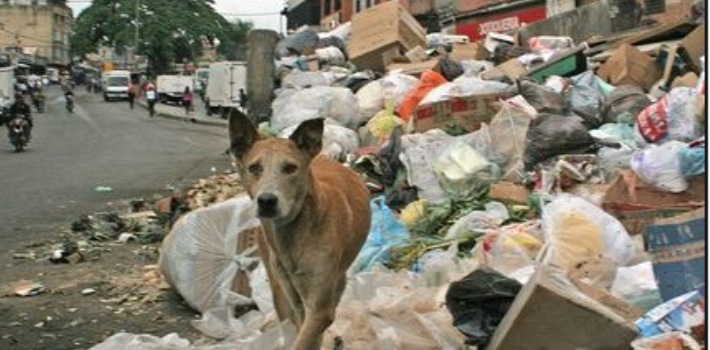
Dogs, cats, pigeons in sight for hungry Venezuelans

As the economy spirals into deeper disarray, protests aimed at driving unpopular Venezuelans president Nicolás Maduro out of office are growing. Maduro responded over the weekend by declaring a 60-day state of emergency to combat what he said are U.S.-sponsored efforts to overthrow his socialist government.

hambre-en-VenezuelaPeter Wilson of USA Today reports the unrest mounts as the country faces continuing shortages of essential food, medicine and toiletries. All the bakeries here in La Victoria, 55 miles southwest of Caracas, stopped producing bread last week because there is no flour.

“People are hunting dogs and cats in the streets, and pigeons in the plazas to eat,” Ramon Muchacho, mayor of the Caracas district of Chacao, said this month in a tweet that was reported in many newspapers.

An epic drought has also gripped this nation that relies mostly on hydroelectric dams, sparking rolling blackouts and water shortages. Hospitals have had to postpone operations and procedures because of power outages. And government employees now work only two days a week to conserve electricity.


Don’t eat poop: Traveller’s diarhhea sickened dozens on Silversea Cruises March voyage

Robert Herriman of Outbreak News Today reports that in a follow-up on the outbreak onboard the Silversea Cruises ship, Silver Spirit, last month, health officials have reported yesterday that the cause of the outbreak that sickened 37 was Enterotoxigenic E. coli (ETEC).

french.dont.eat.poopThe outbreak on the Silver Spirit voyage from March 3 – 21 resulted in the sickening of 24 of 388 passengers and 13 of 366 crew members.

Infection occurs when a person eats food, or drinks water or ice contaminated with ETEC bacteria. Human or animal wastes (e.g., feces) are the ultimate source of ETEC contamination.

Salmonella in organic shake: Gift that keeps on giving

A confirmed case of Salmonella in Wisconsin likely resulted from consumption of an organic shake and meal replacement that was recalled earlier this year, state officials said Friday.

Garden of Life Organic Shake & Meal ReplacementThe recalled product, Garden of Life RAW Meal, has been acquired by consumers from Internet retailers such as eBay and Amazon, according to the Wisconsin Department of Agriculture, Trade and Consumer Protection.

People should not consume the product if it is from the lot codes listed in the previous recall announcements found on the FDA Recall website .

Consumers should dispose of the product or follow the instructions given in the original recall notices found on the FDA website.

Oh Kansas, what is wrong? Downtown Lawrence restaurant reopens day after closing for nearly 100 live roaches

A downtown Lawrence restaurant voluntarily closed its doors earlier this month after a health inspector discovered nearly 100 live roaches on the premises.

Yokohama SushiA day later, Yokohama Sushi, 811 New Hampshire St., reopened. For area diners unfamiliar with the inspection process, it may seem like a fast turnaround, but a Kansas Department of Agriculture spokesperson called it a typical timeline.

On May 2, a restaurant inspection at Yokohama discovered the roaches, explained Heather Lansdowne, a spokesperson for the KDA. The next day, the restaurant voluntarily closed its doors and underwent a follow-up inspection, which found additional live roaches, though fewer in number. A pest control company was called in to treat the restaurant for the insects, caulking and baiting areas around water lines, crevices, cracks and near equipment, according to the inspector’s report. A second follow-up inspection later that day discovered no roaches, and the restaurant was listed back in compliance with health codes, the report says.

The restaurant reopened May 4.

A Yokohama representative did not return phone calls from the Journal-World seeking comment for this story.

When asked whether a single day of work was enough to clear up a significant roach problem and make a restaurant sanitary for its customers, Lansdowne said the restaurant followed a usual pattern based on the department’s standards.

‘Maybe you’re not used to spicy food’ SinCity Thai shut down after customers complain of foodborne illness

SinCity Thai Restaurant was shut down after receiving several customer complaints of foodborne illness. 

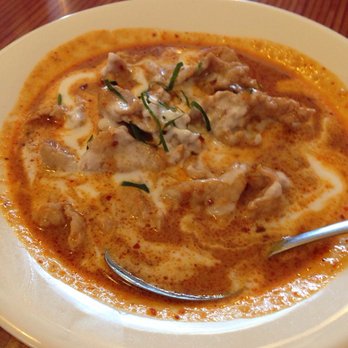
SinCity ThaiAccording to the complaint filed May 10, three customers that ate the beef pad thai and chicken pad thai reported diarrhea hours later. 

13 Action News spoke to the manager of SinCity Thai, Unchanlee Karnchai, who said the customers may not be used to the spicy food. 

“It could be the food or because they cannot handle the spicy food,” said Karnchai. 

After the complaints, the Southern Nevada Health District went in to investigate. 

In a report, they found multiple violations, including, a sanitizer bucket that was originally on the floor was moved near a food prep area next to a cutting board and green onions. 

They also found multiple food that was left at room temperature. Including, thawing beef that sit next to dirty dishes and waste. 

“Employees hadn’t been trained on what they had to do that day,” Karnchai explained. 

There were also several employee violations, including, employees not washing their hands and the kitchen hand sink did not have soap or paper towels. 

Honey Pig fails second health inspection this year

In Georgia, USA, why not have Gwinnett County’s most popular Korean barbecue named Honey Pig, and fail its second health inspection this year. 

honey.pig
Honey Pig, located at 3473 Old Norcross Road in Duluth
, received a 53/U during its Wednesday inspection. It was the same score health inspectors gave it during a January evaluation.

During Wednesday’s inspection, officials noted “multiple foods not covered in walk in cooler,” improperly cooling radish soup and unlabeled spices. According to the inspection report, “large food service containers” were also stored outside the restaurant and a hand-washing sink was “gushing water at the seams.”

Daisy_DukesWednesday’s failure was the second straight on a routine inspection for Honey Pig, which bills itself as “Atlanta’s No. 1 Korean barbecue restaurant” and allows diners to cook their own meals on tabletop grills. During the restaurant’s failed January 19 inspection, officials reportedly saw a live spider crawling in dried soup stock. Points were also taken off for potential contamination of raw beef. The restaurant scored a 96/A on the follow-up to that inspection.

Canadians say: Update to the Vibrio parahamolyticus guideline

This notice provides an update to the information published on October 20, 2015 regarding the management of the risks of Vibrio parahaemolyticus (Vp) in raw oysters. Effective immediately, the Canadian Food Inspection Agency (CFIA) is expanding the scope of application of the bacteriological guideline for Vp in live oysters.

Oyster-Vancouver, B.C.- 07/05/07- Joe Fortes Oyster Specialist Oyster Bob Skinner samples a Fanny Bay oyster at the restuarant. Vancouver Coastal Health now requires restaurants to inform their patrons of the dangers of eating raw shellfish. (Richard Lam/Vancouver Sun) [PNG Merlin Archive]

The interim bacteriological guideline for Vp, found in the CFIA’s Fish Products Standards and Methods Manual will now apply to all live oysters (end product), whether domestically produced or imported. This means that no sample can exceed 100 MPN per gram in each of five subsamples.

Importers, domestic processors and exporters are responsible for ensuring that fish and seafood products meet all applicable regulatory requirements, including the regulations made under the authority of the Fish Inspection Act.

Quality Management Program Importers (QMPI) and fish processing establishments must outline and implement controls to ensure that any significant health and safety hazards identified are controlled for fish imported into Canada, or processed in Canada.

Federally registered establishments must review their Hazard Analysis Critical Control Point (HACCP) plan to ensure that the measures, as a whole, to eliminate or reduce Vp to an acceptable level are effective in ensuring the live oysters meet the updated Vp guideline. Until the review of the HACCP plan is completed and the measures are determined to be effective, additional interim measures (e.g. lot by lot testing of the oysters) are necessary to ensure compliance. Interim measures must be initiated when conditions are favourable for Vp (identified as water or oyster meat temperature at point of harvest equal to or greater than 15°C or testing of Vp in oysters at the harvest area showing persistent levels at or near 100 Vp MPN/g).

Importers must ensure that the live oysters they import meet Canadian regulatory requirements, including the updated Vp guideline. They must also verify that the oysters have been harvested, handled, stored and conveyed in a manner which adequately manages the risk of Vp.

QMPI licence holders that import live oysters must review and amend their QMPI plan. This will ensure that effective controls are in place so that the oysters comply with the updated Vp guideline.

The CFIA will continue to verify that appropriate controls for Vp in oysters have been implemented; through its regular activities at federally registered processing establishments and with importers using inspections, audits and sampling and testing.

Health Canada is reviewing available Vp data, which may result in further revision to the interim guideline. Until this review is completed, the CFIA will apply the interim guideline to all live oysters sold in Canada, in order to continue to protect consumers. 

The CFIA is preparing additional guidance to assist industry in understanding and managing the Vp hazard.  This information will be available on CFIA’s website.  Industry is encouraged to subscribe to the e-mail notification service to be notified when CFIA manuals are updated.

It has excellent sanitation: Winter’s coming so people stop going to the heated pool

I miss the hot tub we had in Kansas.

Yet in the U.S., thousands of public pools, hot tubs are closed each year due to serious violations.

caddyshack.pool.poop-1The U.S. Centers for Disease Control and Prevention reports that inspections of public pools and other aquatic venues enforce standards that can prevent illness, drowning, and pool-chemical–associated injuries such as poisoning or burns.

“No one should get sick or hurt when visiting a public pool, hot tub, or water playground,” said Beth Bell, M.D., M.P.H., director of CDC’s National Center for Emerging and Zoonotic Infectious Diseases. “That’s why public health and aquatics professionals work together to improve the operation and maintenance of these public places so people will be healthy and safe when they swim.”

Inspection data were collected in 2013 in the five states with the most public pools and hot tubs: Arizona, California, Florida, New York and Texas. Researchers reviewed data on 84,187 routine inspections of 48,632 public aquatic venues, including pools, hot tubs, water playgrounds and other places where people swim in treated water.

Among the key findings:

Most inspections of public aquatic venues (almost 80 percent) identified at least one violation.

1 in 8 inspections resulted in immediate closure because of serious health and safety violations.

1 in 5 kiddie/wading pools were closed—the highest proportion of closures among all inspected venues.

The most common violations reported were related to improper pH (15 percent), safety equipment (13 percent), and disinfectant concentration (12 percent).

“Environmental health practitioners, or public health inspectors, play a very important role in protecting public health. However, almost one third of local health departments do not regulate, inspect, or license public pools, hot tubs, and water playgrounds,” said Michele Hlavsa, R.N., M.P.H., chief of CDC’s Healthy Swimming Program. “We should all check for inspection results online or on site before using public pools, hot tubs, or water playgrounds and do our own inspection before getting into the water.”

When visiting public or private pools, swimmers and parents of young swimmers can complete their own inspection using a short and easy checklist that will identify some of the most common health and safety problems:

Use a test strip (available at most superstores or pool-supply stores) to determine if the pH and free chlorine or bromine concentration are correct. CDC recommends:
diaper.poolFree chlorine concentration of at least 1 ppm in pools and at least 3 ppm in hot tubs/spas.

Free bromine concentration of at least 3 ppm in pools and at least 4 ppm in hot tubs/spas.

pH of 7.2–7.8.

Make sure the drain at the bottom of the deep end is visible. Clear water allows lifeguards and other swimmers to see swimmers underwater who might need help.

Check that drain covers appear to be secured and in good repair. Swimmers can get trapped underwater by a loose or broken drain cover.

Confirm that a lifeguard is on duty at public venues. If not, check whether safety equipment like a rescue ring with rope or pole is available.

If you find problems, do not get into the water and tell the person in charge so the problems can be fixed. For more information and other healthy and safe swimming steps, visit www.cdc.gov/healthywater/swimming.

Before CDC-led development of the Model Aquatic Health Code, there were no national standards for the design, construction, operation, and maintenance practices to prevent illness and injury at public treated recreational water venues. Now, local and state authorities can voluntarily adopt these science- and best practices–based guidelines to make swimming and other activities at public pools and other aquatic venues healthier and safer. The second edition of the code will be released during the 2016 swim season. For more information about the Model Aquatic Health Code, visitwww.cdc.gov/mahc.


hot.tubProblem/Condition: Aquatic facility–associated illness and injury in the United States include disease outbreaks of infectious or chemical etiology, drowning, and pool chemical–associated health events (e.g., respiratory distress or burns). These conditions affect persons of all ages, particularly young children, and can lead to disability or even death. A total of 650 aquatic facility–associated outbreaks have been reported to CDC for 1978–2012. During 1999–2010, drownings resulted in approximately 4,000 deaths each year in the United States. Drowning is the leading cause of injury deaths in children aged 1–4 years, and approximately half of fatal drownings in this age group occur in swimming pools. During 2003–2012, pool chemical–associated health events resulted in an estimated 3,000–5,000 visits to U.S. emergency departments each year, and approximately half of the patients were aged <18 years. In August 2014, CDC released the Model Aquatic Health Code (MAHC), national guidance that can be adopted voluntarily by state and local jurisdictions to minimize the risk for illness and injury at public aquatic facilities.

Reporting Period Covered: 2013.

Description of System: The Network for Aquatic Facility Inspection Surveillance (NAFIS) was established by CDC in 2013. NAFIS receives aquatic facility inspection data collected by environmental health practitioners when assessing the operation and maintenance of public aquatic facilities. This report presents inspection data that were reported by 16 public health agencies in five states (Arizona, California, Florida, New York, and Texas) and focuses on 15 MAHC elements deemed critical to minimizing the risk for illness and injury associated with aquatic facilities (e.g., disinfection to prevent transmission of infectious pathogens, safety equipment to rescue distressed bathers, and pool chemical safety). Although these data (the first and most recent that are available) are not nationally representative, 15.7% of the estimated 309,000 U.S. public aquatic venues are located in the 16 reporting jurisdictions.

Results: During 2013, environmental health practitioners in the 16 reporting NAFIS jurisdictions conducted 84,187 routine inspections of 48,632 public aquatic venues. Of the 84,187 routine inspection records for individual aquatic venues, 78.5% (66,098) included data on immediate closure; 12.3% (8,118) of routine inspections resulted in immediate closure because of at least one identified violation that represented a serious threat to public health. Disinfectant concentration violations were identified during 11.9% (7,662/64,580) of routine inspections, representing risk for aquatic facility–associated outbreaks of infectious etiology. Safety equipment violations were identified during 12.7% (7,845/61,648) of routine inspections, representing risk for drowning. Pool chemical safety violations were identified during 4.6% (471/10,264) of routine inspections, representing risk for pool chemical–associated health events.

Interpretation: Routine inspections frequently resulted in immediate closure and identified violations of inspection items corresponding to 15 MAHC elements critical to protecting public health, highlighting the need to improve operation and maintenance of U.S. public aquatic facilities. These findings also underscore the public health function that code enforcement, conducted by environmental health practitioners, has in preventing illness and injury at public aquatic facilities.

Public Health Action: Findings from the routine analyses of aquatic facility inspection data can inform program planning, implementation, and evaluation. At the state and local level, these inspection data can be used to identify aquatic facilities and venues in need of more frequent inspections and to select topics to cover in training for aquatic facility operators. At the national level, these data can be used to evaluate whether the adoption of MAHC elements minimizes the risk for aquatic facility–associated illness and injury. These findings also can be used to prioritize revisions or updates to the MAHC. To optimize the collection and analysis of aquatic facility inspection data and thus application of findings, environmental health practitioners and epidemiologists need to collaborate extensively to identify public aquatic facility code elements deemed critical to protecting public health and determine the best way to assess and document compliance during inspections.

Immediate Closures and Violations Identified During Routine Inspections of Public Aquatic Facilities — Network for Aquatic Facility Inspection Surveillance, Five States, 2013

Surveillance Summaries / May 20, 2016 / 65(5);1–26

Michele C. Hlavsa, MPH; Taryn R. Gerth, MPH; Sarah A. Collier, MPH; Elizabeth L. Dunbar, MPH; Gouthami Rao, MPH; Gregory Epperson; Becky Bramlett; David F. Ludwig, MPH; Diana Gomez, MPH; Monty M. Stansbury; Freeman Miller; Jeffrey Warren; Jim Nichol; Harry Bowman; Bao-An Huynh, MPH; Kara M. Loewe; Bob Vincent; Amanda L. Tarrier, MPH; Timothy Shay; Robert Wright; Allison C. Brown, PhD; Jasen M. Kunz, MPH; Kathleen E. Fullerton, MPH; James R. Cope, PhD; Michael J. Beach, PhD

http://www.cdc.gov/mmwr/volumes/65/ss/ss6505a1.htm?s_cid=ss6505a1_e

Jimmy Page played it: Song Remains the Same in Ireland for Hep A and Norovirus in berries

I’m conflicted about food safety advice regarding frozen berries.

I love the berries.

melon.berriesBut there have been thousands stricken with Hepatitis A from frozen berries.

At my last annual blood test, I asked the physician to check if I had a titer against Hep A because I couldn’t remember if I got my second shot before coming to Australia.

I had and I have.

A while ago, a food safety type said I was silly for boiling frozen berries.

Yes, it reduces the nutritional value.

But for the thousands who have become sick with Hep A from frozen berries in Europe, as well as dozens in Australia and North America, the advice seems prudent.

And was reiterated by the Food Safety Authority of Ireland yesterday.

Why is the FSAI reiterating its advice to boil imported frozen berries for one minute?
As a result of recent outbreaks of norovirus in Sweden and hepatitis A virus in Australia, both of which have been linked to the consumption of imported frozen berries, the FSAI is reiterating its advice to continue to boil imported frozen berries for one minute before consumption. This is particularly important when serving these foods to vulnerable people such as nursing home residents.
The outbreak in Sweden occurred in a nursing home in the beginning of May, causing 70 people to become ill with norovirus.  Three deaths are reported to have been potentially linked to this outbreak.  Contrary to national food safety advice in Sweden, the frozen imported raspberries were served uncooked in a dessert. Microbiological analysis confirmed the presence of norovirus in the frozen berries.

Could contaminated imported frozen berries be on sale in Ireland?
There is no indication that batches of berries implicated in the recent Swedish and Australian outbreaks have been imported into Ireland. These outbreaks, however, demonstrate an ongoing risk in the global imported frozen berry supply chain.

How do I know if frozen berries are imported?
If the label does not state the country of origin, you should assume that the berries are imported. The shop where you purchased the berries may be able to provide this information.

Will retailers be displaying notices about the requirement to boil imported frozen berries?

frozen-berriesRetailers selling imported frozen berries need to ensure that the berries they use are sourced from reputable suppliers operating effective food safety management systems and comprehensive traceability systems. As the food chain can be quite complex, it is necessary for food businesses at each stage of the food chain to seek assurances regarding the effectiveness of the food safety management systems in place from their suppliers. If such assurances are not available, the FSAI recommends that the retailer displays a notice advising customers that the frozen berries should be boiled for one minute before consumption.

How do I know that the berries used by food businesses (e.g. smoothie bars, cake manufacturers, etc.) are safe to eat?
Food businesses using imported frozen berries need to ensure that the berries they use are sourced from reputable suppliers operating effective food safety management systems and comprehensive traceability systems. As the food chain can be quite complex, it is necessary for food businesses at each stage of the food chain to seek assurances regarding the effectiveness of the food safety management systems in place from their suppliers. If such assurances are not available, the FSAI recommends that the berries should be boiled for one minute before being used in foods.

What if I have some berries in my freezer at home – are these safe to eat?
If the berries are imported you should boil them for one minute before consumption. Boiling for one minute will destroy viruses, if present.

Are fresh berries safe/ok to eat?
There is no evidence to suggest that fresh Irish or fresh imported berries are a risk. Fresh berries should be washed before consumption which is in keeping with the advice for all fresh fruit and vegetables.

Can I eat the berries I grow in my own garden?
Yes, this issue only relates to frozen imported berries and so this advice does not apply to berries grown in your own garden and frozen after picking.

Why are imported frozen berries more of a risk than other types of berries?
Across Europe, more outbreaks have been linked to imported frozen berries than to other types of berries.  Freezing preserves viruses such as norovirus and hepatitis A.

Are all frozen berries a risk?
This safety advice refers to imported frozen berries, such as raspberries, strawberries, redcurrants, blackberries, blackcurrants and blueberries. However, as a precaution, we are advising that all imported frozen berries should be boiled for one minute before consumption.

Are tinned berries also a risk?
No, tinned or canned berries have not been identified as a risk.

What if I have eaten frozen berries recently, without boiling them?
The time from consumption of contaminated food to the onset of illness with hepatitis A, ranges from 15-50 days, with the average being 28 days. In the case of norovirus, symptoms usually appear around 12 to 48 hours after consuming contaminated food.
If you think that you have consumed frozen berries and may be ill as a result, you should seek medical advice. This applies in all cases if you believe that any food you have eaten has made you ill.

Should I stop buying frozen berries?
No, there is no need to stop buying frozen berries. Frozen imported berries should be boiled before eating until further notice.

I have given my toddler/child puree made from frozen berries, should I be worried?
If you are concerned about your toddler/child, you should seek medical advice but you should not be concerned about giving them berries that have been boiled. Boiling for one minute will destroy viruses, if present.

What is hepatitis A and what are the symptoms?
Hepatitis A infection is an acute disease of the liver caused by the hepatitis A virus. There are five main hepatitis viruses, referred to as types A, B, C, D and E.
Illness usually starts about 28 days after exposure to the virus, but it can start anytime between 15 and 50 days after infection. The most common symptoms are fever, loss of appetite, nausea, fatigue and abdominal pain, followed within a few days by jaundice. The disease often fails to show the noticeable symptoms or is mild, particularly in children below five years. Jaundice occurs in 70-80% of people aged over 14 years and less than 10% of children younger than six years. Symptoms may last from one or two weeks to a number of months. Prolonged, relapsing hepatitis for up to one year occurs in 15% of cases.

What should I do if I think I have hepatitis A?
You should seek medical advice. More information on hepatitis A can be found on the Health Protection Surveillance Centre (HPSC) website

How is hepatitis A virus spread ?
Hepatitis A is a human virus that is primarily spread from person-to-person via the faecal-oral route. The virus is shed in the faeces of infected people. It may also be spread through food that has been contaminated by infected food handlers or by contaminated water. People who have the virus are most infectious in the week or two before onset of symptoms and may be infectious up to one week after onset.

What is norovirus and what are the symptoms?
Norovirus is one of the most common causes of gastroenteritis. Symptoms include – nausea (often sudden onset), vomiting (often projectile) and watery diarrhoea. Symptoms begin around 12 to 48 hours after becoming infected. The illness is usually brief, with symptoms lasting only about 1 or 2 days. Most people make a full recovery within 1-2 days, however some people (usually the very young or elderly) may become very dehydrated and require hospital treatment.d

What should I do if I think I have norovirus?
You should seek medical advice. More information on norovirus can be found on the Health Protection Surveillance Centre (HPSC) website

How is norovirus spread?
Noroviruses are very contagious and can spread easily from person-to-person. Both the faeces and vomit of an infected person contain the virus and are infectious. People infected with norovirus are contagious from the moment they begin feeling ill to 2/3 days after recovery. Some people may be contagious for as long as 2 weeks after recovery.
It is important for people to use good handwashing and other hygienic practices after they have recently recovered from norovirus illness. In addition, noroviruses are very resilient and can survive in the environment (e.g. on surfaces) for a number of weeks.

How might berries become contaminated with norovirus and hepatitis A virus?
Contamination could occur on the farm, through use of sewage-contaminated agricultural water or through contamination by infected workers. Cross-contamination could occur post-harvest along the supply chain, through contact with contaminated surfaces of machines, equipment and facilities during freezing, mixing and packaging processes.

When did the FSAI first recommend boiling of imported frozen berries?
The FSAI first issued this advice in 2013, during the investigation of an outbreak of hepatitis A virus in Ireland which was linked to imported frozen berries.  The outbreak turned out to be part of a multi-state outbreak, with over 1,000 cases reported in 12 EU countries.

What was the source of contamination of the frozen berries in the 2013 hepatitis A virus outbreak?
The multi-state investigation did not identify the source of the contamination. The investigation concluded that contamination could have occurred at the freezing processor or at the primary production stage.  It highlighted the importance of compliance with Good Hygiene Practice (GHP) and Good Agricultural Practice (GAP) and cautioned that contaminated product related to the outbreak could still be circulating in the food chain.

What was the evidence that linked imported frozen berries with the 2013 multi-state hepatitis A virus outbreak in Europe?
Contaminated batches of mixed frozen berries/berry-containing products were identified in Italy, France and Norway and were recalled from the market. This evidence together with epidemiological and environmental investigations from the affected countries identified frozen berries as the mostly likely vehicle of infection for this outbreak and suggested that it could be a single outbreak linked to a common, continuous source of contamination.
At the request of the European Commission, the European Food Safety Authority (EFSA) coordinated the tracing activities of affected Member States. This work involved collecting data on the source of each berry delivery from retail sale back to the farmer to see if a common source or sources of contamination could be identified. Bulgarian blackberries and Polish redcurrants were identified as the most common ingredient in the food consumed by affected people. However, this might be explained by the fact that Poland is the largest producer of redcurrants in Europe, and Bulgaria is a major exporter of frozen blackberries. While no single point source of contamination was identified, twelve food operators were identified with links to cases and batches in five of the countries affected.

Orwellian: People are sick, but CFIA plays word games with E coli O157 notice

As usual, the Canadian Food Inspection Agency buries the lede at the bottom:

george-orwell-6“There have been no illnesses definitively linked to the consumption of these products.”

Yet the recall of Cantran Meat Co. raw pork and pork organ products from the marketplace due to possible E. coli O157:H7 contamination was triggered by findings of CFIA, Alberta Health Services, and Alberta Agriculture and Forestry during the investigation into a foodborne illness outbreak in Alberta.

Way to mention government agencies and snivel servants, way not to mention sick people.

The affected raw pork and pork organ products, supplied by Cantran Meat Co. Ltd., may have been transformed into raw muscle meat cuts, ground pork, sausages, and raw ready-to-eat products. The products, which have been sold fresh, have only been distributed in Alberta.

The affected products are known to have been sold or distributed by the companies from April 28, 2016 up to and including May 14, 2016. The products may have been sold pre-packaged or clerk-served, with or without a label. Consumers who are unsure if they have the affected products are advised to check with their retailer.