Going public: London, Ontario (that’s in Canada) version after Salmonella spike

Rather than waiting until all the facts were in and all the linkages solid, the Middlesex-London Health Unit on Friday decided to do something which has now become radical: it shared what they knew about a spike in Salmonella illnesses, said what they were doing to find out more, and implied that when they  find out more, you’ll hear it from health-types first.

risks.aheadGood job.

Jennifer O’Brien of the London Free-Press reports that 14 reported cases of Salmonella in a week — compared to a monthly August average of nine — has mystified health inspectors who couldn’t find a “common thread” among those affected.

Stephen Turner, director of environmental health and infectious diseases said, “We look for relationships — common restaurants, grocery stores, a common workplace . . . whether they’ve purchased a common product. We haven’t found that. That is why it’s raised our eyebrows so we are investigating diligently.”

The next step for the health unit is to contact each infected person and find out information that might explain how they became infected, he said.

The 14 people who were infected between Aug. 18 and Friday included males and females who range in age and live in various neighbourhoods across London.

They all reported typical symptoms associated with salmonella — diarrhea, vomiting and fever, said Turner, adding the health unit would like anyone experiencing such symptoms to report them.

Losing my religion: Turkish family celebrating food poisoning survival gets sick again

Nathan Francis of The Inquisitr writes that a Turkish family decided to hold a dinner party for 20 guests this week to celebrate recovering from food poisoning, but were stricken again.

animal.sacrificeA report from the Turkish province of Tekirdag claimed that the family’s matriarch, Asiye Erdal, decided to sacrifice an animal to show gratitude to God for the entire family recovering from the earlier illness. But after serving the animal to the guests, all 20 of them fell ill with food poisoning again and ended up in the hospital, the U.K.’s Independent reported.

The family had just returned from spending an entire week in the hospital after a meal prepared by Asiye Erdal, the report indicated. The meal this week was supposed to be a celebration for the family successfully getting through the illness.

Alattin Erdal, Asiye’s husband, said he couldn’t believe that the family would be struck twice in such a short time.

“We don’t get it. First we were poisoned and then sacrificed an animal for God as a sign of gratitude for gaining our health back. Then we were poisoned once again, as well as the neighbors. May God save us from the worst,” he told Anadolu. “Food poisoning became our nightmare.”

4,700 sick: Second death linked to NZ campy outbreak

A second death has been linked to the Campylobacter outbreak in Havelock North, NZ.

jean.sparksman.cryptoThe Hawke’s Bay District Health Board states the woman in her nineties was admitted to Hawke’s Bay Hospital during the contamination crisis, which has affected more than 4,700 people.

The DHB say while the woman had campylobacter, she died from an unrelated medical condition yesterday evening.

This comes as the coroner investigates the death of 89 year old Jean Sparksman (right) who died on August 13th while also suffering campylobacter.

The coroner won’t be holding a formal investigation into the recent death of the woman in her nineties, as there is not direct link to the gastro bug.

Crypto don’t care about borders

With cases of Cryptosporidium linked to public pools reaching 300 in Columbus, Ohio, and 100 in Phoenix, Arizona, reports have emerged that there are now 223 confirmed cases of Cryptosporidium across southwest UK.

diaper.poolAccording to Heather Pickstock of the Bath Chronicle, no source has been found as yet for the cases and it is not known if they are all linked.

Dr Toyin Ejidokun, consultant in Communicable Disease Control for PHE South West, said, “We have had confirmed reports of Cryptosporidium infection amongst a number of people who visited the Oasis swimming pool in Swindon earlier this summer. The swimming pool is one of a number of possible exposures that we are exploring. At this point, there is no confirmed source of exposure. We would like to reassure the public that we have only had reports of these cases, and if visitors to swimming pools have had similar symptoms, to contact their GP.”

2 Detroit kids sick with E. coli from raw milk

Two metro Detroit children have been infected with E. coli, authorities said Friday.

Spew milkThe Michigan Department of Health and Human Services says the cause is unpasteurized milk. The separate cases have been reported in Oakland and Wayne counties.

Officials are now reminding residents of the potential risks associated with consuming raw milk.

“The public should be aware that raw milk and other unpasteurized dairy products have not been heat treated and, therefore, pose a potentially serious risk to human health,” said Dr. Eden Wells, chief medical executive for MDHHS.

CDC version: 4 dead, 33 sickened from Listeria linked to Dole packaged greens

The U.S. Centers for Disease Control came out with a summary of its investigation of Listeria in Dole packaged leafy greens produced at its Columbus, Ohio plant.

lettuce.tomato.skullIn September 2015, PulseNet, the national molecular subtyping network for foodborne disease surveillance, identified a cluster of Listeria monocytogenes (Listeria) clinical isolates indistinguishable by two-enzyme pulsed-field gel electrophoresis (PFGE) pattern combination and highly related by whole-genome multilocus sequence typing (wgMLST). A case was defined as isolation of Listeria with the outbreak PFGE pattern and highly related by wgMLST with an isolation date on or after July 5, 2015, the isolate date of the earliest case in this cluster.

A standardized Listeria Initiative questionnaire (1) was used to gather information about foods consumed in the 4 weeks before illness from seven persons identified by November 30, 2015, with isolation dates occurring July 5, 2015–October 30, 2015. This tool did not include leafy green vegetables and failed to identify a common source for the infections. During December 2015 and January 2016, eight new or previously interviewed patients or their surrogates participated in open-ended interviews or provided shopper card records, and all reported consuming leafy greens in the month before illness onset. Among these, seven (88%) reported romaine and six (75%) reported spinach, higher than national food consumption estimates of 47% (p = 0.022) and 24% (p = 0.003), respectively (2). Six patients (75%) recalled consuming packaged salad, and three patients (38%) who recalled brands reported packaged salad brands processed by Company A (that’d be Dole).

The Ohio Department of Agriculture obtained packaged salad processed at Company A’s Ohio facility from a store during routine sampling. On January 14, 2016, PulseNet analyzed sequence data from Listeria isolated from the packaged salad, and the isolate was highly related to the clinical isolates by wgMLST (median allele differences <10). This molecular finding, combined with the epidemiologic information, led the Food and Drug Administration to initiate an inspection of Company A’s Ohio facility on January 16, 2016. Two food samples collected during the inspection yielded Listeria, and wgMLST analysis indicated that they were highly related (median allele differences <10) to clinical and retail product isolates.

On January 21, 2016, Company A voluntarily halted production at its Ohio facility and conducted a market withdrawal of all packaged salad products from that facility because of possible Listeria contamination.* The market withdrawal included 22 varieties of packaged salads sold under various brand names. Company A issued a voluntary recall of these products on January 27, 2016, which further identified the list of affected products and brand names.

After the market withdrawal and recall, CDC fielded >450 inquiries about listeriosis from concerned consumers and clinicians, and the CDC outbreak website received >787,000 page views, more views than after any other foodborne illness outbreak to date.

lettuceAs of March 28, 2016, there were 19 persons meeting the case definition from nine states (Connecticut, Indiana, Massachusetts, Michigan, Missouri, New Jersey, New York, Ohio, and Pennsylvania) with isolation dates through January 31, 2016. All were hospitalized; one died. One illness in a pregnant woman resulted in a preterm live birth. One otherwise healthy child developed meningitis.

The Public Health Agency of Canada investigated 14 cases of listeriosis associated with this outbreak, with onset dates from May 7, 2015 to February 23, 2016 (3). Six Canadian clinical isolates were compared with U.S. clinical isolates and were highly related by wgMLST. Three cases reported consuming packaged salad processed at the Ohio facility. In January 2016, the Canadian Food Inspection Agency (CFIA) collected 55 packaged salads from stores in Canada representing 12 different products processed at the Ohio facility. CFIA isolated the outbreak strain and issued a food recall warning on January 22, 2016, for all products processed at the Ohio facility and distributed in Canada.

The wgMLST analysis identified this listeriosis cluster and provided evidence of the link between contaminated food products and human illness. This allowed timely recall of potentially contaminated food, which might have prevented additional cases of serious illness.

This is the first reported outbreak of listeriosis associated with leafy greens and the eighth reported outbreak of listeriosis associated with fresh produce in the United States; all occurred since 2008 (4).** It is unclear whether the appearance of these outbreaks might be attributed to improved outbreak detection, changes in consumer behavior, or changes in production and distribution. Fresh produce processors are advised to review food safety plans and consider incorporating measures to avoid the growth and persistence of Listeria.†† The Listeria Initiative questionnaire has been revised to include additional questions about fresh produce to better identify produce vehicles of Listeria.

Outbreak of listeriosis associated with consumption of packaged salad – United States and Canada, 2015-2016

Weekly / August 26, 2016 / 65(33);879–881

JL Self, A Conrad, S Stroika, A Jackson, L Burnworth, J Beal, A Wellman, KA Jackson, S Bidol, T Gerhardt, M Hamel, K Franklin, C Kopko, P Kirsch, ME Wise, C Basler

http://www.cdc.gov/mmwr/volumes/65/wr/mm6533a6.htm?s_cid=mm6533a6_e

133 sickened in Norway: ‘Improvements required in production processing of fresh salad products’

In May 2014, a cluster of Yersinia enterocolitica (YE) O9 infections was reported from a military base in northern Norway. Concurrently, an increase in YE infections in civilians was observed in the Norwegian Surveillance System for Communicable Diseases. We investigated to ascertain the extent of the outbreak and identify the source in order to implement control measures.

radicchioA case was defined as a person with laboratory-confirmed YE O9 infection with the outbreak multilocus variable-number tandem repeat analysis (MLVA)-profile (5-6-9-8-9-9). We conducted a case–control study in the military setting and calculated odds ratios (OR) using logistic regression. Traceback investigations were conducted to identify common suppliers and products in commercial kitchens frequented by cases. By 28 May, we identified 133 cases, of which 117 were linked to four military bases and 16 were civilians from geographically dispersed counties. Among foods consumed by cases, multivariable analysis pointed to mixed salad as a potential source of illness (OR 10.26; 95% confidence interval (CI): 0.85–123.57). The four military bases and cafeterias visited by 14/16 civilian cases received iceberg lettuce or radicchio rosso from the same supplier. Secondary transmission cannot be eliminated as a source of infection in the military camps.

The most likely source of the outbreak was salad mix containing imported radicchio rosso, due to its long shelf life. This outbreak is a reminder that fresh produce should not be discounted as a vehicle in prolonged outbreaks and that improvements are still required in the production and processing of fresh salad products.

National outbreak of Yersinia enterocolitica infections in military and civilian populations associated with consumption of mixed salad, Norway, 2014

Eurosurveillance, Volume 21, Issue 34, 25 August 2016, DOI: http://dx.doi.org/10.2807/1560-7917.ES.2016.21.34.30321

E MacDonald, M Einöder-Moreno, K Borgen, L Thorstensen Brandal, L Diab, Ø Fossli, B Guzman Herrador, AA Hassan, GS Johannessen, EJ Johansen, R Jørgensen Kimo, T Lier, BL Paulsen, R Popescu, C Tokle Schytte, K Sæbø Pattersen, L Vold, Ø Ørmen, AL Wester, M Wiklund, K Nygård

http://www.eurosurveillance.org/ViewArticle.aspx?ArticleId=22561

Hamburger safety videos: Who’s the bullshitter, UK or US?

How can two different countries come up with two different recommendations – yet equally cheesy videos – on the basics of hamburger food safety?

Value assumptions in risk assessments.

My guess would be the UK Food Standards Agency thinks consumers can’t handle thermometers so they provide misguided and meaningless risk messages. And when talking about steaks, they don’t talk about needle- or blade tenderized steaks, in which the outside is pushed into the inside.

The U.S. Department of Agriculture gets the science right, but fails to expand beyond the simplistic cook-chill-clean-separate mantra and doesn’t mention sourcing food from safe sources, like the World Health Organization does.

I provide information. You decide.


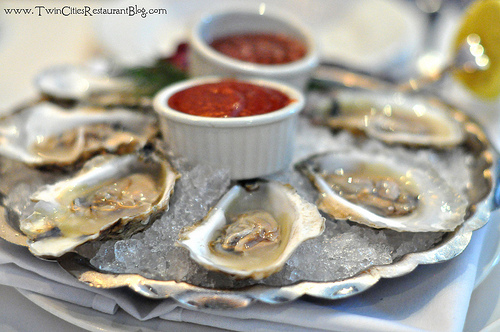
Minneapolis sees rise in foodborne illness from nororvirus, Vibrio in oysters

When I think Minnesota, I think raw oysters.

No, I never think that about anywhere.

raw.oysters.minnJeremy Olson of the Star Tribune reports that city health inspectors in Minneapolis are investigating a summer increase in foodborne illnesses related to norovirus and Vibrio, a bacteria found in raw oysters.

The increases were highlighted in the city’s “food establishment” newsletter, released Thursday.

“The reason for the spike in norovirus outbreaks is not known,” the advisory stated. “The Vibrio outbreaks are due to higher concentrations of bacteria in some oyster beds during the summer.”

Cases of norovirus, a highly contagious bug that causes severe vomiting and diarrhea, are not required to be reported to the Minnesota Department of Health, but the state agency has received reports of a slight uptick that is unusual for this time of year.

Keep reptile–human interactions safe

While the contribution of the main food-related sources to human salmonellosis is well documented, knowledge on the contribution of reptiles is limited.

reptile–human interactionsWe quantified and examined trends in reptile-associated salmonellosis in the Netherlands during a 30-year period, from 1985 to 2014. Using source attribution analysis, we estimated that 2% (95% confidence interval: 1.3–2.8) of all sporadic/domestic human salmonellosis cases reported in the Netherlands during the study period (n = 63,718) originated from reptiles.

The estimated annual fraction of reptile-associated salmonellosis cases ranged from a minimum of 0.3% (corresponding to 11 cases) in 1988 to a maximum of 9.3% (93 cases) in 2013. There was a significant increasing trend in reptile-associated salmonellosis cases (+ 19% annually) and a shift towards adulthood in the age groups at highest risk, while the proportion of reptile-associated salmonellosis cases among those up to four years-old decreased by 4% annually and the proportion of cases aged 45 to 74 years increased by 20% annually.

We hypothesise that these findings may be the effect of the increased number and variety of reptiles that are kept as pets, calling for further attention to the issue of safe reptile–human interaction and for reinforced hygiene recommendations for reptile owners.

Increase in reptile-associated human Salmonellosis and shift toward adulthood in the age groups at risk, The Netherlands, 1985 to 2014

Eurosurveillance, Volume 21, Issue 34, 25 August 2016, DOI: http://dx.doi.org/10.2807/1560-7917.ES.2016.21.34.30324

L Mughini-Gras, M Heck, W van Pelt

http://www.eurosurveillance.org/ViewArticle.aspx?ArticleId=22564