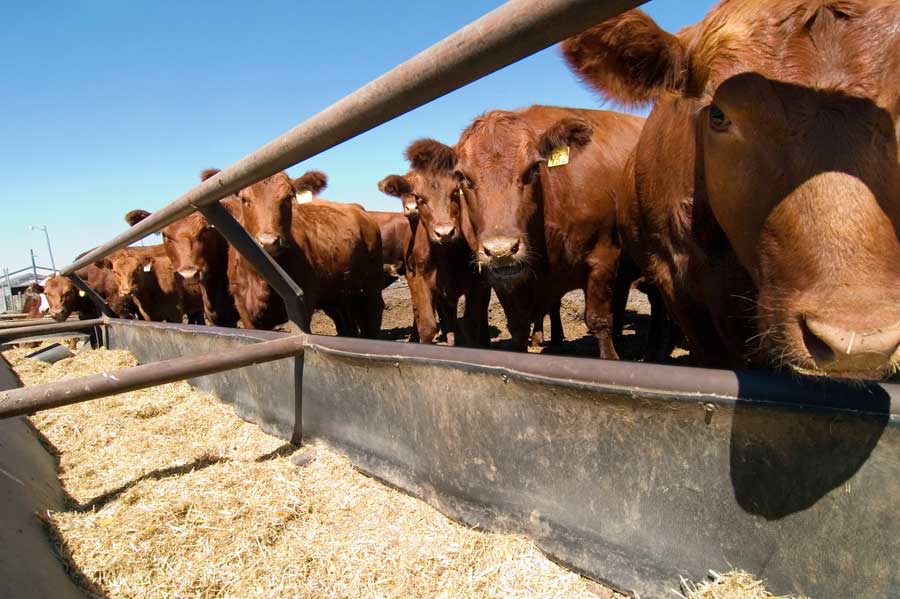
Where’s Thor or Loki (having fun in Brisbane) 300 reindeer killed by lightning in Norway

Friday was a bad time to be a reindeer navigating the barren Hardangervidda plateau in Central Norway.

reindeer.lightening.norway323 reindeer were killed by lightning strikes, in one fell swoop. Norway’s Environment Agency is at a loss as to how the massacre could have happened. Agency spokesman Kjartan Knutsen told the Associated Press that while it’s not uncommon for reindeer or other animals to be struck by lightning, the sheer scale of this massacre is singular.

The agency now faces the bizarre dilemma of what, if anything, to do with 300+ lightning-struck reindeer corpses. Usually, they would simply let the animals decay naturally, but the volume of dead reindeer presents a disturbing conundrum.

We’re looking to some sky-dwelling deity — possibly Odin, or Thor, or one of the other Norse gods with dominion over lighting (perhaps Loki?) — to address this tragedy.

Epi works but needs to be stronger than ‘some people ate the cheese ’ Cheese firm in Scotland linked to E. coli outbreak threatens legal action

Victoria Weldon of Herald Scotland writes that a cheese firm at the centre of an E.coli outbreak is threatening legal action to prevent a ban on sales of its popular delicacy.
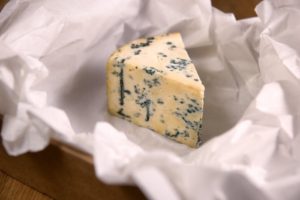
dunsyre.blue.cheeseDunsyre Blue, a mould ripened, gourmet cheese from Lanarkshire, is suspected of being the source of last month’s outbreak which struck down 16 people, hospitalising two.

Makers Errington Cheese were initially forced to recall two batches but claim they have now been ordered to halt all sales or face enforcement action.

It follows fresh tests carried out by FSS identifying genes that, while not confirmation of E.coli, indicate a “presumptive positive” result for naturally occurring bacteria strains.

Company founder Humphrey Errington claims the ban is “unprecedented” and argues that scientific evidence suggests presumptive positive results are notoriously inconclusive, adding, “The behaviour of FSS is monstrous. They blamed our cheese for this outbreak in the absence of any hard evidence and have refused to share with us details of their investigation. We had independent tests carried out two weeks ago that showed the suspected batches of cheese were not contaminated. We shared these results with FSS and they said nothing to restore public trust in the product.”

Errington said the ban on Dunsyre Blue, which accounts for about two-thirds of the company’s revenue, was a “catastrophe” and revealed that his lawyers will decide today whether or not to take legal action.

“I’m afraid I can see this ending up in the courts,” he told the Sunday Times.

Dunsyre Blue is characterised by its chunky blue-green moulds and is favoured by the Queen and Michelin-starred restaurants, including an eaterie run by renowned chef Andrew Fairlie at Gleneagles resort in Perthshire.

It became the focus of the health scare after 14 people in Scotland and two in England were struck down with E.coli in July, suffering stomach cramps, diarrhoea, vomiting and fever.

By the end of the month, health officials announced that Dunsyre Blue was the most likely cause of the outbreak.

However, questions are now being asked over the strength of evidence linking the cheese to the outbreak.

Hugh Pennington, professor of bacteriology at the University of Aberdeen, said: “I don’t know if Dunsyre Blue was the cause or not, but if you’re going to accuse Errington’s cheese of being the vector of the outbreak, then without further ado effectively destroy his business, then I think you should have stronger evidence than just ‘some people ate the cheese’.”

A spokesman for FSS said that all victims had been contaminated with the same strain of E.coli O157 and that “there is a strong link with certain batches [C22 and D14] of Dunsyre Blue cheese”.

He added: “Dunsyre Blue cheese remains the most likely source of this outbreak, with confirmed cases becoming unwell between July 2 and 15. It would not be appropriate to respond in more detail as investigations have not yet concluded.”


A lot of STEC: Numbers mean new interventions

Shiga toxin-producing Escherichia coli (STEC) strains can colonize cattle for several months and may, thus, serve as gene reservoirs for the genesis of highly virulent zoonotic enterohemorrhagic E. coli (EHEC).

Cattle-Heat-Load-ForecastingAttempts to reduce the human risk for acquiring EHEC infections should include strategies to control such STEC strains persisting in cattle. We therefore aimed to identify genetic patterns associated with the STEC colonization type in the bovine host. We included 88 persistent colonizing STEC (STECper) (shedding for ≥4 months) and 74 sporadically colonizing STEC (STECspo) (shedding for ≤2 months) isolates from cattle and 16 bovine STEC isolates with unknown colonization types. Genoserotypes and multilocus sequence types (MLSTs) were determined, and the isolates were probed with a DNA microarray for virulence-associated genes (VAGs). All STECper isolates belonged to only four genoserotypes (O26:H11, O156:H25, O165:H25, O182:H25), which formed three genetic clusters (ST21/396/1705, ST300/688, ST119). In contrast, STECspo isolates were scattered among 28 genoserotypes and 30 MLSTs, with O157:H7 (ST11) and O6:H49 (ST1079) being the most prevalent. The microarray analysis identified 139 unique gene patterns that clustered with the genoserotypes and MLSTs of the strains. While the STECper isolates possessed heterogeneous phylogenetic backgrounds, the accessory genome clustered these isolates together, separating them from the STECspo isolates.

Given the vast genetic heterogeneity of bovine STEC strains, defining the genetic patterns distinguishing STECper from STECspo isolates will facilitate the targeted design of new intervention strategies to counteract these zoonotic pathogens at the farm level.

The accessory genome of Shiga toxin-producing Escherichia coli defines a persistent colonization type in cattle

Appl Environ Microbiol 82:5455–5464. doi:10.1128/AEM.00909-16.

SA Barth, C Menge, I Eichhorn, T Semmier, LH Wieler, D Pickard, A Belka, C Berens, L Geue

http://aem.asm.org/content/82/17/5455.abstract?etoc

Pools or animal farms: 223 sick UK crypto could be anywhere

Janet Hughes of Gloucestershire Live writes that scientists are checking to see if summer holiday visits to animal attractions are behind a massive spike in the number of toddlers with cryptosporidium.

crypto.petting.farmPublic health chiefs are asking affected families to fill in questionnaires about where they have been and what they have eaten in an effort to trace the source of the outbreak which is particularly bad in Gloucestershire and Wiltshire.

Children aged between one and five years are most at risk from the parasite cryptosporidium which is three or four times more prevalent than normal this summer.

Doctors believe a small number of cases could be linked Oasis leisure centre in Swindon, which has been closed as a precautionary measure, and say swimming in contaminated lakes, rivers or swimming pools can cause the disease to strike.

But many of those struck down are young toddlers so other possible theories include the prospect that children might not have washed their hands after petting animals at attractions during the summer holidays.

Hand washing is never enough.


South Carolina sports fan splattered with vomit live on TV as half-time show gets gross

Baseball team the Charleston Riverdogs held a ribbon dancing contest between innings during a game on Thursday.

bull-durham-mv02It went well and one of the dancers was beaming as she strolled off the field, but then out of nowhere she vomited everywhere.

And just in case the fans watching at home missed it, the Riverdogs uploaded the gross-out footage to social media.

What made her ill remains unclear, but viewers have noted that the team runs a “Thirsty Thursdays” promotion.

Others have suggested that it was simply ball-park food combined with the sudden physicality of dancing.

Regardless, her unfortunate outburst is being used as a Twitter meme to express sudden disgust.

Some fans took issue with the minor-league team for sharing the video on social media.

However the fan herself, named Bonnie, joked on Twitter that she gave “all she’s got” for her team.

Most Canadian heist ever: Guy in goalie gear robs Manitoba beer store

I was in Brisbane.

William-Bashin-Bill-Barilko-March-25-1927-c-August-26-1951-celebrities-who-died-young-31630951-650-385Really.

RCMP in Manitoba are on the hunt for two people who pulled off a beer store heist in the community of Russell.

One of the suspects had a hockey stick and was apparently dressed as a goalie.

In surveillance footage from Aug. 15 posted on YouTube, the men are seen smashing a door and walking into the store to steal a bunch of beer.

Police said the one suspect may have been “a defenceman or forward in disguise as he was wearing jersey #17 — a non-traditional number for goalies.”

“Anyone with information about this theft or has played against a goalie matching this description is asked to call Russell RCMP,” the RCMP added.

In others matters Canadiana the full concert of the Aug. 20, 2016 Tragically Hip show that was broadcast around the country – and world – is now up on youtube at https://www.youtube.com/watch?v=7H2ew1MwyQM.

I laughed, I cried, I rocked.


Dozens of Manhattan (the one in Kansas) high school students report nausea, vomiting

Last time I was at Manhattan High in beautiful downtown Manhattan, Kansas, I gave Bill Murray a don’t eat poop shirt.

bill.murray.dp_Before that, I was called in to help out with outbreaks that seemed to have more to do with lack of toilet paper and other hygienic basics, while school types told the kids it was their fault because they didn’t wash their hands. No tools, no job get done.

According to Samantha Foster of The Topeka Capital-Journal, state and Riley County health officials are investigating after dozens of Manhattan High School students were sent home from school this week with nausea and vomiting.

Jennifer Green, administrative director of the Riley County Health Department, said Friday that the high school informed the health department on Wednesday that more than a dozen students had been sent home with those symptoms since Monday.

At least 16 students were sent home between Monday and Thursday, and the school told the health department 19 students were either sent home Friday or had parents who reported to the school they were experiencing nausea and vomiting, Green said.

Soap porn: Soap bar sales plunge as young people opt for hand wash

Richard Gray of the Daily Mail reports a fear of germs may be dooming the humble bar of soap as young, hygiene obsessed members of millennials turn to hand wash instead.

doolNew figures have revealed that young people aged between 18 and 24 are choosing liquid soap over the old fashioned bars.

Sales of soap bars in the US fell by 2.2 per cent between 2014 and 2015 even though the overall market for bath and shower products increased by 2.7 per cent, Mintel has found.

Most of this decline in the use of soap bars has been driven by younger consumers and women.

But it appears traditional bars of soap are still popular with older members of society, particularly men who are over the age of 60, perhaps adding to its old fashioned image.

The figures fit within a growing trend that shows consumers are turning their back on traditional soap bars – since 2010 the number of households using bar soap has dropped by five per cent.

While some of this may be partly driven by the growing range of soap products now available, Mintel found that nearly half of all US consumers believe soap bars are covered in germs after use.

This was most strong in those aged between 18 and 24-years-old – the cohort often identified as Generation Z, or more widely as millennials.

A generation so much dumber than its parents

Came crashing through the window.

Where’s the leafy greens lobby? Feds to seek listeria, leafy green connections after Dole outbreak

Mike Hornick of The Packer writes that health officials will begin routinely asking listeria outbreak victims if they consumed leafy greens, according to the Centers for Disease Control and Prevention.

lettuce.skull.noroThe addition of leafy greens to the standard federal questionnaire on listeria comes in response to last winter’s outbreak linked to a Dole Fresh Vegetables salad plant in Springfield, Ohio. That outbreak sickened 33 in the U.S. and Canada and was tied to at least one death. Dole stopped production in January and reopened the plant in April.

It was the first reported listeria outbreak in the U.S. associated with leafy greens, and the eighth with fresh produce. All occurred since 2008, according to an Aug. 26 report by the CDC.

“It is unclear whether the appearance of these outbreaks might be attributed to improved outbreak detection, changes in consumer behavior, or changes in production and distribution,” the report says. “Fresh produce processors are advised to review food safety plans and consider incorporating measures to avoid the growth and persistence of listeria.”

In the Ohio centered outbreak, the older questionnaire failed to identify a common source for seven infections reported by Nov. 30.

Then in December and January, eight new or previously interviewed patients or their representatives took part in open-ended interviews or provided shopper card records.

That revealed the connection. All reported consuming leafy greens in the month before the onset of illness.

Among these, seven reported romaine and six reported spinach, higher than national food consumption estimates of 47% and 24%, respectively. Six patients recalled consuming packaged salad, according to the report.

Dole Fresh Vegetables denied responsibility in two foodborne illness lawsuits that followed the outbreak.

Go public with data: More Listeria in more frozen veggies

Country Fresh, LLC. of Conroe, Texas, is recalling 30,000 cases of various fresh-cut vegetable products because they have the potential to be contaminated with Listeria monocytogenes.

country.fresh.listeriaThe product in question was shipped to retailers in Alabama, Florida, Georgia, Kentucky, Mississippi, North Carolina, South Carolina, Tennessee, and Virginia under the Country Fresh and store brand labels described in the product listing.

The product bears “BEST IF USED BY” dates between August 7, 2016 (8/7/16) through August 19, 2016 (8/19/16).  The product is in either a clear plastic container as labeled below or in Styrofoam trays overwrapped with clear plastic film as labeled below.  No products except those on this list are subject to this recall.

To date, no illnesses have been confirmed by public health authorities.

“We are treating this incident very seriously because we want to ensure that our customers are provided with only the safest, most wholesome, and high-quality products available,” said Max Payen, Country Fresh’s Director of Food Safety.  The potential for contamination was uncovered as the result of a single routine sample taken at a retail store by the Georgia Department of Agriculture, which revealed the finished product tested positive for the bacteria.  

If the company believes its soundbites, will it reveal its own testing results?