Last night I was watching the Toronto Raptors play in their first NBA finals so I missed my annual viewing of the Scripps Spelling Bee. I’ve been hooked on the spelling drama since watching Spellbound in 2002.
Campylobacter was one of the words in this year’s competition. One of my food safety nerd friends sent me the below screenshot from Instagram.
I used to be a lick-the-batter-off-the-spoon kind of guy. I stopped doing that a few years ago. I don’t eat raw cookie dough, or let my kids eat it. I’m probably not the most fun dad, but outbreaks like what is going on right now is why.
Courtesy of the Safe Plates Information Center and NC State Extension
As of May 24, 2019, 17 people infected with the outbreak strain of E. coli O26 have been reported from 8 states. A list of the states and the number of cases in each can be found on the Map of Reported Cases page.
Illnesses started on dates ranging from December 11, 2018 to April 18, 2019. Ill people range in age from 7 to 86 years, with a median age of 23. Sixty-five percent of ill people are female. Of 17 people with information available, 3 have been hospitalized. No deaths have been reported.
In interviews, ill people answered questions about the foods they ate and other exposures in the week before they became ill. Of seven people who were interviewed, four (57%) reported eating, licking, or tasting raw, homemade dough or batter. Two people with detailed information reported eating raw dough or batter made with flour or baking mixes from ALDI.
Investigators with the Rhode Island Department of Health collected records and flour samples at a bakery where an ill person reported eating raw dough. Records indicated that the bakery used Baker’s Corner All Purpose Flour from ALDI. The outbreak strain was isolated from an unopened bag of Baker’s Corner All Purpose Flour collected at the bakery.
WGS results showed that the E. coli O26 strain identified in the Baker’s Corner All Purpose Flour sample was closely related genetically to the E. coli O26 strain identified in ill people. These results provide additional evidence that people in this outbreak got sick from eating flour.
On May 23, 2019, ADM Milling Co. and Aldi recalled pdf icon[PDF – 142 KB]external icon 5 lb. bags of Baker’s Corner All Purpose Flour sold at retail locations in the following states because they may be contaminated with E. coli: Connecticut, Delaware, Massachussetts, New Hampshire, New Jersey, New York, Ohio, Pennsylvania, Rhode Island, Vermont, and West Virginia
I talked to Korin Miller at whattoexpect.com about this outbreak too, and the hidden risk factor in all of this might be cross-contamination.
It’s a good idea to take care when handling raw flour the same way as you would if you were preparing raw meat. That means washing your hands well after you touch it, sanitizing your countertops after you use it and not eating flour products until they’re thoroughly cooked, Chapman says.
Overall, you should definitely take this seriously. “It’s really, really risky to eat raw flour products,” Chapman says.
And I think about this every time I squeeze and plop down a bag of flour in my kitchen. The pathogens, if they are in there, get spread around like shrapnel.
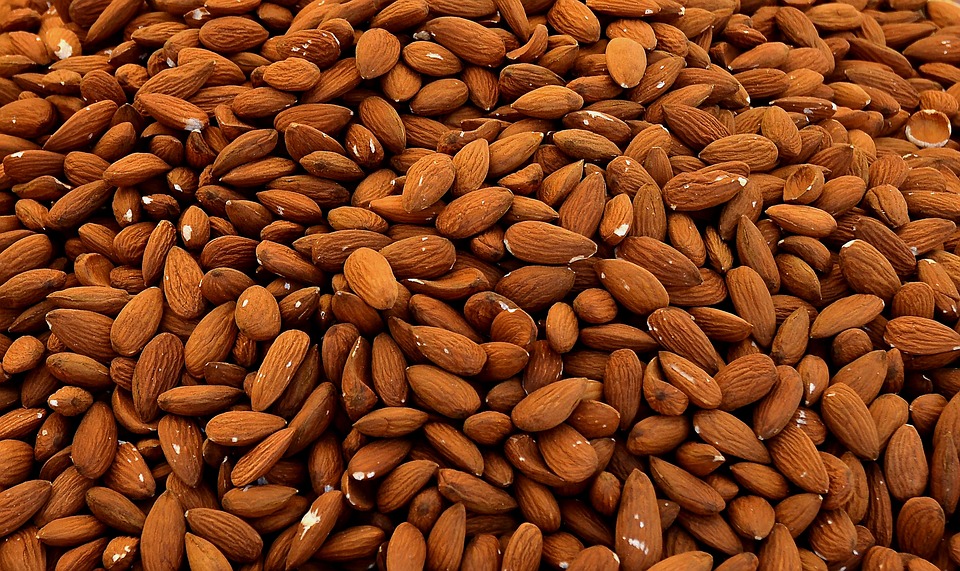
Don and Ben are joined by longtime friend and colleague, podcast downloader (and sometimes listener) Linda Harris. The three nerds talk about other podcasts, Kardashian indices, Erdos numbers, berries, and the long and progressive food safety story of raw almonds. The almond story touches on what should happen when an industry has a major outbreak, how working with extension and research academics can lead to solutions and ripples of managing food safety risks.
For almost 20 years I’ve tried to connect the things I know about. Today it worked.
Matt Shipman and Chris Liotta, my buddies and colleagues in NC State Communications and our college communications independently hit me up with a question about if we could connect food safety and hockey as Raleigh was in the midst of NHL playoff fever.
Here’s what we came up with:
A lot of traditions have developed around the Stanley Cup since it was first awarded to hockey champions in 1893. One of those traditions is for members of the winning team to drink from the Cup, which raises the question: could the Stanley Cup spread disease?
To get at that question, we should discuss the history of the “common cup.”
Shared Cups and Public Health
In the early years of train travel in the United States, travelers were expected to share a common cup, or a dipper, when getting water in their train cars. This eventually raised public health concerns, which led to a spate of state and federal laws barring the use of common cups in train travel.
“We now know that whenever someone places their hands or mouth on a cup, or other eating utensil, that person can deposit bacteria or viruses on the surface,” says Ben Chapman, a food safety researcher at NC State University (and avid hockey fan). “The next person to use that utensil may then ingest the bacteria or virus.
“This form of cross-contamination is well established, and has been identified as a vector for disease since studies of diphtheria and tuberculosis in the early 20th century – which is what led to the common cup laws in the first place.”
That’s good general background, but what about the Stanley Cup in particular?
Drinking From Lord Stanley’s Cup
The bowl part of the Cup, which is what people actually drink from, is made of silver – not dissimilar to a silver chalice your grandparents might own, if your grandparents own a silver chalice that’s been photographed with Wayne Gretzky. And the fact that it’s made of silver actually matters.
Silver is inert. That means it won’t react chemically with most of the substances you put into it, like the acidic fruit juices. Silver also has antimicrobial properties. However, given the circumstances we’re talking about (a bunch of hockey players drinking out of the Cup), those antimicrobial properties won’t reduce the risk of cross-contamination in any meaningful way.
What About Booze?
Everyone knows alcohol is a disinfectant. But does the presence of alcohol eliminate the risk of disease transmission for people drinking out of the Cup? No.
“There are two big factors here,” Chapman says. “One factor is the amount of alcohol in the beverage. For example, beer has a lower percentage of alcohol than champagne, which has less alcohol than hard liquor.
“An alcohol percentage of about 3% appears to be the threshold for making a difference in regard to contamination. And the higher the alcohol percentage, the more effective the beverage will be as an antimicrobial agent.”
However, this first factor is largely irrelevant, because of the second factor: time.
“In order to kill off pathogens, the alcohol has to be in contact with the pathogens for a specific period of time,” Chapman says. “The higher the alcohol content, the shorter the contact time needs to be.
“But, as we’ve noted in the past with eggnog, even strong liquor won’t significantly reduce microbial contamination in an hour or less. And nobody’s waiting an hour between sips when it comes to the Stanley Cup.”
What Increases Risk?
People have put all sorts of things into the Stanley Cup, from dogs to caviar. But the riskiest behavior comes when people put things in the Cup that are likely to be contaminated, such as raw eggs (that’s happened) or babies that are about to poop (that’s happened too).
Beyond that, basic health guidelines suggest that any time someone is drinking from the Cup, you want to make sure they’ve washed their hands first and haven’t thrown up recently. Players who are playing through an illness, for example, could potentially pass it on to the rest of the team. (Players who barfed due solely to athletic exertion likely don’t pose an increased health risk.)
What Is The Biggest Risk?
“If someone is going to contract a disease by drinking out of the Cup, my best guess would be norovirus,” Chapman says. “There are more than 19 million cases of norovirus each year in the U.S., and it is incredibly hardy. In addition, it only takes a little bit to make you sick – on average only a few virus particles are necessary to cause an illness.
“If norovirus got onto the Cup, it could survive there for months. What’s more, you have to take very specific steps to sanitize a surface contaminated with noro.”
However, it’s important to note that cross-contamination can only occur if one of the people handling the Cup is a disease carrier.
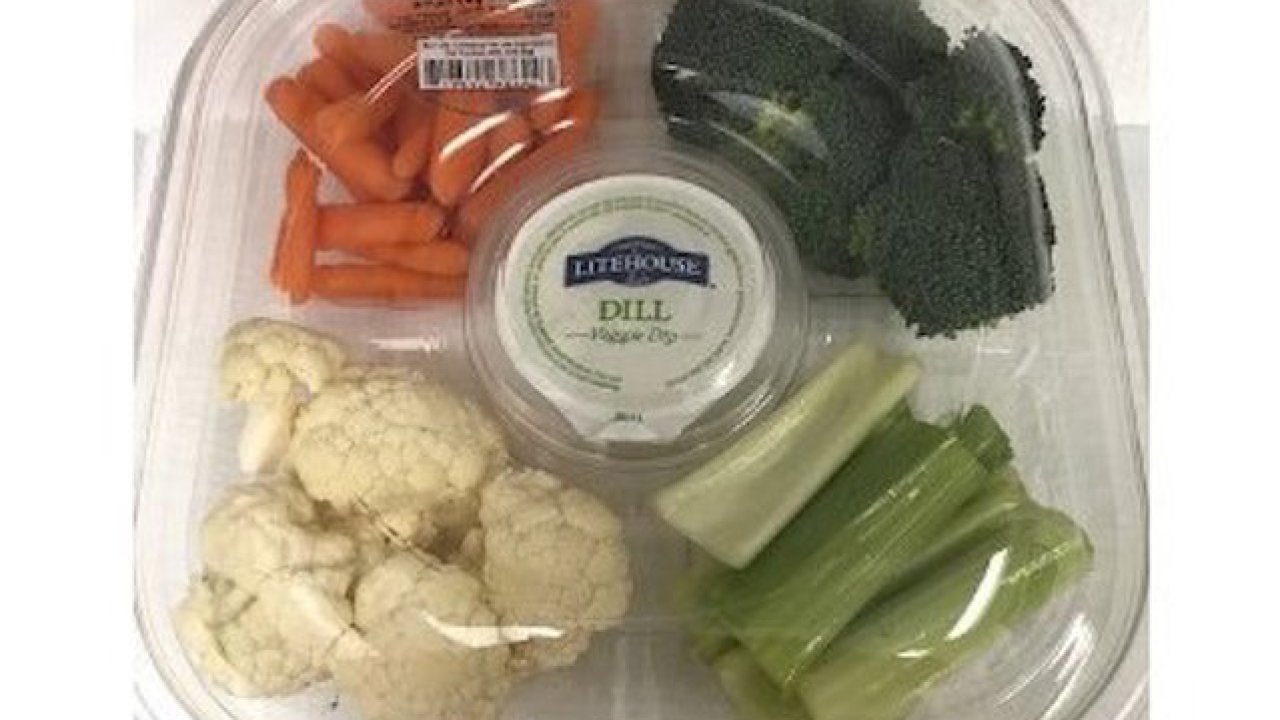
The U.S. Food and Drug Administration (FDA) is inspecting the Del Monte facility that produced vegetable trays that the Wisconsin Department of Health Services linked to an outbreak of salmonellosis. The facility is in Kankakee, Illinois.
On May 21, 2019, the Wisconsin Department of Health Services announced that vegetable trays produced by Del Monte Fresh Produce Inc. and sold at Kwik Trip convenience stores in Wisconsin and Minnesota are linked to three illnesses in Wisconsin and one illness in Minnesota.
According to Wisconsin authorities, these patients reported becoming ill between April 13 and April 27, 2019, and Kwik Trip has voluntarily removed all Del Monte vegetable trays from their stores.
The FDA, CDC and state authorities from Wisconsin and Minnesota continue to investigate the cause and source of the outbreak and the distribution of products.
My family, some of my friends, and most importantly my partner, have sold me out in the name of, we just want you to get better.
I tell them for years there’s weird things going on in my head, since I started taking pucks there in 1967, now they just want to lock me up.
I’d rather be creative.
And not like Jamie Oliver.
Celebrity chef Jamie Oliver has issued an emotional statement after his UK restaurant chain collapsed into administration, putting at least 1300 jobs at risk.
The celebrity chef’s firm Jamie’s Italian Limited – which includes 23 Jamie’s Italian restaurants and 15 Barbecoa outlets – has appointed KPMG as administrators.
In a statement, Oliver said he and staff had “put our hearts and souls into the business” and described the administration as a “difficult time for everyone”.
He said: “I am deeply saddened by this outcome and would like to thank all of the staff and our suppliers who have put their hearts and souls into this business for over a decade. I appreciate how difficult this is for everyone affected.
I had this dream, where I was coaching ice hockey in Brisbane for a few hours, helping do evaluations of kids – male and female – and running them through drills.
As the kids got changed and the girls were mixed in with the boys, I explained we had enough girls in Guelph (that’s in Ontario, Canada) that they had their own league, and as a coach, I wouldn’t go into the dressing room until they were all dressed, and after the game would debrief for a couple of minutes, and then say good bye outside.
After 3 hours of on-ice training I said I’m going home for an hour and would be back in an hour.
I started to put on my street clothes, realized it was dark outside, looked at my iPhone and saw it was 2 a.m.
I miss coaching, but my brain is doing too many weird things.
And in real-life I fall a lot.
I’d post this to my other blog, but what’s left of my identity that I can remember is barfblog.com.
I used to write up the U.S. Centers of Disease Control with the enthusiasm of a teenage going on a date.
It was current, it was confident and it was cool.
Now, not so much.
Maybe it’s just me, but I’m tired of watching Salmonella and other foodborne illnesses flatline, even if a Senator brings a day-old bucket of KFC into a hearing to make some sort of metaphorical point.
I’ll say the same thing I say every year: the numbers aren’t changing because the interventions are in the wrong place.
When national organizations go agenst the World Health Organization and don’t mention on-farm food safety, then they’re missing the source.
According to Food Business News, illness was more prevalent in 2018, according to preliminary surveillance data from the Centers for Disease Control (C.D.C.) and Prevention. Incidents of Campylobacter, Salmonella and Cyclospora infections increased last year, according to FoodNet 2018 preliminary data released by the C.D.C. The increases were due, in part, to more infections being diagnosed using culture-independent diagnostic tests (C.I.D.T.s), but the C.D.C. noted the possibility that the number of infections actually is increasing.
Campylobacter infections were the commonly identified infection in FoodNet sites since 2013 with poultry being the major source of infection. More infections are being diagnosed, the C.D.C. said, because more laboratories use C.I.D.T.s to detect Campylobacterand other pathogens. C.I.D.T.s detect the presence of a specific genetic sequence of an organism. The tests produce results more rapidly because they do not require isolation and identification of living organisms.
Reducing Campylobacter infections will require more knowledge of how case patients are becoming infected, the C.D.C. said. The pathogen can contaminate raw chicken or poultry juices, and cross-contamination can impact hands, other foods or kitchen equipment.
“Focusing on interventions throughout the food production chain that reduce Campylobacter bacteria in chicken could lead to fewer illnesses in people,” the C.D.C. said. “Whole genome sequencing might help us figure out the contribution of various sources and help target interventions.”
Salmonella infections, the second most common infection, also appear to be increasing, according to the preliminary report. The most common Salmonella serotypes were Enteritidis, Newport and Typhimurium. Additionally, Enteritidis infections are not decreasing despite regulatory programs aimed at reducing Salmonella in poultry and eggs.