FDA closes cheese plant linked to listeriosis illnesses and death


Former graduate student Allison Smathers caught Liz Szabo’s color-is-not-an-indicator brief in USA Today and tweeted like love, food safety is color blind.
It’s a myth that color is a reliable indicator of whether food is fully cooked. Use a meat thermometer, says Benjamin Chapman, assistant professor at North Carolina State University. Poultry requires an internal temperature of 165 degrees, ground beef, 160; pork and seafood, 145.
Safely cooked chicken can still be pink; preservatives (nitrates or nitrites) also can cause a pink color, more common in younger birds with thin skin.
Stick it in.
Beef’s color is affected by acidity and fat content. Low-fat patties need more cooking and higher temperatures. Beef also can turn brown before reaching a safe temperature if it’s from an older animal, was stored for a long time or exposed to too much air.
Ashley Chaifetz, a PhD student studying public policy at UNC-Chapel Hill writes,
After last year’s extended recall of my dog’s food, I switched brands. The recalls kept piling up and I did not want to put Chloe, my dog, at an increased risk as I repeatedly switched out bags of food.
Our pet food store gave me all sorts of samples for her to try before I committed to a new 30-lb bag. This time, I decided look up all the brands I had samples for in the FDA recall database. I initially considered ruling out companies with a history of recalls because repeated problems demonstrates a company that can’t get it right.
But what to do about businesses that may have had one health-related recall? Or none?
What I want to know is what a company does, or has done in response to an event, to improve their systems to reduce the risk of dogfoodborne illness.
It’s really hard to find information from dog food producers about what they do to keep Chloe’s potential food safe. It’s time for producers to step it up.
Providing consumers with risk reduction plans and systems, whether a company has had a contamination event or not, should be the industry standard but only a few companies provide this information.
Retirement homes and hospitals have a lot of trouble with norovirus. If an ill resident, patient or staff member sheds the virus through vomit or poop in a public area a lot of folks can get sick.
According to KDRV ABC Channel 12, The V.A. hospital in White City Oregon is dealing with its own norovirus outbreak with over 125 veterans and 25 staff ill.
“This is very contact oriented, it’s not airborne, it’s by touch,” said V.A. Infection Preventionist Sue Thurston.
Thurston said about 470 vets live at the V.A, and more than a quarter of them are sick.
Veterans are being asked to not leave their rooms until they feel better and bag meals are dropped off at their rooms.
“We’re wiping down everything you can touch – all the side rails, all the doorknobs, all the vending machines, all the rooms, all the surfaces, every single flat surface is being wiped down and disinfected,” said Thurston (I wonder what sanitizer they are using and wiping may just be spreading virus particles around -ben).
Although the virus isn’t respiratory, epidemiological investigations of past outbreaks suggest that virus particles can be aerosolized through vomit events. At IAFP 2013, North Carolina State University graduate student Grace Tung showed a simulated vomit event would yield a spread of droplets 8-12 ft.; the greatest distance traveled in any one experiment was 14.5 ft.
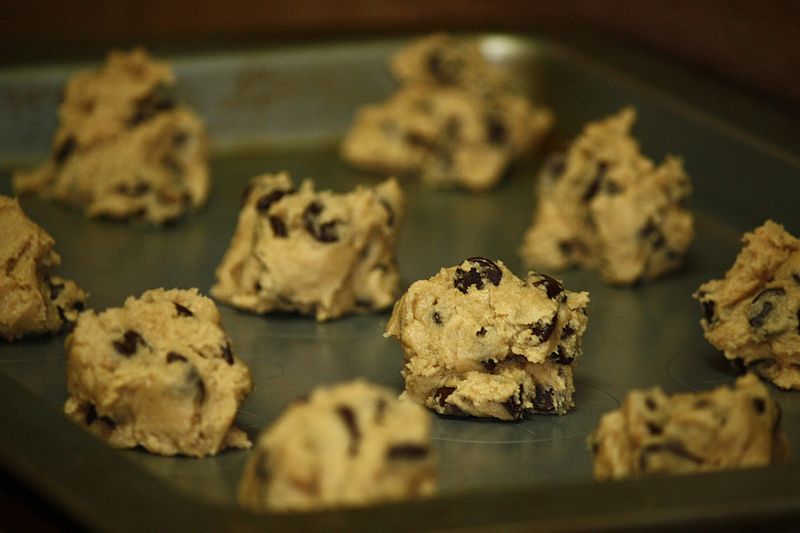
Food safety isn’t dogmatic, it’s based on risk, the product of the likelihood of the hazard and severity of an illness. L.V. Anderson of Slate tackles risk as it relates to raw eggs in homemade cookie dough. She makes the case that the chance of Salmonella in eggs is relatively low (1 in 20,000 eggs) and many egg-related illnesses are linked to pooled and/or temperature abused eggs (see Australia). 
Every time I have made a type of cake or cookie for the recipe column I write for Slate, I’ve unfailingly consumed some of the uncooked mixture. Heck, every time I’ve made a type of cake or cookie just for fun, I’ve unfailingly consumed some of the uncooked mixture. And I have never in my 27 years gotten salmonella poisoning.
A quick back-of-the-envelope calculation: I estimate that I’ve baked cookies, cake, or brownies once a month, on average, since I started baking by myself around the age of 12 and that I have tasted the dough or batter every time. Let’s say that each of those batches of cookies, cake, or brownies has contained two eggs—a conservative estimate. This means that I have ingested the innards of—at the very least—360 uncooked eggs in my life.
Using data from the 1990s, the Centers for Disease Control and Prevention estimate that one in 20,000 eggs is internally contaminated with salmonella. Since salmonella prevention practices have improved since then, the egg contamination rate is probably even lower now.
Speaking personally, the statistics haven’t scared me off unpasteurized eggs for good. If I continued consuming batter and dough containing about two raw eggs per month, I would likely encounter only one SE-contaminated egg over the course of 833 years. And if I remain generally healthy, I might not even get sick from that SE-contaminated egg. Of course, by the time I’m 860, my immune system will probably be weak enough that I’ll want to avoid unpasteurized eggs. In the meantime, though, I’ll take my chances on that cake batter.
That’s a pretty reasoned exposure decision – although I’m not sure severity comes into her calculation. Salmonella isn’t like norovirus where symptoms are acute but generally limited to 2-3 days. Salmonellosis can often lead to hospitalizations and in some cases reactive arthritis. Homemade cookie dough with two individual eggs also isn’t nearly the same as egg dishes at food service where a lot of pooling happens (like sauces and Caesar salad dressing). Each egg added into the mix magnifies the risk. Uncooked foods also carry other risks associated with other ingredients. A 2009 E. coli O157 outbreak linked to raw cookie dough was thought to be flour-linked (not eggs).
Anderson’s choice works for her, but the risk calculation changes with other populations like my kids (who beg to lick the bowl) because don’t have fully developed immune systems. A 1 in 20,000 chance is too much for me to handle as a parent – especially with the consequences. So we use pasteurized eggs in our recipes.
A couple of years ago a colleague at the vet college shared a story with me about restaurant grades. He and his son went into a local sushi place and it was dead – they had no problem getting a seat during the usually busy lunch rush. He asked the manager what was up and she said that business had been down since they had been given a low score during a routine inspection. That made my friend pause a bit; they still ordered lunch and ate, but hadn’t been back. 
I guess some folks do make choices based on posted restaurant grades.
Allegheny County Pennsylvania is debating a new restaurant inspection disclosure system, including a magical matrix for what will generate an A, B or C. According to TribLIVE, excellent food handling procedures will net an A, a B represents generally good procedures, and potential risks will generate a C. Tough to evaluate without the specifics – but risk factors matter more to me than “good procedures.”
The county’s Board of Health on Monday will hear initial plans for a program to post A, B or C grades outside restaurants starting in September, said Jim Thompson, deputy director of environmental health. “There will be a significant number of Bs and Cs,” Thompson said.
About half of the county’s 7,200 permitted establishments had at least one violation last year, and about 5 percent have three or more violations, Thompson said.
“The inspection itself is the same. The food regulation is the same, but we are translating what we find into a format that the customers really understand,” said Dr. Lee Harrison, the [Allegheny Board of Health] chairman.
John Graf, owner of The Priory in the North Side and president of the Western Chapter of the Pennsylvania Restaurant and Lodging Association, said a C grade posted outside some restaurants would shut them down and B grades could cause confusion among customers.
“Based on the matrixes I’ve seen, a surprising number of restaurants will end up with Bs,” Graf said. “What does a B mean? What does it mean for the customer? Is it safe?”
Joe Bello, executive chef and general manager at The Wooden Nickel Restaurant in Monroeville, said he sees positives and negatives to a grading system. He worries that something unforeseeable or uncontrollable during an inspection could drop a restaurant’s grade unfairly. But he thinks grades could motivate restaurants to pay closer attention to health and safety regulations.
Braden Mackey, 23, of Mt. Washington welcomes the idea of letter grades posted outside restaurants. He typically relies on Internet reviews when investigating restaurants. A grade of C, he said, would not deter him from ordering from a menu.
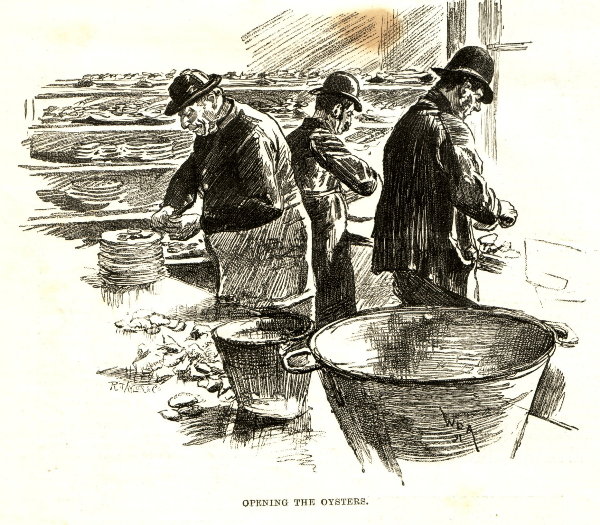
The Colchester Oyster Feast is kind of a big deal. Dating back to the 14th century and boasting a couple of to-be-kings as former guests (King Edward VIII and King George VI) it is the place to be in October. The event even has its own Wikipedia page.
And in 2013, it also was the source of an outbreak.
According to the Essex County Standard, 54 attendees became ill after eating Irish oysters at the annual festival.
A total of 200 guests attended the civic event at Colchester’s Moot Hall last October.
Within days, 13 guests reported they were unwell and an investigation was launched by Public Health England.
Questionnaires were sent out and 54 people reported they had been sick, including Colchester Council chief executive Adrian Pritchard.
The cold weather in North America is stretching out norovirus season. Chan and colleagues report in Emerging Infectious Diseases that a 2012 offseason outbreak of the Sydney strain of norovirus affected infants and young children more than other populations.
In late 2012, a new norovirus strain of genogroup II, genotype 4 originating in Sydney, Australia (GII.4 Sydney 2012), became the predominant norovirus strain and caused a severe norovirus season globally. In Hong Kong, China, this strain caused an off-season communitywide surge in acute gastroenteritis during summer (July–October) 2012. We report hospital admission of persons with this novel strain, which was skewed toward infants and young children for whom fecal viral load of this strain were higher than for patients in other age groups.
Our findings agree with evidence that infants and young children are likely to have the highest rate of infections in health care and community settings. In our study, infants and young children had the highest fecal viral load, compared with other age groups. Similarly lower Ct in children was reported in a historical cohort of norovirus gastroenteritis in the United Kingdom (1993–1996). The higher viral load may relate to delayed viral clearance related to immune naivety. Higher fecal viral shedding also supports a recent mathematical model suggesting that children aged <5 years are more infectious than older children and adults.
I spent most of the past week in California at the American Frozen Food Institute’s annual meeting (in San Diego) and the Global Food Safety Initiative conference in Anaheim. The weather was great and I got to hang out with Schaffner for a couple of days and talk podcasting, so that was cool.

Sealed Air invited me to speak at GFSI about using qualitative data to make decisions and guide behavior change in food handlers. In collaboration with Target and Insight Product Development, the Sealed Air folks carried out a project employing ethnography and video observation to evaluate and characterize behaviors in a sample of Target stores. The project focused on cleaning and sanitation. I was given the data and they asked for ideas on how to use it.
Here’s what I came up with (click here for my slides):
Quantitative data generated through internal and external audits/verifications/inspection/whatever tells a company frequencies and helps prioritize what needs to be worked on. Qualitative methods like ethnography is deeper and can help describe and characterize actual practices, and more importantly, why they are occurring.
Once you know what is going on, and why, a common risk management response is to train food handlers again, or more, or better.
Training more may not matter unless you can make the food handlers care.
The key from the behavioral model literature is two fold: food safety nerds might be more successful with front-line folks if they spend time on sharing the whys behind specific tasks as well as emphasizing that the individual has control over the positive and negative outcomes. Just being prescriptive is not only boring, it doesn’t connect with the audience.
This isn’t revolutionary, and what the food safety infosheets and infographics are based on, but paired with real life practices in real time, with a focus on emotion, training could be powerful.
Messages built on emotions seems to work in lots of situations. The Hindu reports that handwashing behaviors in Indian villages were positively impacted by messages focused on emotions of nurture and disgust.
The campaign, which was carried out by researchers from the London School of Hygiene and Tropical Medicine and St John’s Research Institute, Bangalore, succeeded in doing so by changing an entrenched health behaviour using an unconventional approach — emotional drivers.
The use of emotional drivers is very different from the conventional health risk messaging that public campaigns often tend to use, suggests a paper published today (February 27) in The Lancet Global Health journal evaluating the hand wash campaign “SuperAmma” in Chittoor district.
Through skits, animation films and posters, researchers experimented with four emotions like nurturing (“the desire for a happy, thriving child”) and disgust (“the desire to avoid and remove contamination”), to encourage people to wash their hands with soap before eating and cooking and after using the toilet or cleaning a child.
The team created a fictitious character called ‘SuperAmma’, “a forward thinking rural mother” to help communicate their message in schools and to the community.
Six months after the campaign was launched, evaluations showed a 37 per cent increase in handwashing rates in the intervention villages (these rates sustained for 12 months), while the rates remained fairly unchanged in the control group (which saw a 4 per cent increase), establishing that the campaign had achieved its goals.