
Ben Chapman

About Ben Chapman

Dr. Ben Chapman is a professor and food safety extension specialist at North Carolina State University. As a teenager, a Saturday afternoon viewing of the classic cable movie, Outbreak, sparked his interest in pathogens and public health. With the goal of less foodborne illness, his group designs, implements, and evaluates food safety strategies, messages, and media from farm-to-fork. Through reality-based research, Chapman investigates behaviors and creates interventions aimed at amateur and professional food handlers, managers, and organizational decision-makers; the gate keepers of safe food. Ben co-hosts a biweekly podcast called Food Safety Talk and tries to further engage folks online through Instagram, Twitter, Facebook, YouTube and, maybe not surprisingly, Pinterest. Follow on Twitter @benjaminchapman.

Exempting food events might make political sense; may not be good for public health

When it comes to social issues I’m a bit of a libertarian hippie. I’ve looked the part (big bushy beard and longer thinning hair); used to play ultimate frisbee (poorly); and, our first-born was delivered at home.

The philosophy I’ve embraced around food safety is, let people eat what and where they want. The caveat, and challenge to extension and public health folks, is that eaters should have all the tools available to them to make risk-based decisions. Disclose the risk, have a compelling discussion about consequences and best practices and stand back – hopefully the choice results in the least amount of barf. images

Depending on the jurisdiction, the oversight over commercial food businesses and community-building fundraisers creates a two-tiered system: Professionals have the advantage of a set of regulatory standards and an environmental health specialist pointing out risks; amateurs are unregulated and left to their own devices.

According to the Topeka Capitol-Journal, Kansas legislators are looking to create a tiered system by exempting religious non-profit organizations from following food safety rules.

“Some of these churches have regular food sales just to keep the lights on,” [Rep. John] Alcala, [D-Topeka] said.

One such church meets in North Topeka. As of October, Sullivan Chapel Methodist Church had three regular attendees — all from one family — but the congregation’s monthly taco sales kept utilities paid.

Until, that is, a Kansas Department of Health and Environment employee stumbled upon the sale in 2012 and suggested the church needed several food safety improvements to stay in business.

Alcala’s bill would clarify that the taco sales, and other larger scale church-related meals, are exempt.

The need for the law was debated before it reached the House floor.

The Kansas Department of Agriculture, the agency actually in charge of commercial food safety said it doesn’t regularly license or inspect the religious organizations affected anyway. KDHE handles outbreaks of food-borne illness, which the bill doesn’t address.

Cindy Martin, one of the remaining Sullivan Chapel Methodist Church members, said she and her family were unaware of the bill, but had been told they couldn’t sell tacos because they didn’t have a food vendor’s license. 

Anyone working with food (whether in a business or a community dinner) should have some knowledge of risk as it relates to what they’re making –  and how to manage it. Exempting these organization should carry a big risk disclosure message for patrons: These folks making your tacos aren’t professionals, don’t have the benefit of inspector visits and don’t have a standard. Eat at your own risk.

Alfalfa sprouts with a touch of radish (and Salmonella) recalled in Canada

According to the Canadian Food Inspection Agency, AquaFuschia, a Quebec-based sprouted seed company is recalling one of their products, alfalfa sprouts with a touch of radish, after routine regulatory sampling revealed Salmonella.

AquaFuschia has a nice story on their website about the history of their products, sadly, nothing about food safety systems. If I was a retail buyer I’d want to see how well they follow the CFIA sprouted seed guidance document and what their seed source is.20140225a_1393382891929_eng

Aquafuchsia Foods Inc. is recalling Aquafuchsia brand alfalfa sprout product from the marketplace due to possible Salmonella contamination.

This recall was triggered by the Canadian Food Inspection Agency (CFIA) test results. The CFIA is conducting a food safety investigation, which may lead to the recall of other products. If other high-risk products are recalled the CFIA will notify the public through updated Food Recall Warnings.

The CFIA is verifying that industry is removing recalled product from the marketplace.
Illnesses

There have been no reported illnesses associated with the consumption of this product.

Full disclosure: Toronto Public Health creates institutional outbreak website

Public health folks seem to wrestle with when to make investigation information public: they want to have enough data to be confident before fingering any specific foods or locales. Releasing incorrect or incomplete information, like the Florida tomato industry often points out, can affect business. Sitting on info can further put individuals at risk.
Schaffner often credits epidemiologist Paul Mead with summarizing the problem “If you’re wrong, you went public too early; if you’re right, you went [public] too late.”torontopublichealthexhibitorlogo

Having a consistent policy on what gets released when is lacking in the public health world – and Toronto Public Health (TPH), in an effort to increase openness and transparency, is pulling back the curtain on outbreak investigations. According to the Toronto Star’s Robert Cribb, TPH has begun listing all current confirmed and investigated healthcare-linked outbreaks on their website, and will update the list weekly.

For the first time, all outbreaks in Toronto nursing homes, retirement homes and hospitals will be publicly posted on a city website — a new public health disclosure system prompted by a Toronto Star-Ryerson University investigation.
Each Thursday, Toronto Public Health will now detail outbreaks by nature, institution name and address, as well as indicate whether it is still active. The reports will include both gastroenteric outbreaks (such as those causing nausea, vomiting, diarrhea, fever) and respiratory infections (which result in symptoms such as coughing, runny noses, sore throats, fevers).
The current report, covering the week of Feb. 13-19, lists 15 outbreaks — 10 in long-term care homes, three in retirement homes and two in hospitals. Ten were still active at time of reporting.

“(The new disclosure system) is a good idea,” said Doug Powell, a Canadian food safety expert. “They’re already collecting this information, so making it public isn’t that much more work. They work for the public and they’re there to serve public health. And from a personal point of view, I’d want to know if one of my relatives were in one of those institutions. It brings a level of public accountability.” 

Seven ill and one dead after consuming Listeria-contaminated cheese

Health authorities from US Center for Disease Control and Prevention (CDC) announced today the investigation into an outbreak of listeriosis linked to Hispanic cheeses. The outbreak has lead to a death and seven other illnesses in Maryland and California. CDC reports that five of the illnesses (2 mother-newborn pairs and a newborn) were related to pregnancy and all patients are of Hispanic ethnicity.

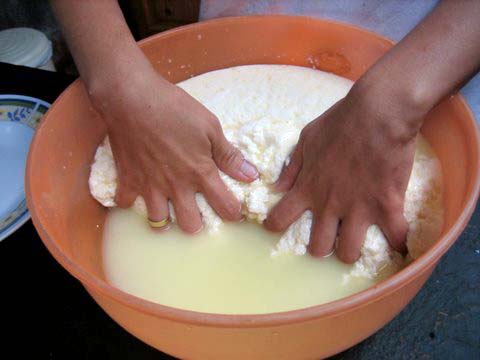
Among persons for whom information is available, dates that illness was diagnosed range from August 1, 2013 to November 27, 2013. Seven of the eight ill persons were hospitalized. Five of the illnesses were related to a pregnancy; two of these were diagnosed in two mother–newborn pairs, and one in only the newborn. The three other illnesses occurred among adults.   Eveling raking the curds

In interviews, ill persons answered questions about foods consumed and other exposures in the month before becoming ill. All patients in Maryland reported consuming soft or semi-soft Hispanic-style cheese and all shopped at different locations of same food store chain (Chain A). Testing of cheese products collected from Chain A (VDACS reports it as Mega Mart -ben) stores was performed in Maryland and Virginia. 

Virginia’s Division of Consolidated Laboratory Services (DCLS) identified the outbreak strain of Listeria monocytogenes in a sample of Caujada en Terron (fresh cheese curd) collected by the Virginia Department of Agriculture and Consumer Services (VDACS) from a Chain A store. This cheese was likely produced by Roos Foods of Kenton, Delaware and was later repackaged in the Chain A store.  VDACS issued a press release on February 15, 2014 instructing persons who purchased this product not to consume the cheese and to discard any remaining product.

logoFrom the VDACS press release,

On February 10, 2014, Listeria monocytogenes, a bacterium that can cause human illness, was isolated from a sample of Cuajada en Terron (Fresh Cheese Curd) collected by food safety inspectors from Virginia Department of Agriculture and Consumer Services.  The sample was collected at Mega Mart, a retail store located at 8328 Shopper’s Square, Manassas, VA 20111. The product was sold in clear, unlabeled plastic bags held in the retail cheese display cooler within the facility.

Listeria affects the elderly and pregnant women disproportionately more than healthy adults and is fatal 25-30 per cent of the time. Hispanic style fresh cheese is regularly linked to Listeria cases. In January, Oregon public health officials issued a warning for illegally imported cheese from Mexico that is believed responsible for giving an unborn baby Listeria. In 2010, Two Oregon mothers have were sickened by Listeria after eating tainted Mexican-style cheese made in Yakima, causing their babies to be born with a serious illness

Barreled water or bottled water? Over 400 cases of noro linked to Chinese schools

According to CRI English, there’s a whole lot of noro going through Chinese schools. Over 400 students attending schools in Haning City and Haiyan County have come down ill with the gastrointestinal virus and investigators believe it is linked to water. A few weeks ago Japan dealt with its own massive school-linked norovirus outbreak that was eventually traced to bread.

Classes will be suspended on Thursday and Friday but are expected to resume on Monday.woode0barrel

The outbreak began on Feb. 11 in Haining and Feb. 13 in Haiyan.
It is suspected that the outbreak was caused by barrelled water. All the affected schools have been using barrelled water with the same brand, said Yang Jing, head of the provincial health and family planning commission.

A further epidemiological investigation is under way, said Yang.

Governments have ordered all the schools to disinfect canteens, classrooms, dormitories and toilets.

Good news, bad news: EU Campy and Salmonella illnesses drop, Listeria increases

The constant public health quest is to stay ahead of the bugs by making risk management decisions. With all the focus on pathogen reduction, CDC reported last year that raw numbers show decreases in Salmonella, E.coli O157, Listeria and Yersinia infections and significant increases in Campylobacter and Vibro illnesses (compared to 2006-2008). GoodNewsBadNews

EFSA using similar methods, released information today that shows an increase in Listeria with decreases in Salmonella and Campylobacter in the EU.

Campylobacteriosis is still the most reported disease, accounting for 214,000 cases of infections.

“It is encouraging to see that cases of campylobacteriosis have gone down in 2012. But more investigation and monitoring is needed to see if this is the beginning of a trend”, said Marta Hugas, Acting Head of EFSA’s Risk Assessment and Scientific Assistance Department.

Over the years, salmonellosis has been decreasing- with 91,034 reported cases in 2012. This is mainly due to the successful Salmonella control programmes put in place by EU Member States and the European Commission in poultry, the report said. Most Member States met their Salmonella reduction target for poultry flocks.

Listeriosis accounted for 1,642 reported cases, 10.5% more than in 2011 and has been gradually increasing over the past five years.

Food Safety Talk 56: Damned hard to make safe food

Food Safety Talk, a bi-weekly podcast for food safety nerds, by food safety nerds. The podcast is hosted by Ben Chapman and barfblog contributor Don Schaffner, Extension Specialist in Food Science and Professor at Rutgers University. Every two weeks or so, Ben and Don get together virtually and talk for about an hour.  They talk about what’s on their minds or in the news regarding food safety, and popular culture. They strive to be relevant, funny and informative — sometimes they succeed. You can download the audio recordings right from the website, or subscribe using iTunes.

The guys started the show following up on the previous episode, the write up on David Gumpert’s website and the comments on the Internet. Theresa Lam also reached out wanting to know more about the risks associated with bootleg versus regulated raw milk.

roger dean wallpaper.jpg

Despite raw milk drinker’s hatred of epidemiologists, Don confessed that maybe he wants to be an epidemiologist, while Ben noted that he has admired them ever since the Jalapeno Saintpaul outbreak. Don also praised Petran, White and Hedberg, for their efforts to identify what items in a restaurant inspection were predictive of the possibility of an outbreak, and Ben’s comments to USA Today on the topic.

A quick round of “I think you’re thinking of” with Howard Dean, and Roger Dean, not to be confused with Roger Dean followed. The guys then hopped back in time with the whizzinator before moving on to food storage mistakes and tortilla safety as prompted by Listener John Kimble.

The guys covered the 1990’s in the IAFP history segment, which also featured a discussion of 808, the Beastie Boys and the speed of Joe Walsh’s Maserati. Ben identified the 1990’s with the adoption of PFGE and rapid methods, while Don though the Mega Regs characterized the time. Ben recalled a recent discussion with Cathy Cutter about meat processing and how HACCP shaped other food safety regulations.

The discussion then turned to Norovirus, prompted by a couple of recent noro outbreaks on the “Explorer of the Seas” and the Caribbean Princess, the boat that Chris Gunter boarded. Unfortunately, Chris couldn’t find out whether the hand sanitizer on the ship was the one that works, though he was assured that it was “alcohol based”. Ben wrapped up the noro discussion with the MoChunk resort outbreak. The guys talked about Netflix in the short after dark.

Nosestretcher alert: Eating pizza is protective against norovirus

I subscribe to the notion that there’s no such thing as bad pizza. It’s hard to mess up cheese, sauce and some sort of meat or veg. Often the best has some herbs like oregano sprinkled on top as well.

I’m not sure it’s a magical food though.

There’s been a lot of coverage to suggest it is magical, all in reference to a recent paper by Gilling and colleagues in the Journal of Applied Microbiology detailing the effects of oregano oil on norovirus. Some of the stories are particularly glowing:
Screen Shot 2014-02-16 at 2.19.42 PM
University of Arizona researchers found an ingredient in pizza that could prevent suffering from winter vomiting disease, norovirus.

and

If you feel guilty after eating a slice of pizza, a new study may help you feel better. An ingredient in oregano has been found to boost immunity, at least in laboratory cells.

The authors of the cited study use murine norovirus (MNV) as a surrogate to human norovirus HuNV. There is some debate in the virology community as to whether MNV is a good surrogate (especially since isopropyl and ethanol shows a decent level of inactivation against MNV, which is not seen with HuNV). It’s not the same virus.

And I’m not sure about the practicality of throwing oregano oil (or it’s active ingredient carvacol) onto food contact surfaces or food.

The authors state,

In the present study, oregano oil and its primary active component, carvacrol, were evaluated for their antiviral activity against MNV as a surrogate for NoV for their use in potential applications such as surface disinfection (including use in clinical settings) or food sanitization. As such, a discussion of quantitative log10 reductions following various periods of exposure is relevant. Oregano oil and carvacrol both significantly reduced MNV titres within 15 min of exposure (0.95-log10 and ≥1.03-log10, respectively). Despite this, the infectivity of MNV treated with oregano oil remained stable over time (1.07-log10 reduction in infectivity within 24 h of exposure), whereas carvacrol was far more effective, producing 387-log10 reductions in MNV within as little as 1 h of exposure.

Exposing a virus that sort of acts like human norovirus, but but sort of doesn’t, to carvacrol (a component of oregano oil), for 15 min you can get get a 1-log reduction infectivity after 15 min. A bit of a stretch from pizza protects against norovirus (above, exactly as shown, courtesy of Gordon Hayburn).

A two-letter substitution: Mohawk says they are not Mohonk

Potential patrons of Mohawk Mountain, a ski resort in Connecticut, are calling to inquire about an outbreak happening 60 miles away – at Mohonk Mountain House. According to the Register Citizen, Mohawk Mountain staff are being asked about illnesses and clean-up.

The names do sound kinda similar. Mohonk_Mountain_House1-T1

Mohawk Mountain wants to ensure its customers that they don’t have to worry about a virus outbreak in their lodge. In a post on Facebook Saturday, Mohawk employees pointed out that they are often confused for a New York hotel called The Mohonk Mountain House.“We’ve been getting some confusing phone calls, but have figured out what the problem is,” the post stated. “The Mohonk Mountain House was struck with an outbreak of the norovirus, and had to close for a week.”

In related news, Mohonk Mountain House reopened in time for Valentines Day festivities.

“The Mountain House has been thoroughly cleaned from top to bottom and is looking beautiful,” Mohonk marketing director Nina Smiley said in an email Friday afternoon.

Ulster County Health Commissioner Dr. Carol Smith said he department had signed off on the sanitation effort, which the resort conducted voluntarily.

“They did everything we and state officials advised them to do to insure the facility was disinfected,” Smith said.

Florida producer recalls curly parsley due to Salmonella; suggests FDA mandated recall

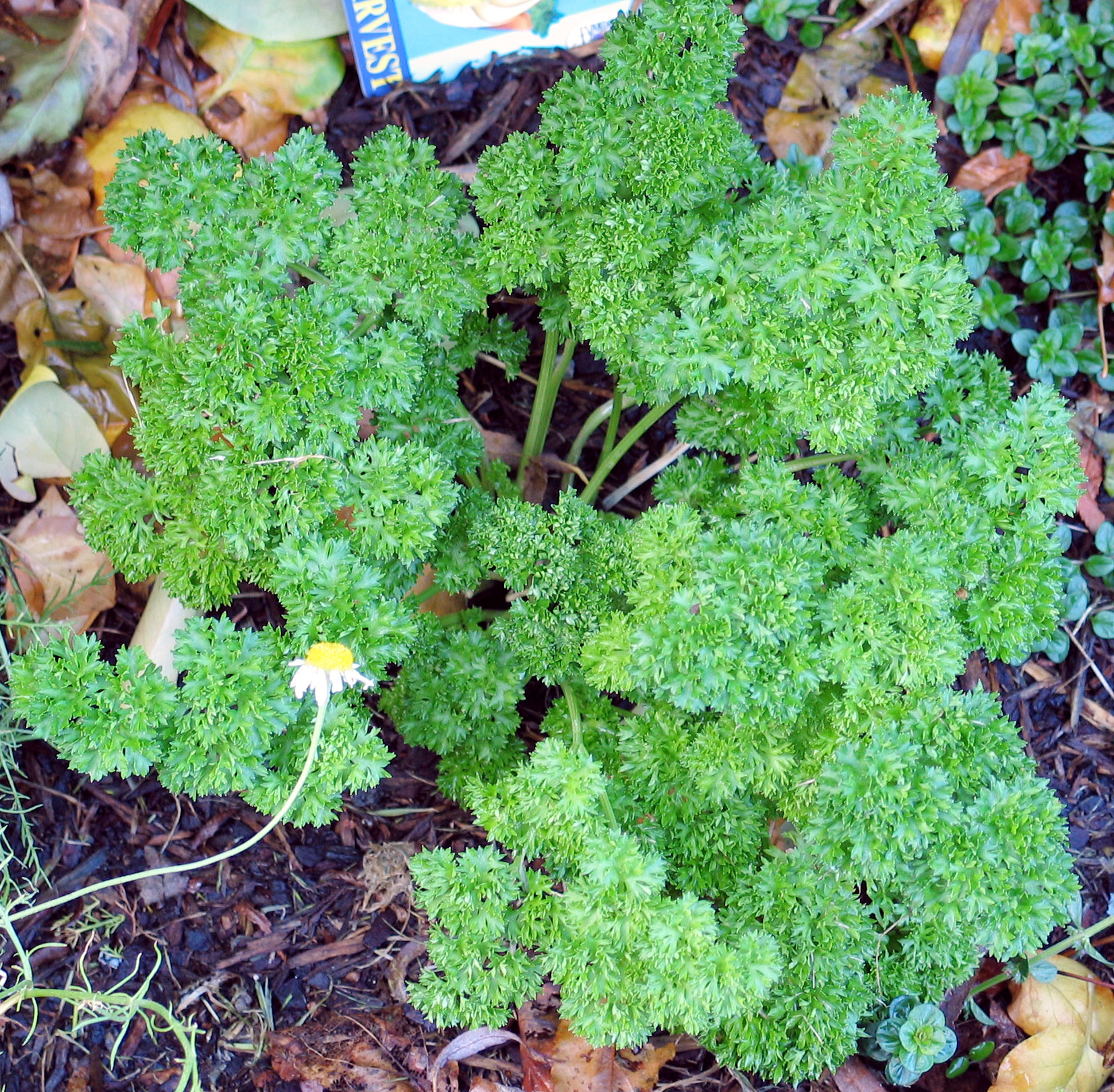
Parsley (the flat leaf kind) is the herb I most often mistake for cilantro while shopping the produce aisle. I’m not sure if I’ve ever purchased curly parsley, a fresh herb often used in Mediterranean and Lebanese salads (and as a plate garnish).  Parsley_Curled

According to the Packer, Roth Farms says that FDA required them to conduct a recall after a sample of their curly parsley tested positive for Salmonella.

A Florida grower says the Food and Drug Administration is mandating a recall of curly parsley five weeks after it was harvested — and long after its shelf life had expired — after a positive test for Salmonella.

However, FDA spokeswoman Theresa Eisenman said the recall is voluntary.

Rick Roth, owner of Roth Farms Inc., Belle Glade, Fla., said he is cooperating with the agency, but the recall was not voluntary. No illnesses have been reported in connection with the Roth Farms parsley.

“We were told it was required,” Roth said Feb. 13.

Roth Farms harvested the parsley Jan. 7. The company’s agent said FDA notified Roth Farms of the positive test result on Feb. 11.

Managing and recovering from a recall is tough enough without the added he said/she said rhetoric. A better message would be that Roth Farms recalled product to protect the folks who eat parsley, and, that they are investigating the source of contamination while evaluating their systems.