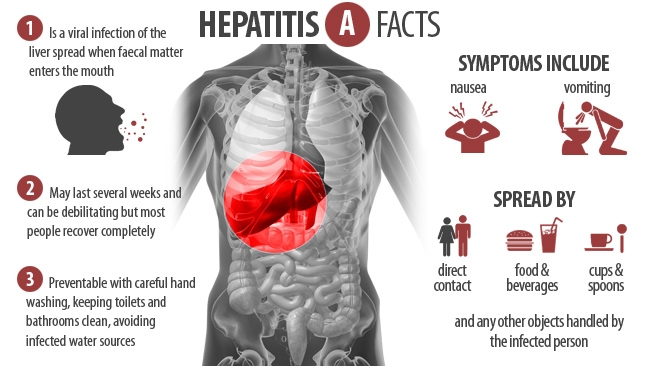
800 Degrees restaurant Hepatitis A risk

Wayne health officials in Indiana said an employee at the 800 Degrees Three Fires restaurant on Illinois Road tested positive for Hepatitis A.

According to officials, if you have eaten or drank anything at the restaurant vomit.toiletbetween the dates of May 18 and May 26, you may be at risk.

A free Hepatitis A vaccine will be provided at the Southwest Allen County Schools Transportation Center, located at 4814 Homestead Road, during the following times:

Saturday, June 1 from noon to 8 p.m.

Sunday, June 2 from 8 a.m. to 5 p.m.

30 sick; Hepatitis A outbreak linked to frozen berries in US; same source as EU outbreaks?

This is starting to sound like so many sprout outbreaks, where seed is contaminated at source, distributed globally, and outbreaks stop popping up that eventually prove related.

State and federal health officials are investigating an outbreak of hepatitis A in Arizona, California, Colorado, New Mexico and Nevada.

The federal Centers for Disease Control and Prevention said Friday frozen.strawberryapproximately 30 cases have been reported.

CDC says the cases are “potentially associated” with Townsend Farms Organic Antioxidant Blend frozen berries purchased from Costco.

Attorney Bill Gaar, representing Townsend Farms of Fairview, Ore., says investigators appear to be focusing on imported pomegranate seed that’s in the product.

A Costco spokesman says the company has removed the product from stores and is contacting its members.

Health officials don’t yet know if the product was sold at other stores or markets. They do know that frozen berry blends are often used to make smoothies, frozen bar drinks and other types of desserts and drinks. One concern is that smaller businesses might have bought bulk frozen berries at Costco and then used them in other products.

According to the label, the berry blend contained pomegranate seeds and other produce from the US, Argentina, Chile, and Turkey.

The strain of hepatitis A in this outbreak is rarely seen in the United States, said CDC’s Lola Russell. It’s known to circulate in North African and the Middle East. The same type of hepatitis A was identified in a 2013 outbreak in Europe linked to frozen berries and another one in 2012 in Canada linked to a frozen berry blend with pomegranate seeds from Egypt, she said.

The berries involved in the European outbreak(s) are from Egypt and Morocco.

I may have some in my freezer. I love the berries, but never thought that in Australia, they’d be coming from wherever. So naïve, and I got a PhD in raspberry.frozenthis stuff.
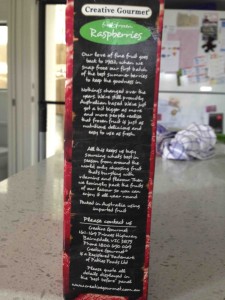
And there it is, left, on my Creative Gourmet raspberries, which were the least expensive per kg last week.

“We’re still a proudly Australian based. We’ve just got a bit bigger as more and more people realize that frozen fruit is just as nutritious, delicious and easy to use as fresh.

“All this keeps us busy sourcing what’s best in season, from around the world, only choosing fruit that’s bursting with Hepatitis A vitamins and flavour. Then we lovingly pack the fruits of others our labour, so you can enjoy it, all year round.”

The Colorado Department of Public Health and Environment says the first people became ill on April 29 and the most recent on May 21. Five of these cases are Colorado residents. The number of cases in Colorado and in this outbreak may change, because on average it takes 30 days to become ill with hepatitis A after eating contaminated food.

Frozen fruit and Hepatitis A outbreaks in Europe

As European regulators work to help identify the origin of the recent outbreak of Hepatitis A in Germany, the Netherlands and Poland, the Coop in Denmark is pulling frozen strawberries after 52 people were sickened across Scandinavia in possibly related outbreaks.

The Copenhagen Post reports that frozen strawberries are suspected of being the source of an outbreak of 52 cases of hepatitis A across frozen.strawberryScandinavia, leading Coop to withdraw them from its stores.

The berries are from Egypt and Morocco and sold under the names “Sund Fornuft Jordbær”, “Irma Jordbær” and “Coop Jordbær”, and have been sold by Fakta, Irma, Dagli´Brugsen, LokalBrugsen, Kvickly and SuperBrugsen.

“We are not sure these berries are to blame for the outbreak but we dare not risk the health of our customers,” Coop spokesperson Karin Frøidt told Jyllands-Posten newspaper. “We are [withdrawing the berries] to be extra safe.”

Meanwhile, the European Food Safety Authority says 15 sickened people had travelled to the autonomous provinces of Trento and Bolzano, in Italy and that preliminary investigations have identified frozen berries as the most likely source of infection.

Sweden hit by 12 more cases of hepatitis A linked to frozen berries

Radio Sweden reports that 12 more cases of hepatitis A in Sweden are probably linked to the same strain of virus first discovered in Denmark frozen.strawberrywhich authorities believe is caused by frozen berries.

Fifty-six cases of hepatitis A have been reported in Sweden since December. Normally, there are five cases a year in the country.

Cases have been reported in other Nordic countries, bringing the total sickened to about 83.

71 sick; ongoing multi-strain foodborne hepatitis A outbreak with frozen berries as suspected vehicle

I love the frozen berries. Almost every night I put some in a bowl with oatmeal and milk or yoghurt, and by morning it’s all thawed and yummy and just really fabulous for my colon.

But there’s been this on-going outbreak in European countries that raises the risk specter.

Gillesberg et al. report in Eurosurveillance this week that a foodborne outbreak of hepatitis A in Denmark was notified to other countries on 1 March 2013. A case–control study identified frozen berries eaten in smoothies as potential vehicle. In the following weeks, Finland, Norway frozen.strawberryand Sweden also identified an increased number of hepatitis A patients without travel history. Most cases reported having eaten frozen berries at the time of exposure. By 17 April, 71 cases were notified in the four countries. No specific type of berry, brand or origin of berries has yet been identified.

In February 2013, Denmark registered a higher than usual number of notified patients with hepatitis A virus (HAV) infection who had no travel history 2–6 weeks before symptom onset or other known risk factors for HAV infection. Concurrently, viruses from six hepatitis A patients who had been notified since October 2012 were shown to be genotype IB with the same sequence across 1,231 nucleotides of the capsid protein VP1 gene, including the VP3/VP1 and VP1/2A junctions (GenBank accession number KC876797). An outbreak investigation was initiated and an urgent enquiry was posted through the European Epidemic Intelligence Information System for food- and waterborne diseases (EPIS-FWD) on 1 March 2013, asking if any other countries had also seen an increase in the number of domestic patients with HAV infection. The sequence was also shared within the International HAV laboratory network managed in the Netherlands.

Following the urgent enquiry, Finland, Norway and Sweden also reported an increase in the number of patients with HAV infection who had no history of foreign travel. Each country identified one or more cases with HAV genotype 1B that had identical sequences to the HAV of the Danish cases. The outbreak is still ongoing. 

The following outbreak case definition was defined in Denmark and applied in all four countries, except that Sweden only includes cases from 1 December 2012 onwards and Finland is not excluding cases with other potential risk factors.

A probable case is defined as a person living in Denmark, Finland, Norway or Sweden with clinical illness compatible with HAV infection and positive for HAV IgM antibodies, no travel history outside of Nordic countries two to six weeks before onset of symptoms or having other known HAV risk factors, such as intravenous drug use, homelessness or male-to-male sexual contact and symptom onset on 1 October 2012 or later.

The full report is available at:

http://www.eurosurveillance.org/ViewArticle.aspx?ArticleId=20467

22 sick; Hepatitis A outbreak in Sweden blamed on frozen berries

Swedish authorities announced on Thursday that frozen berries may have been the cause of over 20 Hepatitis A infections in Sweden since December.

The Swedish Institute for Communicable Disease Control (Smittskyddsinstitutet, SMI) warned that the berries may have frozen.strawberrybeen responsible for 22 cases of Hepatitis A in Sweden so far.

The usual contagion rate for the same timeframe is about five people in Sweden.

Experts from the institute advised berry lovers to take caution when consuming any berries bought in Sweden that were sold frozen.

“If you cook them for at least one minute then all the contagion will die or disappear,” Margareta Löfdahl, epidemiologist from the Institute, told the TT news agency.

The people infected in Sweden were infected with the same type of Hepatitis that 30 people in Denmark were diagnosed with recently, which has since been traced to frozen berries and strawberries in particular.

69 sick; Tel Aviv Hepatitis A increases may be linked to market veggies

Dozens of hepatitis A cases reported in the Tel Aviv area in Israel since last year may be linked to vegetables health officials say, according to a Haaretz report Friday.

Israeli health officials say since the beginning of 2012, there have been 69 cases of the viral liver disease reported from the area, with the majority tel.aviv.marketreported in the latter half of the year.

The Global Dispatch says this is a dramatic increase from the seven cases reported in all of 2011.

According to the report, Health Ministry officials believe the source may be vegetables sold in open-air markets in the south of the city.

Hepatitis A warning for Sumo Salad eaters in Sydney

A health warning has been issued for those who have consumed food from Sumo Salad in the Sydney CBD following the diagnosis of Hepatitis A in an employee.

People who have eaten from the Kent St store between July 19-26 are being urged to seek out the Hepatitis A vaccine.

Those who bought food from the outlet between July 11-18 are encouraged to visit their GP if they begin to develop any symptoms including poor appetite, abdominal discomfort, jaundice and dark urine.

The individual employee, who contracted the virus while overseas. is no longer working in the store.

8 sick; Frozen berries in BC may contain hepatitis A

I loves me the frozen berries; they’re a mainstay of my diet, along with all the fresh berries I can plant, buy and consume.

Maybe the British Columbia Centre for Disease Control (BCCDC) has hepatitis A on its mind, what with the employee at a Victoria retailer testing positive earily this week, but the public is now being warned not to consume Pomeberry Blend frozen berries manufactured by Western Family because it may be linked to the hepatitis A virus.

The BCCDC and regional health authorities are investigating eight cases of hepatitis A that have occurred over the past two months in BC. Five out of eight of these cases are known to have consumed the Pomeberry product and an investigation is ongoing. This product has been distributed through Save-On-Foods and Overwaitea.
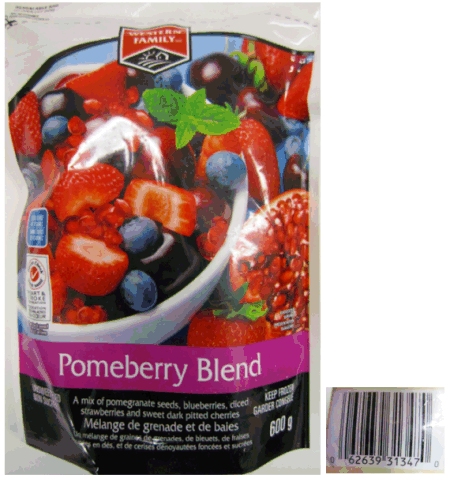
While there is no direct link yet, as a precaution, anyone who has the Pomeberry Blend product in their refrigerator or freezer is advised not to consume it, and to discard it. This blend contains frozen pomegranate seeds, blueberries, strawberries and cherries. No other frozen berry products from Western Family are a concern at this time.

This is a precautionary alert as the investigation continues and more information should be available next week. There is currently no recommendation for people who have consumed the product to receive vaccine since the overall risk to the public is very low. This will be reassessed as further information becomes available.

Hepatitis A alert for customers who recently ate at Quadra Fairway Market in BC

It’s much better to get vaccinated before exposure.

Customers who recently ate at the Fairway Market deli on Quadra Street in Victoria, British Columbia (that’s in Canada) are urged to get vaccinated for hepatitis A after an employee tested positive for the virus this week.

The Vancouver Island Health Authority is urging anyone who ate deli food prepared in-store on March 18, 19, 20, 22, 25 or 26 to receive a hepatitis A vaccine as a precaution.

Drop-in immunization clinics for Fairway Market employees and eligible members of the public will take place Saturday and Sunday at the Victoria Health Unit, located at 1947 Cook St., from 1 p.m. to 5 p.m.

Customers at the deli between March 7 and 15 may also have been exposed to the virus but vaccines will no longer be effective because too much time has passed, said Charmaine Enns, a VIHA medical health officer.

"It becomes of interest to the public and to us when that [infected] person is a food handler, because then it’s not just that person’s circle of close contacts who is at risk, it’s the general public now at risk," Enns said.